Old Cape Point Lighthouse
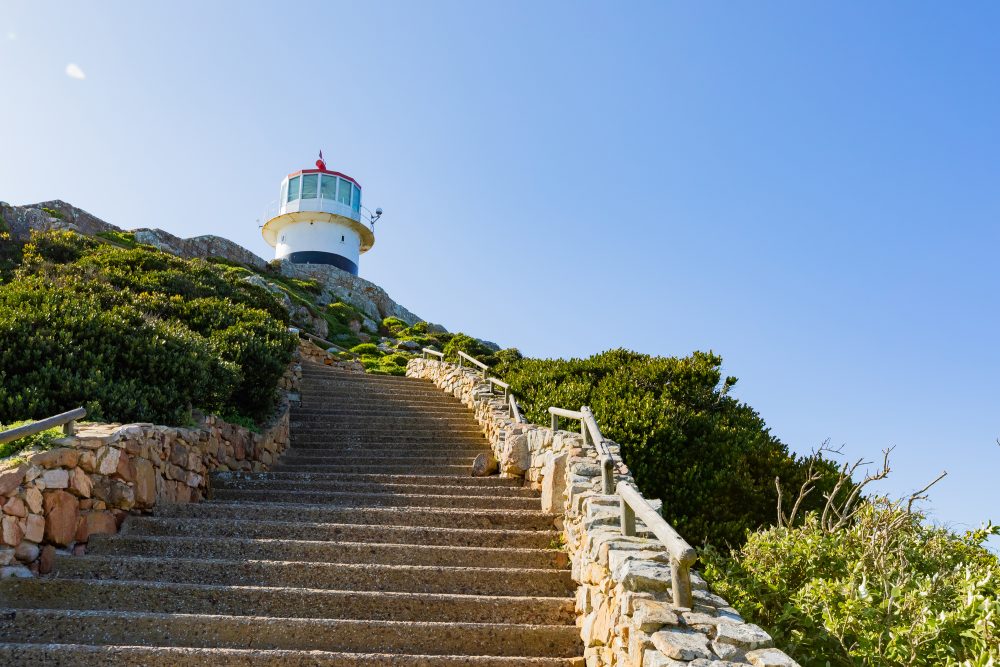
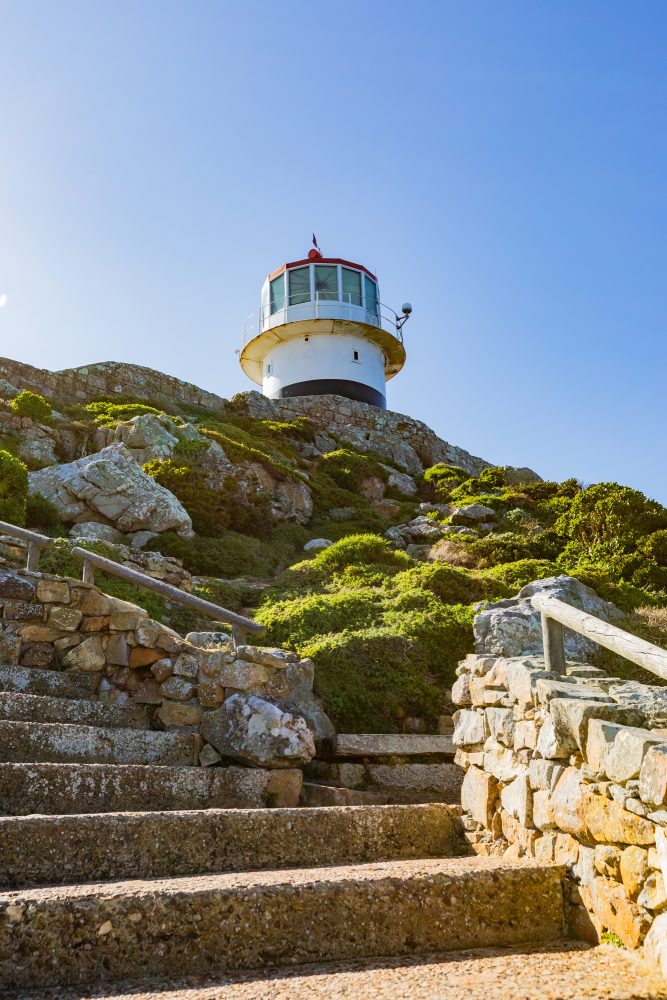
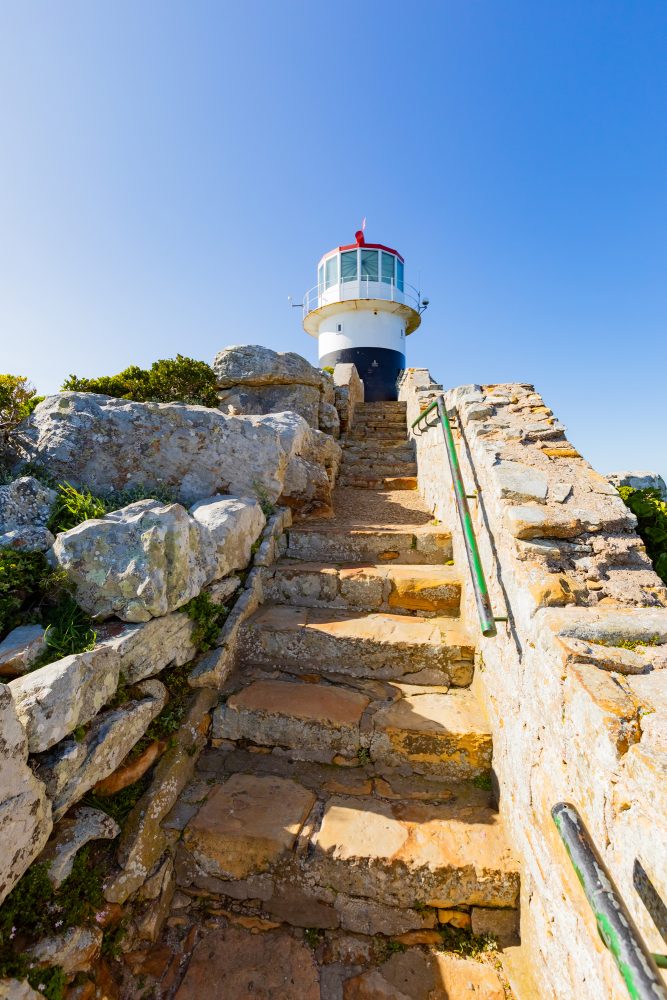
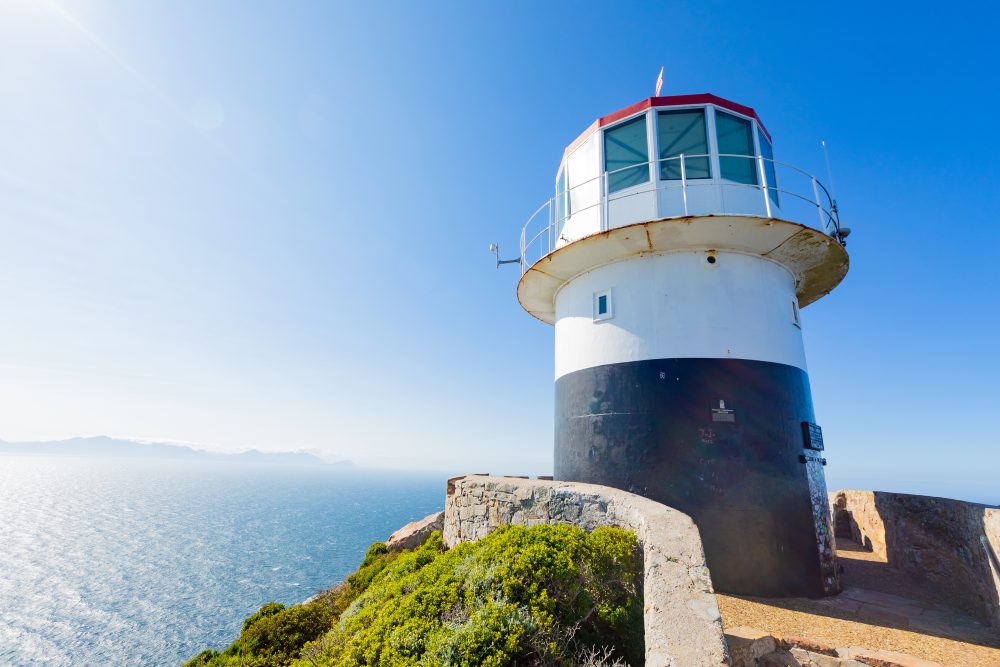
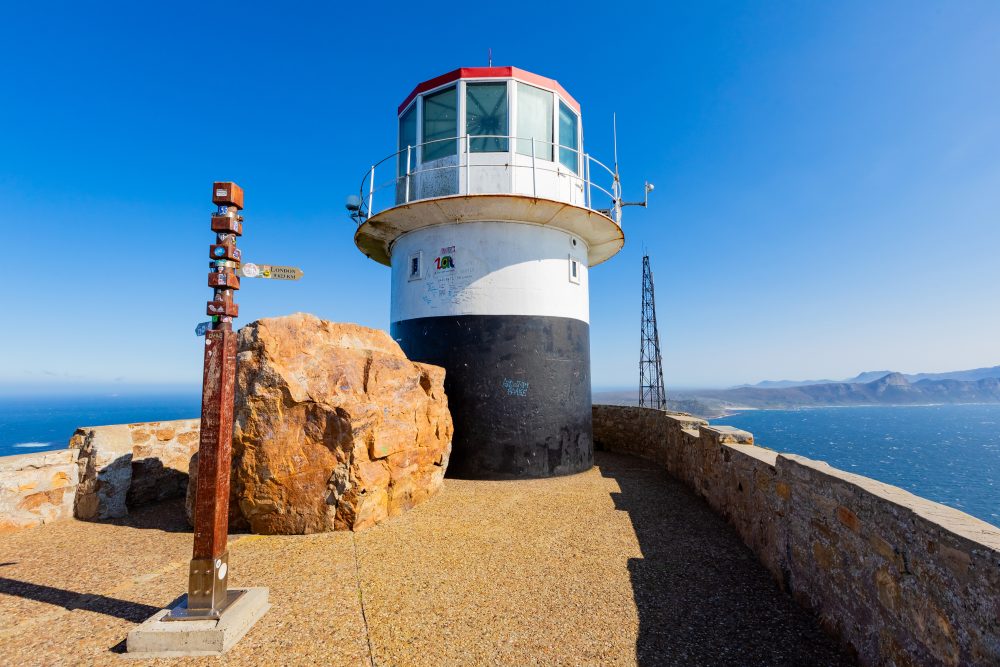
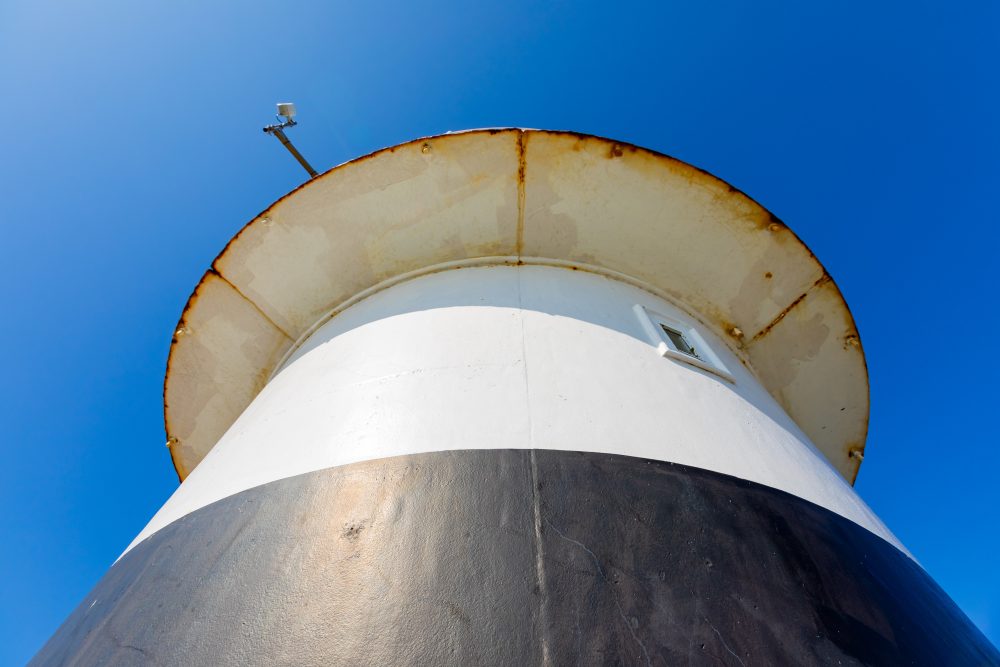
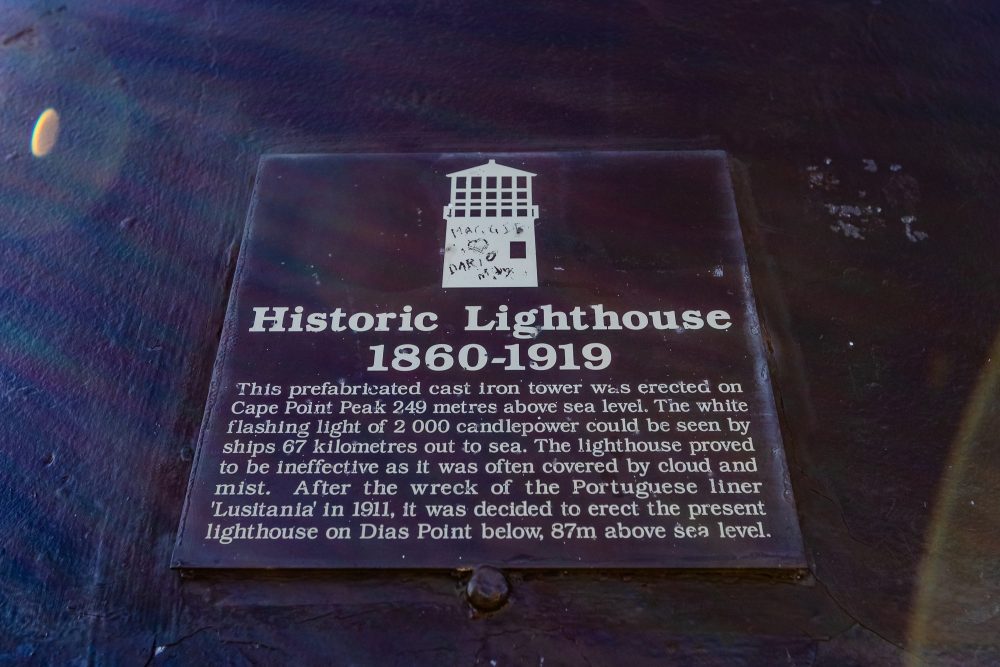
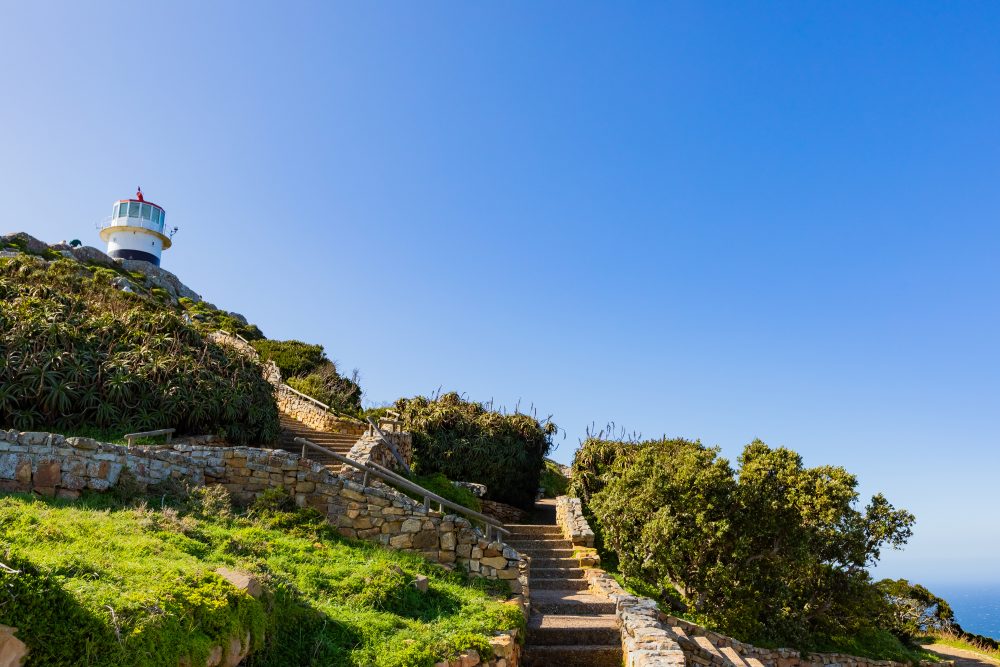
The lighthouses of Table Mountain National Park are located at the Cape of Good Hope, on the southern tip of South Africa. Located high on the cliffs of Cape Point, the two historic lighthouses – the original 19th-century structure and its early 20th-century replacement – stand as enduring symbols of South Africa’s maritime heritage and the ongoing need for safe navigation around the Cape. The need for a lighthouse at the Cape of Good Hope became apparent because of the evident coastline dangers and unpredictable weather that made this coast infamous among sailors. The original lighthouse, which was custom-built in 1860 about 262m above sea level, is a circular prefabricated cast-iron structure built about 262 metres above sea level. The lighthouse had one flash every 12 seconds, with a 32-nautical-mile range. There were two reasons why another lighthouse had to be built. First, it was discovered that the lighthouse had not been ideally placed as it was often covered with cloud, which affected its relevance, reducing its visibility to ships. Second, it was struck by lightning, further highlighting the need for a more reliable solution. Once the second Cape Point lighthouse was built, the old one became a watch room and a popular tourist attraction.
Therefore, in response to the identified challenges, the new 9m high square masonry lighthouse with a white lantern house, was commissioned in 1919 and built on Diaz Point, at a lower and more visible position closer to sea level. It was designed to withstand the extreme coastal conditions. The light as a composite group flashes three times every 30 seconds. It has a 63-nautical-mile range, making it the brightest light on the South African coast at 10-million candelas. In addition, there is a fixed red sector light with a 10 nautical mile (18.5 km) range indicating the dangerous areas off the point with a 18.5 km range.
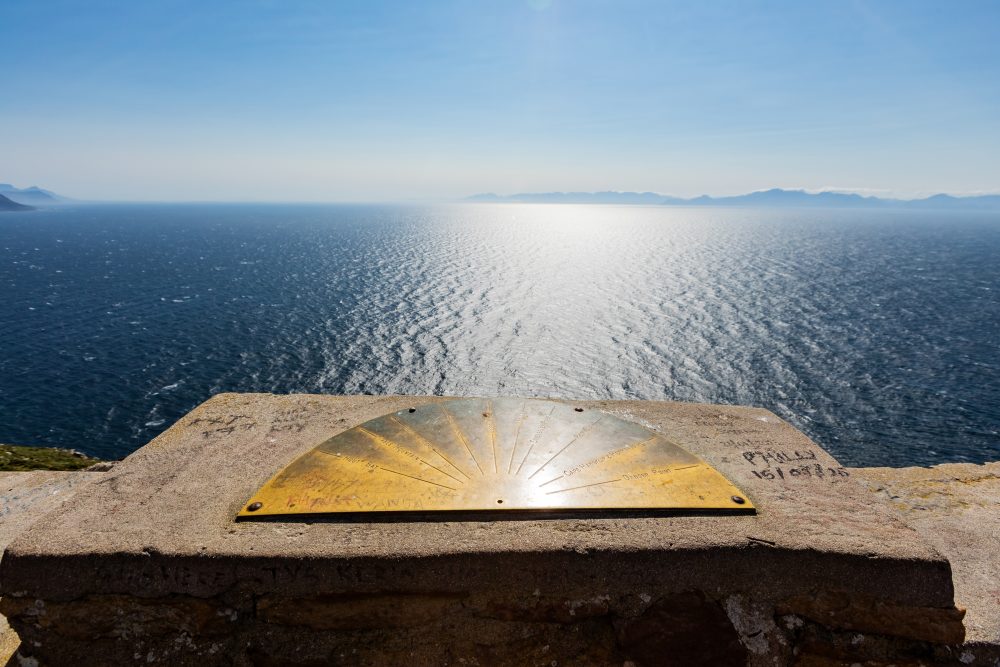
Following the commissioning of the new lighthouse, the original structure was repurposed as a watch room and later developed into a tourist attraction, offering panoramic views of the Cape Peninsula and its dramatic seascapes. Today, both lighthouses stand as powerful symbols of human perseverance, innovation, and adaptation to the natural environment. They form an integral part of Table Mountain National Park’s cultural and historical landscape, linking South Africa’s maritime past with its natural heritage.
GPS Waypoints: 34°21'14.03"S 18°29'25.19"E