Da Gama Cross Monument
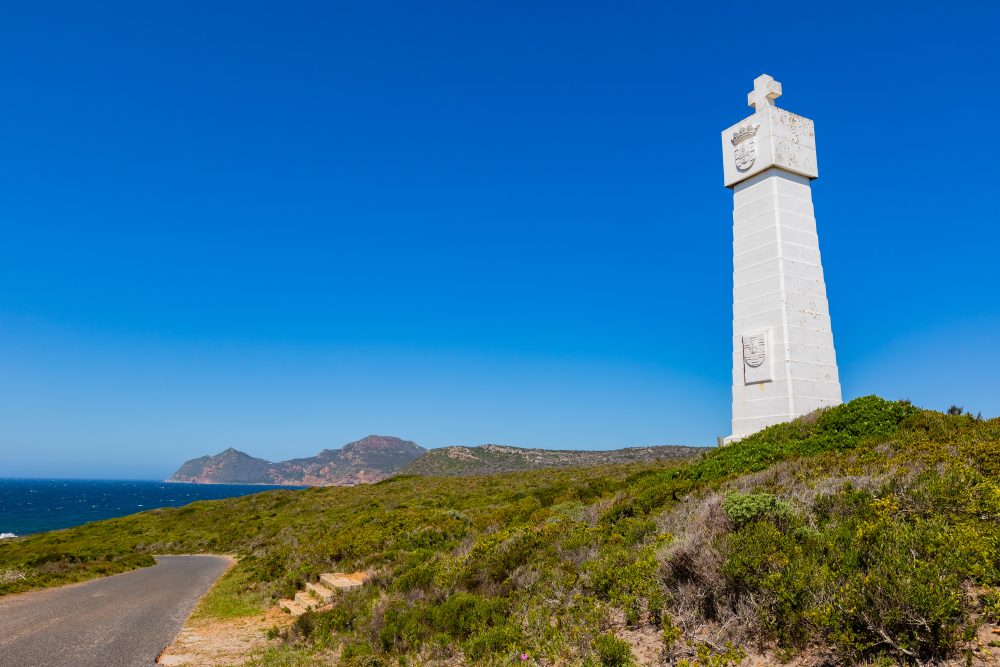
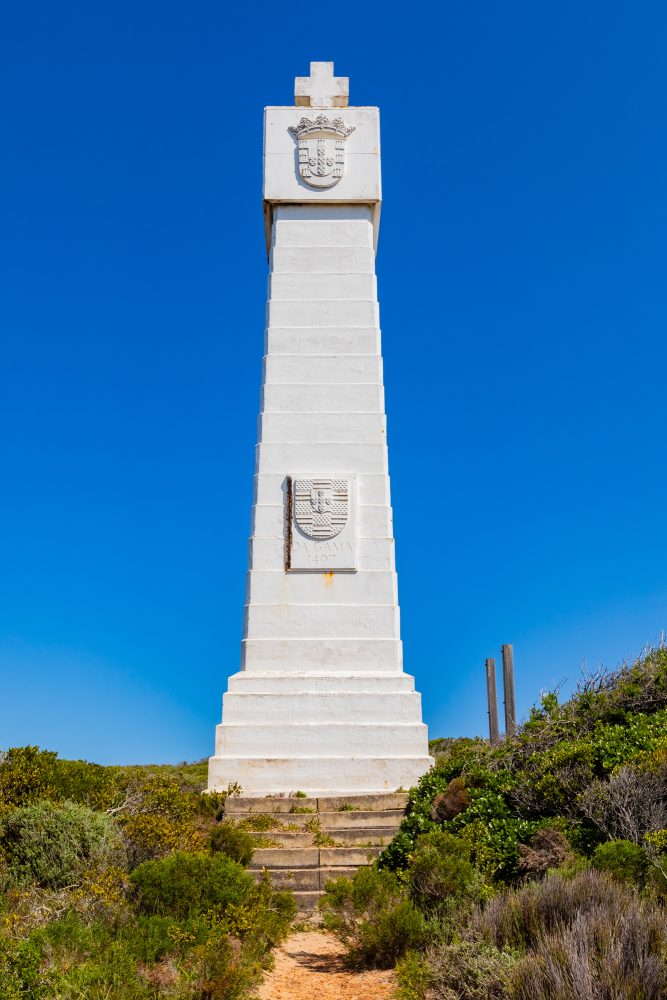
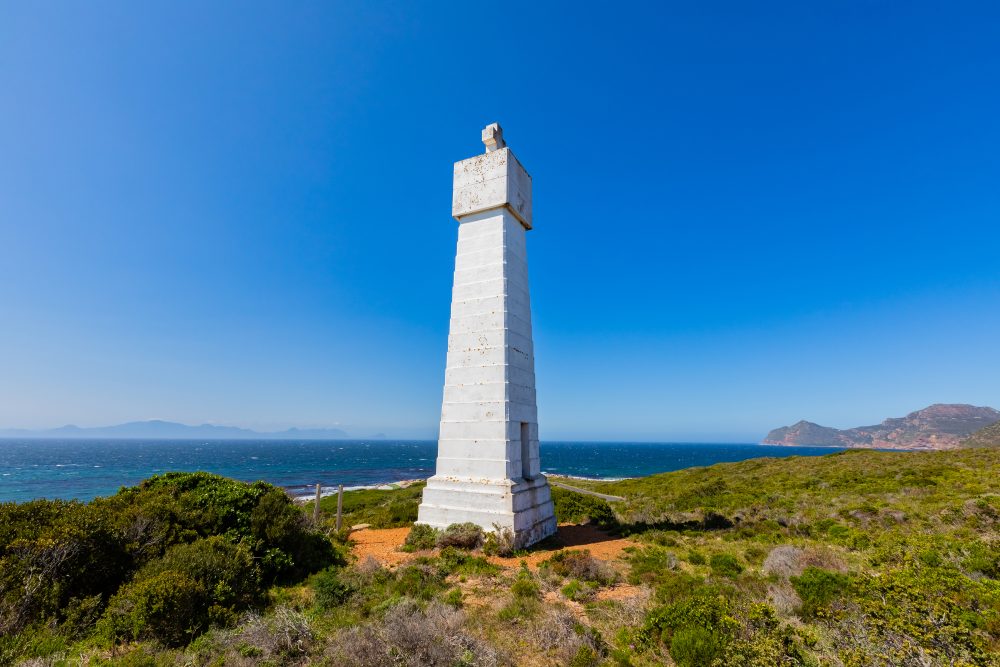

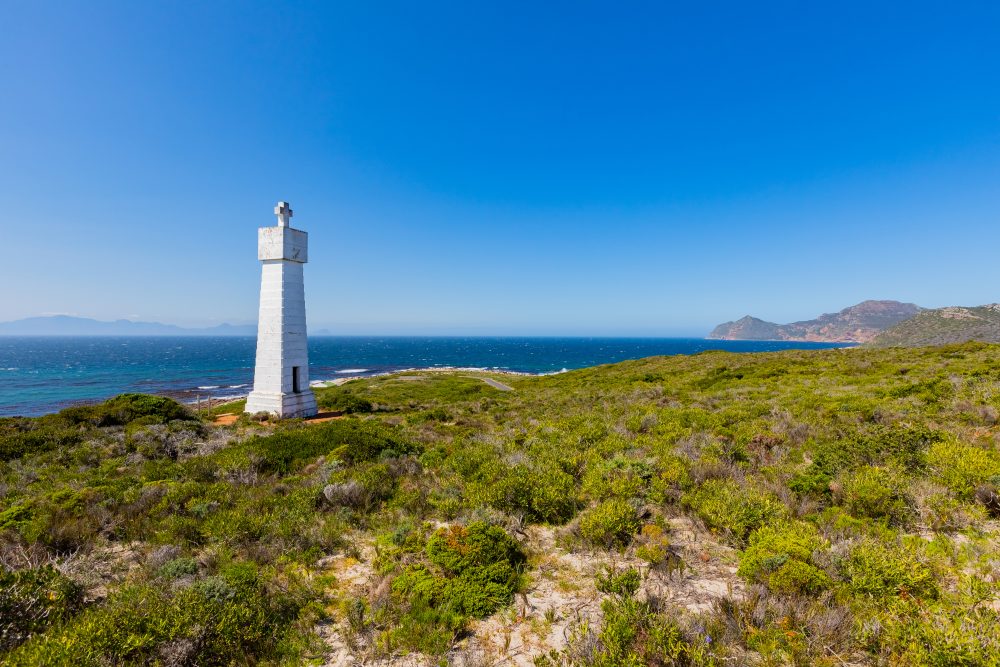
This is a monument built to commemorate the 1497 voyage of Da Gama, a Portuguese navigator and explorer. He is credited with the discovery of the Cape Peninsula, which led to the sea route from Europe to India being opened. It was originally used as a navigation marine beacon. The monument, located near the beach at Stompneus Bay in St Helena Bay where Da Gama is thought to have probably landed and came ashore on 8 November 1497, is defined by two sculpted stylised columns with the coat of arms of Portugal engraved and a single central column reflecting its maritime and historical symbolism. It was donated by the Portuguese government and was unveiled by the then Portuguese Adjunct Prime Minister, Dr Alfredo Vaz Pinto, on 8 November 1969.
The monument is easily visible from the shore and serves as a focal point for both historical commemoration and maritime navigation, linking exploration, maritime heritage, and coastal navigation. It is situated along a rocky coastline, surrounded by sandy beaches, low coastal vegetation, and the Atlantic Ocean. The area is influenced by marine weather patterns, including wind, waves, and salt spray, which shape both the natural landscape and the preservation conditions of the monument. The coastal setting provides a scenic backdrop that enhances the monument’s commemorative and interpretive value for visitors. There are other Vasco Da Gama memorials erected in other parts of South Africa, celebrating early European exploration and the cultural connections between Portugal and South Africa.
GPS Waypoints: 34°18'49.26"S 18°27'37.24"E