Agulhas Dune Field
These dynamic, wind-shaped dunes act as a vital ecological buffer. Rich in Holocene archaeological remains, they preserve a fragile record of ancient human adaptation and interaction with the shifting coastal environment.
These dynamic, wind-shaped dunes act as a vital ecological buffer. Rich in Holocene archaeological remains, they preserve a fragile record of ancient human adaptation and interaction with the shifting coastal environment.
These ancient limestone fish traps use tidal patterns for sustainable harvesting. Built by indigenous hunter-gatherers, they represent enduring engineering knowledge and a layered cultural history within the Agulhas landscape.
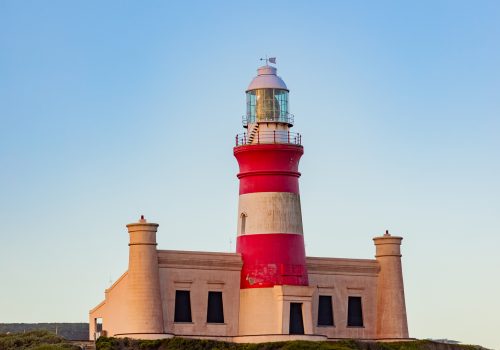
Built in 1848 from local limestone, this historic lighthouse marks Africa’s southernmost tip. Now a museum and engineering landmark, it guides mariners through treacherous waters where the two oceans meet.
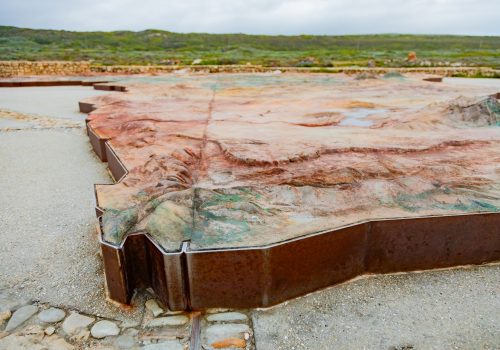
Located on the Agulhas coastal boardwalk, this stone map monument artistically represents the African continent. It blends heritage with nature, offering visitors a symbolic, reflective experience at Africa’s southernmost tip.
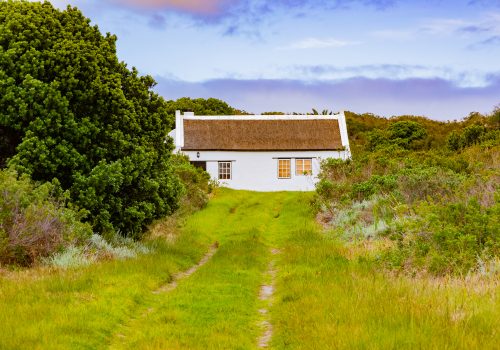
Originating in the 1740s, Rhenosterkop is a premier example of early colonial pastoralism. This former National Monument preserves the Strandveld’s agricultural heritage, marking a transition from informal grazing to structured governance.
These historic saltpans reflect South Africa’s early mineral industry. Once managed by the Dutch East India Company, the surviving factory and ponds illustrate how colonial economies harnessed natural evaporation cycles.
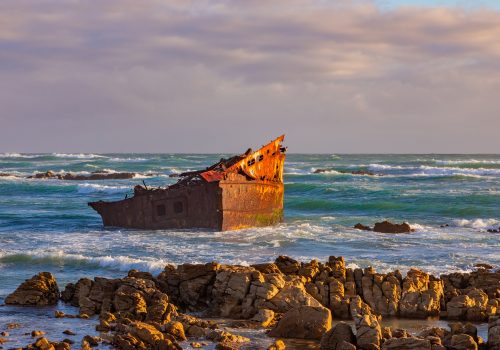
Centuries of maritime disasters define the Agulhas coastline, a treacherous trade route junction. Historic shipwrecks, preserved in museums and visible on shores, reflect evolving naval technology and the sea’s power.
Africa’s southernmost freshwater lake, Soetendalsvlei, was named by survivors of the 1673 Zoetendaal shipwreck. It provides essential ecological diversity and a historic narrative of survival within the Agulhas landscape.
SoetenSuur, named for its “sweet and sour” ecological mix, served as a vital outspan for shipwreck rescues. Its koffieklip architecture reflects a deep history of pastoralism and coastal movement.
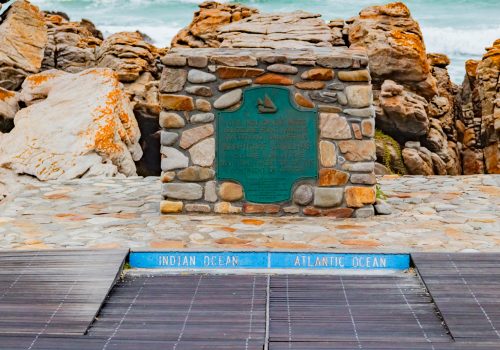
Marking the continent’s precise geographic end, this iconic stone cairn sits among rugged limestone and fynbos. It symbolises a historic maritime threshold where the Atlantic and Indian Oceans finally meet.