Skip to Content

Our Stories

World bee day shines the spotlight on pollinators and insects more broadly, and the important role of protected areas in conserving this immense diversity of organisms

19 May 2023

World bee day shines the spotlight on pollinators and insects more broadly, and the important role of protected areas in conserving this immense diversity of organisms

Insects have over the years been recognised for the important role they play in both natural and agricultural ecosystems in delivering provisioning services, such as pollination of food crops and provision of honey. However, their role in ecosystems also extends beyond pollination services, where they play an important role as pest controllers, waste decomposers and…

Read More

Levelling Up Monitoring Efforts Towards Saving Our Iconic African Penguin

15 May 2023

Levelling Up Monitoring Efforts Towards Saving Our Iconic African Penguin

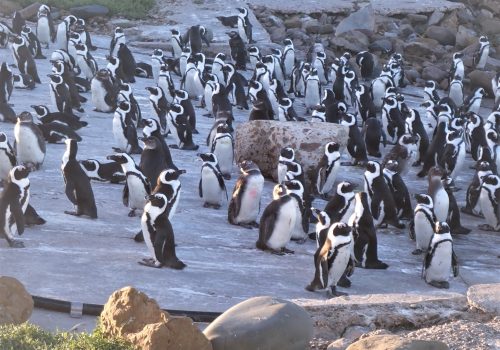
South Africa’s iconic African penguin population is in serious trouble. Once abundant in colonies along the west coast and Namibia, penguin numbers have been rapidly dwindling over the past century. Historically, this was due to extensive guano and egg harvesting, however recent declines have been attributed mainly to a shortage of food around their colonies….

Read More

MSc Scholarships Available for Research to support Climate Change Adaptation in South African National Parks

11 May 2023

MSc Scholarships Available for Research to support Climate Change Adaptation in South African National Parks

SANParks is pleased to announce the availability of MSc grants for student research on addressing climate change impacts in South African National Parks. This should focus on conservation of biodiversity, cultural heritage, and/or the services they provide to people. Research should have significant scientific value and produce results that are directly relevant to management of…

Read More

CRC staff pot poached plants

22 March 2023

CRC staff pot poached plants

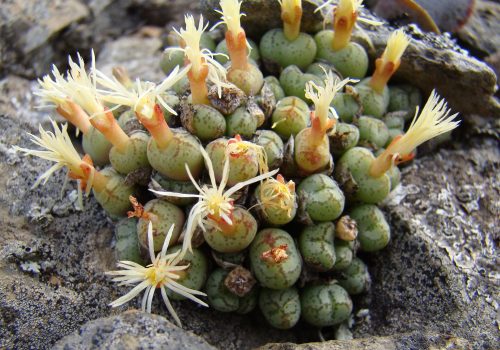
When you experience a crisis first hand, it sticks with you. On Wednesday the 8th of March, staff from the Cape Research Centre potted up many confiscated plants that were illegally collected from the dry interior of South Africa. Due to limited space and resources, many such uprooted plants have been waiting for a year…

Read More

Full Circle: My Path from Volunteering, to Interning, to becoming a Scientist

17 March 2023

Full Circle: My Path from Volunteering, to Interning, to becoming a Scientist

After four years of studying, I left Cape Town at the beginning of 2018 with two qualifications, a dream, and high hopes of kickstarting my journey as an Environmentalist. However, with high unemployment rates in South Africa and many graduates looking for work, finding a job after completing an Honours degree in Geography and Environmental…

Read More

A trip of a lifetime to Antarctic Sea ice

17 February 2023

A trip of a lifetime to Antarctic Sea ice

I was thrilled to learn that I was among ten applicants selected as SAPRI (South African Polar Research Institute) trainees to participate in the SCALE (Southern oCean seAsonaL Experiment) Winter research cruise in 2022. The opportunity for SAPRI trainees was made available by the South African Environmental Observation Network (SAEON), funded by the Department of…

Read More

Introducing the new ‘JRS’ project team

20 January 2023

Introducing the new ‘JRS’ project team

Five project staff have now been hired on the new project funded by the JRS Biodiversity Foundation. This project focusses on modernising SANParks’ biodiversity data management systems and mobilising data for management and policy use. This blog introduces the JRS project team, who are based at the four Scientific Services nodes and will be collating…

Read More

Wise management of ecological infrastructure for water security in the Garden Route

05 December 2022

Wise management of ecological infrastructure for water security in the Garden Route

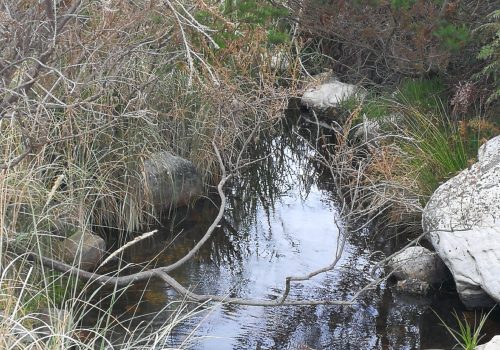
‘Ecological infrastructure’ (EI) refers to naturally functioning ecosystems that deliver valuable services to people. Examples of EI include mountain catchments, wetlands, riparian zones, coastal dunes, kelp beds and spawning grounds. EI is the nature-based equivalent of built infrastructure. However, unlike built infrastructure, EI already exists – we don’t have to build it. Like built infrastructure,…

Read More

  1. 1
  2. ...
  3. 14
  4. 15
  5. 16
  6. 17
  7. 18
  8. 19
  9. 20
  10. 21