Introducing the new ‘JRS’ project team
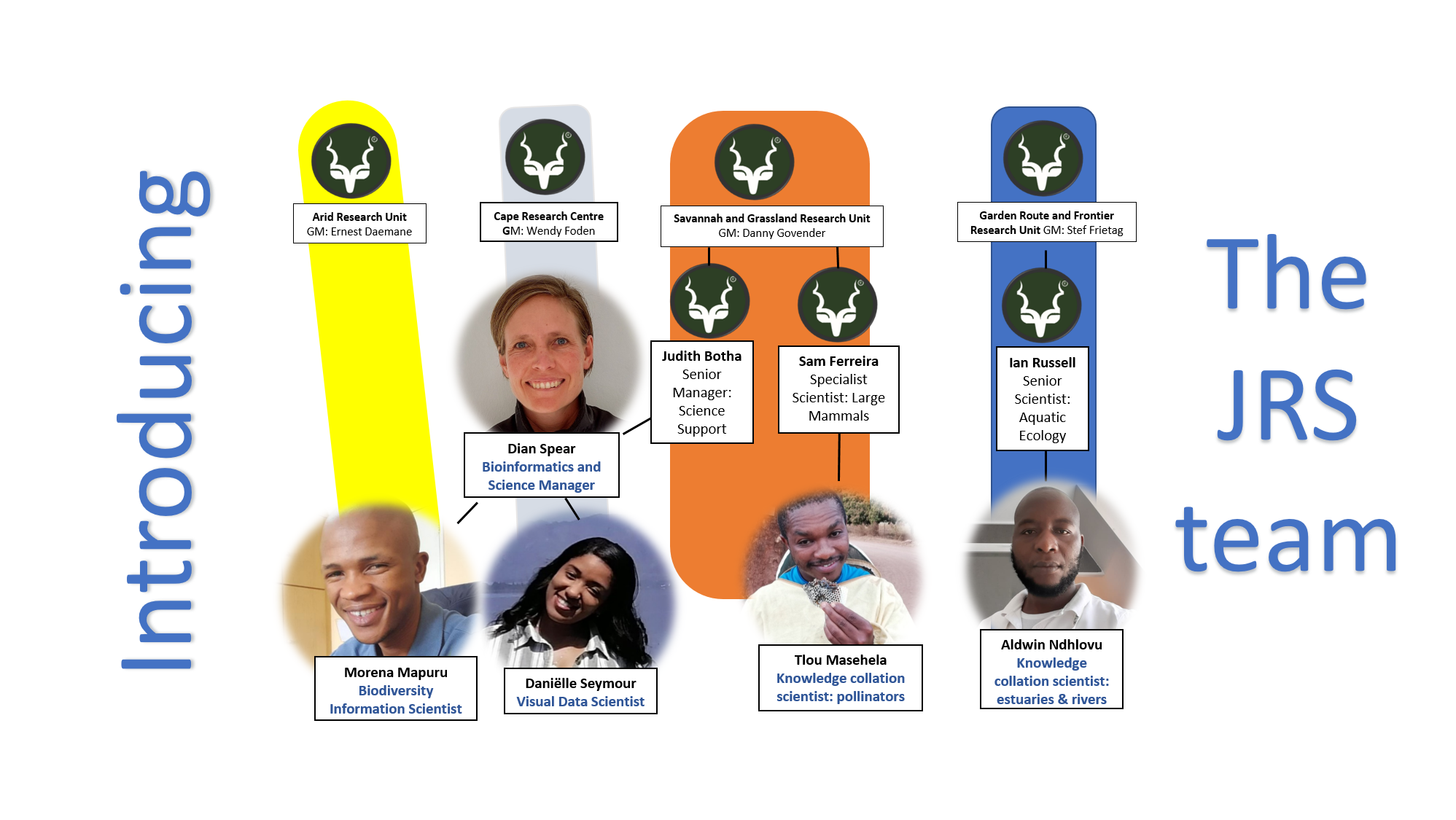
The JRS team is dispersed across all four nodes of Scientific Services.
Five project staff have now been hired on the new project funded by the JRS Biodiversity Foundation. This project focusses on modernising SANParks’ biodiversity data management systems and mobilising data for management and policy use. This blog introduces the JRS project team, who are based at the four Scientific Services nodes and will be collating knowledge and data from multiple parks across nodes.
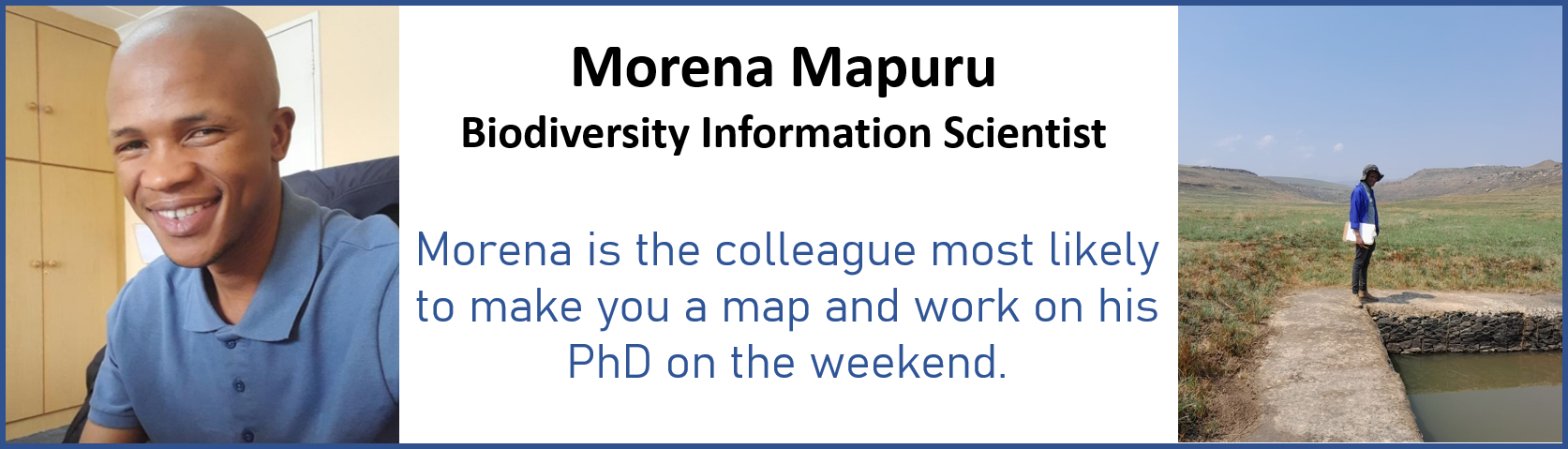
Morena started working on the project in October 2022 and is based in Kimberley at the Arid Research Node. He is a GIS and remote sensing enthusiast. He received his BSc in Geography and Environmental Geography and his BSc (Hons) in Geography from the University of the Free State (UFS). He later completed his MSc in Geography at the University of Pretoria. Morena’s MSc project aimed at understanding the determinants of aardvark (Orycteropus afer) burrow sites in Rietvlei Nature Reserve in Pretoria. He is currently enrolled for a PhD in geography at the UFS. He is inquisitive and has experience using geospatial software (ArcGIS Pro, ArcMap, QGIS, DIVA_GIS, and Maxent) and statistical programming languages (R Studio, Python, and Google Earth Engine).
Morena is responsible for managing species occurrence data for parks. This job involves data inventory, cleaning, curation and collation with a useful output being the creation of checklists for parks.
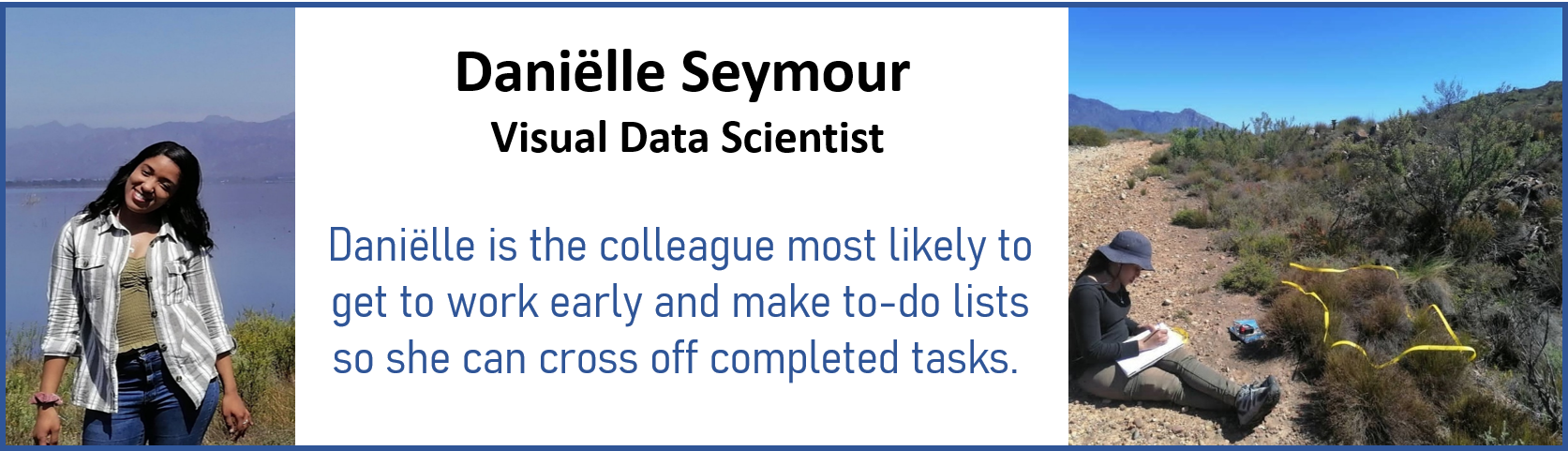
Daniëlle has been based in Cape Town at the Cape Research Centre since December 2022. She has a Master’s degree in Geographical Information Systems. Her thesis connected Remote Sensing imagery with detailed field work to enhance the understanding of spatial patterns of wetland vegetation types, wetland functioning and processes. She enjoys working with big data and organizing it into digestible easy-to-understand datasets for visualization, interpretation, and analysis. You will often find her with a laptop open organizing data or working on a map.
Daniëlle will be responsible for carrying out an inventory of visual datasets and their locations and developing a strategy and operational plan for capturing, storing, managing and analysing visual data across parks.
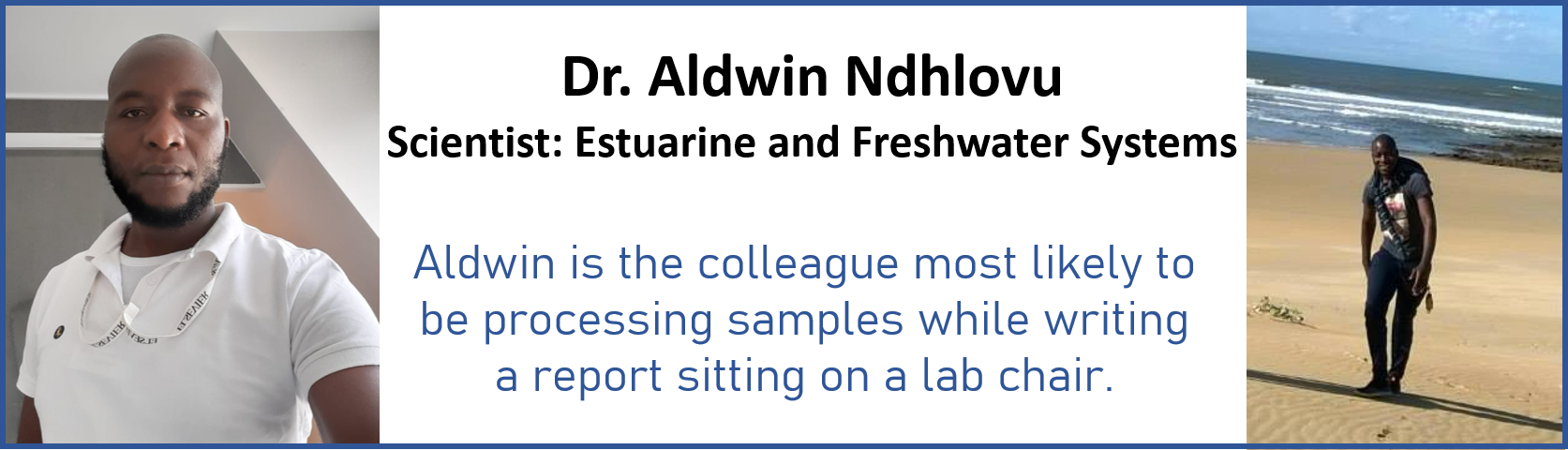
Aldwin has been based at the Rondevlei Office in the Garden Route since December 2022. He has a PhD and an MSc in Marine Biology from Rhodes University. He previously conducted research on heavy metal pollution in estuaries, looking at how heavy metals are transferred from lower in the food chain to higher trophic level organisms, such as fish, that can be consumed by humans. He has also done research on the distribution of endolithic cyanobacteria along the South African coast and how these endolithic cyanobacteria affect the energy budget of mussels, impacting their growth and reproduction. Aldwin enjoys fieldwork. In the past, you would find him on rocky shores and sand banks counting all the invertebrates that he could find.
Aldwin will be responsible for collating freshwater and estuarine data across parks, conducting literature review, identifying, reviewing and analysing SANParks’ datasets and developing reports to meet key management and policy needs.
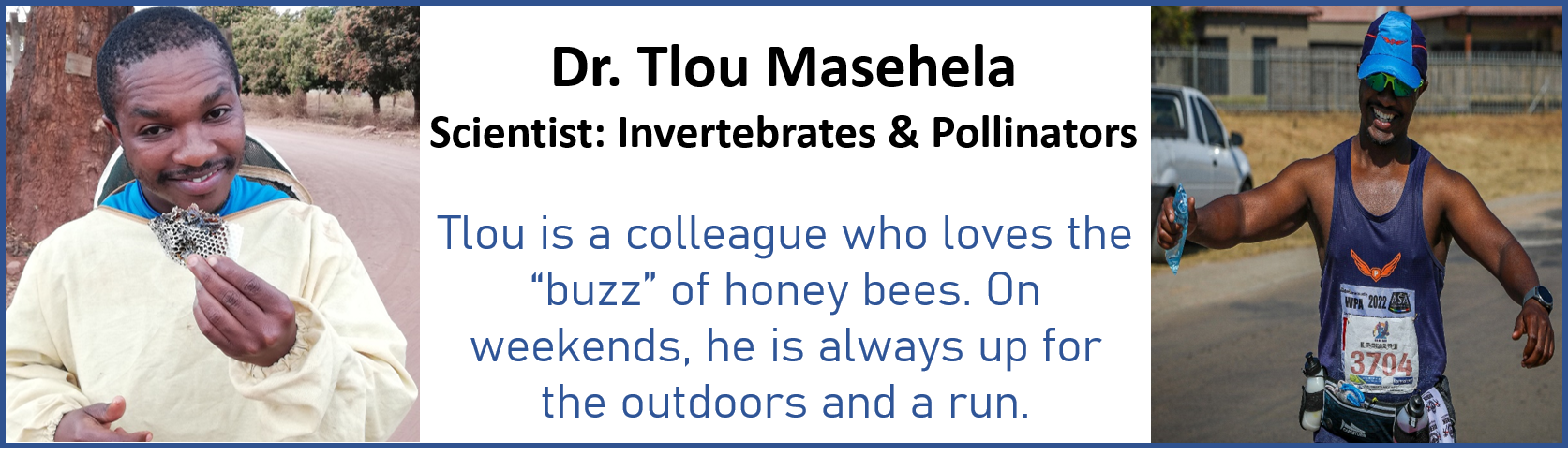
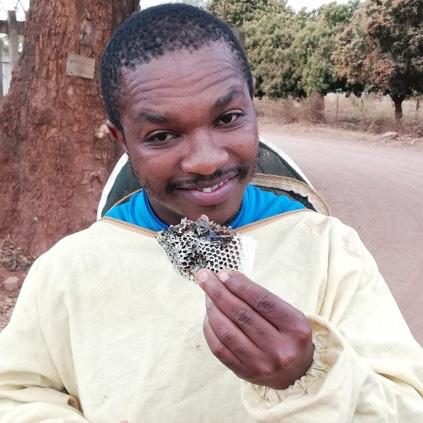
Tlou Masehela joined the Skukuza Scientific Services team in January 2023. He will be responsible for collating invertebrate and pollinator knowledge and data across parks.
Tlou holds a PhD in Entomology from Stellenbosch University. His other qualifications are in the field of Botany, with an ecosystem services research component. Tlou previously worked for the South African National Biodiversity Institute (SANBI) and was also in the Environmental Consultancy space for about a year. His previous work was more multidisciplinary, across both the environmental and agricultural sectors. The focus areas for his projects and research was pollinators, specifically honey bees and hoverflies, environmental impacts and monitoring, environmental risk assessments and various elements of biosafety for Genetically Modified Organisms, particularly maize, soybean and cotton. Tlou is passionate about insect pollination work and research that involves plant-insect interactions. He also enjoys working on policy instruments and has served on provincial and national working groups for assessments, frameworks, action plans and policy reviews.
The key objective of Tlou’s work is to produce a State of Knowledge report for invertebrates and pollinators across parks. His work will also cover key areas around identifying knowledge gaps, priority research areas, and ways to strengthen management and policy instruments within these groups.
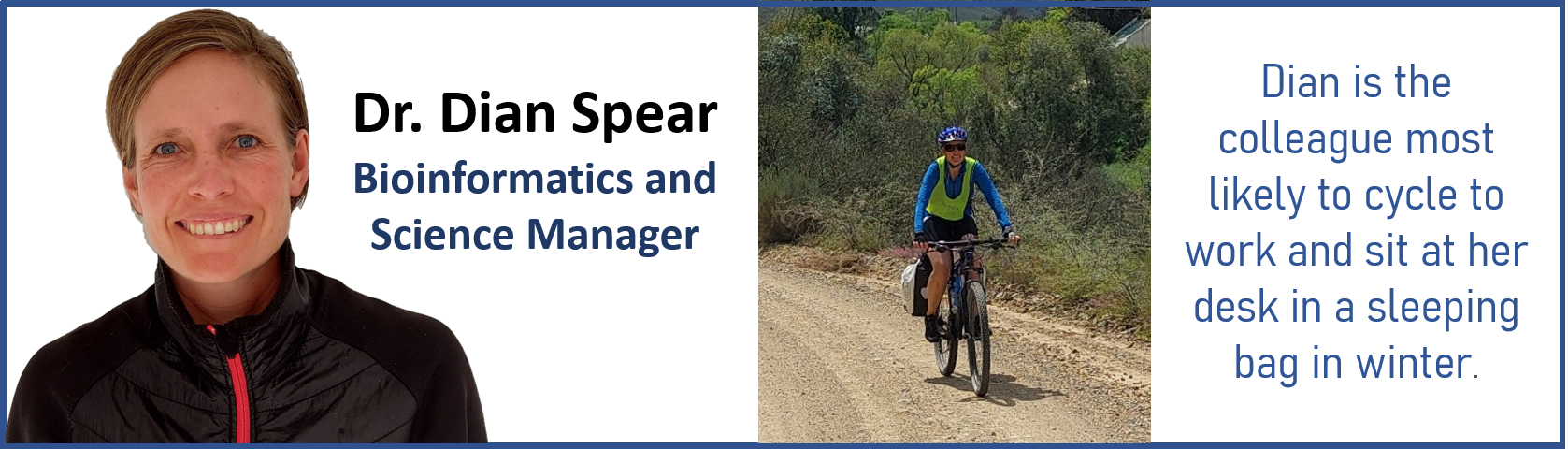
After working for a year as the Bioinformatics Officer on a previous project funded by the JRS Biodiversity Foundation, Dian was appointed as the Bioinformatics and Science Manager on the new JRS project to continue working towards collating, standardizing and sharing biodiversity occurrence data for national parks in South Africa. She is based at the Cape Research Centre in Cape Town.
Dian has a PhD in Zoology from Stellenbosch University and an MSc in Conservation Biology from the University of Cape Town. She previously conducted research on antelope translocations in the game industry, introductions of alien species and their impacts in South African national parks and countries globally, and the adaptation of society to climate change. She has also managed an inter-disciplinary research programme on adaptation to climate change in semi-arid regions, which included engaging with and communicating research findings and recommendations to policymakers, practitioners and small-scale farming communities.
Dian enjoys working with data in MS Excel and has learned lots of useful data management tricks that she’ll gladly share with you. She will be reporting to the project funders and making sure the project runs smoothly as well as working with software developers to develop tools to improve the management of SANParks’ biodiversity occurrence data.