Skip to Content

Our Stories

Practicing responsible and safe “otter etiquette”

08 November 2022

Practicing responsible and safe “otter etiquette”

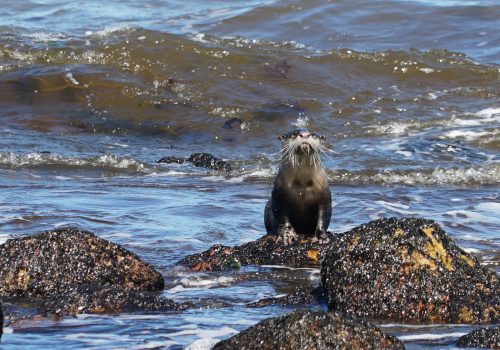
If you see an otter or an otter sees you or tries to interact with you, please move away from it. Give the otter a large area and keep a safe distance while taking photos and enjoying the privileged moment. This is for the sake of the otter and for preserving our wildlife. One of…

Read More

My internship journey during the Covid-19 pandemic

23 September 2022

My internship journey during the Covid-19 pandemic

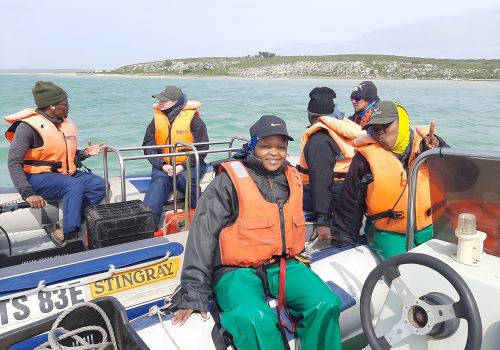
In January 2021, I received a phone call from SANParks to inform me that my application for the WWF Environmental Leader’s internship program was successful. I was excited to have landed an opportunity to work and get practical experience aligned with my academic background and career goals. I graduated with a Master of Science in…

Read More

The Ghosts of Table Mountain

21 September 2022

The Ghosts of Table Mountain

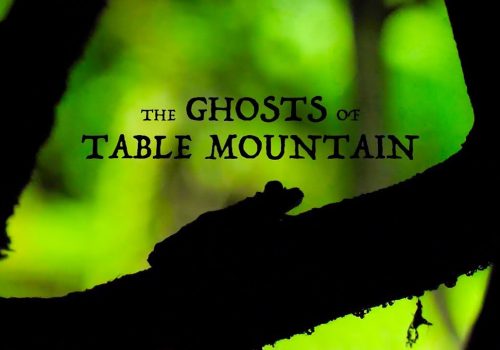
The short film, The Ghosts of Table Mountain, was recently released and stars SANParks’ very own Ruth-Mary Fisher. The film highlights the novelty and plight of the Critically Endangered Table Mountain ghost frog, Heleophryne rosei, and the collaborative effort that is being undertaken to restore the freshwater ecosystems that are critical to the ghost frog’s…

Read More

Invasive Alien Species in Kruger National Park: Ornamental plants

11 August 2022

Invasive Alien Species in Kruger National Park: Ornamental plants

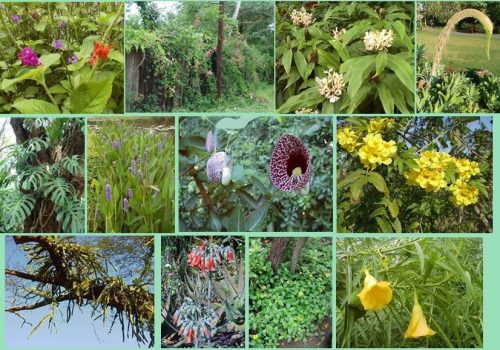
The future challenge in many areas of invasive alien plant control however lies in integrating biological, chemical, and other control operations, to maximise the benefit and cost effectiveness of overall control efforts. Management plans also now recognise the role that people have played in the introduction and spread of IAPs. One study showed that in…

Read More

Invasive Alien Species in Kruger National Park: Biological control

10 August 2022

Invasive Alien Species in Kruger National Park: Biological control

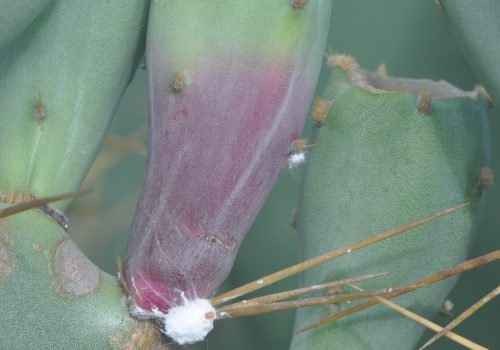
Classical biological control has also been used as one of the KNPs invasive alien plant management tools. Host specific insects are collected from the country of origin of the invasive alien plant and tested under quarantine conditions to be specific to the host/ target alien plant, and, if successful, are approved for release by relevant…

Read More

Invasive Alien Species in Kruger National Park: Control Efforts since the 1980s

20 July 2022

Invasive Alien Species in Kruger National Park: Control Efforts since the 1980s

In 1985 ten species were thought to have been successfully eradicated, with the eradication of a further 14 species considered possible. However, one of these plants was again found in Skukuza as recently as 1998, 17 years after its ‘eradication’, thus illustrating that ongoing control efforts are often needed for many years. Whether failure to…

Read More

A boon for biodiversity data management at SANParks

03 June 2022

A boon for biodiversity data management at SANParks

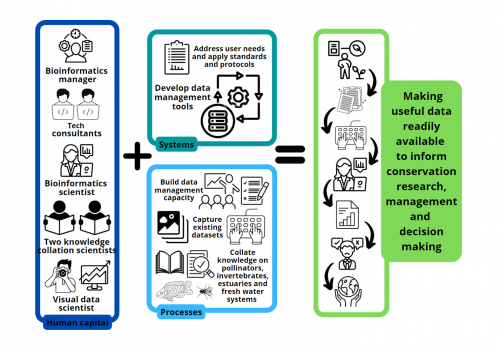
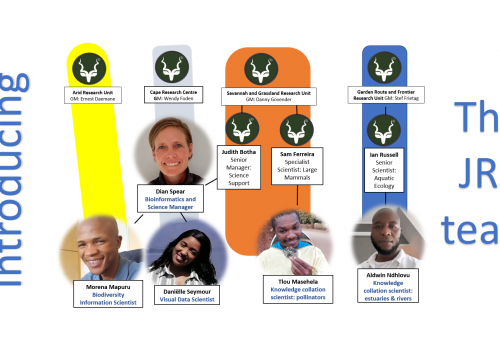
The JRS Biodiversity Foundation has awarded SANParks a grant extension of US$ 498,100 (~R 7,500,000) to expand existing bioinformatics work. This grant builds on good biodiversity data foundations in SANParks, enabling a transition to the digital data commons. It will allow access to the latest software and interfaces to improve knowledge collation and data sharing…

Read More

Fire as friend and foe: what the public needs to know

30 March 2022

Fire as friend and foe: what the public needs to know

The media often portrays fires in and around our national parks with pictures of roaring blazes and firefighters. These stories convey loss, destruction and threat to vegetation, property and human life, and a goal of suppressing fires at all cost. But fires are also natural and vital components of these ecosystems. Fire will continue to…

Read More

Spotted grunter spawning aggregations observed in Knysna Estuary

28 March 2022

Spotted grunter spawning aggregations observed in Knysna Estuary

It has been generally accepted that many marine fish species, including spotted grunter, make annual migrations from the southern Cape up into KwaZulu-Natal (KZN) waters to reproduce. This tactic has advantages in that the eggs and larvae can develop in warmer waters whilst the Agulhas current transports them back down the coastline and into more…

Read More

  1. 1
  2. ...
  3. 14
  4. 15
  5. 16
  6. 17
  7. 18
  8. 19
  9. 20
  10. 21