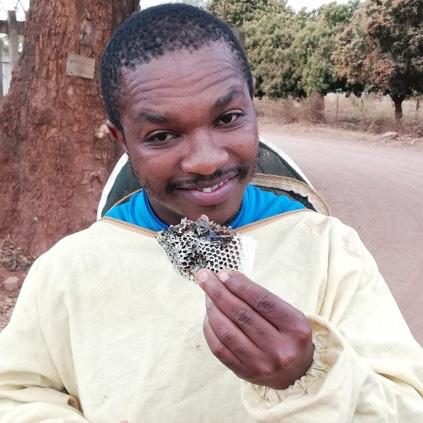
World bee day shines the spotlight on pollinators and insects more broadly, and the important role of protected areas in conserving this immense diversity of organisms
Insects have over the years been recognised for the important role they play in both natural and agricultural ecosystems in delivering provisioning services, such as pollination of food crops and provision of honey. However, their role in ecosystems also extends beyond pollination services, where they play an important role as pest controllers, waste decomposers and recyclers, and as food sources to other fauna. Among the group of recognised beneficial insects, honeybees (Apis mellifera Linnaeus 1758), have become the centre of attention, given their presumed disproportionate importance in agricultural crop pollination and human food security. More recently, however, research has shown that the majority of the food crops we rely on are primarily dependent on animal pollinators. In fact, about 75% of the world’s flowering plants and approximately 35% of the world’s food crops depend on animal pollinators to produce.
While most credit for insect-led pollination has gone to honeybees, research has also shown that the pollination of most crops is also done by other native bees (yes, not all bees produce honey!) and insects. However, honeybees have claimed the title of being the most widely used and effective pollinator of crops, and this is evident given the economic contribution worldwide of the different crop commodities which they pollinate.

Butterflies are also an important pollinator species for flowering plants (photo by Tlou Masehela)
In 2018, the efforts of the Government of Slovenia with the support of Apimondia, led the United Nations (UN) General Assembly to declare 20 May as World Bee Day. Since then, World Bee Day is observed each year, with the aim to raise awareness on the essential role bees and other pollinators play in keeping people and the planet healthy, and on the many challenges they face in our current world. The day was chosen to honour the late Slovenian beekeeper, Anton Janša. Through extensive research globally, we have now begun witnessing reports of how bees, pollinators, and many other insects are declining in abundance. The threats and stressors impacting their survival are also multifaceted, and act often in concert. Among the leading documented threats to insect populations are habit loss and destruction, pesticide use, pests, pathogens, diseases, and various impacts of climate change. These threats, affect and impact on various insect groups differently, depending on their biology, presence, and interaction in the different environments or landscapes. In most instances, it is widely reported that the hard knock-on effects are those landscapes with competing lands uses often linked to development for industrial activities, human settlement, and agricultural activities.
So where can our insects (pollinators) find refuge? Through various research programmes, governments, organizations, civil society groups, and citizens are rallying behind initiatives to create awareness and promote actions that will protect pollinators, and improve their population numbers and diversity, as well as protect the habitats they rely on for survival. In some instances, refuge areas are being created and promoted in urban green spaces, including public parks and home gardens. However, these areas are also often at the periphery of increasingly less hospitable landscapes, increasing the need to find alternatives that would contribute long term to ensuring insect populations survival.
Globally, Protected areas (PAs) are established and maintained to strategically protect biodiversity and its ecosystem services. In essence, PAs are a mechanism towards helping to maintain key habitats, provide refugia, maintain species genetic diversity, facilitate species migration, and protect threatened and endangered species (populations). A recent study by Chowdhury and colleagues, revealed that PAs have not adequately recognised or studied the role they play in insect conservation. In fact, they highlight that though PAs have mainly been designated towards protecting vertebrates and plants, they may have inadvertently provided refuge for a large diversity of insects.
Already, research in most countries is starting to focus extensively towards understanding insect (pollinator) statuses, trends and habitat requirements. Since PAs offer vast tracts of natural habitat, representing all the major biomes, with diversity of nesting sites and forage resources, they could contribute directly to the conservation and protection of various insect groups. These areas can also serve as buffers and barriers against harsher man-made threats, including polluted and degraded landscapes, through well managed and monitored conservation practices. Protected areas can therefore, through adequate regulations, management plans and practices, serve as good refuge for the successful conservation of natural habitats that maintains and enhances the diversity and abundance of our insect populations, and with it the immense contribution they make to ecosystem services.
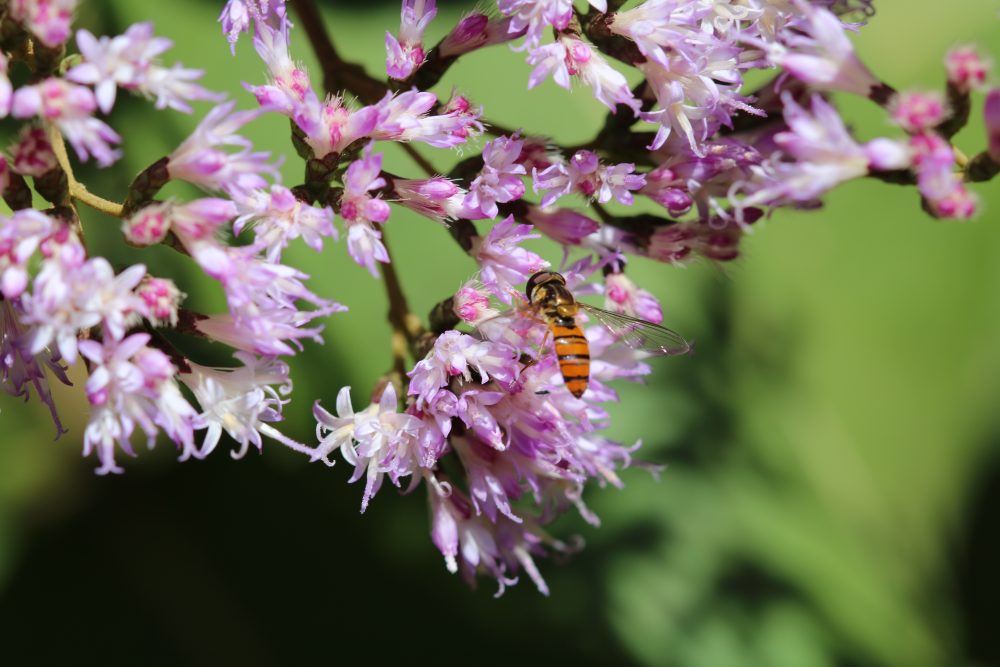
Hoverflies visit and pollinate many flowers in our gardens and surrounding natural vegetation (photo by Tlou Masehela)
Further Reading
- Convention on Biological Diversity. Post-2020 Global Biodiversity Framework
- FAO. World Bee Day. 20 May
- Goulson, D., 2019. The insect apocalypse, and why it matters. Current Biology, 29(19), pp.R967-R971
- Hill, D.S., 2012. The economic importance of insects. Springer Science & Business Media
- Siviter, H., Fisher, A., Baer, B., Brown, M.J.F., Camargo, I.F., Cole, J., Le Conte, Y., Dorin, B., Evans, J.D., Farina, W. and Fine, J., 2023. Protecting pollinators and our food supply: understanding and managing threats to pollinator health. Insectes Sociaux, pp.1-12