Skip to Content

Our Stories

Kruger National Park, more than just the large and hairy

06 October 2023

Kruger National Park, more than just the large and hairy

For many visitors, a trip to the iconic Kruger National Park (KNP) is all about the herds of large game, impressive landscapes and of course, spotting the Big Five. Recounting the trip’s first lion sighting around the evening braai, whilst hyenas call from the other side of the camp fence, is all part of the…

Read More

SANParks staff get trained by iNat guru

29 September 2023

SANParks staff get trained by iNat guru

iNaturalist is an invaluable resource to South African National Parks. It provides a treasure trove of visual and digital data that is available at our fingertips. At a time of budget cuts to conservation organisations leading to lower budgets available for monitoring and data collection and collation, iNaturalist is something that we should be making…

Read More

The thunderbird is trending thanks to citizen science

29 September 2023

The thunderbird is trending thanks to citizen science

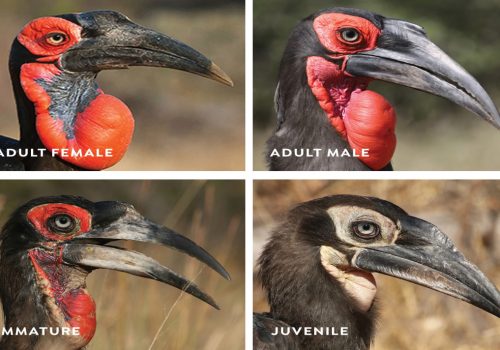
Long-term monitoring of the southern ground hornbill population in Kruger National Park (KNP) started in 1969. More recently,  citizen science has been at the forefront of this monitoring project.  Current data suggest that 180 breeding southern ground hornbill groups are occupying 88% of KNP, making it the largest population in South Africa. A new monitoring…

Read More

Global Assessment on Invasive Alien Species and their Control – Effective Management of Invasive Alien Species in Protected Areas is Possible

29 September 2023

Global Assessment on Invasive Alien Species and their Control – Effective Management of Invasive Alien Species in Protected Areas is Possible

Invasive alien species are one of the top five threats to biodiversity, including threatened and endangered species and ecosystems. Protected areas and national reserve systems, therefore, become critically important from an invasive alien species management perspective. The first global Assessment on Invasive Alien Species and their Control by the Intergovernmental Science-Policy Platform on Biodiversity and…

Read More

Endangered and rare butterflies and moths of the Garden Route

29 September 2023

Endangered and rare butterflies and moths of the Garden Route

Taxonomic knowledge is an important component of biodiversity conservation. However, expertise for specific groups, including invertebrates, is limited within SANParks. Various national and international institutions and organisations, including individuals in their personal capacity, who conduct research within national parks assist in filling this knowledge gap and greatly supplement our capacity. Dr Dave Edge, South African…

Read More

Cape honeybees kill African penguins in a bizarre incident

22 September 2023

Cape honeybees kill African penguins in a bizarre incident

Sixty-five endangered African penguins mysteriously died overnight at Boulders African Penguin colony. Excellent sleuthing skills combined with specialist attention to detail and knowledge found the unlikely cause to be death by bee stings. The incident highlights the value of collaborating with specialists and veterinarians. At sunrise on Friday, 17 September 2021, a group of dead…

Read More

Discovering the Cape Floral Region Protected Areas World Heritage Site: A Closer Look at Table Mountain National Park

21 September 2023

Discovering the Cape Floral Region Protected Areas World Heritage Site: A Closer Look at Table Mountain National Park

UNESCO World Heritage Sites are more than just remarkable places; they are treasures of humanity that hold exceptional cultural and/or natural value. These sites are globally recognized and protected, with the aim of preserving their cultural and natural significance for present and future generations. They signify our shared heritage, showcasing the diverse beauty and importance…

Read More

Understanding shark movements: The spatiotemporal distribution of white sharks has implications for interactions with fisheries and spatial management

15 September 2023

Understanding shark movements: The spatiotemporal distribution of white sharks has implications for interactions with fisheries and spatial management

One-third of the world’s sharks, rays, and chimaeras are threatened with extinction according to IUCN Red List criteria, primarily due to fishing pressure. These iconic species are essential for maintaining the structure and function of marine ecosystems, have high cultural and societal value and contribute significantly to the global economy, mainly through tourism. By combining…

Read More

The effect of adjacent vegetation on fire severity in Afrotemperate forest along the southern Cape coast of South Africa

11 September 2023

The effect of adjacent vegetation on fire severity in Afrotemperate forest along the southern Cape coast of South Africa

Closed-canopy forest often occurs within a matrix of fire-prone biomes, such as fynbos, shrubland or grassland, as patches or pockets that are less exposed to fire. These forest pockets typically occur in ravines and other topographical positions in the landscape that are protected from fires driven by desiccating bergwinds. The aim of this study was…

Read More

The rediscovery of Disa newdigateae in the Garden Route

11 September 2023

The rediscovery of Disa newdigateae in the Garden Route

Disa newdigateae was recently rediscovered in the Garden Route National Park, after it had been presumed to be extinct. Someone posted a picture of an unknown orchid on Facebook. Marthinus Vosloo, an orchid enthusiast, mountain explorer, all round nature lover and CREW (The Custodians of Rare and Endangered Wildflowers) volunteer, saw the post. He went…

Read More

Hiding in plain sight

04 September 2023

Hiding in plain sight

We live on an increasingly urban planet. More than half of all people live in urban areas, and urbanisation is a major threat to biodiversity globally. However, cities can still support permanent wildlife communities. Cities offer rich sources of food, and if a species is a risk-taker they can thrive in these highly transformed and…

Read More

  1. 1
  2. ...
  3. 12
  4. 13
  5. 14
  6. 15
  7. 16
  8. 17
  9. 18
  10. 19
  11. 20
  12. 21