Wise management of ecological infrastructure for water security in the Garden Route
‘Ecological infrastructure’ (EI) refers to naturally functioning ecosystems that deliver valuable services to people. Examples of EI include mountain catchments, wetlands, riparian zones, coastal dunes, kelp beds and spawning grounds. EI is the nature-based equivalent of built infrastructure. However, unlike built infrastructure, EI already exists – we don’t have to build it. Like built infrastructure, EI needs to be managed, maintained and in some cases restored.
In South Africa, a well-demarcated example of EI is the country’s Strategic Water Source Areas (SWSAs). SWSAs are those areas that supply a disproportionately high amount of surface runoff in relation to their surface area. South Africa’s SWSAs make up only 10% of the country’s land area but provide 50% of the mean annual runoff, which in turn supports at least 50% of South Africa’s population and 60% of its economy. As such, SWSA make a critical contribution to water security in South Africa. However, only 13% of these areas enjoy formal protection.
Protecting water source areas is a cost-effective means of keeping contaminants out of drinking water and delivering a continued supply of good quality water to downstream users. The importance of protecting these areas for enhancing water quality and quantity has been recognised worldwide. For example, in Australia the city of Melbourne set certain catchments aside exclusively for water harvesting more than 100 years ago. These protected catchments are closed to the public and commercial activities (e.g. logging), which prevents contamination of water and consequently Melburnians enjoy some of the highest quality and most affordable drinking water in the world. Similarly, New York City saves millions of dollars on water treatment by ‘importing’ (through a system of underground tunnels) clean water from well protected catchments in the Catskill Mountains some 150 km north of the city. In a further example dating back to the 1960s, the city of Seattle took full ownership of the Cedar River Catchment that provides 70% of the drinking water to 1.4 million people in the greater Seattle area. They took care to restore natural habitats and even decommissioned the Milwaukee railway line through the catchment to promote good quality and quantity of water from this source.
In the Garden Route, both the Outeniqua and Tsitsikamma Mountains form part of South Africa’s SWSAs. Along the Garden Route, water security of a number of towns (e.g. George, Knysna and Plettenberg Bay) is highly dependent on water draining from these mountains, often via a single river per town (e.g. Swart, Touws and Keurbooms-Palmiet rivers). The associated drainage areas or catchments are essentially the ‘water factories’ that provide the quality and quantity of water to supports downstream communities and economies. Unfortunately, due to a lack of policy coherence across departments and policy sectors, several land uses (e.g. urban development, agriculture, plantation forestry and conservation) often compete in the same water source areas, which will inevitably result in trade-offs between long-term water security and other developmental goals.
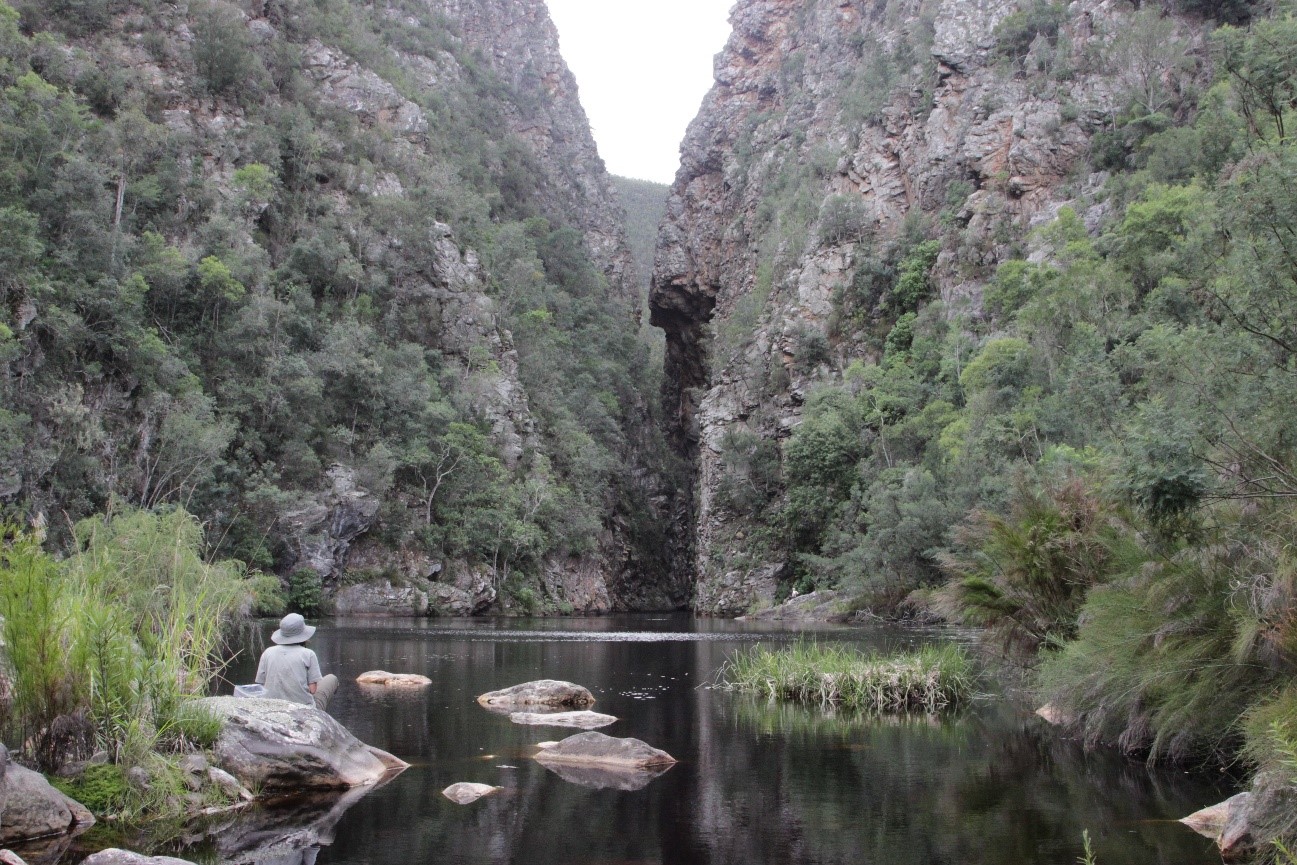
“Die Kosyn”, a narrow gorge where the Palmiet River flows through the Tsitsikamma Mountains. Almost the entire catchment of the Palmiet River falls within the Garden Route National Park, where natural fynbos vegetation is protected and invasive alien trees cleared. As a result, the Palmiet River Catchment represents well-maintained ecological infrastructure that can contribute a steady supply of clean water to downstream users, including the Keurbooms Estuary and the people as well as the economy of Plettenberg Bay.
Considering the current influx of people to the Garden Route, combined with the likely impacts of climate change, safeguarding limited freshwater resources for future water security should be of the highest priority to local government. The most straightforward and cost effective step for doing this is through protection of the Garden Route’s SWSAs and wise management of associated EI, especially the drainage areas of rivers that provide water for people and the economy. Based on good practice examples from around the world, wise management of these strategically important EI would start with protecting and restoring natural vegetation. Restoration should include the eradication of alien trees such as pines and Black Wattle, which have been shown to increase evapotranspiration and reduce stream flows relative to native vegetation.
For example, a recent South African study showed a 15-30% increase in available surface water resources after clearing of mature infestations of alien trees. Furthermore, it would be wise to prohibit any development or land use that might modify natural infiltration and drainage of rainwater runoff, or cause contamination of water in streams. Such protection and maintenance of water-providing ecological infrastructure could well be the best future insurance for sustainable living in the Garden Route.

The upper reaches of the Knysna River flows through the Garden Route National Park. Here the riverine ecological infrastructure produces and transports high-quality water for downstream use by the people of Knysna and to help keep Knysna Estuary healthy. Further downstream, however, various land uses have modified the riparian zone of the river, decreasing its ability to filter out sediments and other contaminants from catchment runoff.
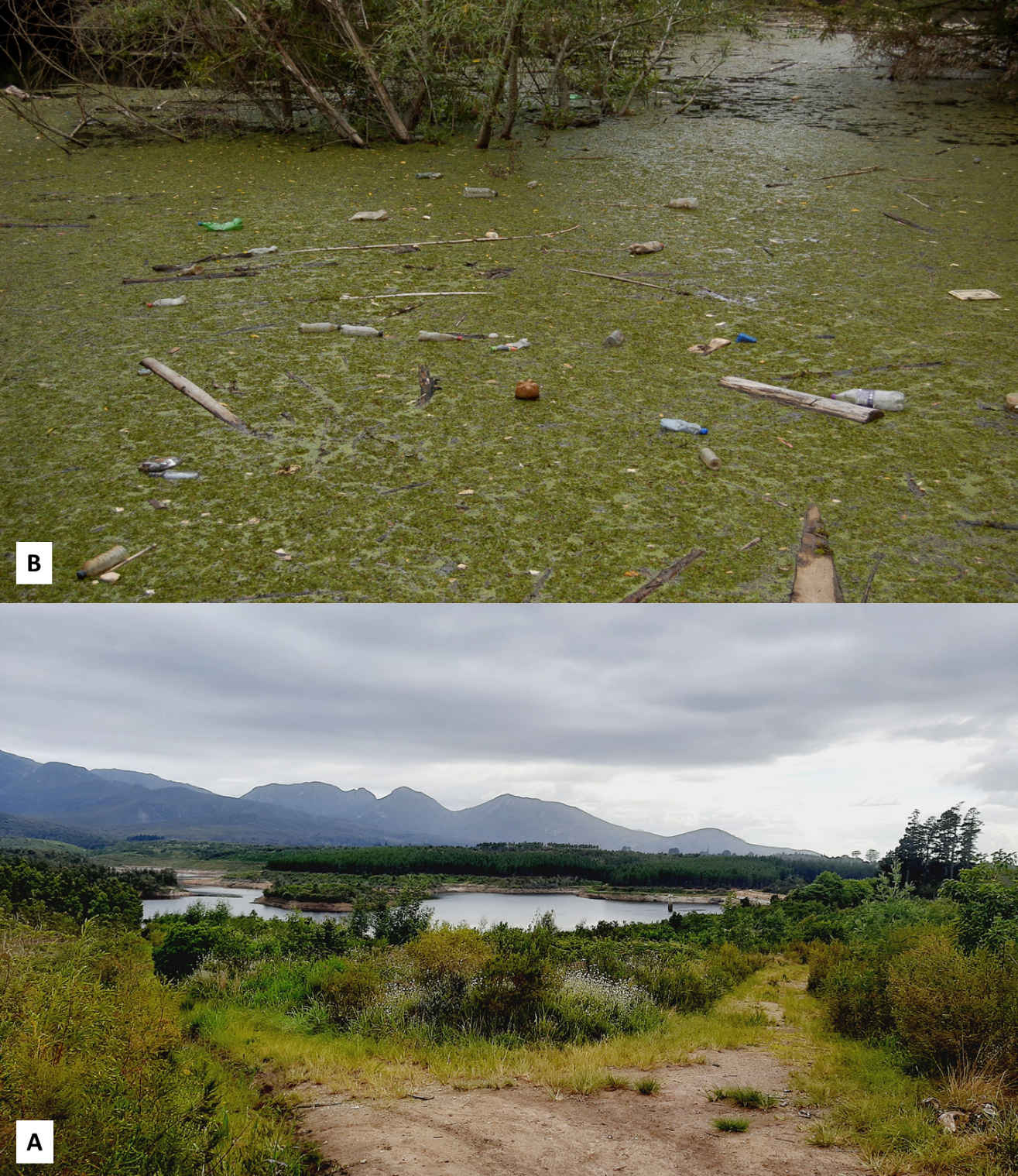
The dropping water level of Garden Route Dam (photo A) has led to public concerns and water restrictions. In the background (photo A) is the Outeniqua Mountain, a Strategic Water Source Area that supplies the dam with water. In this way, ecological infrastructure and built infrastructure can work together. However, not all of the Garden Route Dam’s catchment area (or supporting ecological infrastructure) is protected. Alien pine trees (e.g. behind the dam in photo A) compete with humans for runoff in the catchment, and pollution in the Kat River (photo B) impact on the quality of the water in the dam.
Further reading
- Rebelo, A.J. et al. 2022. The hydrological impacts of restoration: A modelling study of alien tree clearing in four mountain catchments in South Africa. Journal of Hydrology 610, p.127771. https://doi.org/10.1016/j.jhydrol.2022.127771
- Nel, J.L. et al. 2017. Strategic water source areas for urban water security: Making the connection between protecting ecosystems and benefiting from their services. Ecosystem Services 28: 251–259. http://dx.doi.org/10.1016/j.ecoser.2017.07.013
