Skip to Content

Our Stories

Exploring the biodiversity of the Grasslands National Park

23 March 2022

Exploring the biodiversity of the Grasslands National Park

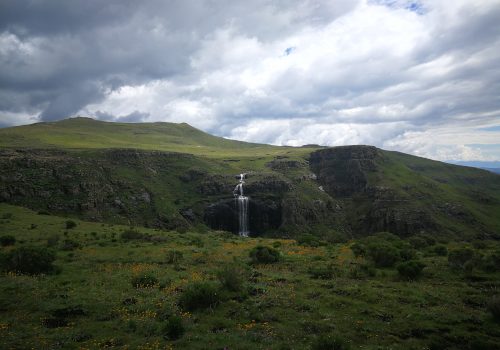
In a remote mountainous area south of Lesotho, lies an amazing piece of South Africa, home to impressive biodiversity and landscapes, waiting to be discovered. Covering about 30 000ha, the soon to be proclaimed national park brought together a group of specialists from various taxonomic fields and institutions for a week. Besides admiring the gorgeous…

Read More

Redefining “provisioning” in marine wildlife tourism

05 July 2021

Redefining “provisioning” in marine wildlife tourism

What does “provisioning” mean? It turns out it is often misused when discussing marine wildlife tourism. This paper proposes a new framework and language to describe the type of attractant used in common tourism operations. Studies focused on wildlife tourism are increasing, but the words used to describe the attractant can be confusing. For example,…

Read More

New ‘old’ species discovered in the Garden Route Afrotemperate forests

15 April 2021

New ‘old’ species discovered in the Garden Route Afrotemperate forests

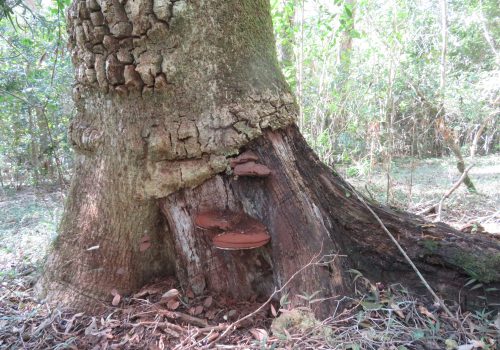
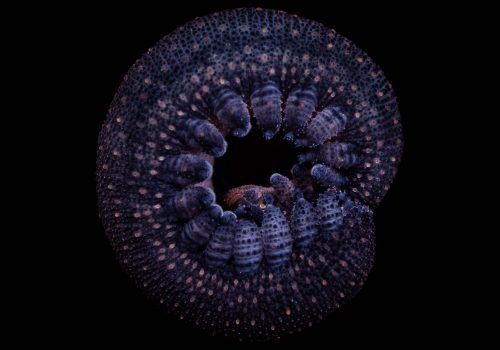
South Africa has two genera of velvet worms – Peripatopsis occurring mainly in the Cape and Opisthopatus, occurring in the north-east of the country. They are nocturnal predators, ambushing other invertebrates with sticky slime squirted from a pair of specialised glands on their heads. A recent study of Cape velvet worms by Stellenbosch University researchers…

Read More

Temporary pans of Gras- and Holpan: Rapid burst of life

29 March 2021

Temporary pans of Gras- and Holpan: Rapid burst of life

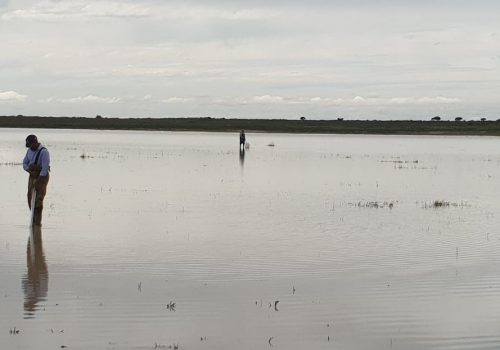
The Gras-Holpan section of Mokala National Park, is an almost 5000 ha piece of wilderness situated about 30 km outside of Kimberley. The park has unique vegetation because it is situated in an area where savanna meets Nama-karoo and on top of that, the area has some interesting wetlands in the form of ephemeral pans….

Read More

Counting Kruger’s rhinos

15 March 2021

Counting Kruger’s rhinos

Numbers of animals are often of interest and importance for conservationists and the public. Trends in numbers are key indicators of conservation effectiveness. There are numerous ways to determine how many individuals of a species live in a park at a specific time, including aerial surveys, call-up surveys, dung counts and camera trapping. In smaller…

Read More

International Collaboration Teaches the Importance of “Correct” Fire

12 March 2021

International Collaboration Teaches the Importance of “Correct” Fire

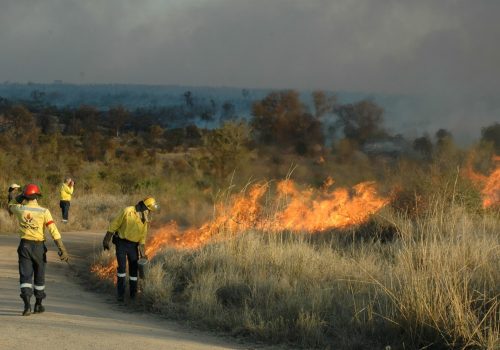
An article, led by Dr Adam Pellegrini from the University of Cambridge, was recently published in Nature (Ecology and Evolution) that considered global effects of long-term frequent fire on woody communities and traits. The experimental burn plots from Kruger National Park formed part of the sites used in the study. I started studying fire in…

Read More

Invasive Alien Species in  Kruger National Park: Early Records and Concerns

03 March 2021

Invasive Alien Species in Kruger National Park: Early Records and Concerns

The KNP, while a large conservation area under protection for the last century, has not escaped the increase in numbers of alien species. Only two accounts provide information on the intentional introduction of alien plants to the area that is now the KNP, before 1900. One was the planting of Spanish or giant reed (Arundo…

Read More

  1. 1
  2. ...
  3. 14
  4. 15
  5. 16
  6. 17
  7. 18
  8. 19
  9. 20
  10. 21