Skip to Content

Our Stories

Veterinary Wildlife Services’ research highlights

09 November 2023

Veterinary Wildlife Services’ research highlights

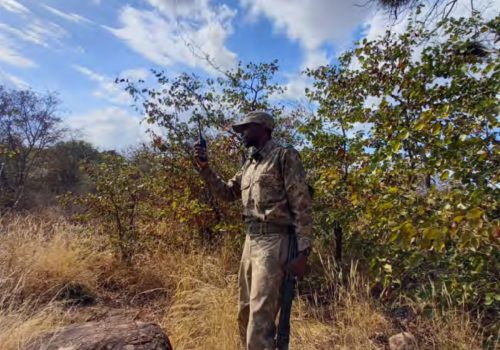
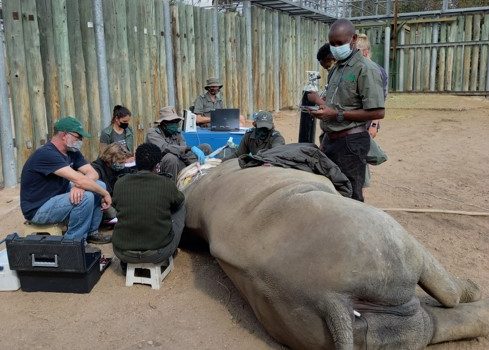
The function of Veterinary Wildlife Services within SANParks ranges from hands-on treatment of animals to being involved in field studies, that cover fields in disease epidemiology, immobilisation drugs, development of diagnostic tests, and establishing blood reference values for wildlife species. Veterinarians, veterinary technicians, and the capture team in Kruger National Park (KNP) keep busy immobilising…

Read More

The ecological importance of brown locust outbreaks

07 November 2023

The ecological importance of brown locust outbreaks

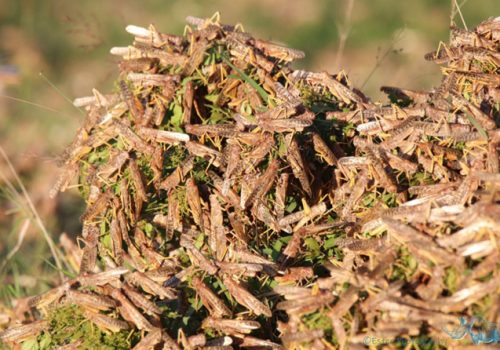
Brown locust outbreaks often follow good rainfall conditions in arid areas. Not always good news for people but locusts are a food source to various animals and its frass contain nutrients that are recycled into the soil. Stakeholders around national parks are starting to embrace outbreaks as a natural phenomenon and are adopting control measures…

Read More

Putting marine biodiversity data management on the agenda

03 November 2023

Putting marine biodiversity data management on the agenda

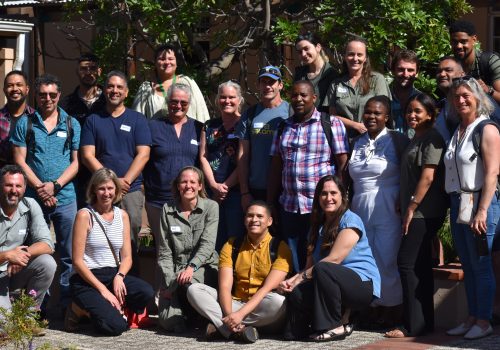
On Wednesday the 18th of October, CapeNature, the Department of Forestry, Fisheries and the Environment (DFFE), the South African Institute for Aquatic Biodiversity (SAIAB), South African Environmental Observation Network (SAEON) and SANParks colleagues met to discuss the management of marine biodiversity data. This workshop was pivotal to some of the workshop participants for numerous reasons….

Read More

Lights, BRUVS, Action: Best Practice Workshop at Cape Research Centre

03 November 2023

Lights, BRUVS, Action: Best Practice Workshop at Cape Research Centre

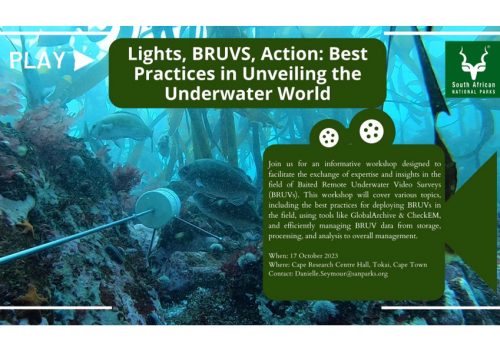
Baited Remote Underwater Video Systems (BRUVS) are a widely adopted, non-invasive, and highly effective methodology for exploring the depths of our vast seas. Over the past decade, researchers from around the world have harnessed the potential of BRUVS to unlock the mysteries of our oceans. On 17th October 2023, the Cape Research Centre, of South…

Read More

It’s not just about the permit – conserving wild ginger for people and nature

02 November 2023

It’s not just about the permit – conserving wild ginger for people and nature

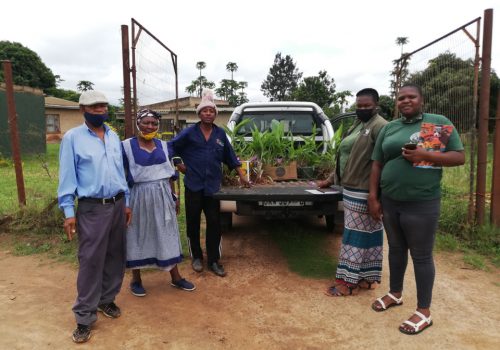
Helping local growers of rare plants to get permits, not only allows them to continue their important work legally, but ongoing positive engagement with traditional healers builds solid, relevant relationships with an influential stakeholder group, and leads to benefits for both people and biodiversity. This past year was a positive one for wild ginger (Siphonochilus…

Read More

Is passive rehabilitation enough to restore fynbos in the Garden Route?

01 November 2023

Is passive rehabilitation enough to restore fynbos in the Garden Route?

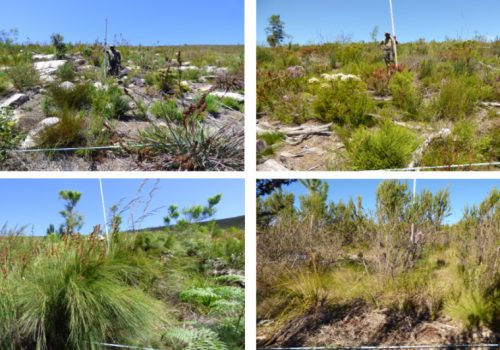
By examining the recovery of fynbos in clear-felled pine plantations, the study observed that fynbos could be re-establish through natural regeneration, however, the potential for recovery decreased with the duration under plantation. Secondary invasion by nitrogen-fixing Acacias is a further barrier to the recovery of fynbos because of soil enrichment. Restoration has become an integral…

Read More

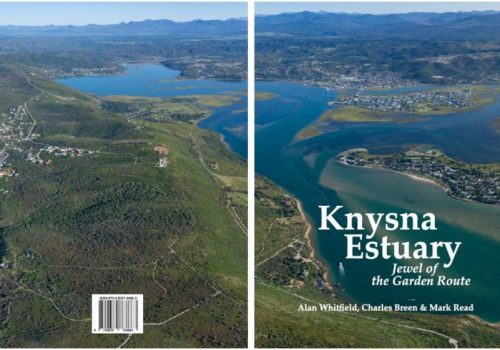
New book launched ‘Knysna Estuary – Jewel of the Garden Route’

30 October 2023

New book launched ‘Knysna Estuary – Jewel of the Garden Route’

The Knysna estuary, also popularly known as Knysna lagoon, is managed as part of GRNP – the most biodiverse estuary of highest conservation importance in South Africa and the only natural estuarine bay on the subcontinent. It has a fascinating pre- and natural history, has been the subject of much research effort over a long…

Read More

Assessing climate change vulnerability in South Africa’s national parks

26 October 2023

Assessing climate change vulnerability in South Africa’s national parks

Climate change will have an impact on SANParks’ ecosystems, infrastructure and tourists in significant and unique ways through both extreme events and long-term change. This necessitates planning for specific management interventions that allow for species and ecosystems to respond, protection of both cultural and infrastructure assets, and continued tourism, while responding appropriately to the changing…

Read More

Sport Fishing Tournaments in National Parks: Striking a Balance Between Recreation and Conservation

21 October 2023

Sport Fishing Tournaments in National Parks: Striking a Balance Between Recreation and Conservation

Fishing competitions, also known as fishing tournaments, are an integral part of the recreational fishing world. These events range from local community gatherings to nationally recognised tournaments offering substantial prizes. Regardless of their scale, the common thread among them all is a shared emphasis on competition, organisation by public or private entities, entry fees, and…

Read More

When managing parks, is SANParks learning from stakeholders?

11 October 2023

When managing parks, is SANParks learning from stakeholders?

SANParks is committed to meaningful engagement of stakeholders, especially during the development and revision of park management plans. The co-produced vision and high-level objectives of a park is then typically implemented on behalf of society. However, for parks with sections/ecosystems that are open-access and characterised by overlapping governance regimes, there is an increasing need to…

Read More

Islands of fertility: the invasive alien cactus Opuntia stricta creates and benefits from fertile islands

06 October 2023

Islands of fertility: the invasive alien cactus Opuntia stricta creates and benefits from fertile islands

The sour prickly pear Opuntia stricta changes soil characteristics, such as nutrients and the level of enzymes, which are involved in nutrient cycling processes, and the abundance and diversity of soil bacterial communities, suggesting that extensive invasions could alter belowground ecosystem function. Opuntia stricta, or sour prickly pear, has spread extensively in the Kruger National…

Read More

  1. 1
  2. ...
  3. 11
  4. 12
  5. 13
  6. 14
  7. 15
  8. 16
  9. 17
  10. 18
  11. 19
  12. 20
  13. 21