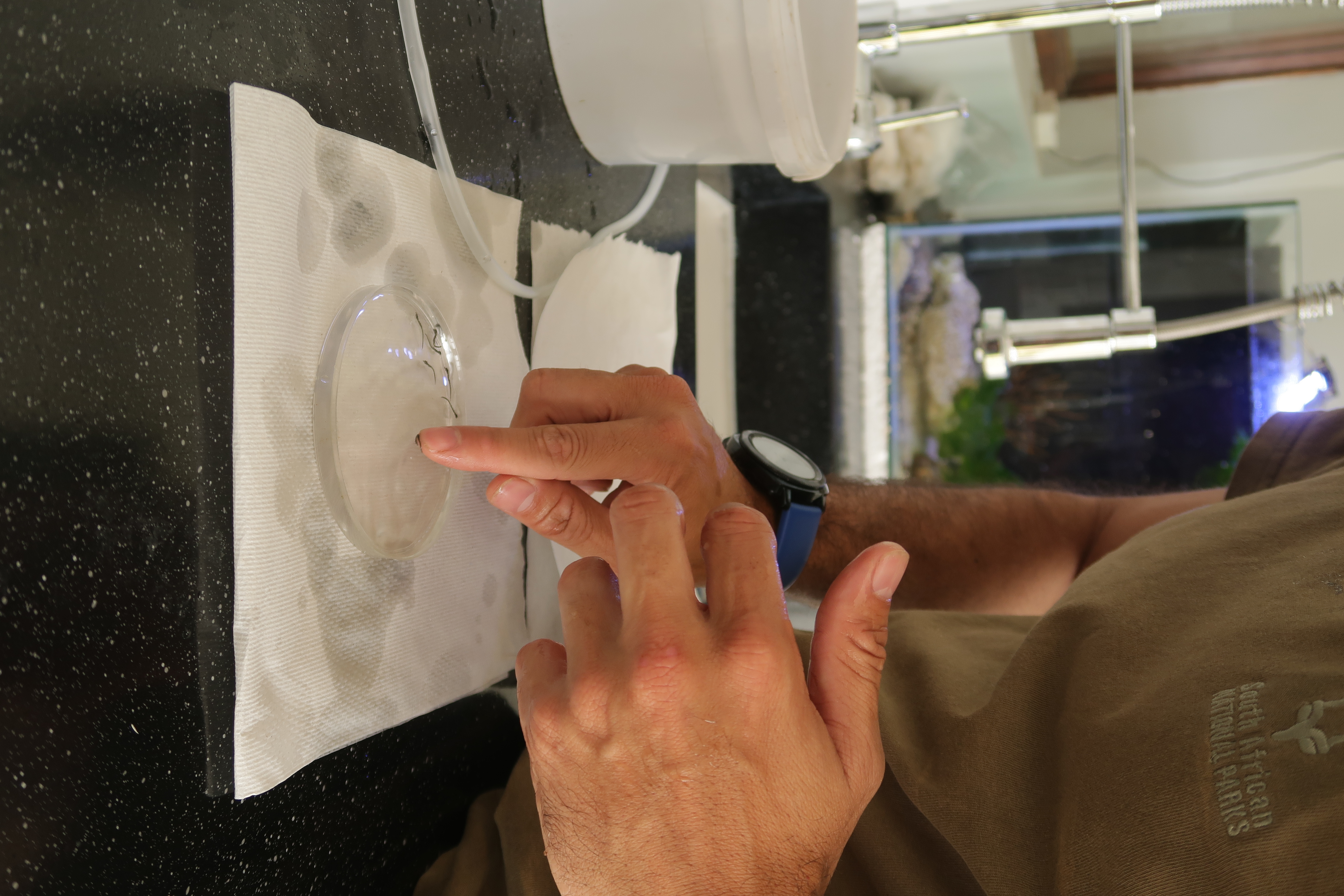
Researcher placing juveniles in petri dish to be photographed
With a little bit of research, any Knysna seahorse enthusiast will find out that there is a display tank with Knysna seahorses at the SANParks office on Thesen Islands. This educational display tank, generously donated by the SANParks Honorary Rangers, serves to provide locals and visitors alike a first-hand experience with these cryptic fish while providing an opportunity for SANParks staff to raise awareness of this endangered species which is only found in the Knysna, Swartvlei and Keurbooms Estuaries.
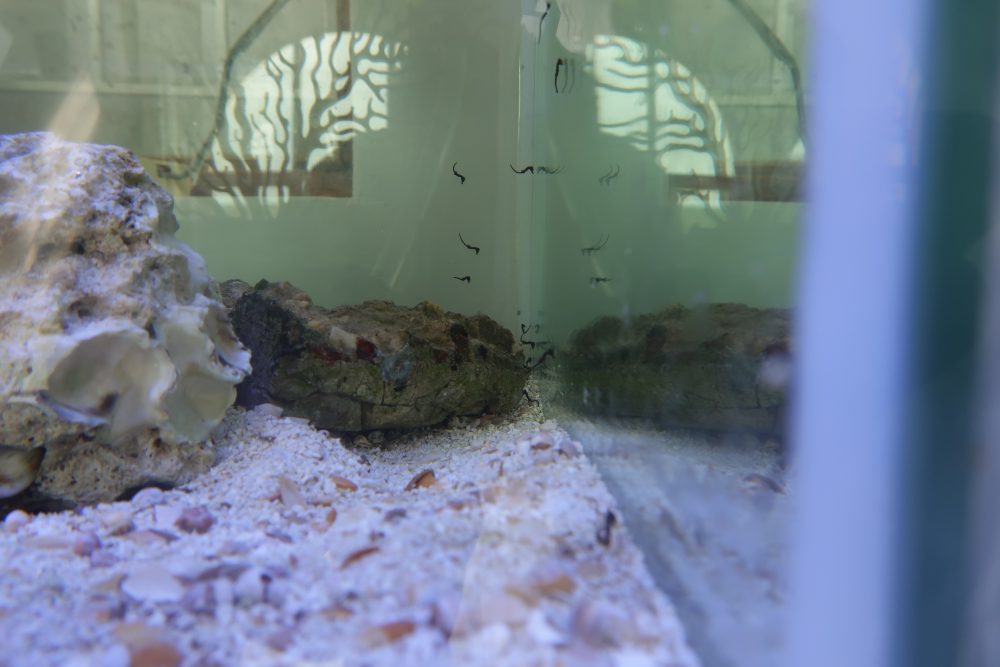
Knysna seahorses generally spawn in the warmer Spring and Summer months, with the most recent cohort, 175 miniature seahorses, spawned at the Thesen Islands SANParks office in mid-November. This spawning event provides a unique and exciting opportunity to study the growth of these cryptic species.
90 of these juveniles were recently transferred to a fish tank at our Rondevlei office where their growth will be monitored. Studying the growth of these captive seahorses is a first step in determining the age of wild seahorses based solely on length data, a useful approach where sacrificing of individuals to estimate age is undesirable.
Researcher placing juveniles in petri dish to be photographed
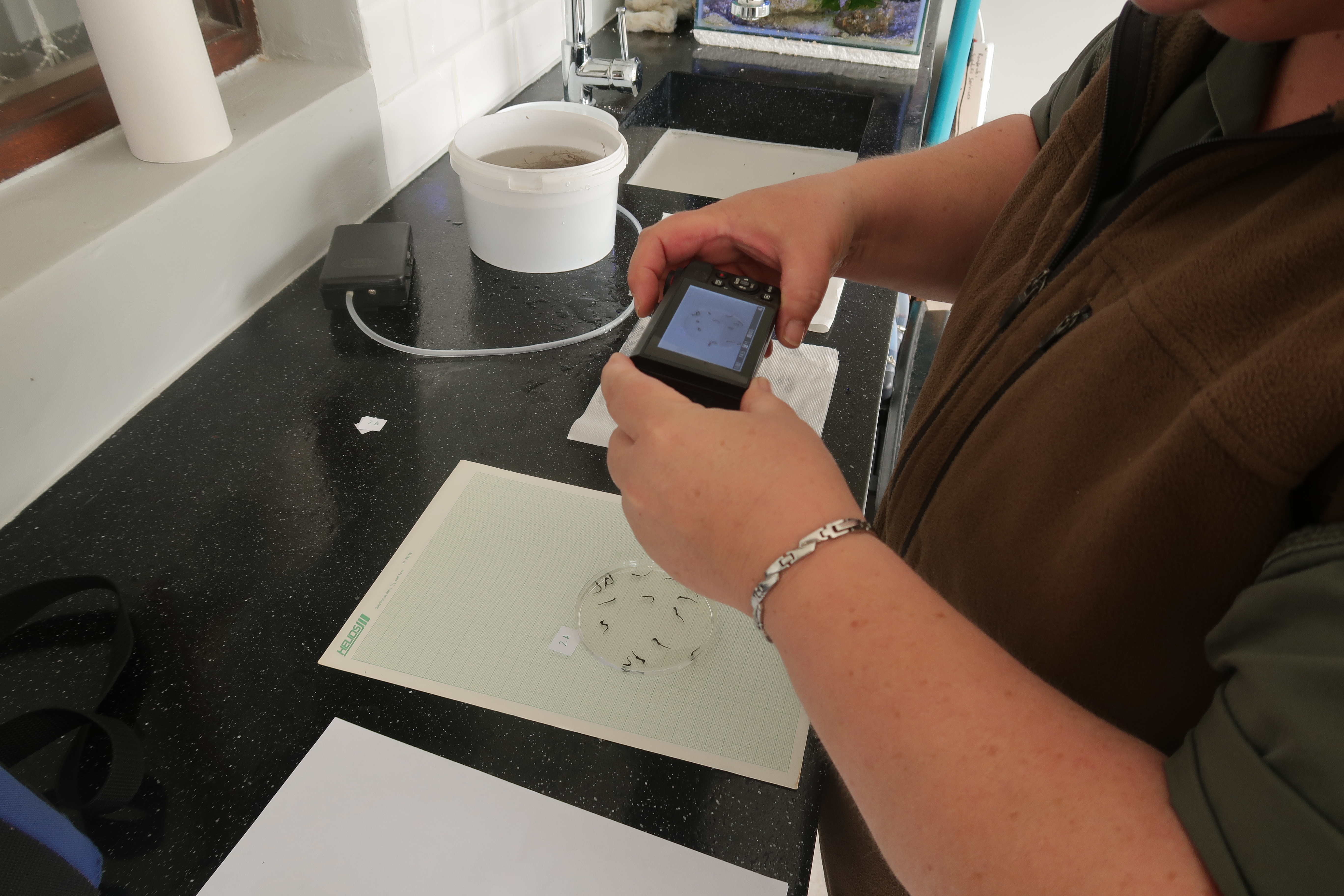
Researcher photographing juveniles
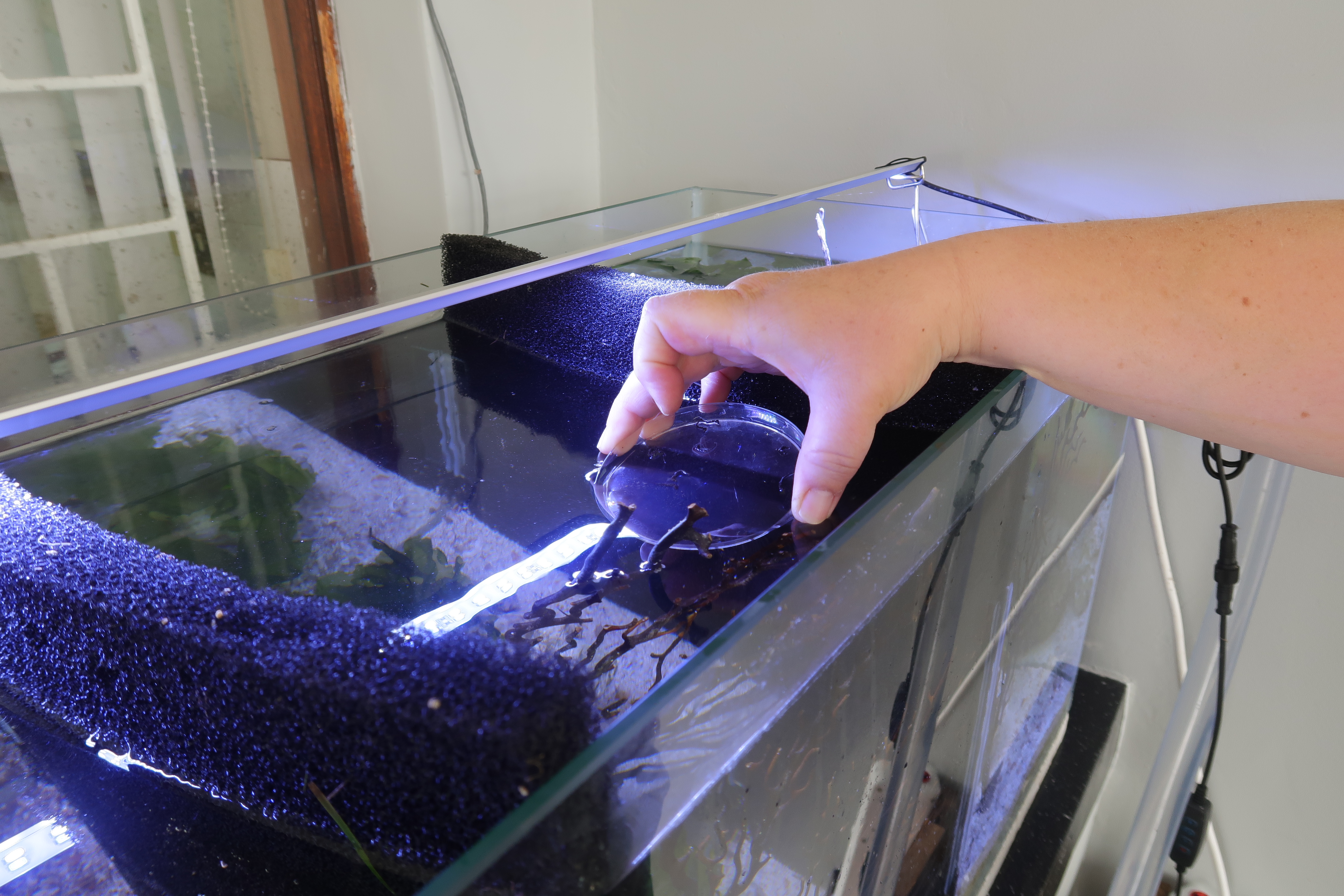
Juvenile seahorses released into tank after being photographed
Water temperature in the tank is kept within a tolerable range for the juvenile seahorses (generally 18-21°C) with the aid of a chiller donated by the SANParks Honorary Rangers and seahorses are fed prey items collected in the nearby estuaries by Rondevlei staff members. Measurement of juveniles commenced one day after spawning and will be carried out at least three times per week for the first month, thereafter seahorses will be measured once weekly for a one year period, at which time it is estimated that they would reach sexual maturity. To measure the seahorses, juveniles are placed in a transparent petri dish with grid paper underneath and photographed in batches of 10-20 individuals. Individual seahorses are then measured using image analysis software to obtain an indication of the relative size of seahorses at that particular age.
