Lights, BRUVS, Action: Best Practice Workshop at Cape Research Centre
Baited Remote Underwater Video Systems (BRUVS) are a widely adopted, non-invasive, and highly effective methodology for exploring the depths of our vast seas. Over the past decade, researchers from around the world have harnessed the potential of BRUVS to unlock the mysteries of our oceans.
On 17th October 2023, the Cape Research Centre, of South African National Parks, hosted a workshop where experts from prestigious institutions, including the National Department of Forestry, Fisheries & Environment (DFFE), CapeNature, the University of Western Australia, the South African Institute for Aquatic Biodiversity (SAIAB) and the South African Environmental Observation Network (SAEON), came together. This meeting aimed to exchange knowledge and expertise about BRUVS, with the main goal being to foster collaboration and knowledge sharing in the field of BRUVS. The scientific community sometimes grapples with common challenges that include a lack of awareness about well-established methods, limited widespread distribution of these methods, not enough motivation for building a strong community, and the absence of a central place for sharing and accessing best practices. In this context, it’s important to define what is meant by “Best Practices.”
Best practices are methods that consistently work better than other approaches with the same goals. To become a best practice, a method needs to be adopted and used by multiple organizations. Using standardized best practices helps reduce variations in how research is done. This makes the data collected more consistent and reliable. It also supports the FAIR principles, which aim to make data Findable, Accessible, Interoperable, and Reusable. This makes it easier for researchers to combine data from around the world and answer ecological questions. Even though many groups have created best practices, this information can be scattered online, in local places, or is not available digitally.
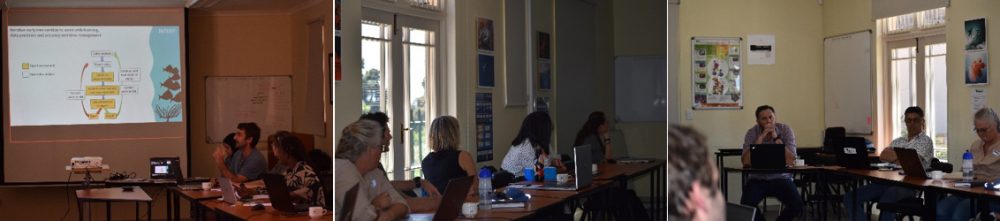
Presentations and informative discussions about various aspects of best practice methods in the deployment of BRUVS, and the processing and management of BRUV data. Photo: SANParks
Participants at the workshop delved into a wide range of essential topics, focusing on best practices for deploying BRUVS in the field. They also explored the utilization of indispensable tools, such as CheckEM, and global repositories, such as the GlobalArchive, which provide efficient solutions for managing BRUV data, quality-checking, validating, and archiving large datasets. Distinguished speakers from participating institutions shared their expert knowledge and experiences, enriching the discussions with valuable insights. The workshop thrived on the active engagement and contributions of all participants. It underscored the long-term goal of establishing a vibrant network among BRUV researchers, aiming to facilitate continued communication, collaboration, and the sharing of insights.
Some of the golden nuggets derived from the workshop that SANParks realized how we can improve our data management, data governance, and increase our data value:
- Investing in Modern Data Infrastructure: Upgrading our tools, upgrading to faster internet speeds, and expanding our data storage capacity with Network Attached Storage (NAS) systems. By doing so, we will not only streamline our data handling processes but also ensure that we can effectively manage the ever-growing volumes of data that play a crucial role in our conservation efforts.
- Building Specialized Data Teams: We’ve observed that institutions like SAIAB and SAEON have benefited significantly from dedicated data teams consisting of data technicians, managers, and analysts. This is something that we lack in SANParks.
- Leveraging Open-Source Software: Making use of open-source software such as R for repeatable data analysis. For example, using packages such as ‘rfishbase’ to access data from FishBase, which is a comprehensive database of information about fish species.
- Utilizing Quality Assurance Tools: CheckEM to fix errors in data, validate and quality check errors in metadata i.e., incorrect fish lengths. This way our data will conform to standards that meet the requirements of global repositories such as Global Archive.
- Staying Aligned with Global Ocean Best Practices: Keeping track of the latest and greatest in Ocean Best Practices by checking which resources are available and ensuring that our data is standardized according to global standards.
- Most importantly, effective data management is crucial for robust reporting of data particularly for decision-making processes.
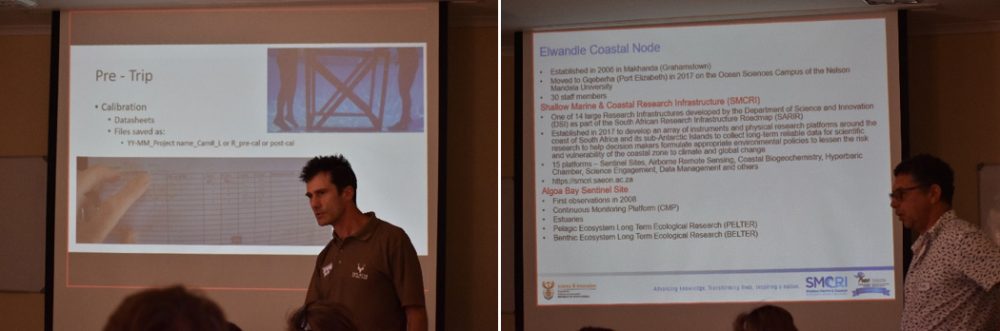
Kyle Smith (left) from Garden Route Scientific Services (SANParks) and Tim Parker-Nance from the NRF-SAEON Elwandle Coastal Node presented their respective BRUV data curation, storage, and management procedures. Photo: SANParks.
As a result of this collaborative effort, the future of BRUVS in South Africa looks incredibly promising. The workshop not only shed light on the opportunities for future research but also highlighted the significant role that BRUVS can play in conservation and long-term monitoring initiatives.
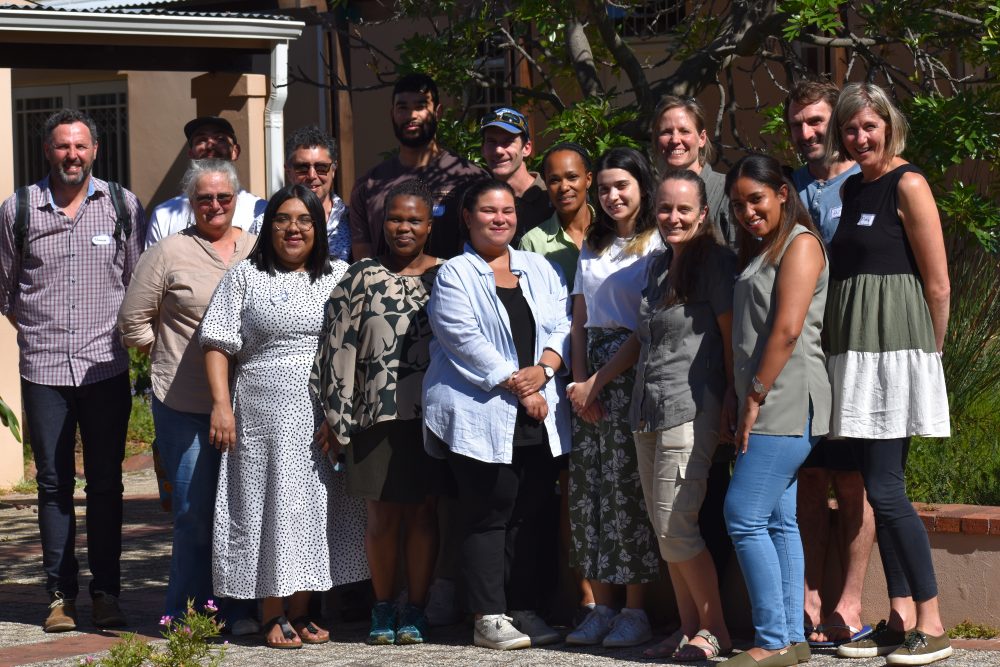
Participants who attended the workshop at the Cape Research Centre, Tokai, Cape Town. Photo: SANParks.
