Invasive Alien Species in Kruger National Park: Early Records and Concerns
The KNP, while a large conservation area under protection for the last century, has not escaped the increase in numbers of alien species. Only two accounts provide information on the intentional introduction of alien plants to the area that is now the KNP, before 1900. One was the planting of Spanish or giant reed (Arundo donax) in the area near Phabeni gate, and the other was the planting of about 10 gum trees (Eucalyptus camphora) near Crocodile Bridge. Neither have led to further invasions, although the former is invading along the Sabie River from other sources.
The first six alien plants recorded during botanical surveys in KNP were listed as “troublesome weeds” [Mexican tea (Chenopodium ambrosioides), khaki bush (Tagetes minuta), Mexican poppy (Argemone mexicana), prostrate globe-amaranth (Gomphrena celosioides), red spiderling (Boerhavia diffusa) and broom creeper (Cocculus hirsutus)].
Concerns were raised in 1936, when Gen. Hoare (Pretoriuskop section ranger) protested against the planting of flamboyant (Delonix regia) trees in Pretoriuskop. Shortly afterwards, in 1937, Col. J. Stevenson-Hamilton, the first warden of the KNP voiced his concerns stating “The introduction of alien species should be religiously avoided”.
In 1947, referring to the introduction of alien species into national parks, Dr R. Bigalke, a board member of the National Parks Board of Trustees (now SANParks) wrote an article in the South African Journal of Science titled “The adulteration of the fauna and flora of our national parks”. Unfortunately, for a range of reasons, even while these concerns were raised by high profile people, the invasion by alien species could not be stemmed.
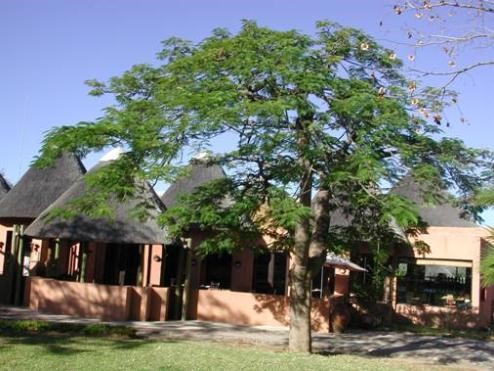
Delonix Regia in Pretoriuskop
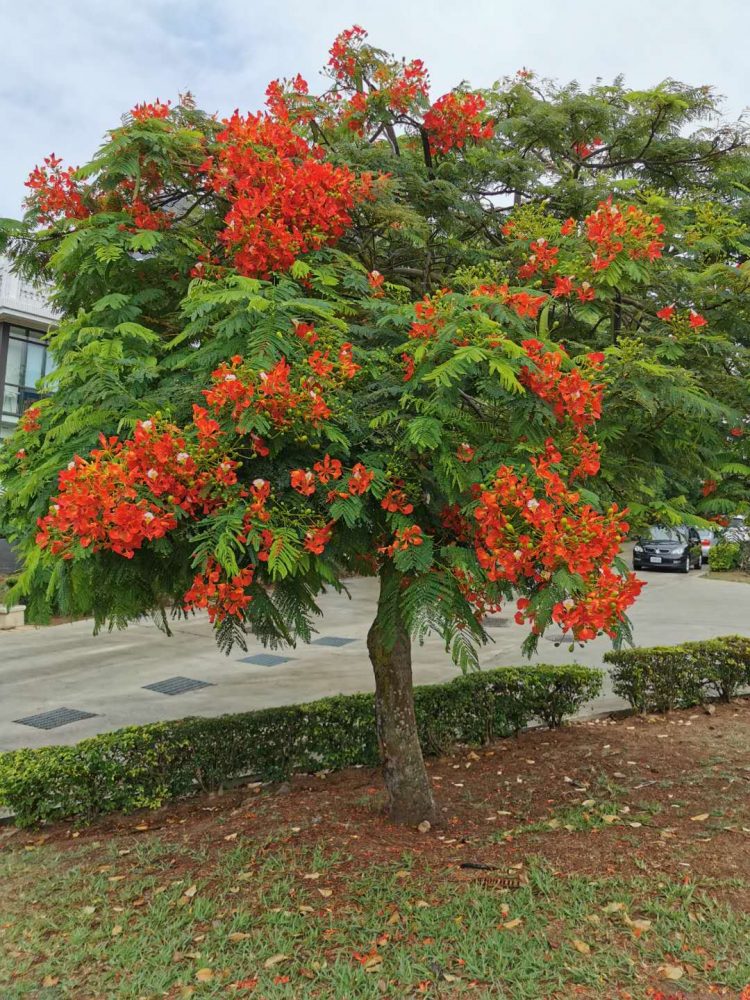
Delonix regia in flower