Temporary pans of Gras- and Holpan: Rapid burst of life
The Gras-Holpan section of Mokala National Park, is an almost 5000 ha piece of wilderness situated about 30 km outside of Kimberley. The park has unique vegetation because it is situated in an area where savanna meets Nama-karoo and on top of that, the area has some interesting wetlands in the form of ephemeral pans. Ephemeral pans are just what their name say, pans that appear and disappear depending on rain. These habitats are key for biodiversity such as eubranchoipod crustaceans (i.e. little freshwater shrimp), migratory aquatic birds and stages of nymphs (e.g., immature dragonflies) and larvae (i.e. juvenile insects) for various aquatic invertebrates. These pans were filled with water in 2013 but then remained dried for six years; while the pans were dry the associated aquatic species were dormant. When the summer rains came late in 2019, the pans were filled and life came “flooding” back.
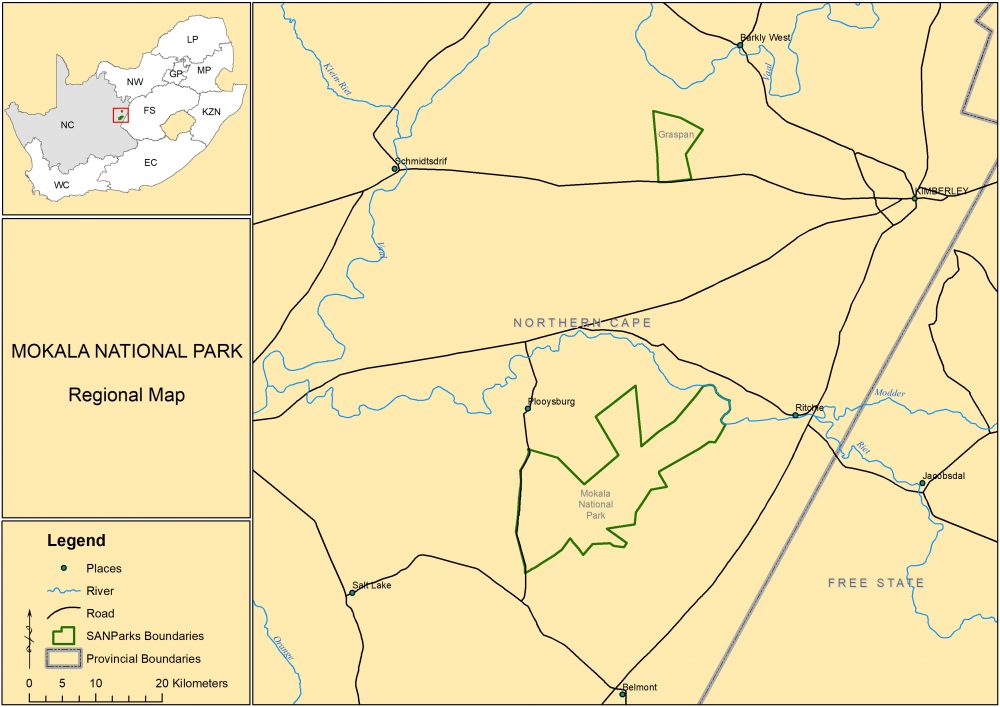
Map showing the location of Gras-Holpans in relation to Mokala NP and Kimberley
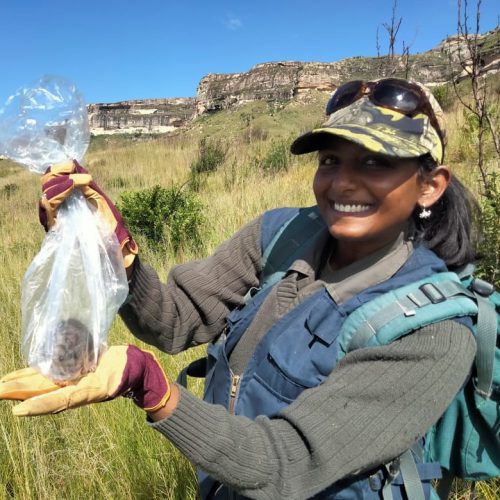
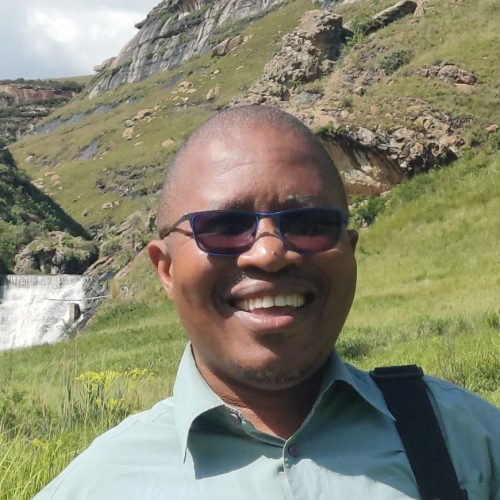
When Hugo, our Vegetation Ecologist, suggested we have a look to see what was happening in Gras-Holpan, we formed a team that included myself (Arid Regional Ecologist), Hendrik (Entomologist) and Roxanne (Biotechnician). Along the way, we had assistance from other staff members including Abel Matsapula (GIS technician) and Rodney Makwakwa (from Biodiversity Special Projects). The idea of searching for freshwater shrimp and possibly a living “fossil” had me excited.

The research team (L-R): Hendrik, Nkabeng, Hugo, Roxanne
We measured aquatic life both in and around the pans. In the pans we found the usual freshwater suspects including dragon flies, back swimmers and water scavenger beetles. The variety of shrimp we found in the pans included the tadpole shrimp (Triops granarius) which has a highly limited range and therefore very rare. Triops is considered a living fossil (living fossils are species that strongly resemble the ancestral species as they appear in the fossil record); they have a 90 day life expectancy as adults and have eggs that remain dormant in the soil until conditions are perfect. In many ways we were privileged to have found the Triops and to have it call Gras-Holpan home. This is also true for another rare species, the Giant bullfrog (Pyxicephalus adspersus), the largest southern African bullfrog and a resident of the ephemeral pans. The aquatic bird life associated with the pans included Spoonbills, Cape Teal, Cape Shoveler and several of the Grebes. This is only to name a few of the 50 species recorded at the pans. Although water plant species were not surveyed, the highly invasive European water net (Hydrodictyon reticulatum) was recorded which according to literature is not found in temporary waters.
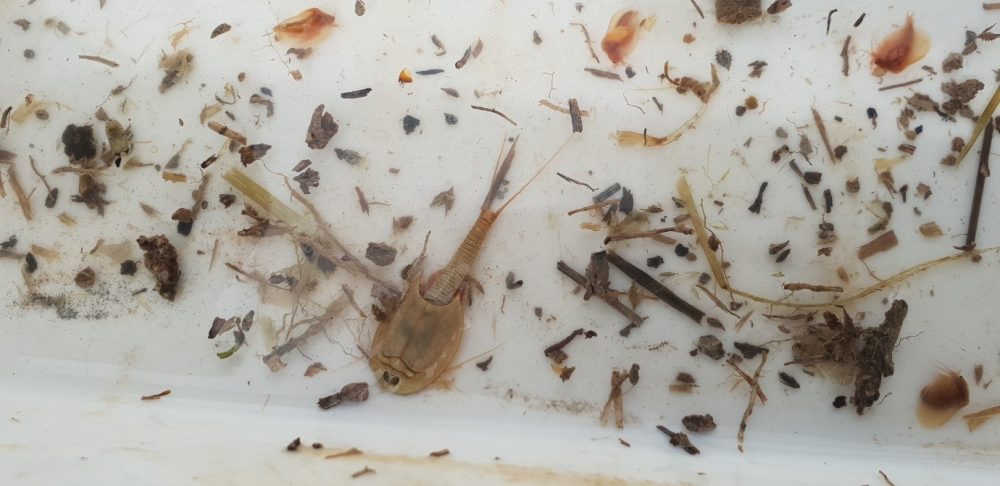
Triops granarius found in a Gras-Holpan freshwater pan in the Nama-Karoo biome. Triops are considered living fossils and have only a 90 day adult life span.

Hendrik looking at samples under a microscope in the field
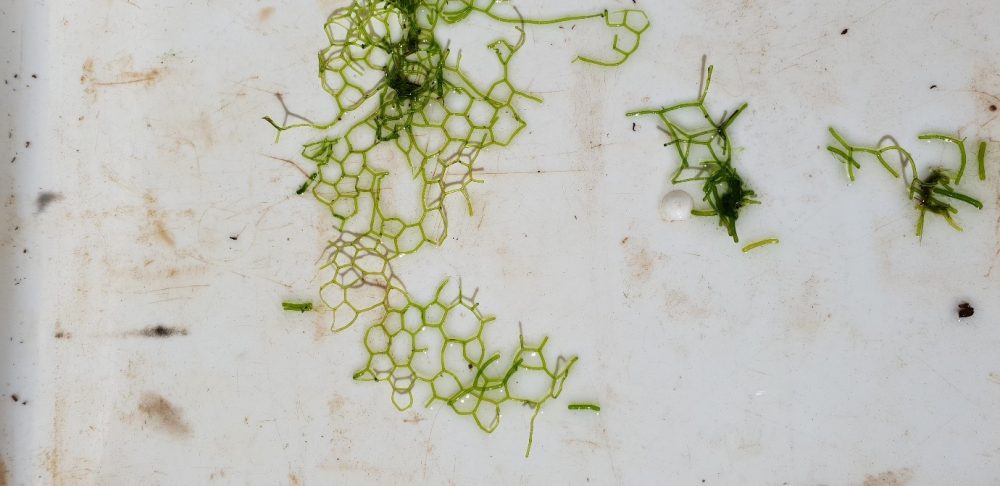
Net algae found in all the Nama- Karoo biome pans however literature states that these do not occur in temporary pans. The net algae was likely carried over by migrating aquatic birds.

Juvenile Giant bullfrog. The Giant bullfrog has a limited range and areas where they occur are required to be monitored.
Apart from sampling the various animals, we also measured and monitored components that influence the health of the pans. These included the quality of the water such as pH, salinity and clarity. The clarity of the water affects how deep sunlight penetrates into the water which in turn can affect the community and type of biological life in the water. Simultaneously, depth measurements give an idea of how rapidly the water level was retreating. Some pans were so deep that we could not reach the centre while others were so shallow they barely reached our ankles. All living creatures including humans have a certain pH tolerance range. Theoretically, given the pH and general quality of the water in the pans, the water is better than that of tap water in Kimberley!
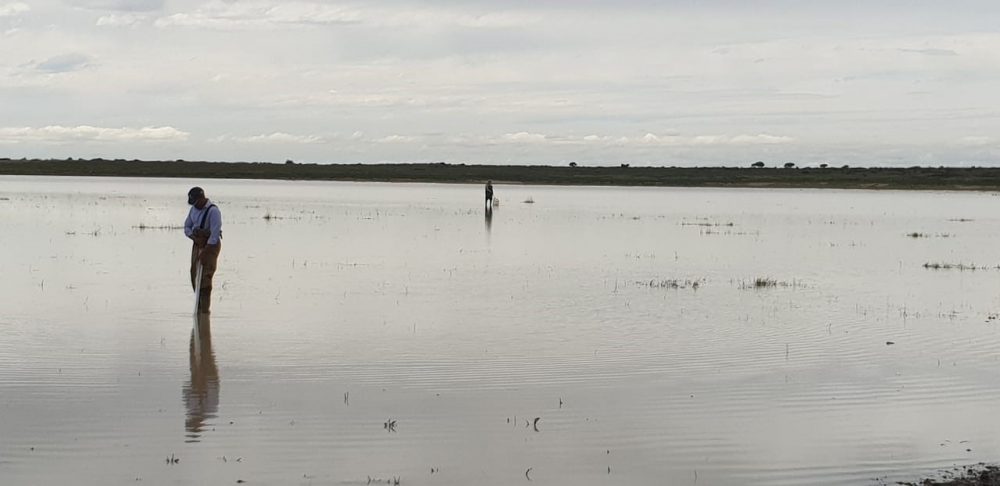
Hugo gathering invertebrate samples in a net and Hendrik preparing for a water clarity test. Although the pan is shallow, it held water for over six months.
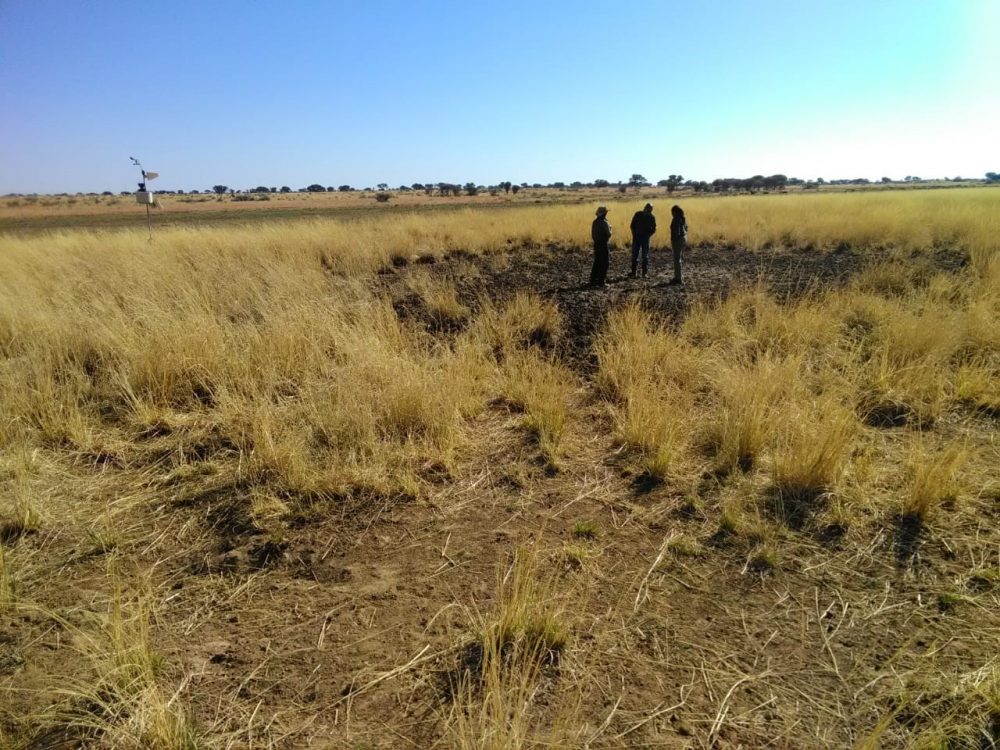
Hugo, Roxanne and Hendrik at a dried savanna pan. Savanna biome pan that dried early during fieldwork (taken the same trip as the Nama-Karoo June 2019)

Nkabeng and Roxanne measuring the water quality of a Nama-Karoo Pan in June of 2019.
We were disappointed when we returned for further monitoring in 2020 and 2021, and despite the high rainfall, found the pans empty. Instead, the pans were covered in a luscious herbaceous layer. We are left wondering about the contributing factors and conditions that determine when the pans are filled or not? At the same time, we realise that we are fortunate to have these pans in the Northern Cape and have a responsibility to monitor and maintain the ecosystem in which such special animals, including the tadpole shrimp, are found.

We returned to the Nama-Karoo Pan in 2021and found it covered with grasses and flowers.

Infographic by Corli Wigley Coetsee

Infographic by Corli Wigley Coetsee