Madzaringwe
This fossil site is located in the northern region of the Kruger National Park, near the Nyalaland Trails area just south of the Luvuvhu River. The fossil site is only accessible by those who go on the Nyalaland 4 x 4 trail. The site, extremely rich in fossilised materials, is of exceptional scientific value due to the discovery of vertebrate fossils in 1995. These include fossilised remains identified as belonging to Euskelosaurus, a large herbivorous (about 9.3 metres long and 4.4 metres tall) dinosaur that lived approximately 210 million years ago. This is the first vertebrate fossil site ever discovered in the park. The species are likely to have moved in small family groups. This discovery represented the first recorded vertebrate fossil site within the Kruger National Park. The site is particularly significant due to the rarity of Euskelosaurus fossils, and the richness of the material found. Fossilised remains of two different dinosaur types have been identified, making the area unique in the park. In addition, fossilised wood (petrified tree remains) has been recorded at two locations nearby, further enhancing the palaeontological importance of the site.
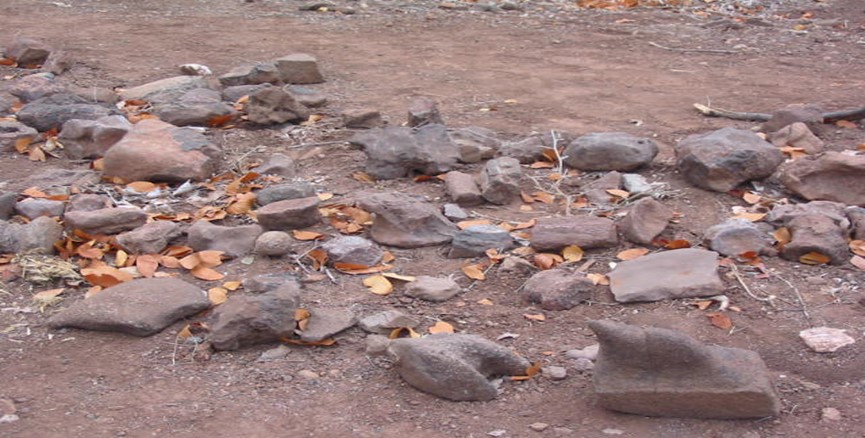
The site is also associated with human settlement dating back to the Iron Age, reflecting early occupation of the region by agro-pastoral communities. These communities utilised the fertile soils and water resources of the nearby Luvuvhu River for farming, grazing, as well as daily subsistence. Thus, the site contributes to a broader understanding of early human settlement patterns, land use, and cultural development within what is now the Kruger National Park.
The landscape is characterised by a mix of riverine forest, open woodland, and rocky outcrops, creating a diverse ecological setting. This relatively remote environment has contributed to the preservation of both archaeological and palaeontological sites. Thus, access to the site is restricted, and it can only be visited as part of the guided Nyalaland Trail experience.
Madzaringwe Iron Age Site represents a rare convergence of palaeontological and archaeological heritage. As such, the site holds outstanding scientific and archaeological significance within the Kruger National Park.
GPS Waypoints: 22°29'45.7"S 31°03'45.9"E