
Albasini Commemorative Plaque
Historical accounts suggest that Joao Albasini was born in 1813 on board a ship in the bay of Oporto…
Humans have been interacting with the Kruger ecosystem for the last 40,000 years.
The San (Bushmen) lived in the area during the Stone Age period for thousands of years. They left behind a rich collection of rock paintings and artefacts, whilst their way of life had little impact on the environment.
Iron Age civilizations settled in the Kruger Park area as early as 200 AD, and a couple of centuries later, the first Bantu-speakers settled in the Letaba area. As populations grew people hunted animals successfully. However, local diseases like malaria, kept occupation levels relatively low. From the 12th and 18th century the trade of glass beads, ivory, animal skin and meat where taking place thus, boosting the population. This continued until the prolonged and widespread Difaqane conflicts started displacing some of the people of that area.
Historical accounts suggest that Joao Albasini was born in 1813 on board a ship in the bay of Oporto…

The archaeological remains of a 19th‑century trading post established by the Portuguese trader named João Albasini.

A well-known baobab tree situated on raised promontory platform or hill located along the road between Klopperfontein and Pafuri main road.

A hunting camp used by Miles Bowker, his cousin Alec Bowker and Charlie White and the founder of Barberton – Fred and Harry Barber.

This hut is situated at Skukuza Rest Camp, some few meters away from Sabie River facing the old railway bridge.
The final resting place of a respected and influential traditional leader in the region.
Chief Nyongane Mkhabela’s family was forcefully evicted from Pretoriuskop in the 1930s. This tragic history includes a “cattle holocaust” and the Chief’s death from heartbreak, now honoured by a memorial.

Chief Nyongane Shikuvati Mkhabela was a royal headman who used to live within the boundaries of the KNP long before the park was established.

Crooks Corner served as a notorious refuge for outlaws, poachers, and illegal recruiters. Its strategic border location allowed infamous figures like “Bvekenya” Barnard to evade law enforcement by escaping into Mozambique.

A Portuguese Cross carved into an old Leadwood tree. Of uncertain provenance, it is thought to have been made by Diocleciano Fernandes das Neves.
Established in 1844, this vital wagon route linked the Transvaal goldfields to Delagoa Bay. Despite wars and disease, it facilitated 19th-century trade and migration until the railway rendered it redundant.

This old tank was used for several years from 1938 as a foot bath to disinfect immigrants from Mozambique.

Fihla-Manzi was a well-known outpost used by the transport riders of the time on the road between Lydenburg and Delagoa Bay.

Statue of the founders of the Kruger National Park: Paul Kruger, Piet Grobler and James Stevenson-Hamilton.

The dominant painted panel is characterised by red painted pigments of prolonged human figures, giraffe, and antelope.
In 1725, Chief Dawano’s warriors ambushed François de Cuiper’s Dutch expedition near the Lebombo Mountains. Seeking precious metals, the defeated party retreated to Mozambique, marking an early instance of indigenous resistance.

On 12 July 1725 Frans De Kuiper and his 30 men were ambushed in this vicinity by Chief Dawano’s warriors.

The site on the south bank of the Crocodile River is where the Boer forces spiked and destroyed most of their artillery pieces and ammunition.
Gomondwane Road was the first jeep track laid by ranger C.R. de Laporte in the early 1920s, tracing ancient trade and migration routes.

During the Apartheid era, Kruger became a militarised buffer zone. Despite five military bases and a failed “sisal fence,” liberation fighters used the park’s international borders as strategic entry points.

Named after a headman, Gumbandebvu is a sacred Venda hill where the rainmaker Nwakama performed rituals. Legend dictates that men must still shave their beards before ascending this spiritually significant site.
The historic Nyala tree served as a Makuleke community gathering point for receiving “Dompas” identification during Apartheid. Today, it remains a living landmark symbolising resilience, cultural heritage, and ecological importance.

This is the place where Sir Percy Fitzpatrick’s famous dog Jock of the Bushveld was born early in May 1885.

An overnight station for black porters who carried trade goods through the KNP.

The site is an ephemeral Iron Age cave occupation indicated by few scattered diagnostic and undiagnostic sherds.
Established in the 1960s near the Lebombo Mountains, Klipkoppies was a vital early ranger post for wildlife protection. Though replaced in 1974, it remains a significant landmark of pioneering conservation history.
Built in 1940 by the military for border security and anti-poaching, this former airstrip also marks the legacy of “Bvekenya” Barnard, a legendary hunter linked to early ivory trade and lawlessness.

A culturally significant historical site known for its strong connections to indigenous heritage and ancestral traditions.
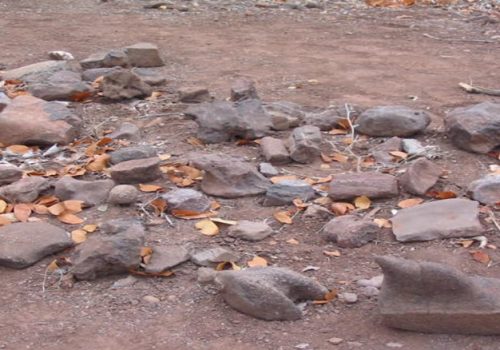
Discovered in 1995, this unique site contains 210-million-year-old Euskelosaurus fossils and petrified wood. It also features Iron Age settlements, marking a rare convergence of ancient paleontological and early human history.

These terraced walls were constructed or built by illegal immigrants from neighbouring Mozambique “Mafourteen” who were caught passing through the park to look for jobs.
Makahane Hill, an Iron Age settlement linked to the Khami Kingdom, was ruled by “Makahane the Terrible.” This defensive site preserves Vhalembethu cultural history and archeological evidence of early southern African political networks.

Makahane was a well-known chief living on a hill which to this day has his name…

This natural hot spring is named and gets its cultural significance from ancient Shangaan oral history of a tribal warrior…

This is an ancient fountain at Pafuri situated adjacent to Malonga mineral prospecting site.

In the 1920s, the Gerber brothers explored the Malonga site for diamonds. While large-scale mining never developed, the remaining prospecting pits provide historical insight into early twentieth-century mineral exploration techniques.

An important archaeological and cultural site, representing the remnants of a once-thriving indigenous settlement.

Located 11 kilometres from Phalaborwa Gate, Masorini Hill preserves a 19th-century Northern Sotho site. It features restored huts and clay furnaces, showcasing the advanced iron-smelting expertise of the Ba-Phalaborwa ancestors.

The mass cattle grave in the Pretoriuskop area is where forty of Chief Nyongane’s cattle were shot by Park officials together with more livestock of his relatives.
An important cultural site that holds significant historical value due to the presence of well-preserved remains from earlier periods.

The paintings are a bit faded because of natural weathering, but the shelter’s general state of conservation is good.

The paintings are a bit faded because of natural weathering, but the shelter’s general state of conservation is good.
Muntshe, a prominent rhyolite hill, blends geological beauty with deep history. Once an Iron Age settlement, it later served as a strategic base for Swazi regiments, marking centuries of human occupation.

A notable archaeological site that preserves the remains of Iron Age settlements.

These ruins reflect the complex social and cultural life of precolonial communities, offering important insights into their architecture, land use, and spiritual practices.

Ntomeni Spruit Dam is one of the many man-made structures associated with the beginning of the Kruger National Park.

An archaeological site featuring the remains of early settlements likely dating back to the Iron Age period.
Originally established as part of the infrastructure supporting migrant labour routes.

The historic Clock Tower at Skukuza Rest Camp was erected in memory of Herbert Boshoff Papenfus.

Paul Kruger was a prominent Boer leader and the president of the then South African Republic (Transvaal) from 1883 to 1900.
Phabeni Ruins document indigenous life and the forced removal of families under racist colonial policies. Though seven households remained as “squatter labourers,” the last family was evicted after Nkayinkayi Mavundla’s death.

The significance of the grave is its association with the Voortrekker expeditions.

The original Pumbe outpost with a horse stable which could hold about five horses was most probably build by ranger W. Lloyd in the late 1920s.

Two round, domed structures were found near Pumbe camp site by researchers Andre Potgieter and Freek Venter.

Punda Maria Rest Camp is in the northern section of the Kruger National Park, positioned in proximity to an artisan spring a place previously (before 1919) called Shikokololo.

The Rangers Monument pays homage to and commemorates the valued contribution of Kruger National Park Rangers.
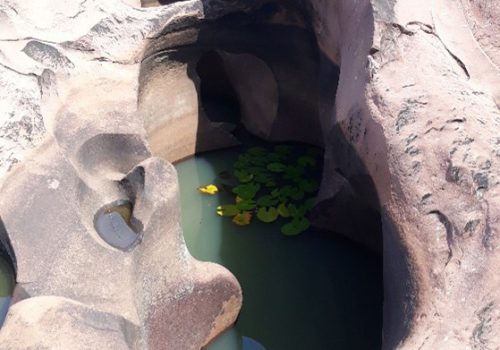
In the early 1890s it was known to the local people as Ribye-ra-Gudzani (meaning Gudzani’s Rock), derived from the name of one of their gods, Khubyane.

The term “rock art” refers to all paintings and engravings made by people on natural rock.

The term “rock art” refers to all paintings and engravings made by people on natural rock.

The Mount Tshikumbu area is classified as part of the late Iron Age and are associated with the Mojela, a sub-group of the Ba-Phalaborwa people…

Established in the 1800s by “Sardelli the Greek,” this trading post supplied travelers and sold marula liquor. Its controversial history includes ties to the Steinaecker’s Horse unit and mineral-worker exploitation.

Before 1926, the Selati Railway was the primary transport for the Lowveld. It launched tourism via “round-in-nine” excursions, though a tragic 1970 crash eventually preceded the line’s closure in 1973.

Records show that the Selati railway line and bridge are one of the most iconic structures associated with railways.

An important archaeological site known for preserving the remains of early human settlements.

After his death, the ashes of renowned warden, James Stevenson-Hamilton, were scattered from a top Shirimantanga koppie.

A historical site of notable cultural importance, featuring remains that are closely linked to the indigenous heritage of the region.

Ancient archaeological remains representing early Iron Age settlements within Kruger.
Located near Makhadzi, this British military outpost supported Steinaecker’s Horse during the South African War. Archaeological excavations in 1997 revealed artifacts that now offer vital insights into early wartime logistics.

The Stevenson-Hamilton Memorial Library and Museum houses an impressive collection of historical accounts and informative displays.
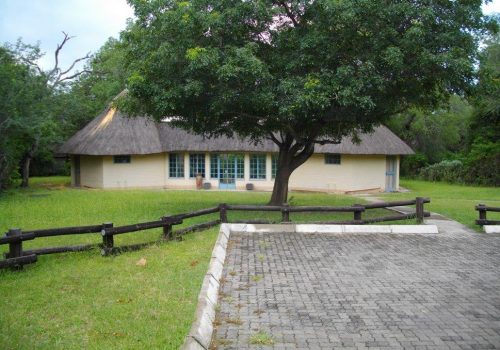
The historical Struben Family Cottage in Skukuza is named for the Struben brothers, Fred and Harry.

The Tsonga-speaking Shilowa clan, famed for medical prowess and mystical defenses, migrated from Mozambique to the Lebombo foothills. Their heritage includes sacred hills, iron-smelting ruins, and ancestral gravesites within Kruger.

Thulamela is a 15th-century stone-walled National Heritage Site linked to Great Zimbabwe. Its 1990s discovery fostered vital partnerships between SANParks and local Venda and Tsonga communities through shared archaeological oversight.
This plaque commemorates the 1837 Great Trek route of Louis Trichardt’s party. It marks their September resting spot during a perilous wagon journey from the Soutpansberg to Delagoa Bay.
Tsengemanti, meaning “buy water” in SeSwati, was a vital 19th-century trading post operated by Alf Roberts. It supported transport riders and long-distance trade networks along wagon routes near the Crocodile River.
The Vapor Trail features significant San rock art paintings depicting animals, human figures, and spiritual motifs. These ancient works offer vital records of hunter-gatherer life, hunting practices, and San spirituality.

The grave of Mr W. W. Lloyd, a ranger at Sabie game reserve from 1919 – 1922.
The Wenela station at N’wanetsi coordinated migrant labour recruitment from Mozambique for Witwatersrand gold mines. This historical hub reflects the colonial exploitation of African workers and shaped the park’s early roads.