Malelane Gate to Close Temporarily due to Planned March by Unemployed Youth
Access to the Malelane Gate in the south of the Kruger National Park will be closed temporarily on Tuesday, 22 September 2026 due to a planned march b...
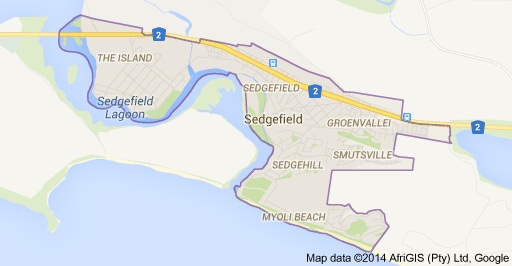
Water in the lake is managed partly to prevent it from “inundating adjacent low-lying residential areas.” The method used for this is “periodic artificial breaching of the estuary mouth resulting in an exchange between lake and marine water.” It is breached when water levels reach 2.0 meters above mean sea level. Touw estuary between 2, 1 to 2, 4 meters above mean sea level. This breaching is done by SANParks, the custodians of the system which is now part of the Garden Route National Park.
Previous studies conducted on the conservation significance ranked Swartvlei 6th in the country for biodiversity (richness in animal and plant life- Turpie et al, 2002) as well as its size.
The difference between an estuary and a lagoon
Estuary: An estuary is defined as a partially enclosed coastal body of water, which is either permanently or periodically open to the sea, and within which there is mixture of seawater with freshwater derived from land drainage
Lagoon: A coastal lagoon is a shallow, coastal body of water, separated from the ocean by a barrier. This barrier can be formed by a coral reef, barrier islands, a sand bar or less frequently, rocks. The depth of a lagoon seldom exceeds a few metres.
Recent media reports indicate the e.coli levels in Swartvlei are high.
Several types of E. coli (bacteria) exist as part of the normal flora of the human gut, warm blooded animals (in the case of Swartvlei, birds) and have many beneficial functions, such as the production of vitamin K2. They also prevent harmful bacteria, known as pathogenic bacteria, from establishing themselves in the intestine. Most E. coli strains pose no harm to human health, except for serotype O157:H7, which can cause food poisoning in humans and can become life-threatening. (read up more: http://www.medicalnewstoday.com/articles/68511.php) . This description of e.coli is generic and may not apply to Swartvlei.
Whilst authorities (Eden District Municipality, Knysna Municipality and SANParks) investigate the causes of the E.coli spikes, there are various factors in Swartvlei that could contribute to this. These may include the input of fecal matter from warm-blooded animals. A meeting this week amongst authorities will determine whether breaching must occur. Conditions for breaching the Swartvlei mouth are spelt out in the Estuarine plans which form part of managing that area.
Nandi Mgwadlamba
SANParks
Tel: 044 302 5633 or 078 702 9663
Email: [email protected]