VOC Beacon
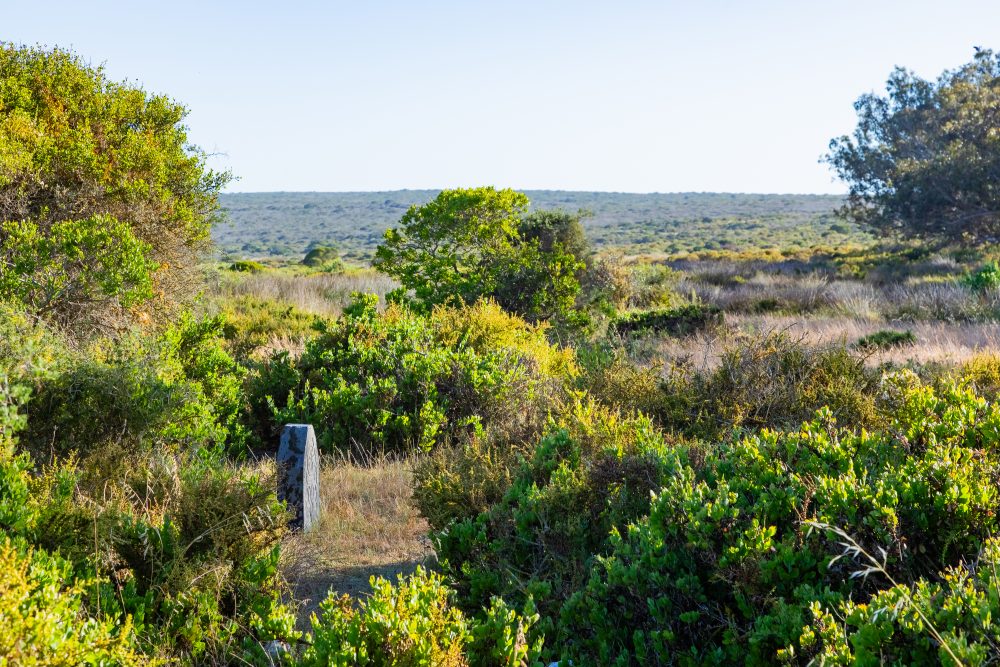
The Dutch East India Company (Vereenigde Geoctroieerde Oost-Indische Compagnie, VOC, 1602-1798) was established by the Netherlands government in 1602 to amalgamate existing companies while profiting from the Malukan spice trade and operated during a period of unfolding colonialism and slavery, leaving a controversial legacy. It had monopoly for Dutch overseas trade from the Cape of Good Hope eastwards, bringing goods like spices, silk, printed cottons and precious stones to Europe. The VOC, which is defined as the first multinational company, is generally viewed in the positive light, not surprisingly, as the glorified view of the entity is always presented not by those whose ancestors were the victims of their operations. During its trading period, VOC became the greatest and most powerful mercantile company of its time with many trading stations around the world. Its ships operated along the ‘Brouwer Route’, thus significantly relying on ocean currents and steady winds created by rotating atmospheric high-pressure systems north and south of the Equator. From 1652, a date symbolical with colonialism in South Africa, Table Bay in Cape Town became an ideal locality for the establishment of permanent maritime replenishment service. This service station was maintained until 1795. The Table Bay station was supported by other stations like Saldanha Baaij and St Helena Baaij.
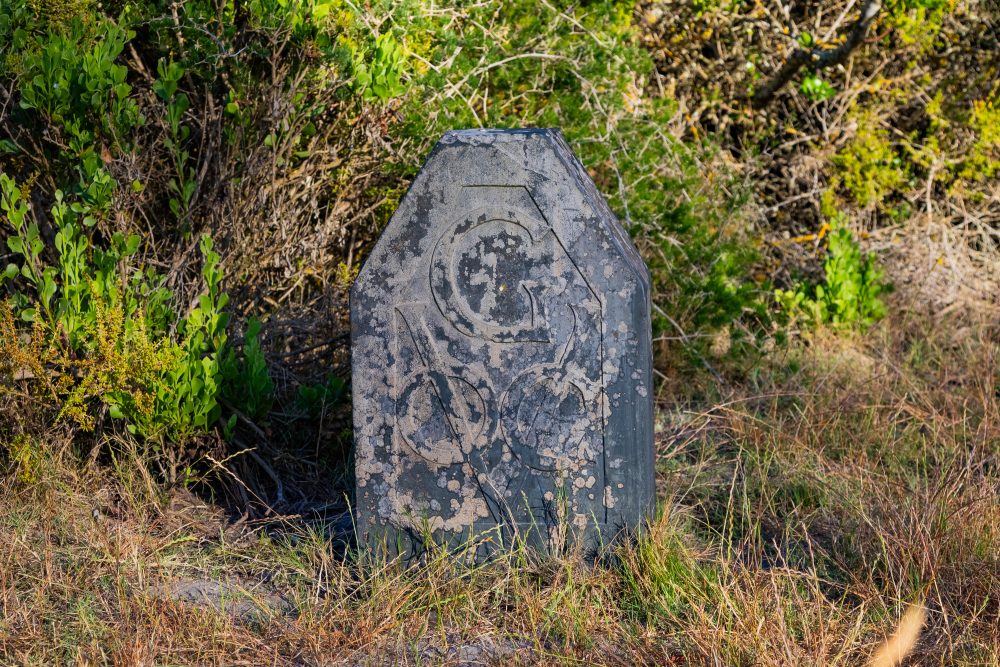
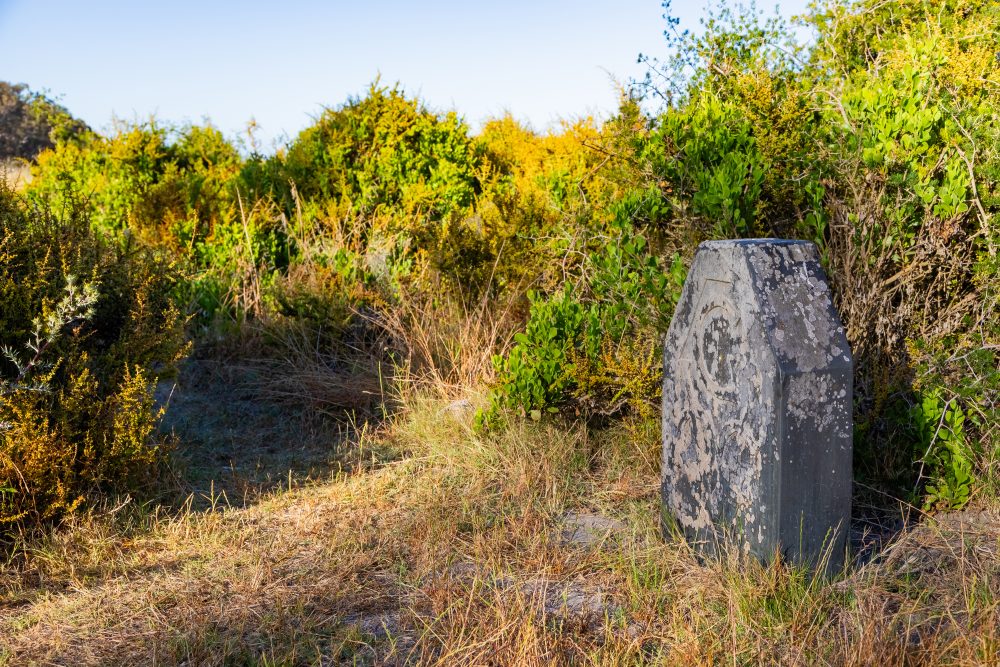
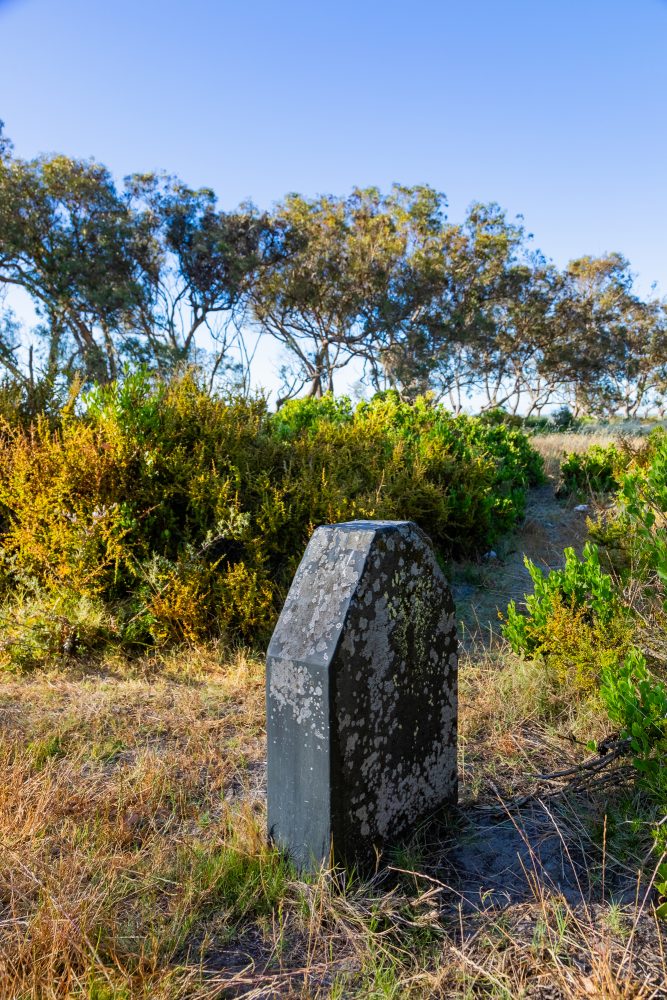
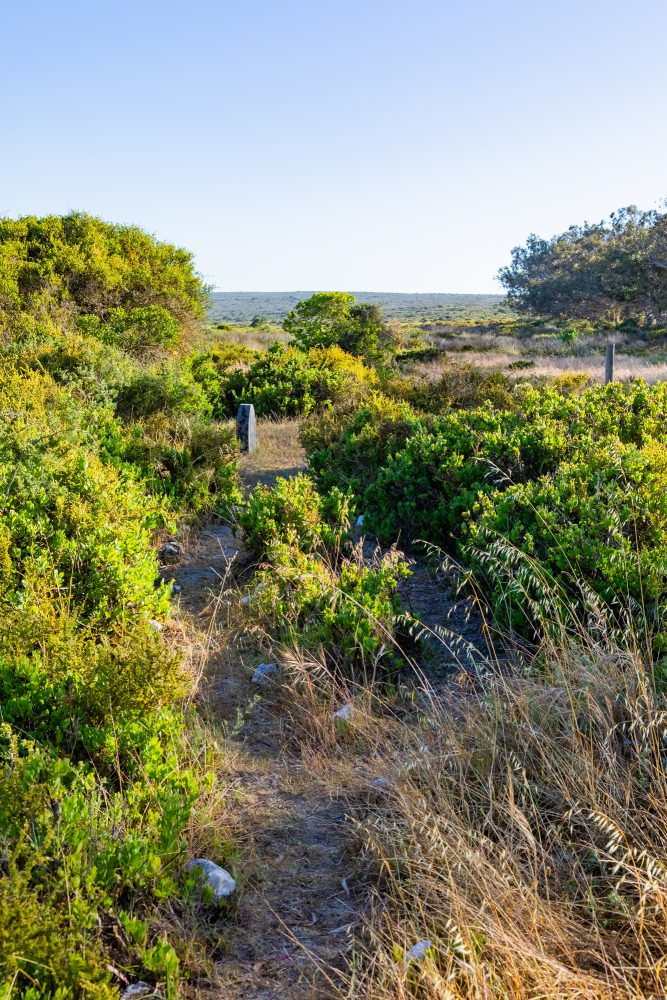
VOC represents the Company’s famous trademark which was often made in stone or beacons. It was used to clearly identify its properties, marking their ownership of various properties and natural resources found within them. This further highlights the politics of land ownership within a colonial context and the wars that were fought at the time. The beacon, made in stone with the VOC logo and the letter ‘G’ (which stands for ‘gemeen’ or general – indicating that the location represents the whole Company rather than a portion of it), was reported at Geelbeksfontein, within West Coast National Park, in 1760 and 1762. It is not clear as to when was it installed. The beacon is mostly likely made of the dark blue Malmesbury shale which might have originated from the company’s slate quarry on the southern portion of Robben Island. This is where slate for building, paving, and for use as markers in gravestones was mined. The VOC beacon serves as a claim to the freshwater source in the vicinity, effectively indicating the colonisation of the given landscape where these markers were found. All legal instruments that were used colonised areas were meant to apply rules and laws that were conducive to the VOC, thus helping to increase its profit. It did not matter how these legal frameworks were received by the local population, who provided cheap labour for the success of the company. The VOC soldiers were first posted at the freshwater fountain, a valuable natural resource, at Geelbeksfontein in 1666. They were later moved, first in 1669 to the site named Oude Post before they were transferred to the locality named Nieuwe Post in 1730. The VOC beacon was previously declared as a National Monument under the then National Monuments Act of 1969.
The illustrious success of the Dutch East India Company was however not without controversy as it was also accompanied by incidents of brutal violence against inhabitants of most of the lands they ventured to, not only in South Africa. Some of their actions could easily be described as acts of genocide against the citizens of the countries where they operated. For instance, the company conquered the Banda Islands in 1621. As a result, it is estimated that about 14 000 citizens had been massacred or enslaved at the hands of the VOC army by 1621. This devastating massacre, which led to the near destruction of the Bundanese population, illustrates the extent to which the company went to entrench its control.
By 1785, the VOC was severely in decline after nearly 200 years as protagonists of slavery, colonialism, and exploitation. The monopoly they enjoyed around the world where they operated allowed the company to deepen the roots of colonialism, exploitation of cheap labour, causing large-scale environmental destruction, and use of violence. They also led to the death of many employees through various ways, among which was ships that wrecked on dangerous coastlines and various diseases.
GPS Waypoints: 33°11'27.8"S 18°07'42.2"E