Eve’s Footprints
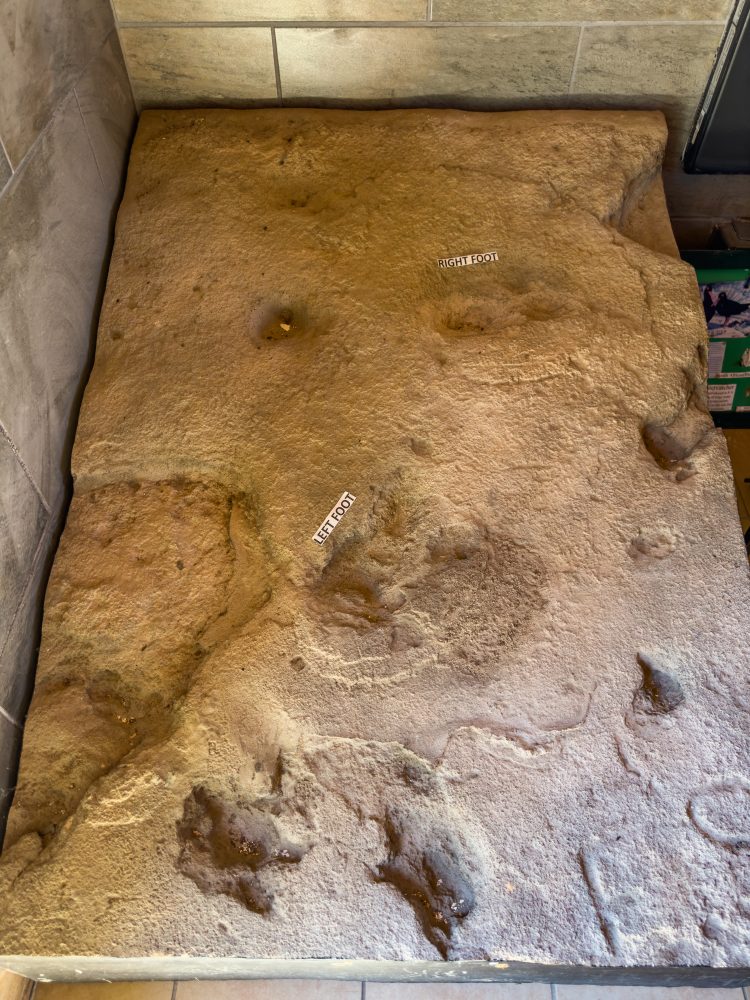
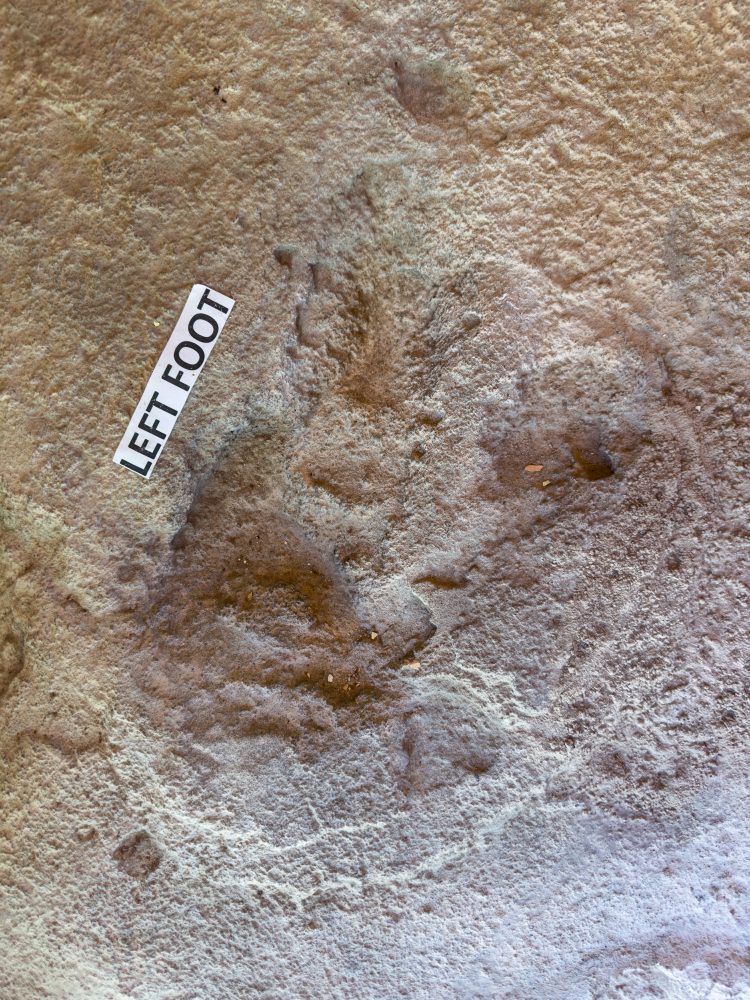
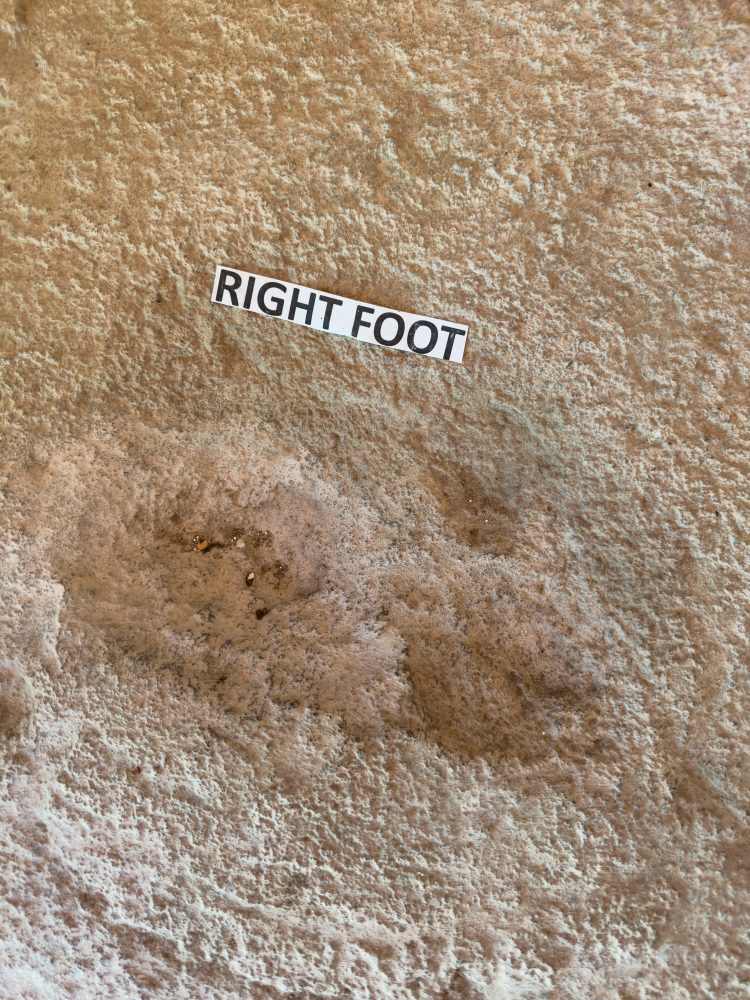
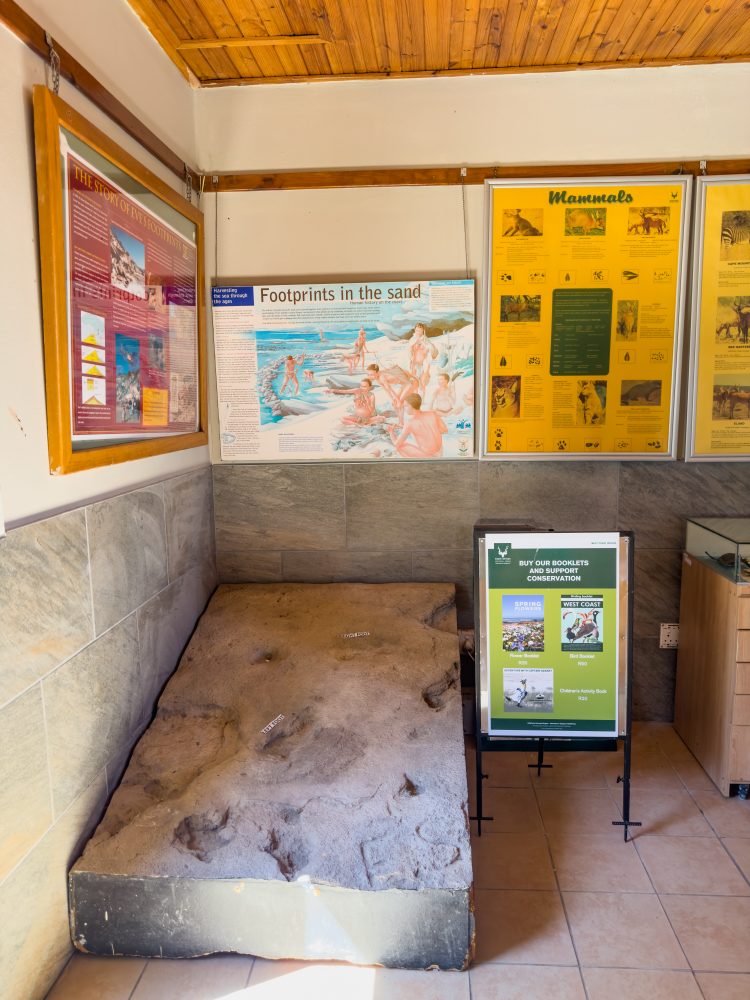
Eve’s Footprints were discovered in 1995 close to the shores of Langebaan Lagoon. The fragile original fossil slab was removed for preservation and is now curated at the Iziko Museum in Cape Town. A replica of the footprints is displayed at the Geelbek Visitor Centre, allowing visitors to the park to appreciate the discovery within its original geographical context. The footprints were formed approximately 117,000 years ago, making them to be among the oldest known fossilised footprints attributed to anatomically modern humans (Homo sapiens). Analysis of the size and stride pattern suggests they were likely made by a young adult female, which inspired the symbolic name ‘Eve’. The footprints were preserved in aeolianite, a type of rock formed from wind-blown (aeolian) dune sand that later became naturally cemented. After the impressions were made in damp sand, layers of additional sand covered them. Over thousands of years, mineral-rich groundwater caused the sand grains to bind together in a process known as lithification. This geological process transformed what could have been a temporary human trace into a fossilised record. Their exceptional clarity provides rare physical evidence of early modern human activity and demonstrates how specific environmental and sedimentary conditions can preserve delicate features such as toe impressions and stride length. The footprints offer insights into anatomy and environmental interaction during a crucial period in human evolution.
These footprints were formed during the Late Pleistocene, at the time when the landscape had coastal dunes bordering a lagoon system. The climate was cooler and sea levels fluctuated, periodically exposing wide stretches of damp, compacted sand along the shoreline. Today, the surrounding environment is characterised by coastal fynbos vegetation, sandy plains, and the biologically rich Langebaan Lagoon. The lagoon supports migratory birds, marine invertebrates, and fish species, providing insight into the types of resources early humans may have accessed along this coastline.
As part of South Africa’s rich archaeological record, Eve’s Footprints contribute to the broader understanding of human origins and migration. Southern Africa is widely recognised as a key region in the story of early modern humans, and this discovery strengthens evidence that coastal environments played an important role in sustaining early populations.
GPS Waypoints: 33°11'40.5"S 18°07'32.5"E