Waterval 1
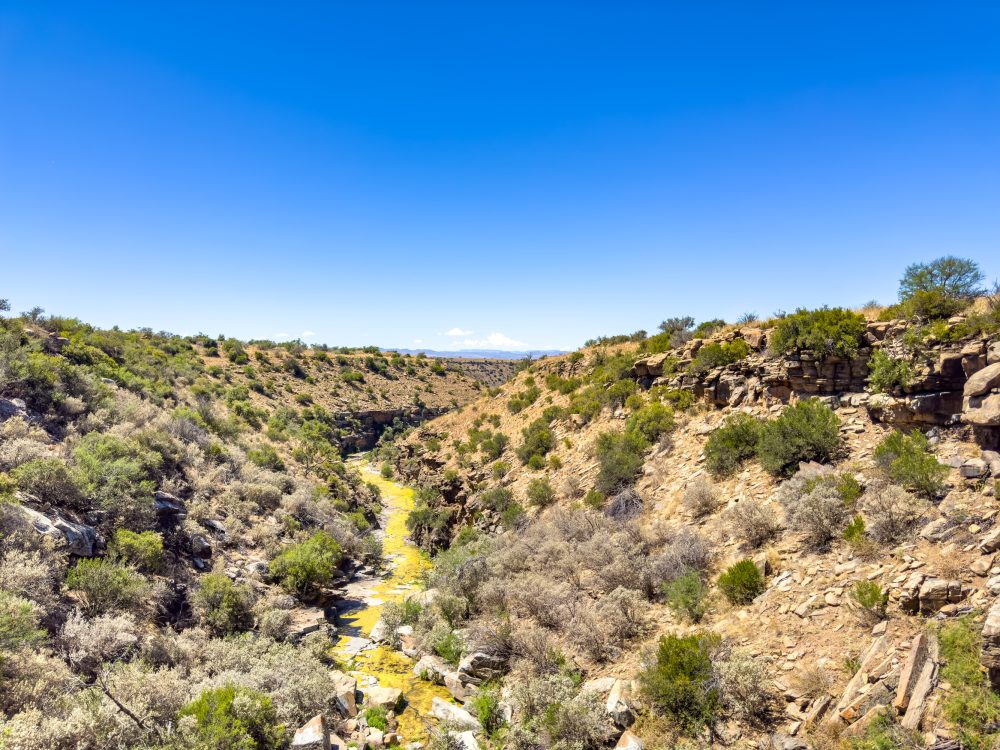
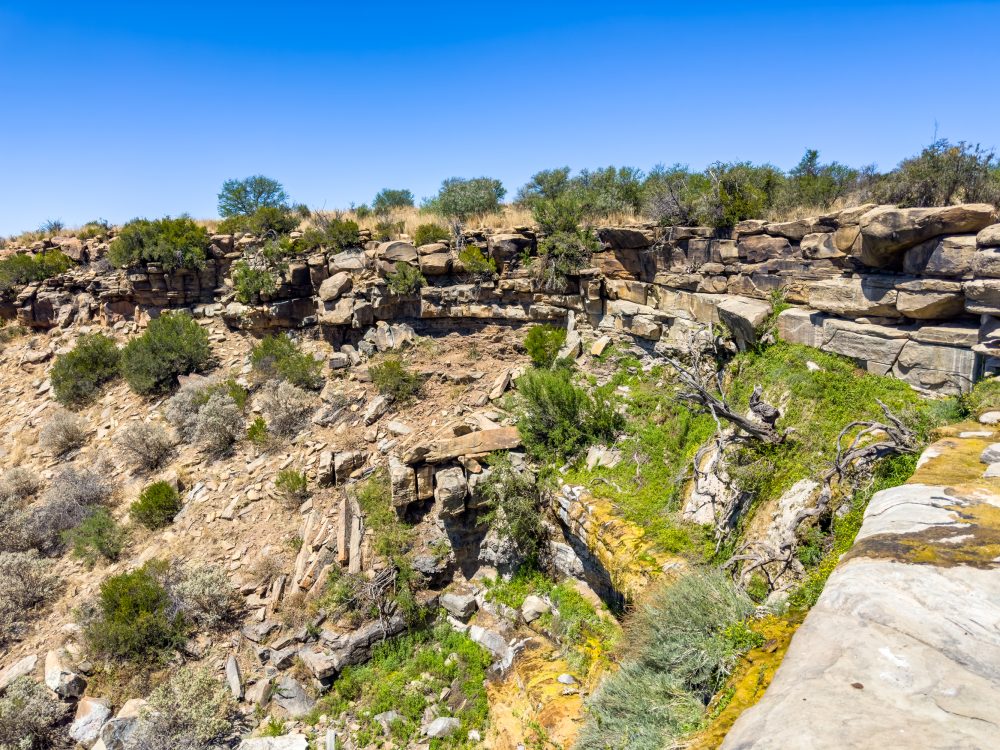
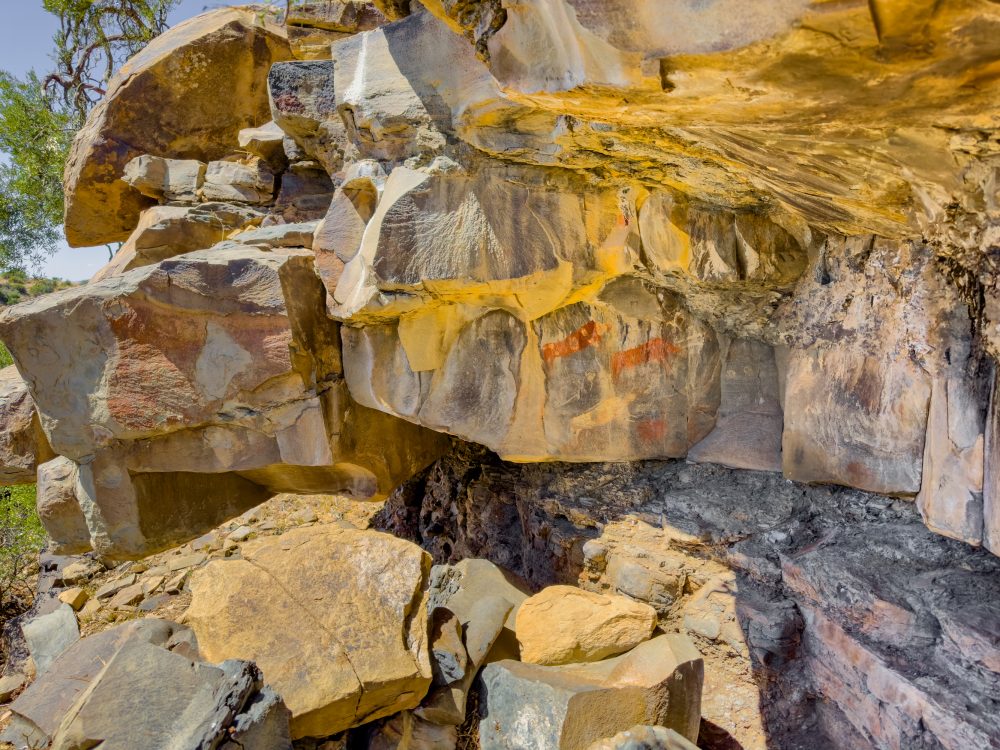
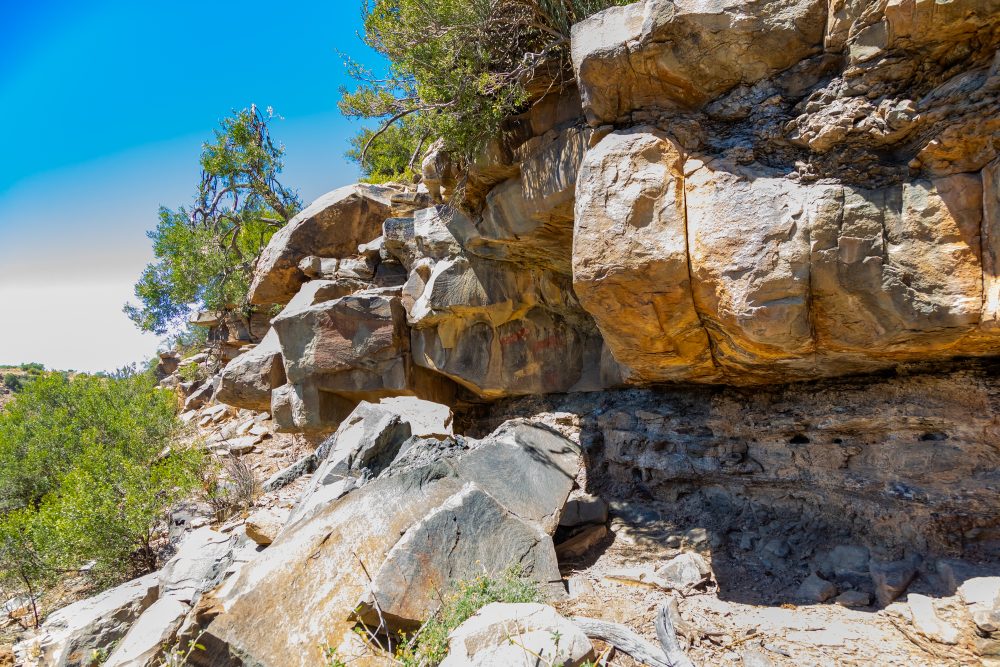
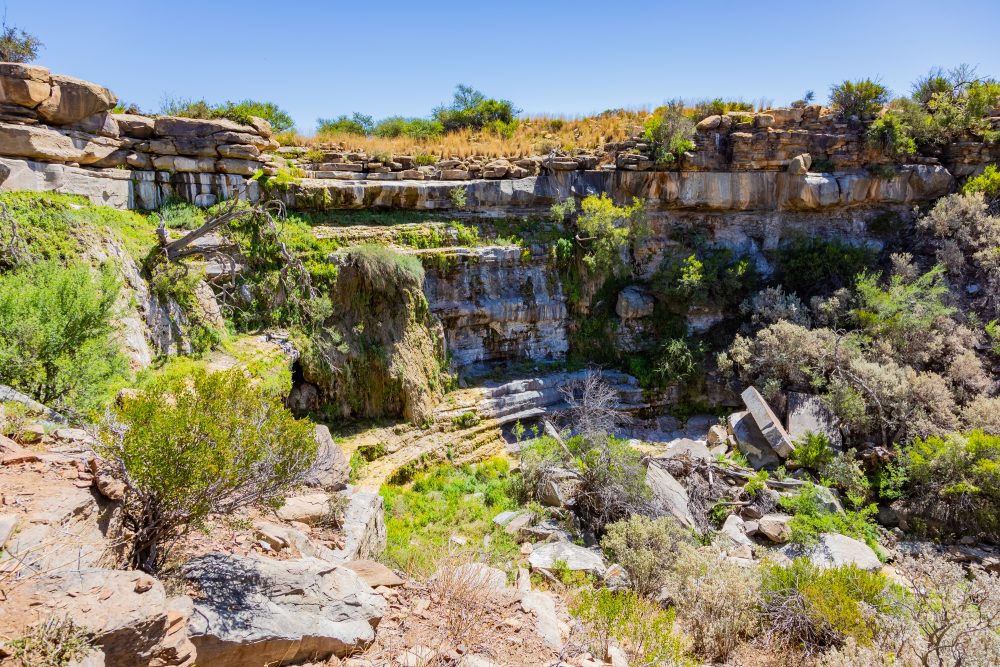
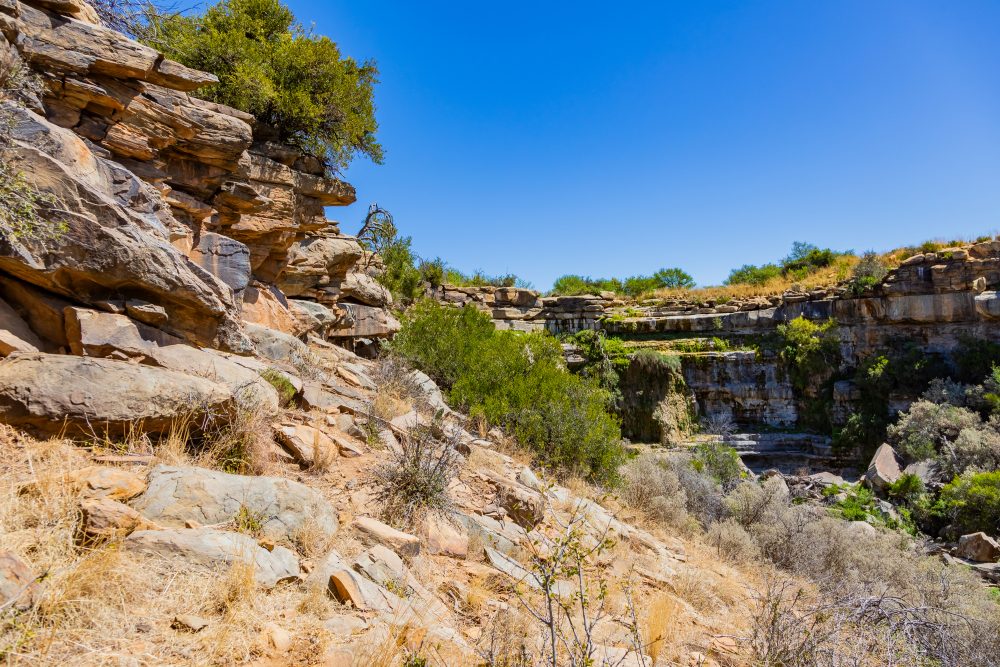
This site, like Bushmenskloof, is located alongside a seasonal river where natural rock shelters and overhangs are found amid the rugged valley terrain. Its location provided shelter, access to water, and proximity to game, making it a strategic place for occupation. The site is relatively easy to access, with two known paths to visit the site.
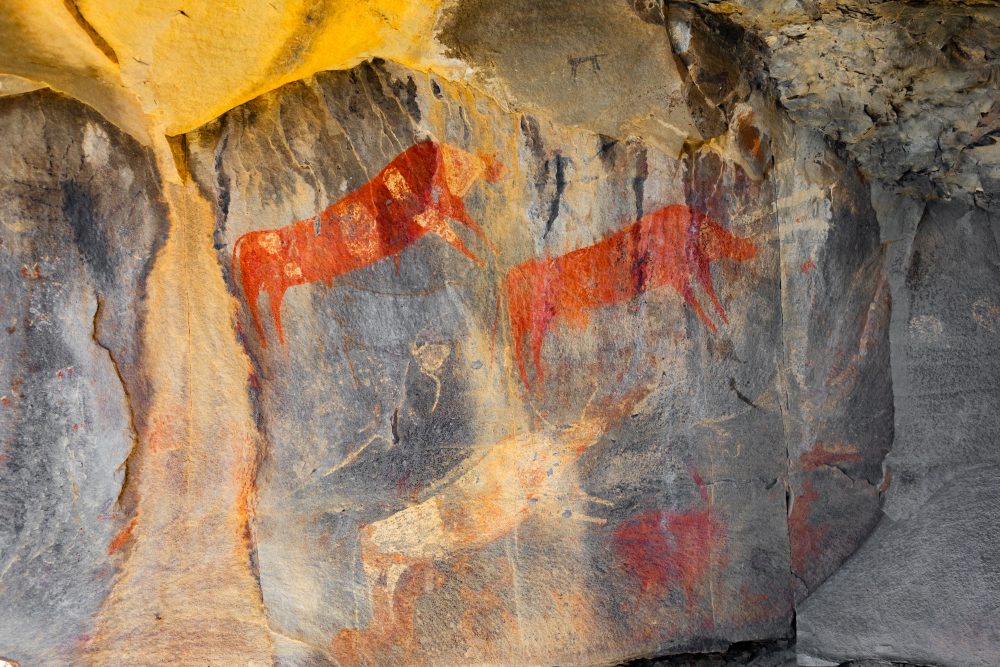
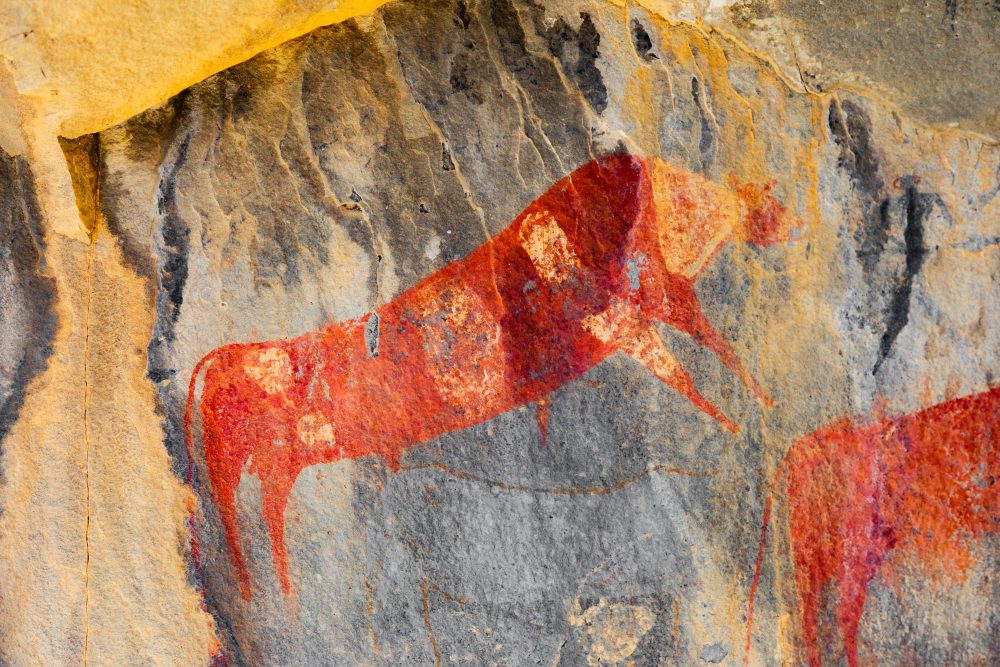
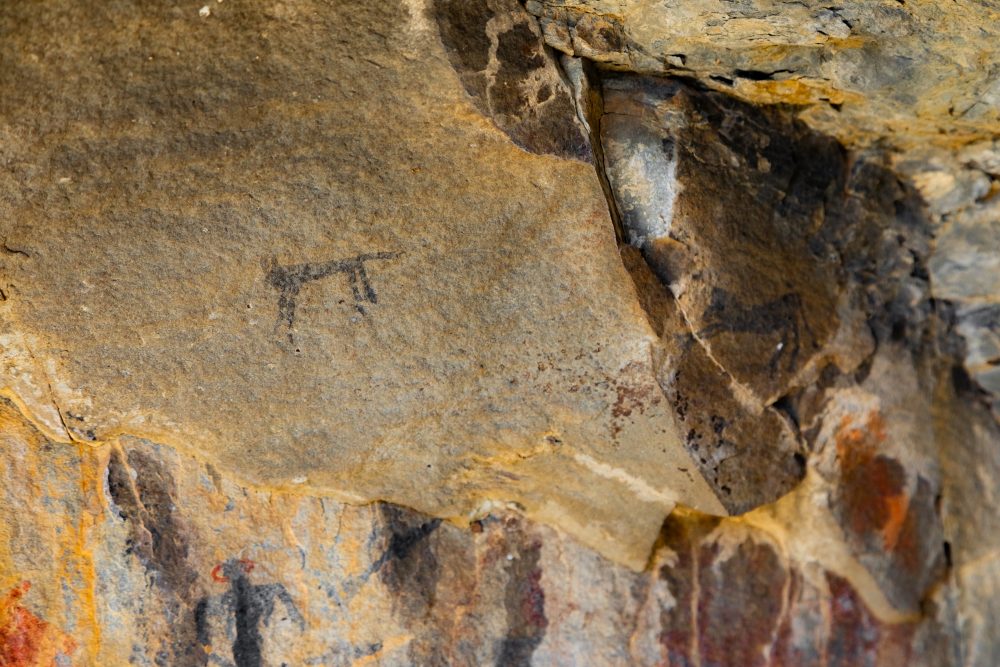
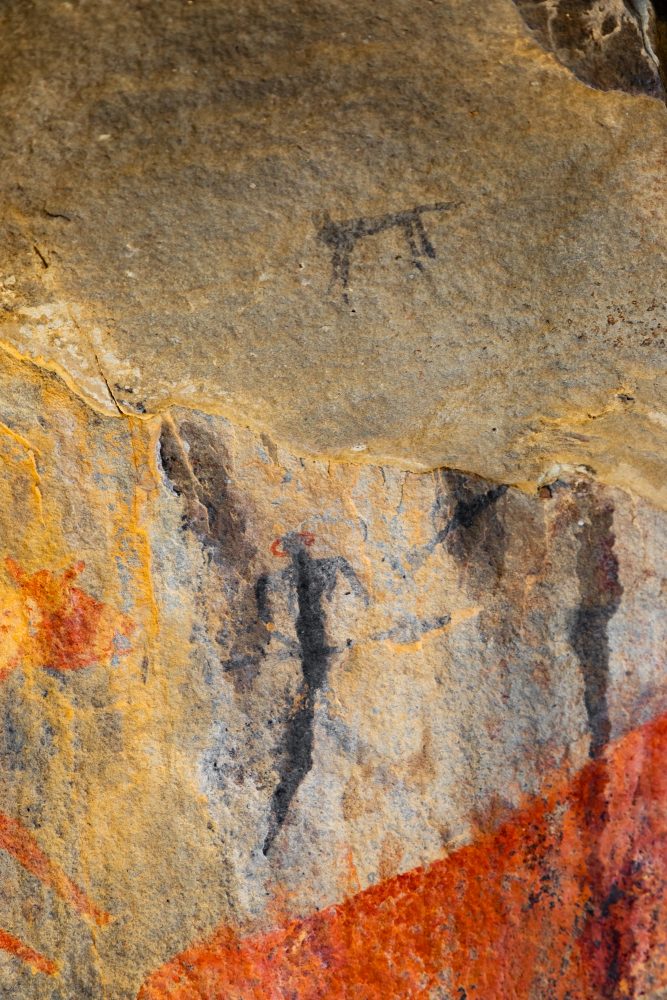
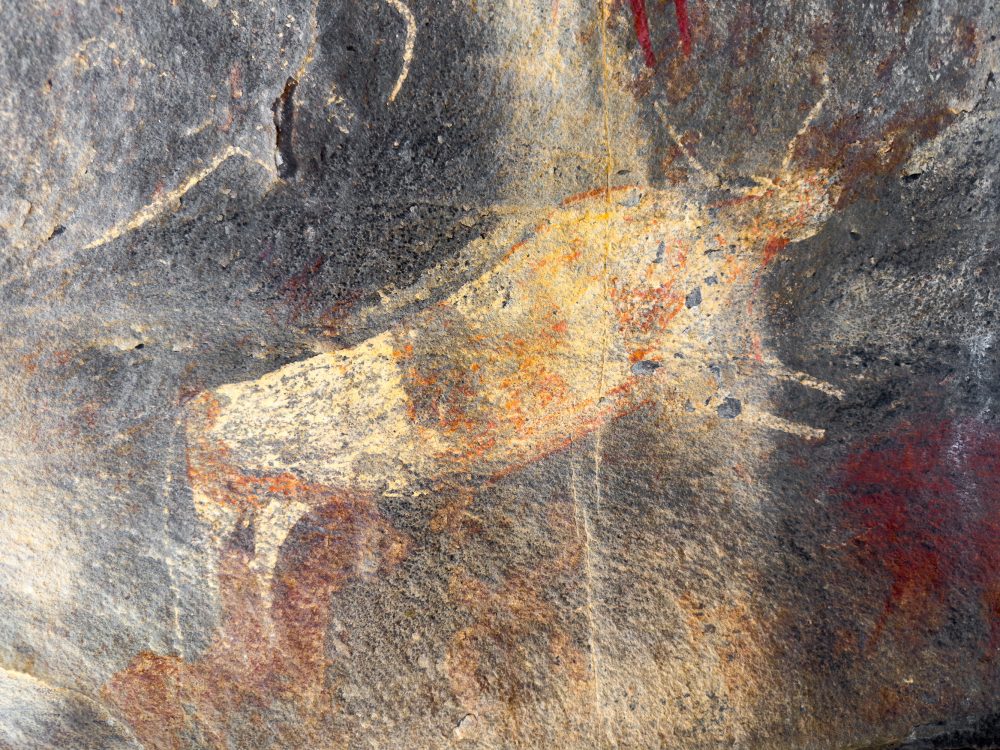
Waterval 1 has rock art that provides insight into historical interactions and social dynamics in the region. The painted panel depicts what looks like five Nguni cattle, a human figure, a jackal, and a crayfish. These motifs were made in red and white, with one of the cattle having been fully painted in white. The inclusion of domesticated cattle alongside wild animals highlights early contact and exchange between San hunter-gatherers and Nguni-speaking agro-pastoralist communities. Such incorporation of cattle in hunter-gatherer rock art reflects social adaptation and the integration of new resources into existing cultural frameworks. According to Manhire et al. (1986: 22), “domestic animals are by no means common and are heavily outnumbered by painting of wild animal” (see also Rudner & Rudner 1959; Cooke 1965; Willcox 1960, 1966; Johnson et al. 1963; Seddon & Vinnicombe 1967; Rudner & Rudner 1970). It has been previously argued that the rock art paintings of cattle are quantitatively more dominant than other domestic animals (i.e. sheep), their representation is geographically limited (Manhire et al. 1986: 22; see Figure 5). There are more cattle motifs in South Africa (Eastern and KwaZulu-Natal provinces) as opposed to any other country within southern Africa (see Viereck 1968; Epstein 1971; Izzett 1980; Walker 1980; Campbell et al. 1980; Mazel 1981). The lack of domestic rock art paintings anywhere in southern Africa cannot be explained as indicating an absence of these animals in the area (see Smith 1985). Engraved domestic animals (i.e. sheep and cattle) are even rarer – with only a few known examples having been recorded within South Africa, in the northern Cape and Free State provinces (Willcox 1963, 1966; Fock 1970, 1972; Fock & Fock 1984).
While noting that the Eastern Cape has more representation of cattle in the eastern portion of the province, Nguni cattle may not be quantitatively well represented in the Bushmen rock art of the area around Mountain Zebra National Park. Also, cattle in the eastern portion of Eastern Cape province are often associated with potential conflict scenes. History tells us that there were cattle raiding incidents that was caused by the arrival of the settlers (Wright 1971). Cattle representations at Waterval 1 are not necessarily associated with scenes of conflicts, making them unique representation.
GPS Waypoints: 32°10'24.2"S 25°26'14.2"E