Bambandyanalo
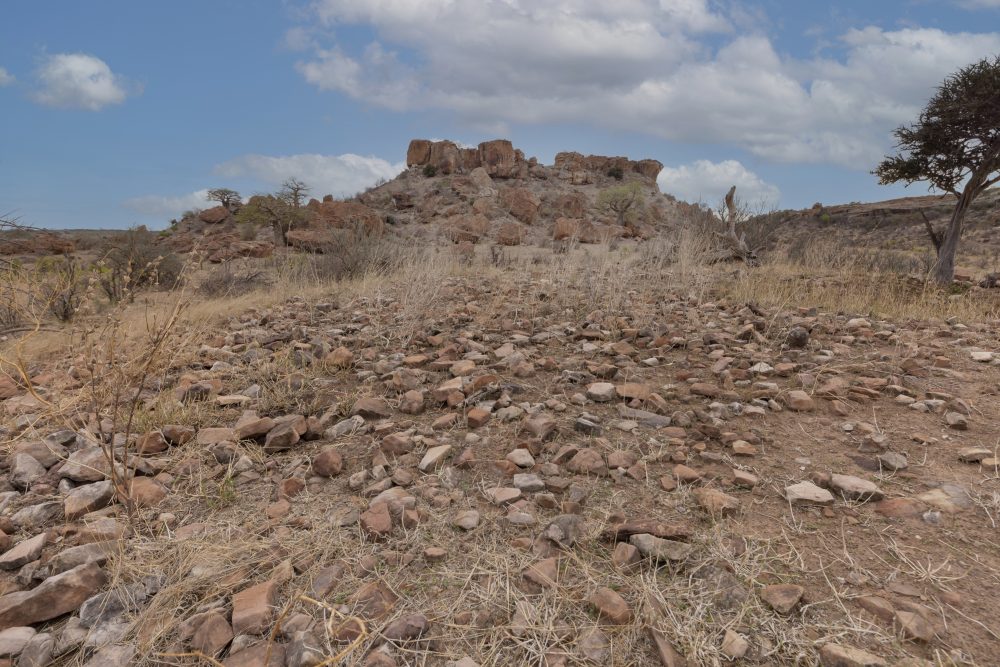
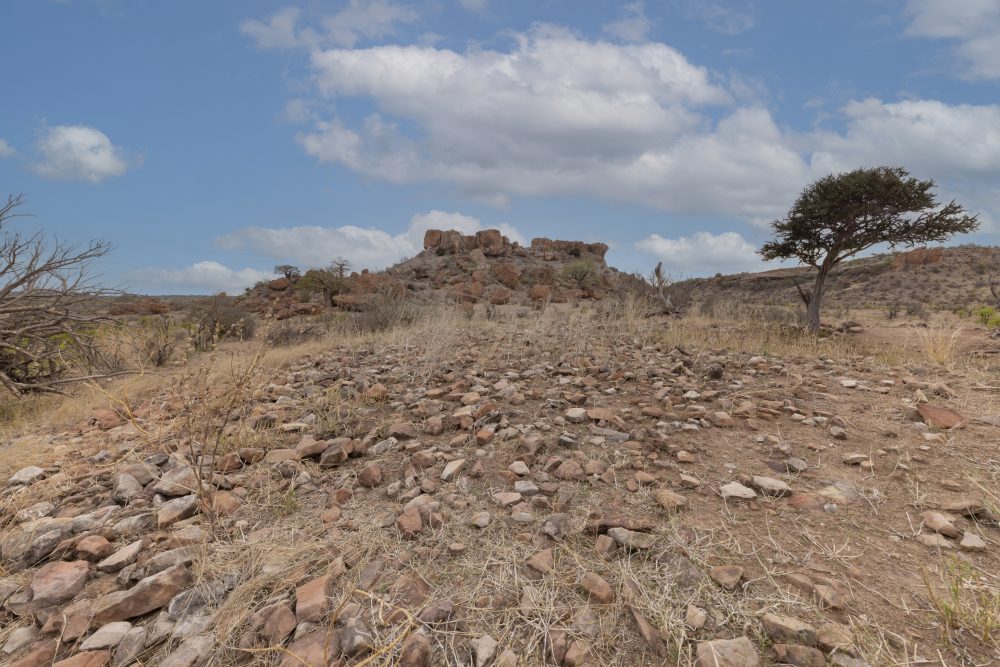
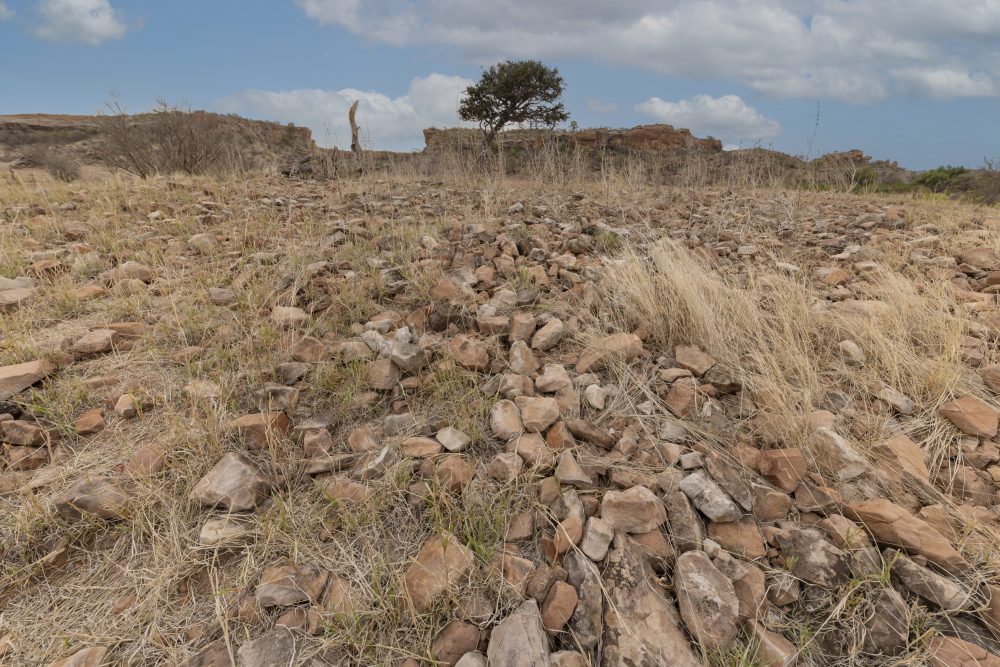
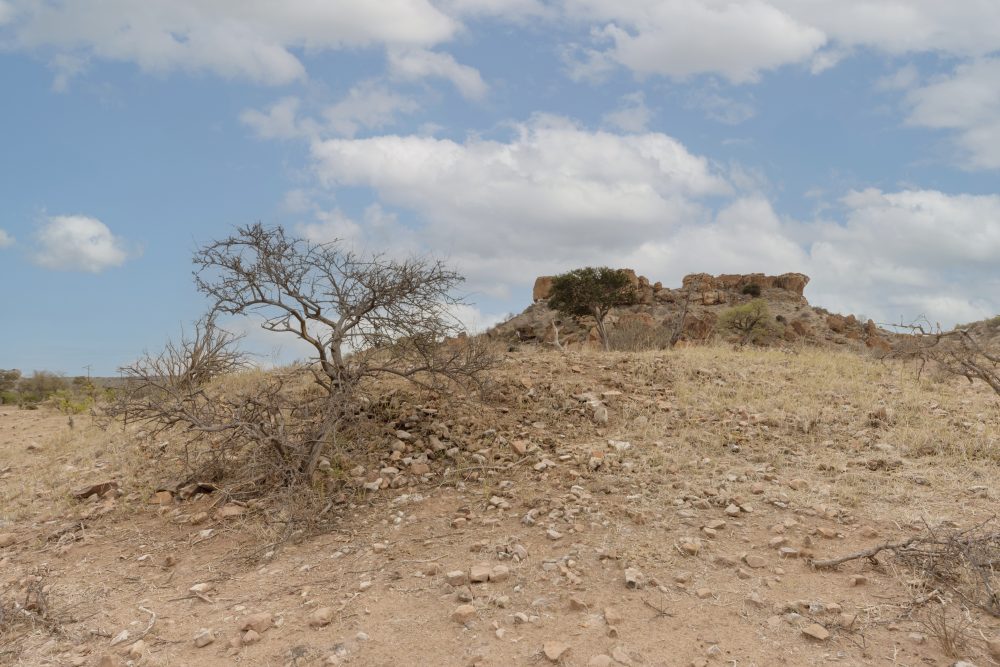
Bambandyanalo, also known as Klein Mapungubwe, is a key archaeological site located near the Mapungubwe Hill. It dates to around AD 1030–1220 and represents an important cultural phase in the transition between earlier Iron Age settlements (such as Schroda and K2) and the rise of the Mapungubwe Kingdom. The site is particularly significant because it provides evidence of the Leopard’s Kopje cultural tradition and the emergence of social and political complexity in the region.
Its key features include stone-walled enclosures and terracing, showing early developments in settlement planning. Pottery that is characteristic of the Leopard’s Kopje tradition is often found in domestic contexts. There is also evidence of livestock keeping, agriculture, and iron smelting. Burials with grave goods were found, hinting at increasing social differentiation – long before this became more elaborated at Mapungubwe Hill. Artefacts such as glass beads, iron tools, and trade items were discovered at the site, suggesting links to wider regional trade networks.
Bambandyanalo, as a transitional site, bridges the cultural and chronological gap between the Zhizo people and the rise of the Mapungubwe State. It marks the beginnings of social stratification, with signs of elite spaces and burial practices, settlement hierarchy, separating living areas based on status and trade expansion, connecting inland communities to Indian Ocean networks.
The site’s proximity to Mapungubwe Hill and its shared material culture strongly suggest that Bambandyanalo was a direct precursor to the Mapungubwe Kingdom, both culturally and politically. It is a vital part of the region’s archaeological sequence, helping to illustrate the development of complex societies in precolonial southern Africa.
GPS Waypoints: 22°10'30"S 29°16'00"E