Stone-Built Structure
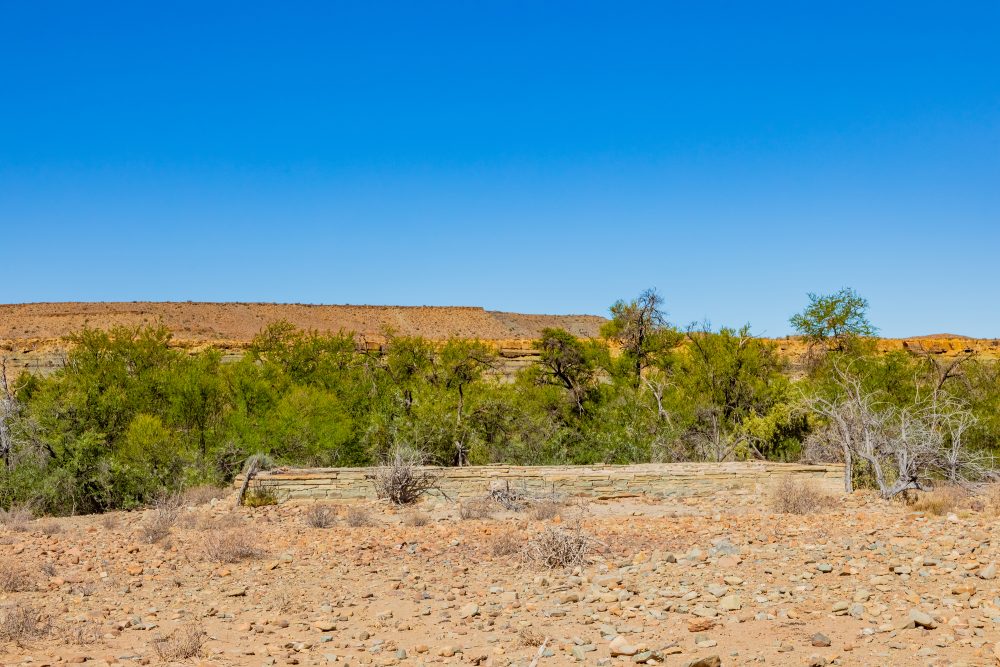
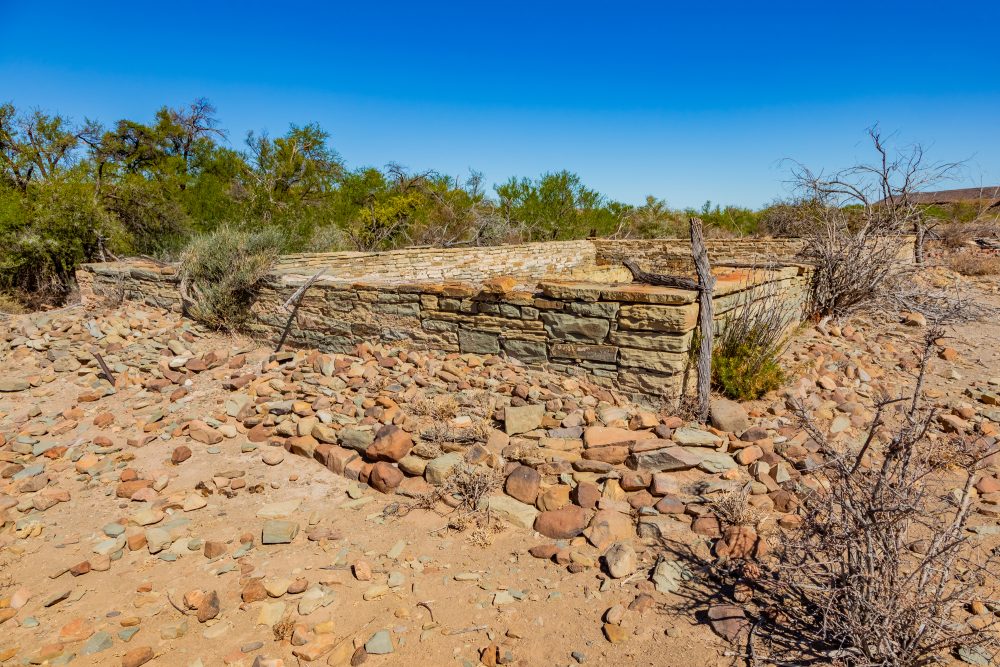
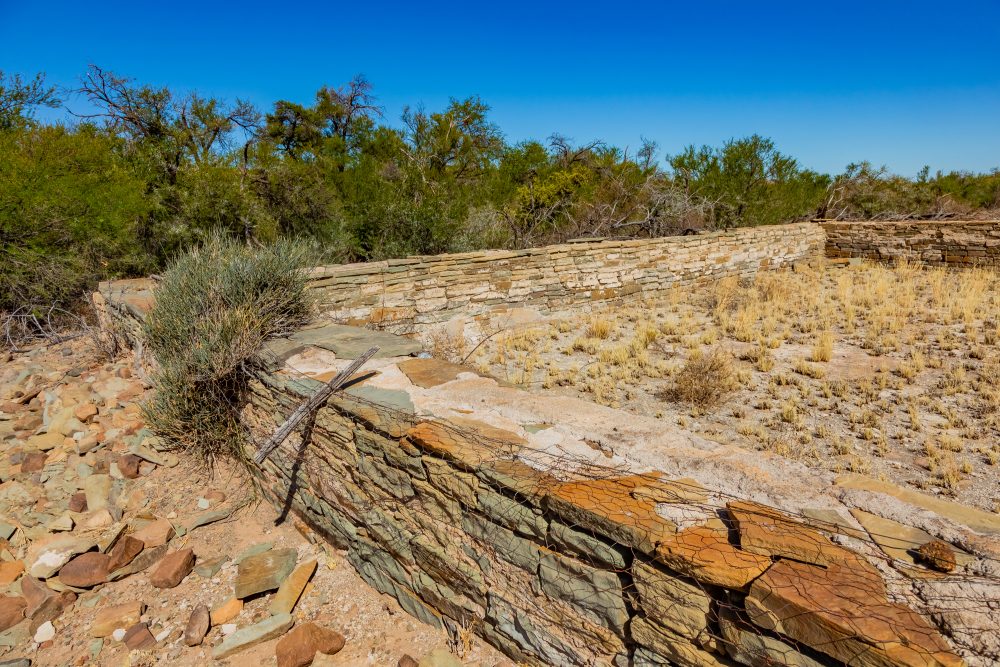
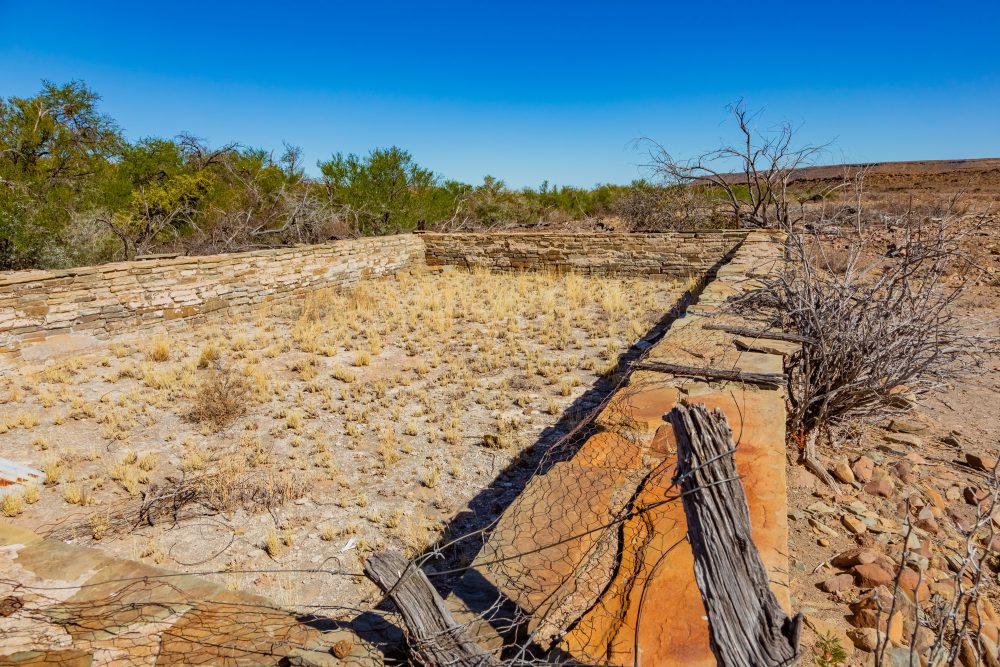
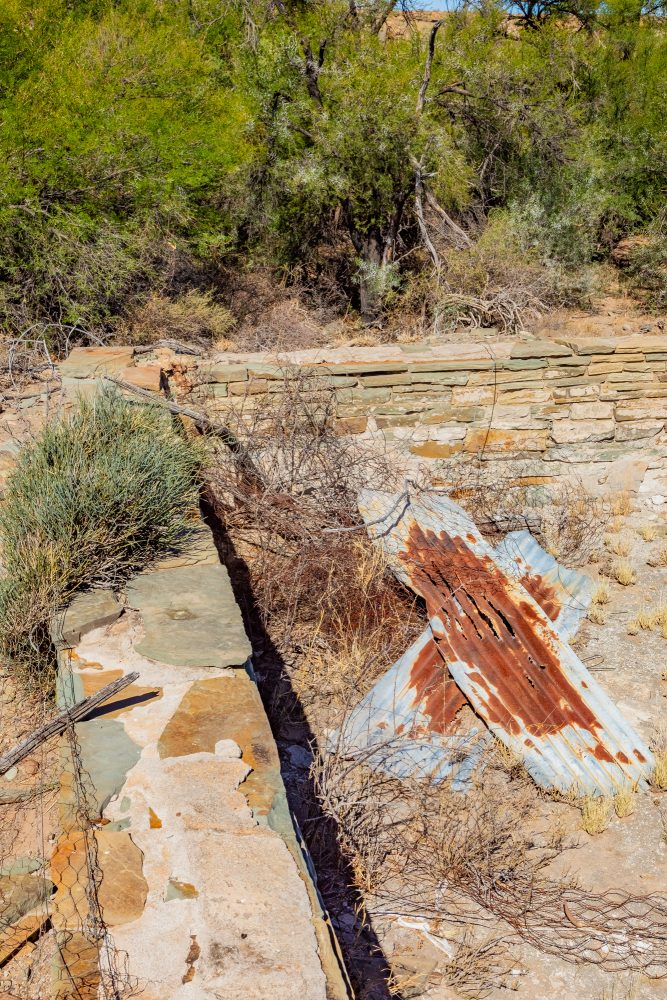
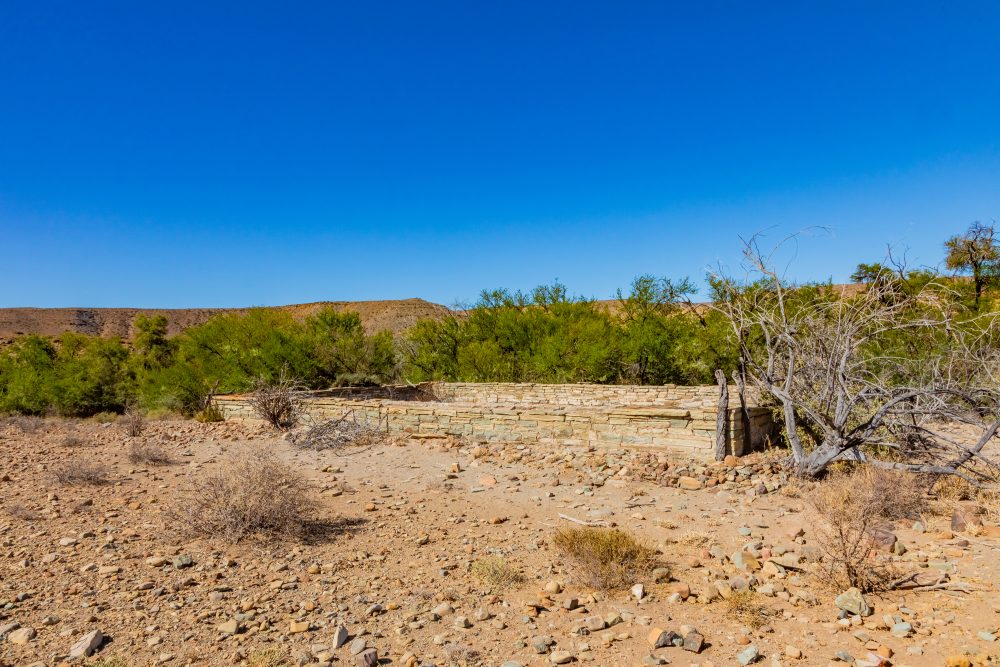
This is a one-room stone structure, which is still relatively intact. The roof, however, has been damaged. There are two inscriptions on this structure, one by the entrance, written ‘Jan’, and the other by the side of the structure, on the outside, written LGU Swanepoel 1908. This is most likely the date when this building was constructed.
The stone-built structure is situated within the semi-arid interior of the Karoo region. It occurs within a landscape characterised by open plains, rocky outcrops, and low ridgelines, in proximity to historic farmsteads, stock routes, or seasonal water sources. The placement of this house reflects functional considerations such as access to grazing, water, and defensible or sheltered terrain, forming part of a broader historical rural landscape.
The surrounding environment is typical of the Karoo biome, with sparse shrub vegetation, low annual rainfall, and marked seasonal temperature extremes. Thus, the harsh climatic conditions influenced both settlement patterns and construction techniques. Stone-built structures offered durability and thermal stability, protecting occupants or stored goods from intense summer heat and cold winter conditions. The structure, whose materials were locally sourced, contributes to a cultural landscape shaped by agricultural, pastoral, and subsistence activities over time. This house serves as evidence of historical construction practices and rural settlement in the Karoo, providing insight into past building technologies, labour organisation, and the social and economic activities of the communities that constructed and used them. Its presence reflects adaptation to environmental constraints, resource availability, and patterns of land use. As a surviving built remnant, it contributes to understanding the organisation of rural society and the development of vernacular architecture in the semi-arid interior of South Africa.
GPS Waypoints: 32°14'23.4"S 22°08'32.5"E