Darlington Graveyards
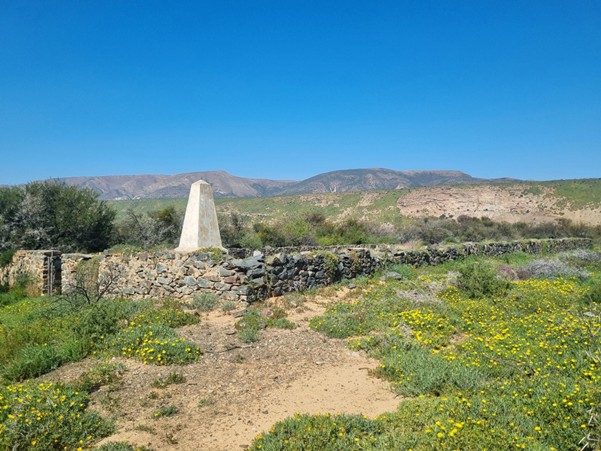
South Africa is a country whose political history has been largely defined by racial laws which were enforced following the deepening of colonisation. Such racial laws manifested in various ways. Burial grounds were not sparred, as illustrated at two graveyards within this section of the Addo Elephant National Park. What these graveyards illustrate, therefore, is that racism was not only limited to the period when individuals were alive but was extended beyond their passing – to their final resting places.
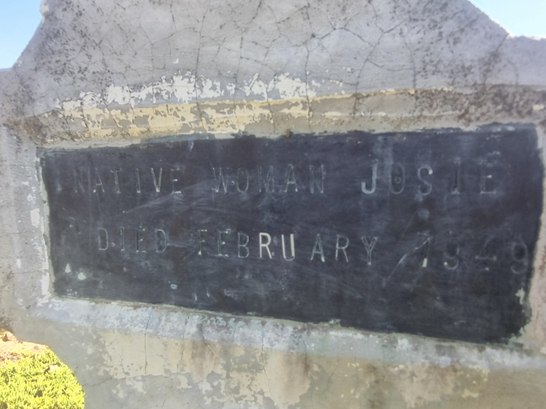
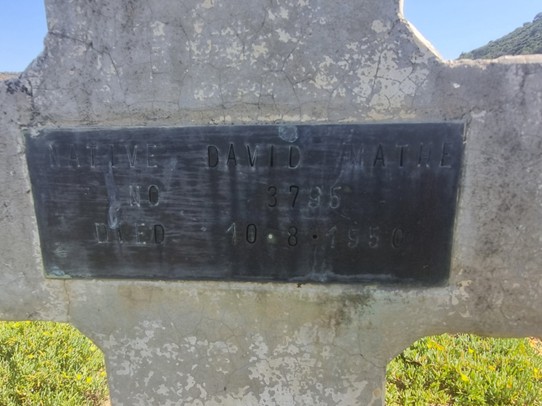
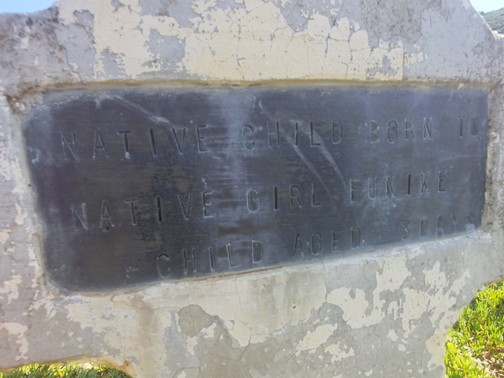
The first small and fenced graveyard, called a quarry, has 24 historic graves dating to between 1918 and 1922. About 20 years graves were added at a later period, and these date to the period between the late 1940s and early 1950s. All these younger graves are outside the fenced area. Some of these graves have very disturbing headstones, with individuals referred to as boys and girls, even though they were grown-ups. Their only crime was being African and slaves in their own country. Among the disturbing bronze plates on the headstones are: Native Chief no. 2333 died 3-10-1947; Native woman Jose died February 1949; Native Jackson Busiami no. 4486 died 5-2-1952; Native Girl child Funike child died 3 days; Native David Mathe no. 3795 died 10-8-1950; Native Child of Boy called German. About 27 other graves are marked with stone cairns and soil mounds.
Some of the burials within this graveyard belong to the Lambani, Olifant, and Gebore families. Individuals from these families are related to some of the staff members employed within the park, who are based in the Darlington Section.
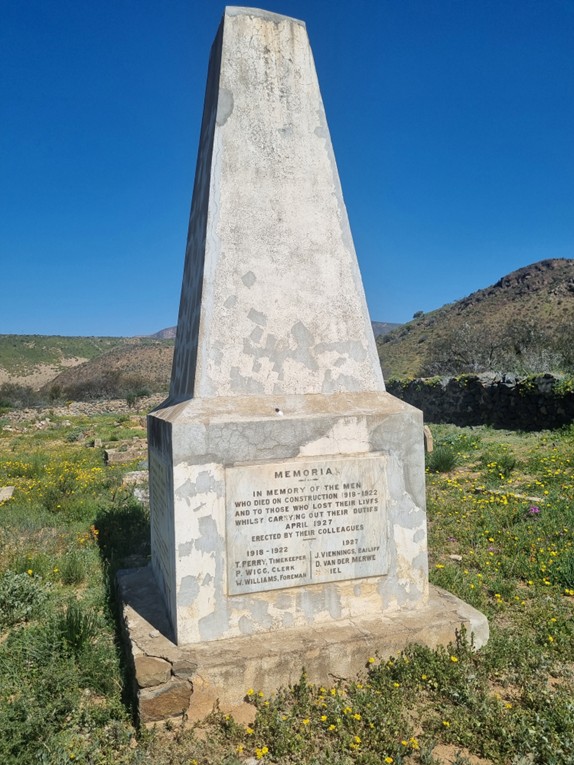
The second stone-walled graveyard, with about 60 burials, belongs to those who died during the construction of the Darlington Dam wall. Other than the graves, there is a limestone conical memorial pillar, built inside the cemetery, which was erected by their colleagues in honour of the selected few who died during the construction of the dam wall. Among those who were commemorated are Perry, T.; Wigg, P.; Williams, W.; Viennings, J.; van de Merwe, D.; Nife, N.; Mrs Thompson; and Smith, J. V. Also honoured were children: Butler, G.; de Lange, H.; Wright, E.; Taylor, M.; Nixon, A.; Boths, F.; Neill, G.; and Baby Smith). None of the African workers are mentioned by name, because they were not even known by their full identity. Their only form of acknowledgement in the graveyard is a plaque dedicated to the “unknown buried within these sacred walls.”