Alexandria Dune Field Shell Middens
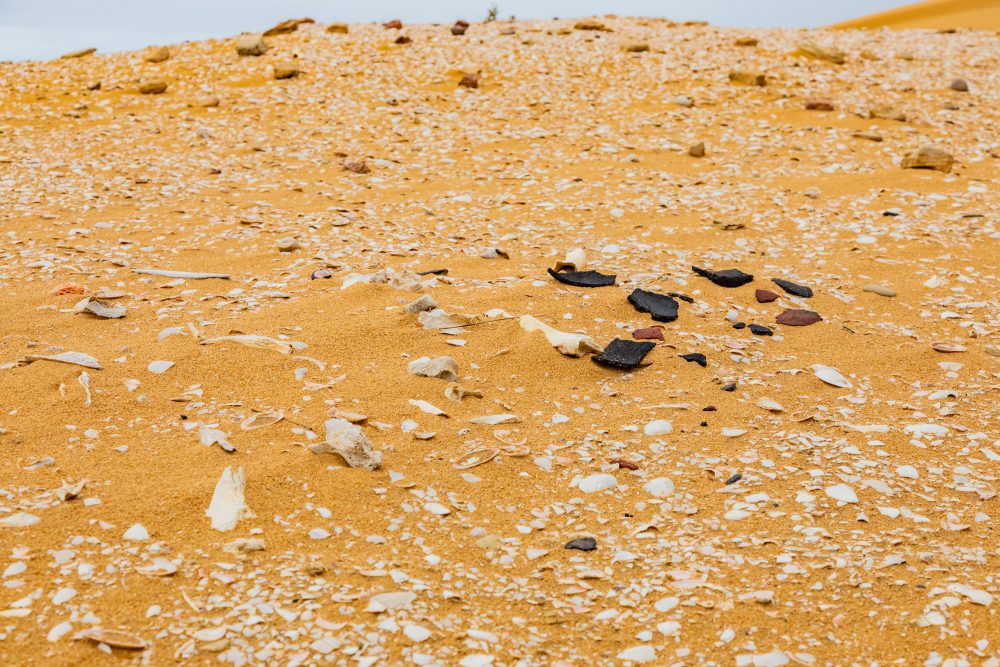
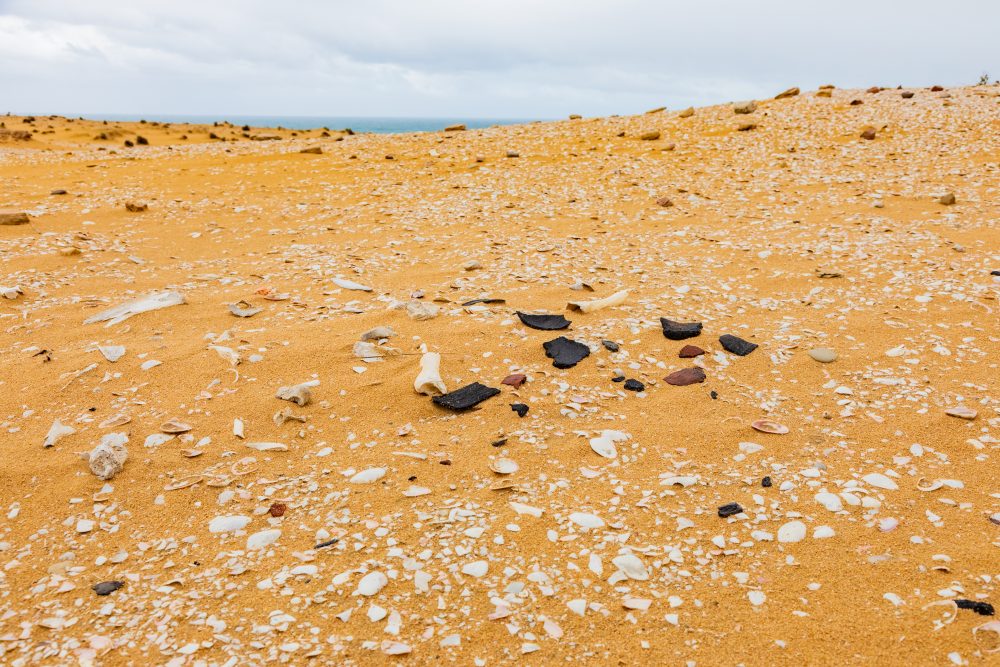
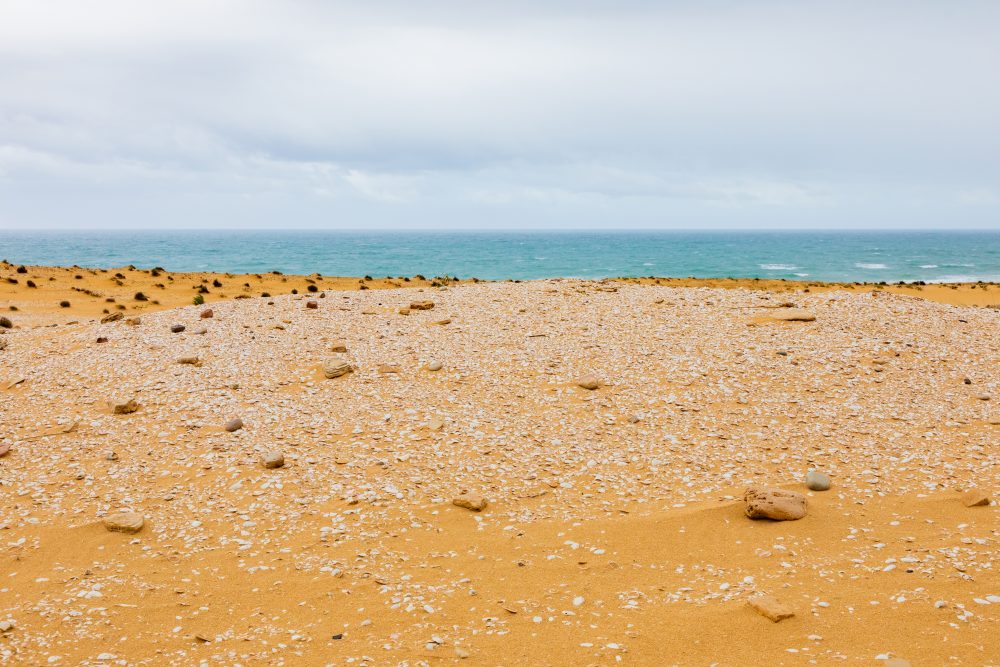
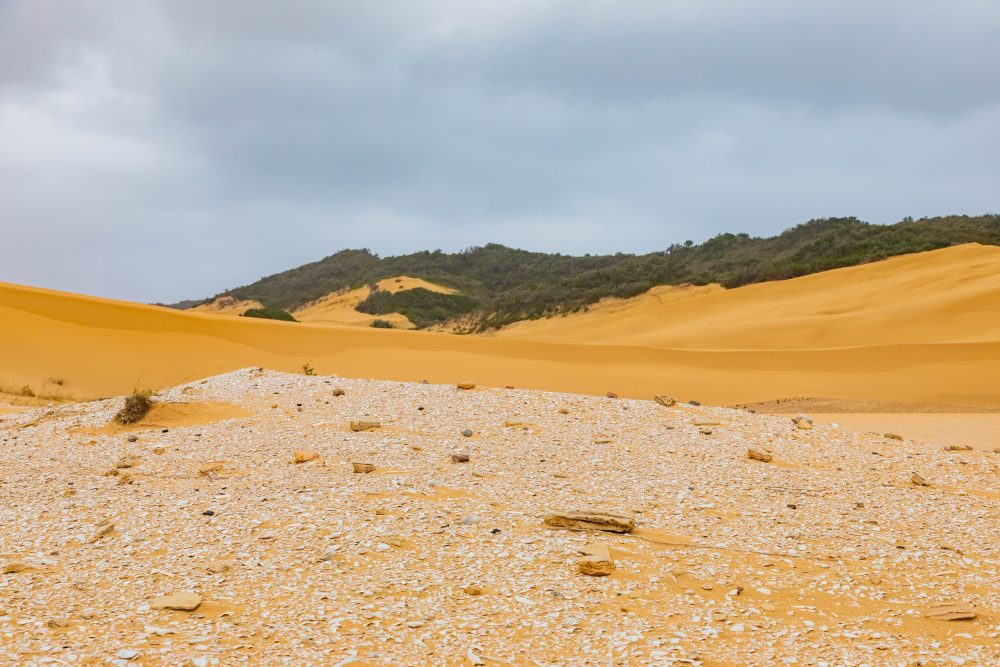
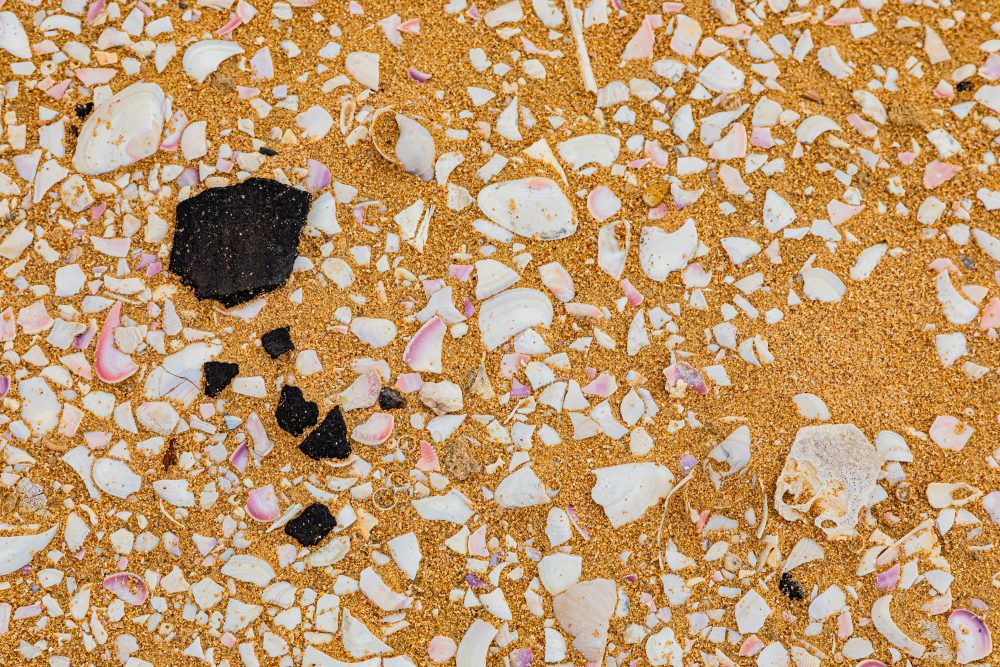
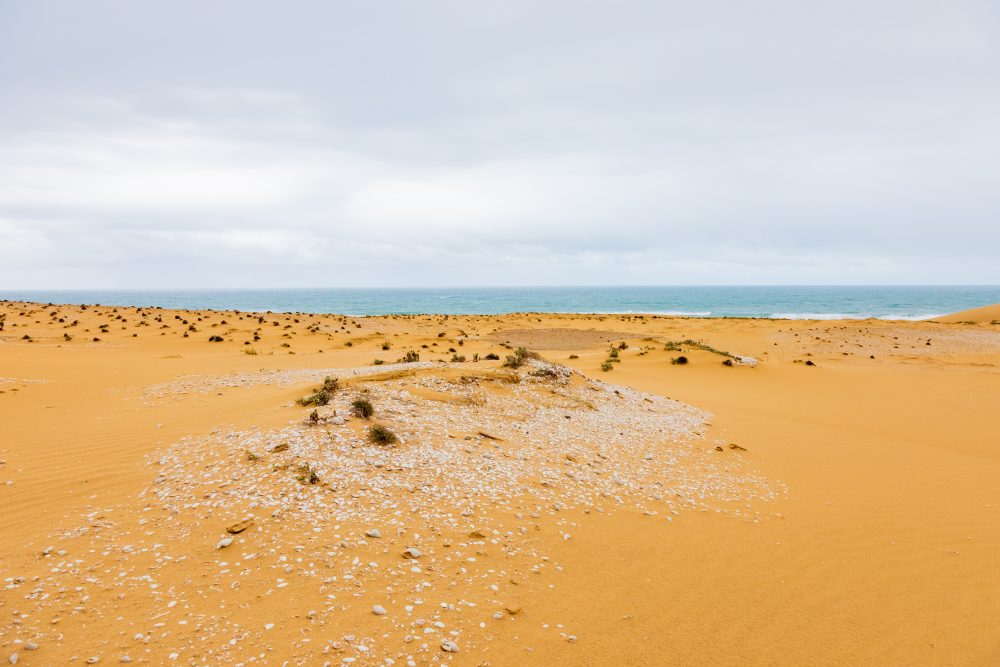
The Alexandria Dune Field, situated along the Bushman’s River, it is one of the largest active coastal dune systems in the southern hemisphere. Stretching for kilometres along the shoreline, its landscape is characterised by shifting dunes, sheltered valleys, coastal thicket, and access to rich marine resources. This dynamic environment would have offered early coastal foragers a varied and abundant resource base, ranging from shellfish, fish, game, and plant foods.
The dune field consists primarily of fine, windblown quartz sands that originate from ancient marine deposits. Constantly shaped by prevailing coastal winds, the dunes move slowly inland, revealing archaeological surfaces such as shell middens. Beneath these sands lie older palaeo-dunes and estuarine deposits that preserve evidence of changing sea levels and long-term environmental changes. This constantly evolving geological setting has protected and exposed archaeological sites over time, creating a layered landscape in which past human activities are recorded in pockets across the dunes, coastal cliffs, and nearby valleys.
The Alexandria Dune Field is culturally significant for its numerous shell middens, which serve as direct evidence of long-term human occupation along the coast. Created by the region’s nomadic Strandloper communities, ancestors of the Khoi and San people, these shell middens contain shells, bones, stone tools, pottery fragments, and other remnants of daily life. Together, these archaeological materials offer crucial insights into the coastal foraging strategies of early communities. They reveal much about subsistence, technology, and mobility. For instance, the remains of shellfish, fauna, and stone tools show selective harvesting and hunting practices and a technological tradition respectively. These archaeological materials are valuable to scholars when reconstructing patterns of seasonal movement, resource management, and social organisation among coastal foragers. One of the most remarkable aspects of the Alexandria middens is the presence of white mussel shells that are of the same type as those that are found in archaeological sites within the Zuurberg Mountains. This connection indicates long distance travel, exchange networks, or trade routes extending more than 40 kilometres inland. Such evidence demonstrates that coastal and inland communities were not isolated. Rather, these societies were part of broader social landscapes involving movement of materials and cultural practices across significant distances.
The Alexandria Dune Field shell middens stand as a valuable archaeological archive that helps to preserve a rich record of human interaction within a changing coastal environment. They illuminate the complex cultural heritage of the earliest inhabitants and reaffirm the importance of coastal landscapes in shaping historic life.
GPS Waypoints: 33°45'20.4"S 26°22'08.4"E