Status Unknown
There are many Tuskers that have been identifed as presumed dead, as we are unsure of their current status.

Babalala (Photo by Dewald Keet)
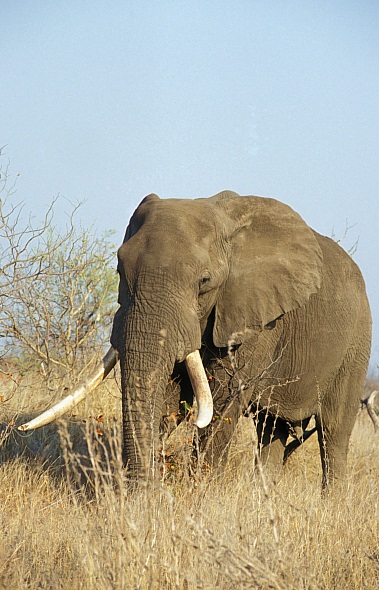
Bakoor (Photographer unknown)
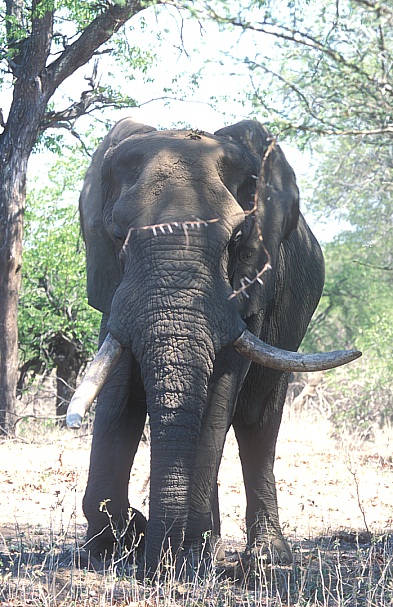
Gombanyokile (Photo by Johan Marais)
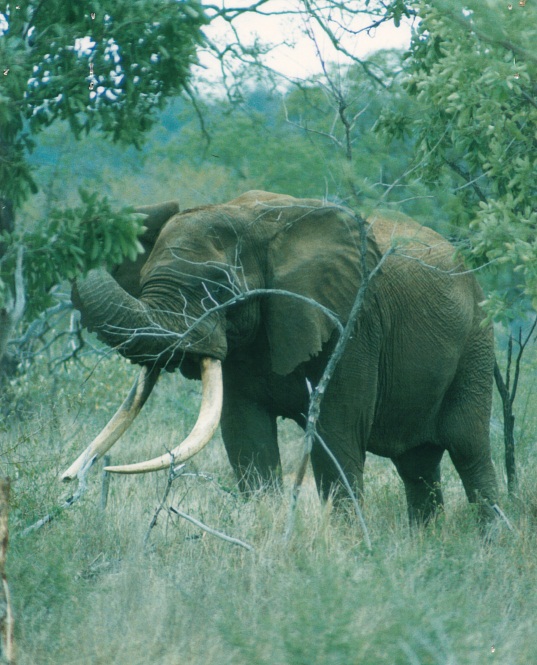
Gumbandebvu (Photo by SA Police)
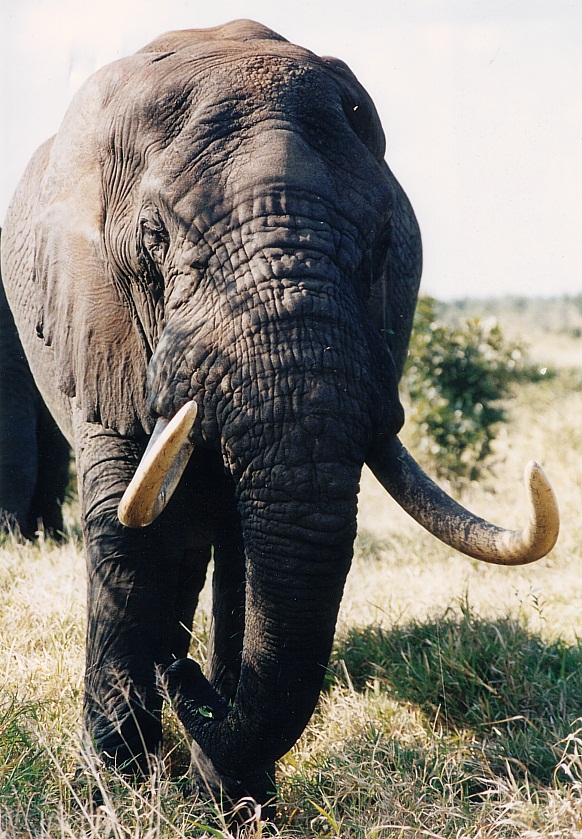
Hlamalala (Photographer unknown)
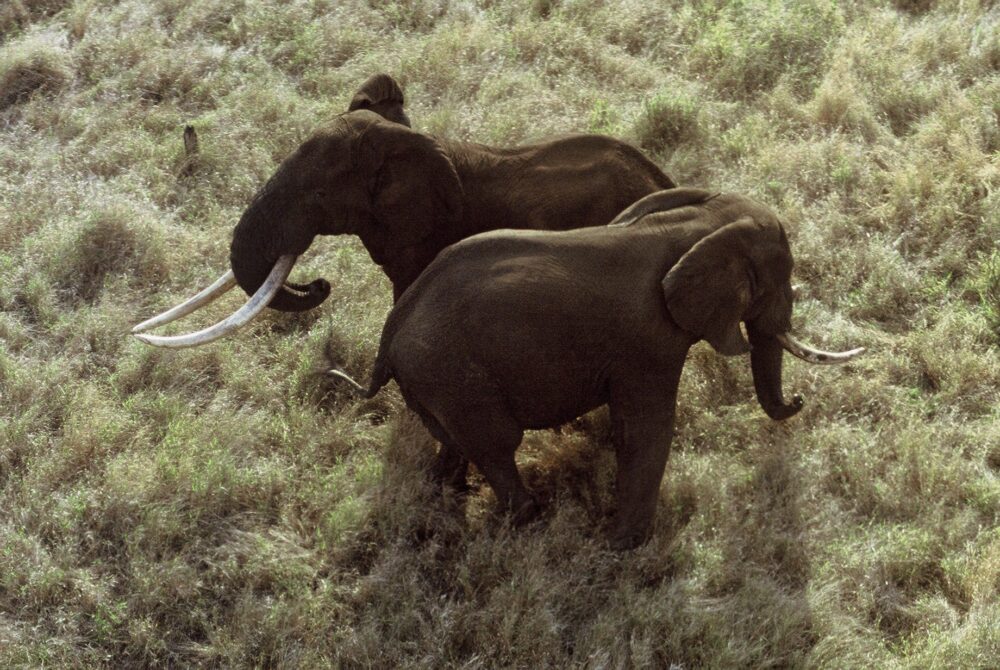
Mac (Photo by Dr Ian Whyte)
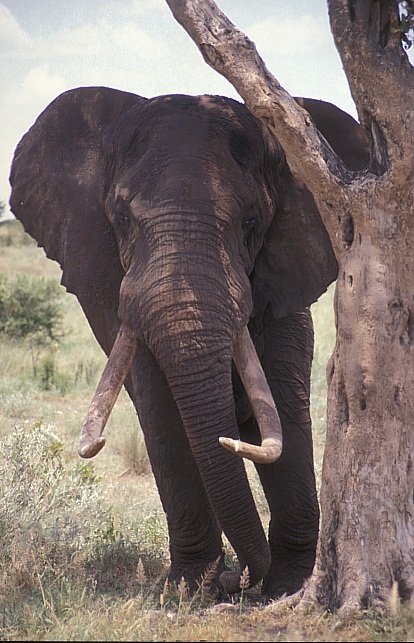
Mahudzi (Photo by Johan Marais)
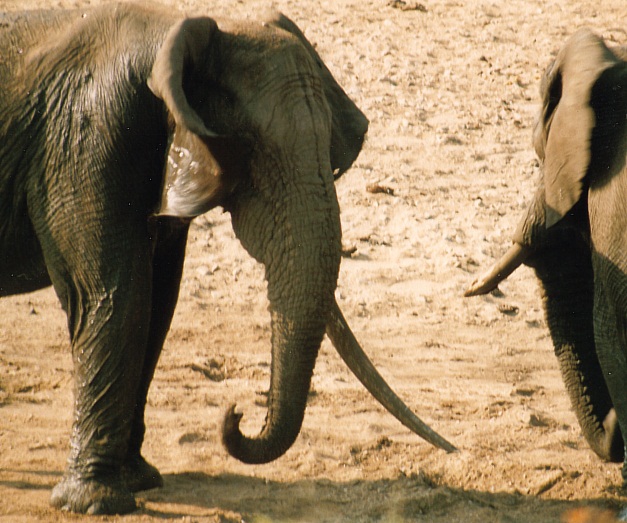
Mbohle (Photo by M Roets)

Metsi-Metsi (Photo by Dr Ian Whyte)
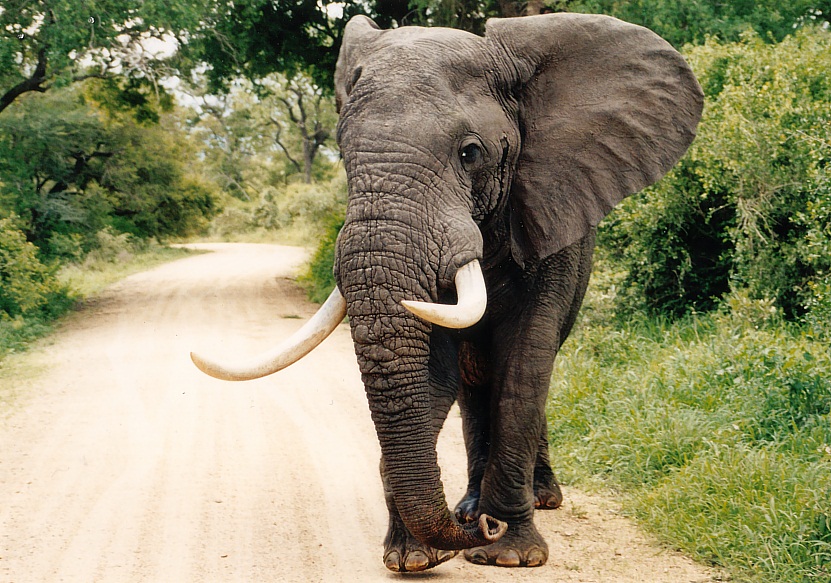
Mluwati (Photo by Stuart Bassil)
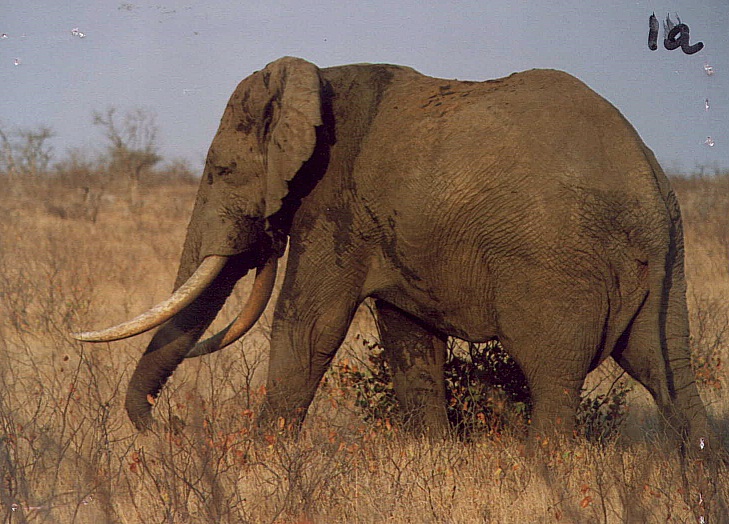
Mungana (Photo by M Roets)
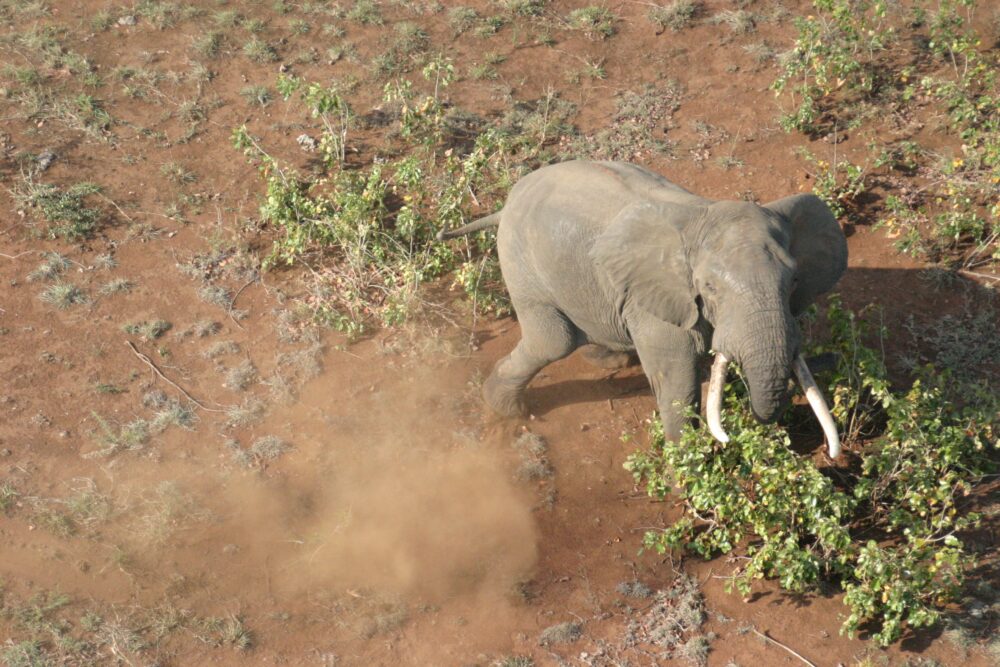
Mutlumuvi (Photo by Dr Ian Whyte)
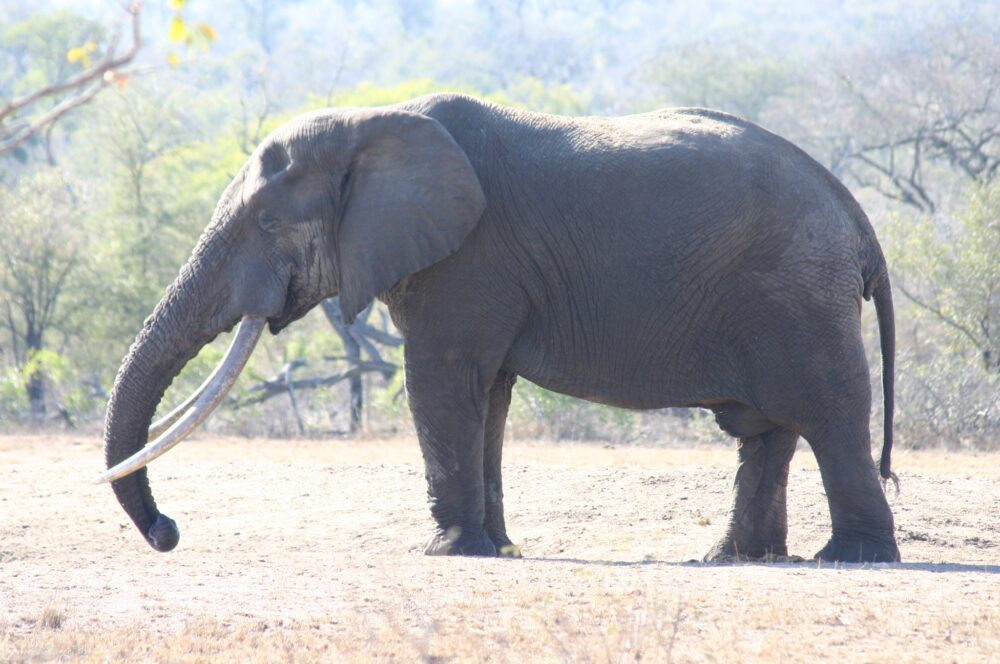
Ngwenyene (Photo by Manie Rossouw)
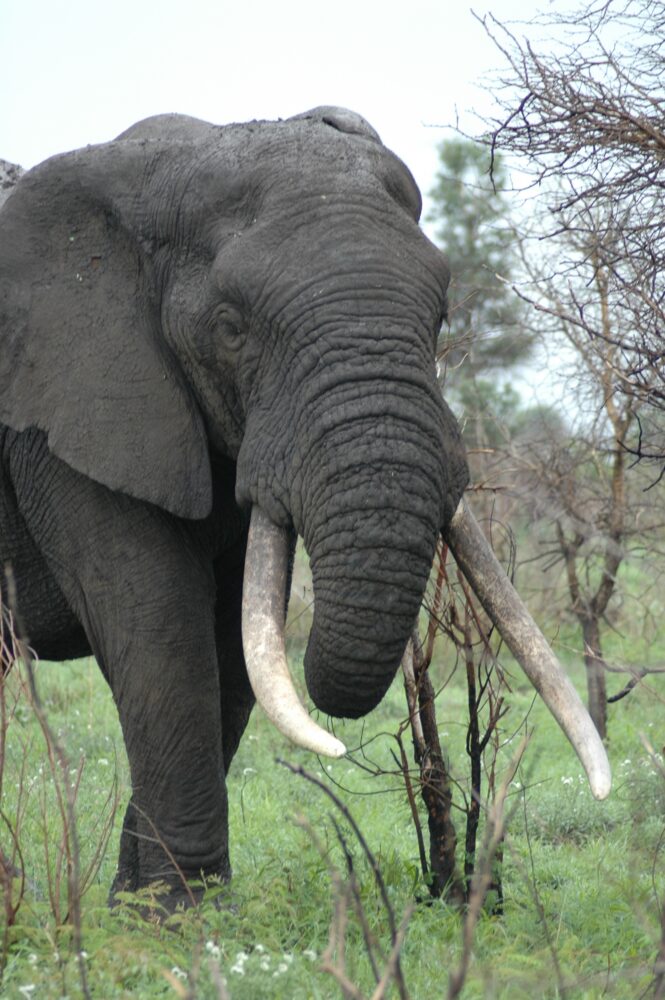
Satara (Photo by Johan Marais)

Shirahini (Photo by Johan Marais)
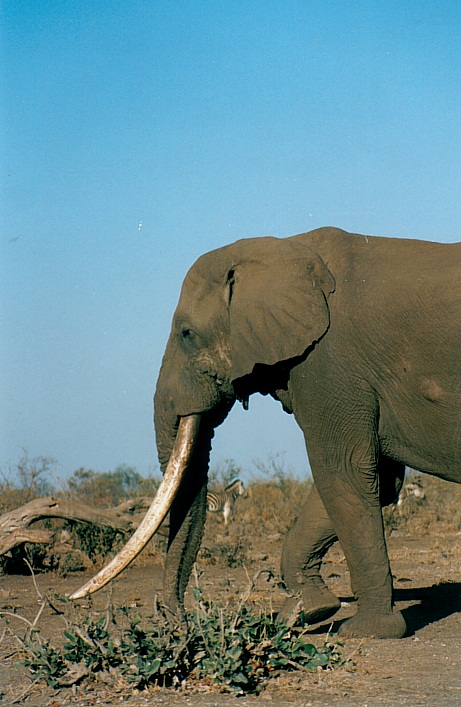
Shimatsi (Eendrag) (Photographer unknown)
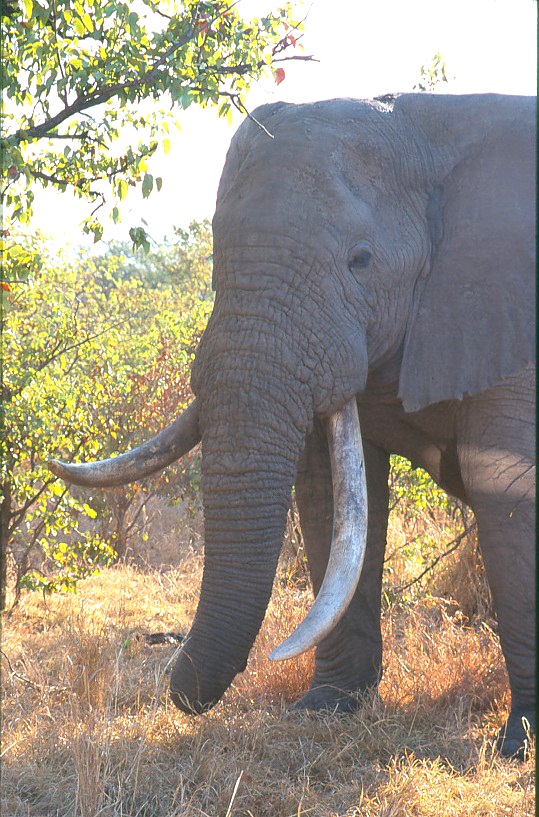
Sikele (Photographer unknown)
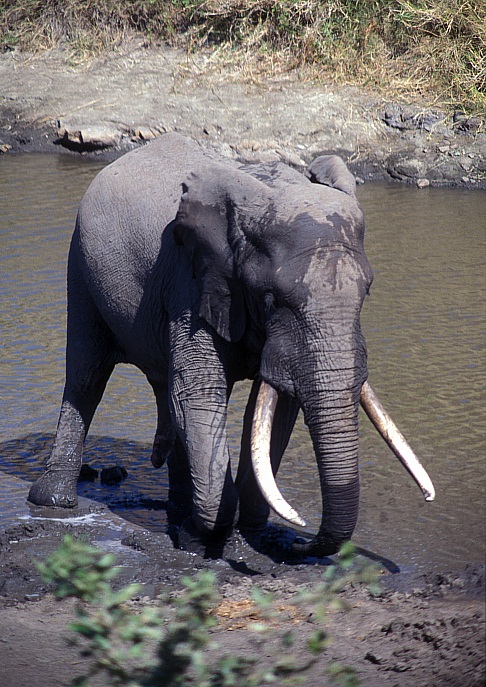
Tsendze (Photographer unknown)

Tsumane (Photographer unknown)
Babalala
Origin of Name
Named for the Borehole 5km south-east of Vlakteplaas on the banks of the Dungile Spruit and was the name of a former inhabitant of the area.
Range
Vlakteplaas, Babalala Waterhole.
Special Features
Prominent v-shaped tear in his left earlobe, with several square shaped notches further down the earlobe. A smaller v-shaped notch on the right ear lobe towards the bottom of the lobe is less prominent but is still visible. His right tusk appears to have been broken at some stage and is considerably shorter then the left tusk.
General
Photographed for the first time by Dewald Keet, state vet department.
Bakoor (Munye)
Origin of Name
Named after the Bakoor Windmill which in turn was named after the Bat-eared Fox which was recorded in the area. Although common elsewhere, the Bat-eared Fox is a very rare animal in Kruger National Park.
Range
South of Shingwedzi.
Special Features
Both tusks diverging, right tusk extending slightly longer then the left.
General
First photographed by researcher Keith Begg in 1993.
Gombanyokile
Origin of Name
Named for his unique curved tusk (Gombanyokile is a Tsonga word meaning ‘something that is not straight’ or is deformed. A crooked road can be described as ‘gombanyokile’, as could a crooked tusk or deformed leg).
Range
He can be found in Letaba area close to the rest camp, although he seems to have relocated himself towards the Mopani area of late.
Special Features
This elephant is not a particularly big tusker, but was named due to his unique tusk growth. This bulls left tusk has developed at a virtual right angle to the bulls trunk and face making him very unique in the elephant world.
General
Last seen in 2003.
Gumbandebvu
Origin of Name
Name after the koppie situated 5km east of Punda Maria. (Gumbandebvu, Venda word meaning ‘to shave one’s beard’).
Range
Punda Maria.
Special Features
Very ragged generally torn outer edges to the ear lobes. Inward curving tusks.
Hlamalala
Origin of Name
Named for the tributary of the Shisha Spruit, 23km north east of Punda Maria. (Hlamalala is a Tsonga word for the southern stripe bellied grass or sand snake).
Range
Unknown.
Special Features
Old bull with very upwards curved thin tusks.
General
Photographed by researcher Keith Begg.
Mac
Origin of Name
Named for Hector MacDonald, ranger Crocodile Bridge 1928 – 1951.
Range
Crocodile Bridge.
Special Features
Substantial ivory, similar in size and shape to Duke before the break.
General
Mac is almost a mythical elephant because he has so seldom been seen. He was photographed once from the helicopter, but has not been seen since. He may therefore have died without his carcass or tusks having been located.
Hector MacDonald
Hector McDonald hailed from Dundee, Scotland, began his career in the British Navy. He then served throughout the First World War with the armed forces in “German East Africa” ending as a lieutenant with a Highland battalion on the Western Front. After the war he turned to hotel management, but acted as an honorary escort to a Mr Selby who visited the Park for photographic purposes. He joined the Ranger’s staff in KNP in 1929 and retired in 1951 with all of his service (23 years) having been conducted at the Crocodile Bridge Ranger’s post. “South African Eden”, J Stevenson-Hamilton (1937).
Mahudzi
Origin of Name
Named for the tributary of the Letaba River 9km west of Letaba Restcamp. (Tsonga word meaning ‘a passer by’).
Range
South of Letaba Restcamp to as far north as Mooiplaas.
Special Features
Symmetrical tusks which curved upwards. A notable inverted V shaped notch in the bottom of the left ear.
General
First seen by Johan Marais in December 1996.
Mbohle
Origin of Name
This bull shares its name with the waterhole 2,5km east of the Shingwedzi River, which is covered by the waters in the Kanniedood Dam (Origin of the name unknown – was probably the name of a former inhabitant of the area.).
Range
East of Shingwedzi.
Special Features
Only one straight tusk. There is a prominent hole in the left ear lobe towards the middle of the lobe.
Metsi-Metsi
Origin of Name
Named for the Metsi-metsi Spruit, a tributary of the Nwaswitsontso River and for the trails area of this name in which he was first sighted.
Range
Tshokwane/Metsi Metsi area.
Special Features
One tusk (right).
General
This one-tusked bull was also seen and photographed from the helicopter for the first time close to the Metsi-metsi Trails Camp in September 2004 during the elephant census.
Mluwati
Origin of Name
This bull derives his name from the Mluwati tributary of the Nwaswitsontso River, 21,5km south east of Kingfisherspruit. (Mluwati is the Tsonga name for ‘flame thorn’ Acacia ataxacantha).
Range
Ngwenyene Dam.
Special Features
Fairly symmetrical ivory, curved upwards. Prominent square shaped notch in right ear at the top of the ear lobe.
Mungana
Origin of Name
This bull was named Mungana as he was the constant companion of the well know tusker Shilowa. (Mungana is the Tsonga word meaning ‘friend’).
Special Features
Wide but shallow v-shaped notch in the left ear at the top of the ear lobe.
General
This bull was often seen in the company of Shilowa.
Mutlumuvi
Origin of Name
A large tributary of the Sand River near Skukuza. Tsonga pronunciation of a Sotho word “motla-o-mobe” meaning “dangerous when it comes down in flood”.
Range
Timbetene area of the Tshokwane Section.
Special Features
His ears were generally rather undamaged, but he had a small semi-circular nick in his right ear.
General
This is another youngish bull that seems to have potential as a future tusker. He was seen and photographed from the helicopter during the 2004 elephant census, but has not been recorded since.
Ngwenyene
Origin of Name
Named after the dam and waterhole in this area (Tsonga word meaning ‘at the place of the crocodile’).
Range
Unknown.
Special Features
One small square nick in his left ear. Tusks symmetrical and curved slightly forward.
General
First seen and photographed at the Ngwenyene drinking spot at the about 200 m east of the intersection of the S36 and S125 on 19/07/05. Only one photo on record.
Satara
Origin of Name
Unknown.
Range
Unknown.
Special Features
Unknown.
General
Unknown.
This elephant has also not been seen after he was photographed in the Satara area, and may therefore also have died. Needs to be renamed.
Shirahini
Origin of Name
Named after the tributary of the Mlondozi. (Tsonga word meaning “at the wild animals”).
Range
Tshokwane/Lower Sabie area.
Special Features
Two equally frontward curving tusks.
General
This bull because of his size was thought at one stage to be the elusive ‘Mac’. This bull was photographed in Dec 1997 by Johan Marais near Mlondozi Dam. It is thought that if this elephant was still alive that he would be one of the prominent bulls in the area. In discussions with Markus Hofmeyer by Johan Marais it was determined that several large tuskers had been translocated out of the Kruger National Park by the game capture team from the Lower Sabie area, it is thought that this may be one of them.
Shimatsi (Eendrag)
Origin of Name
This is the Tsonga word meaning ‘lefty’ as this bull had one significant left tusk.
Range
Shingwedzi/Mooiplaas.
Special Features
Substantial left tusk. Shimatsi had a distinctive round swelling 50cm behind his left shoulder and an almost hairless tail end. Two shallow v-shaped tears in the left ear, one towards the bottom of the lobe and one further up on the ear.
General
Named by Johann Oelofse and his field rangers.
Sikele
Origin of Name
Named in memory of James Chauke who served many years in the Kruger National Park. (Sikele meaning “The Sickle”, and this elephant’s skewed tusks are reminiscent of this tool used for cutting grass).
Range
West of the Klopperfontein windmill.
Special Features
Characteristic tusks, widely splayed with the right tusk curved more upwards then the left.
General
This characteristic tusker was seen and photographed during the elephant census of 2004.
Tsendze
Origin of Name
This bull has been named for the Tsendze spruit 26km north of Mooiplass this spruit is a tributary of the Letaba River. (derived from the Tsonga word tsendzeleka meaning ‘to wander about as a person lost in bush country’ – this is in reference to the many turns the river makes).
Range
Mooiplaas/Small Shawu area.
Special Features
Right tusk curved slightly higher then the left tusk.
Tsumane
Origin of Name
Tsumane shares his name with the tributary of the Shingwedzi River and the windmill around which he is often seen. (Tsonga word meaning ‘red ochre’).
Range
Dzombo east/Shingwedzi.
Special Features
Right tusk considerable more curved upwards then the left tusk.
General
First seen by Keith Begg in November 1993.