MNP 05
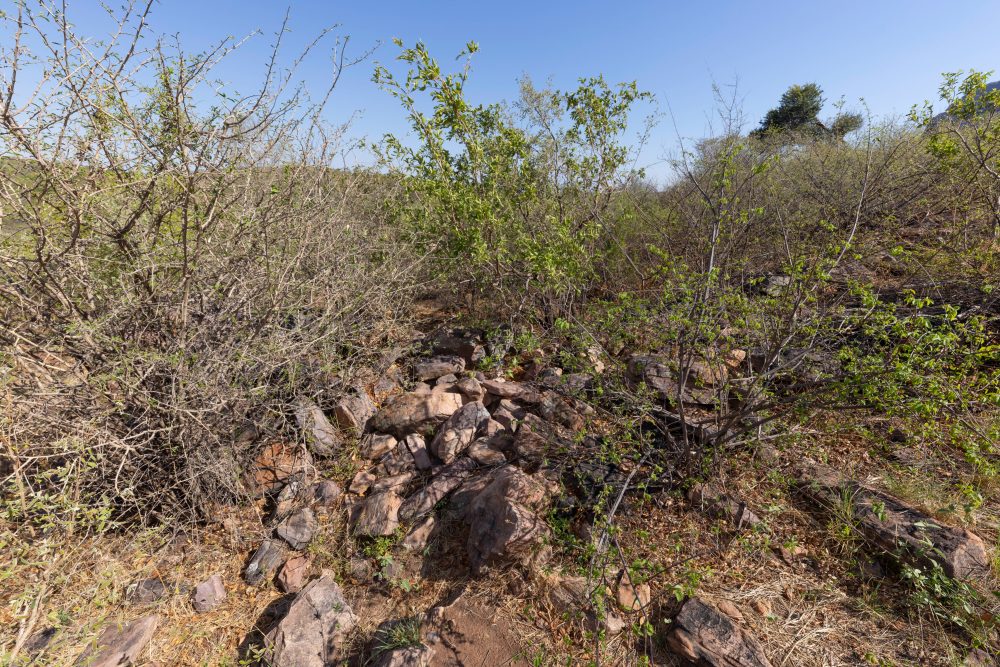
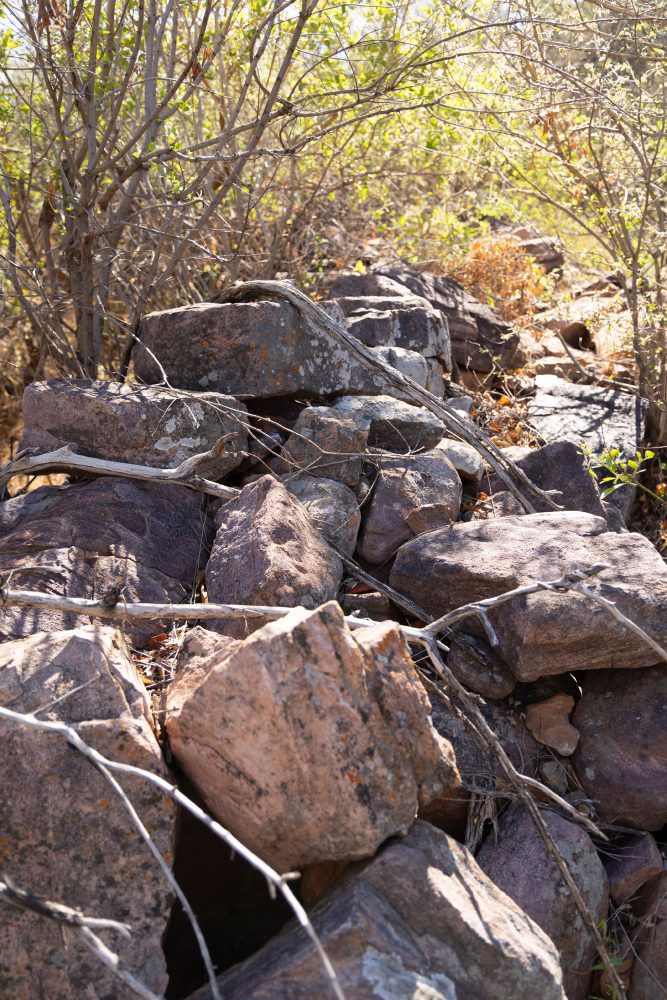
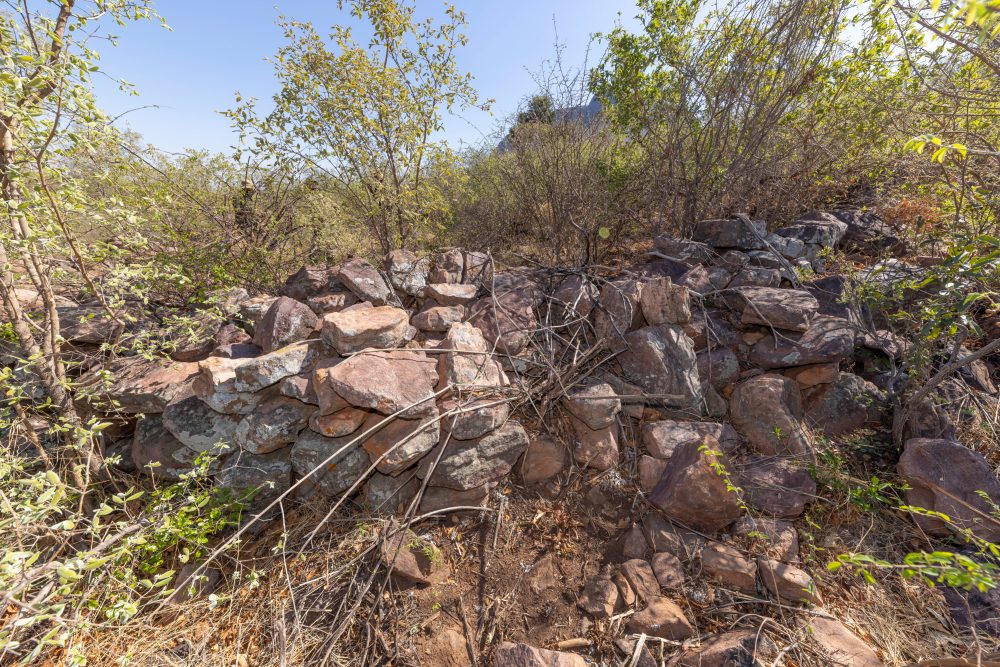
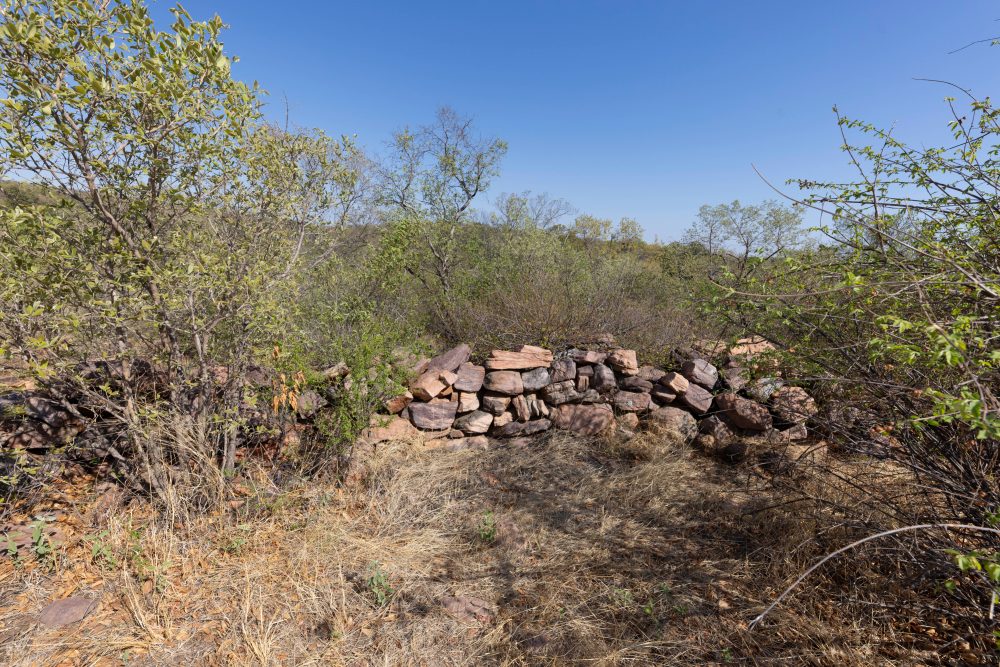
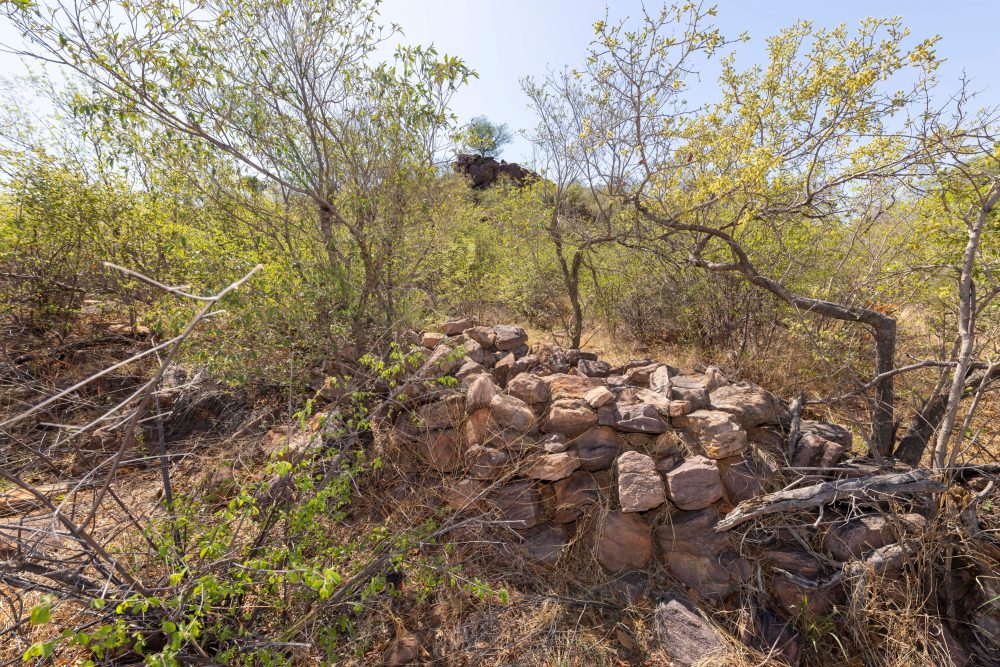
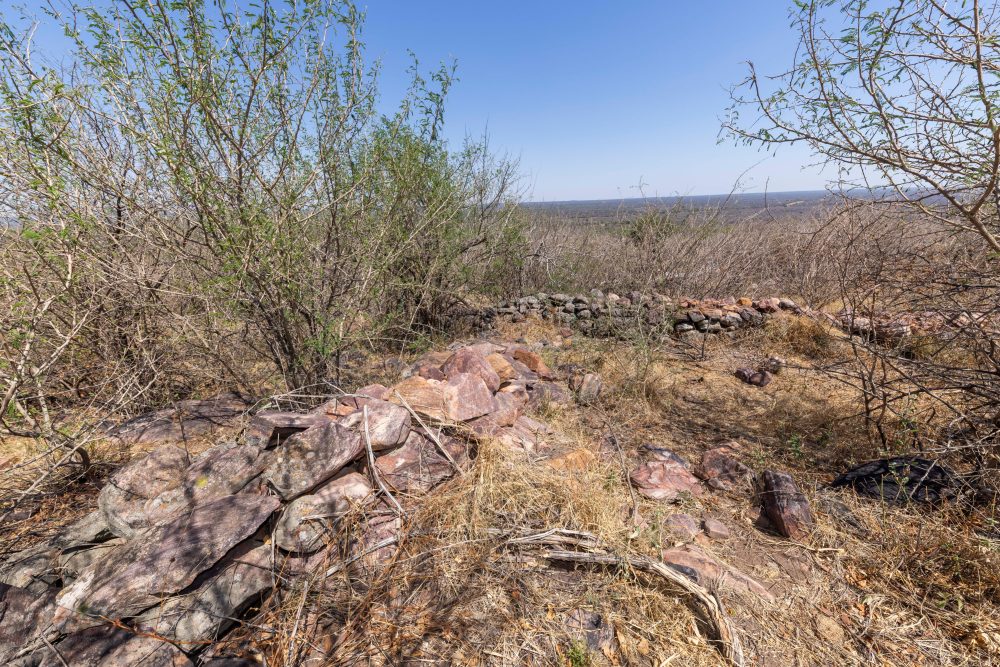
MNP 05 is situated on the northern slope of the mountain range within the Marakele National Park. The site covers an area of approximately 150 x 100 metres and comprises a series of stone wall enclosures that are visible on the surface. The elevated position provides extensive views over the Matlabas Valley, suggesting a strategic location possibly related to defence, visibility, or access to valley resources.
The site is positioned within a mountainous environment characterised by rocky slopes and sparse vegetation. The vegetation primarily consists of mixed grassland with scattered shrubs and small trees adapted to the drier slope conditions. The northern aspect provides moderate exposure to sunlight and protection from prevailing southern winds, offering favourable conditions for habitation or livestock management. Seasonal drainage channels from the surrounding slopes would have provided intermittent water flow.
The underlying geology is dominated by metamorphic and igneous formations typical of the regional mountain geology, producing shallow, stony soils. Locally available stone from the surrounding outcrops was used in the construction of the enclosures, which consist of unworked or minimally shaped rocks. The geological setting would have provided both construction material and a firm foundation for the enclosure walls, while the slope ensured effective natural drainage.
MNP 05 represents a well-preserved Iron Age settlement defined by multiple stone-built enclosures that were most likely used for domestic, livestock, and possibly storage purposes. Its location on a mountain slope overlooking the Matlabas Valley suggests a strategic choice reflecting both practical and social considerations. The site provides valuable evidence for understanding Iron Age settlement distribution, defensive positioning, and land-use strategies within the region. MNP 05 contributes to the broader archaeological landscape of Iron Age occupation in the Matlabas Valley area and holds potential for further research into community organisation, subsistence practices, and interaction networks. This site was also occupied by Batswana people.