MNP 03
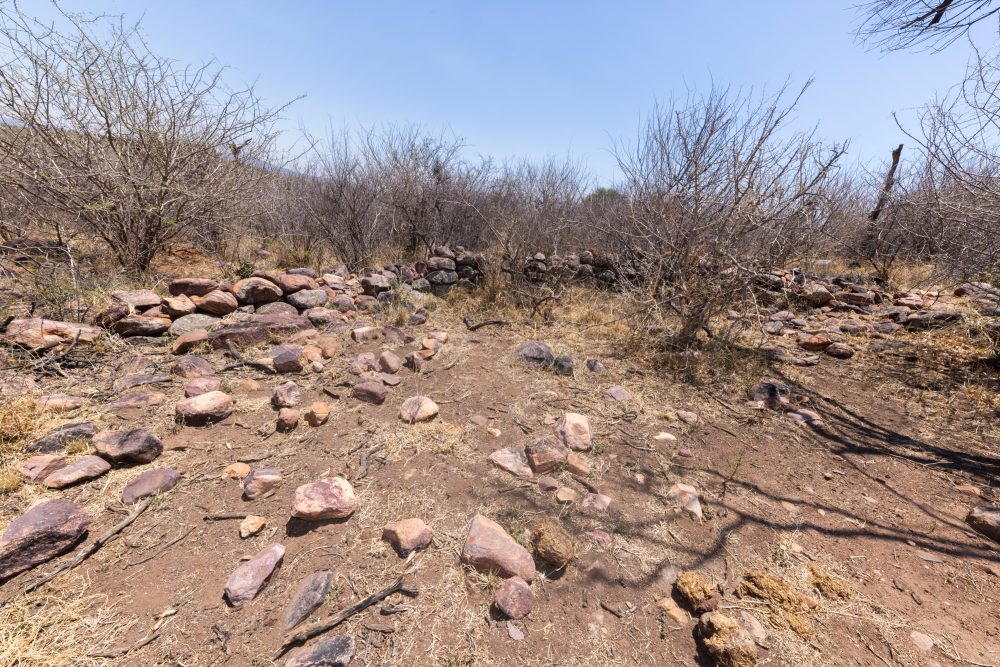
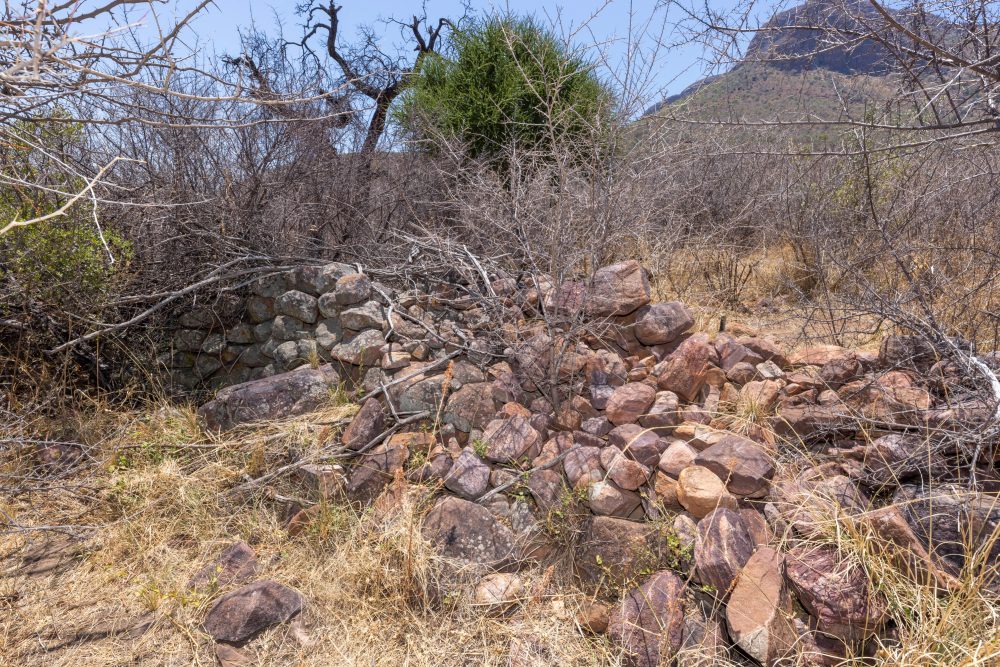
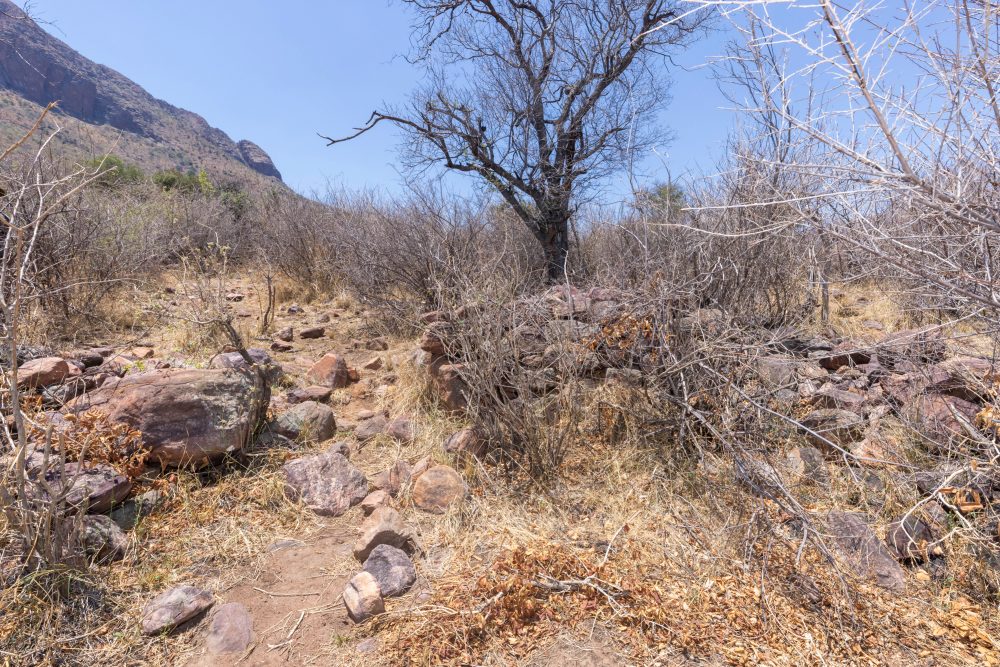
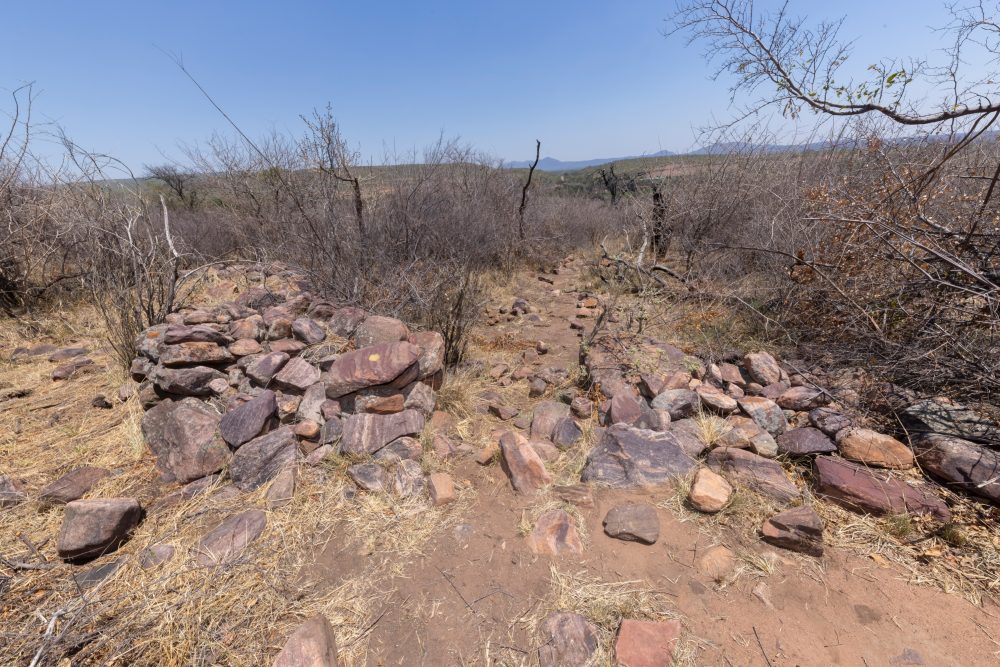
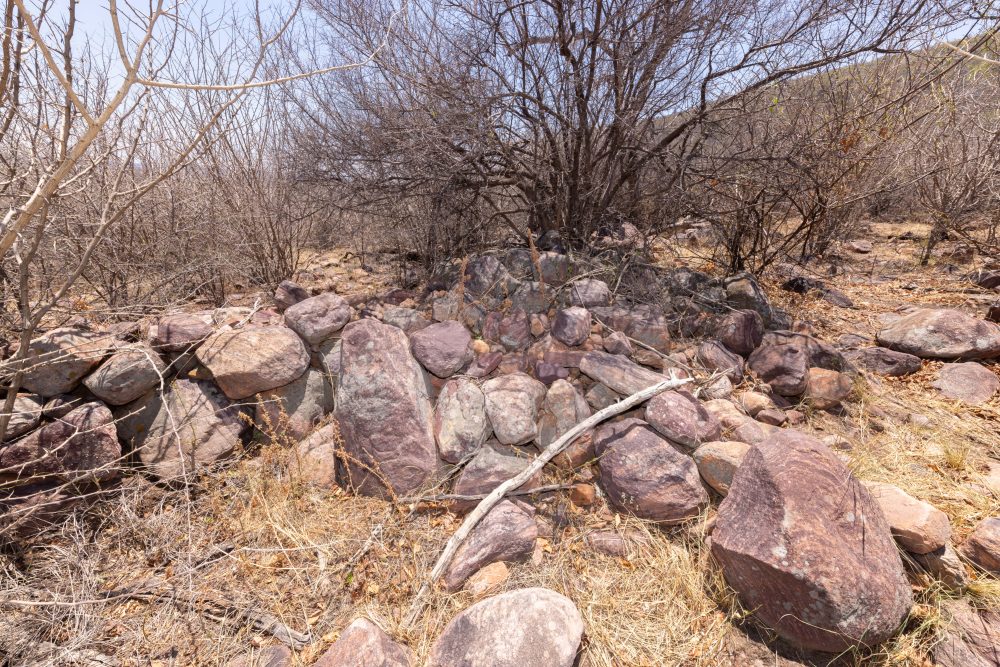
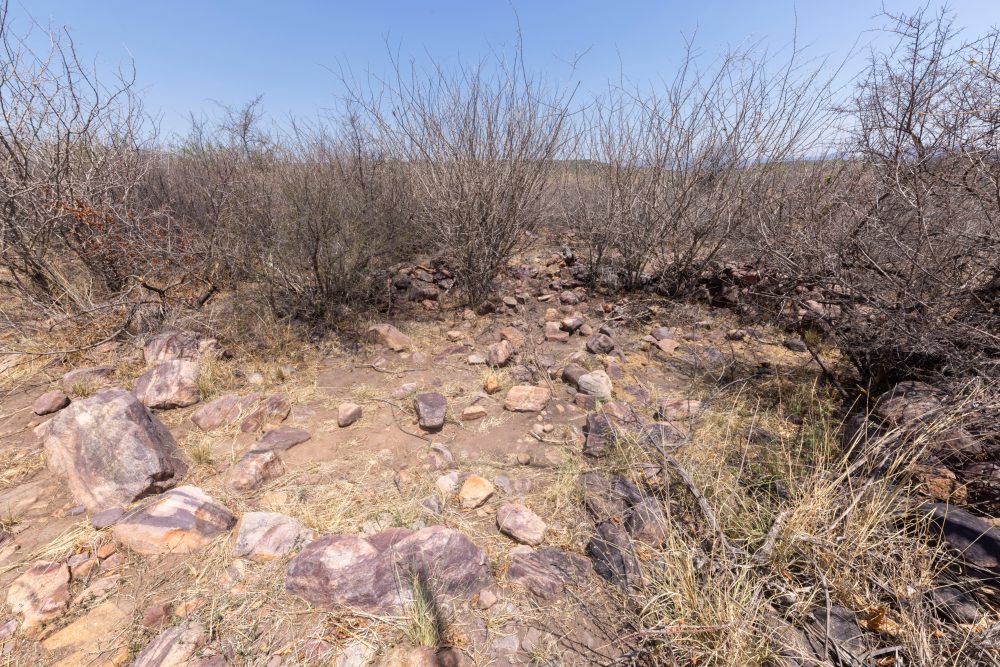
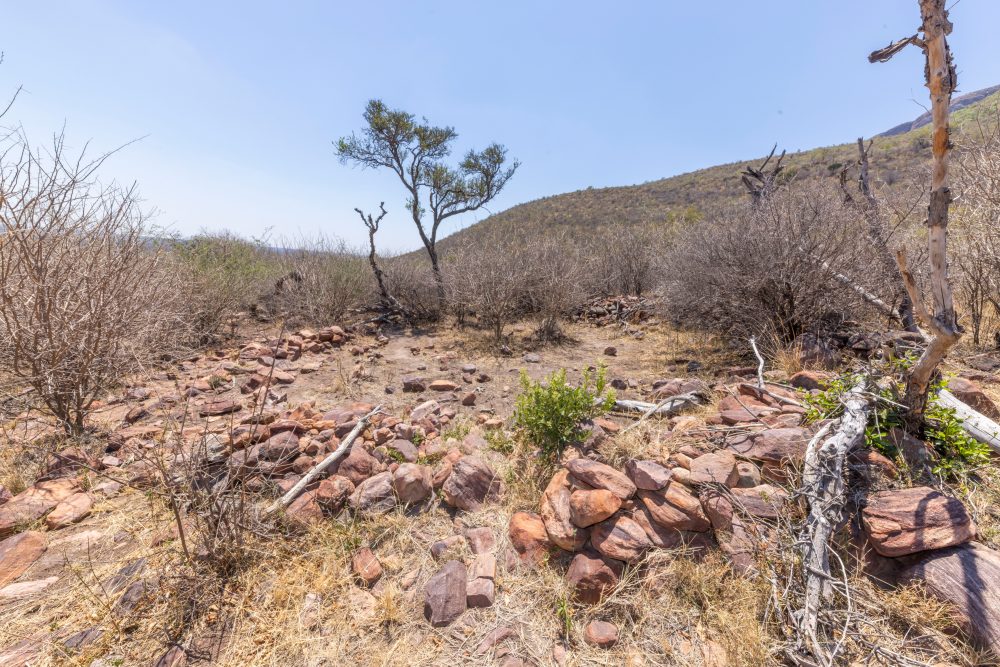
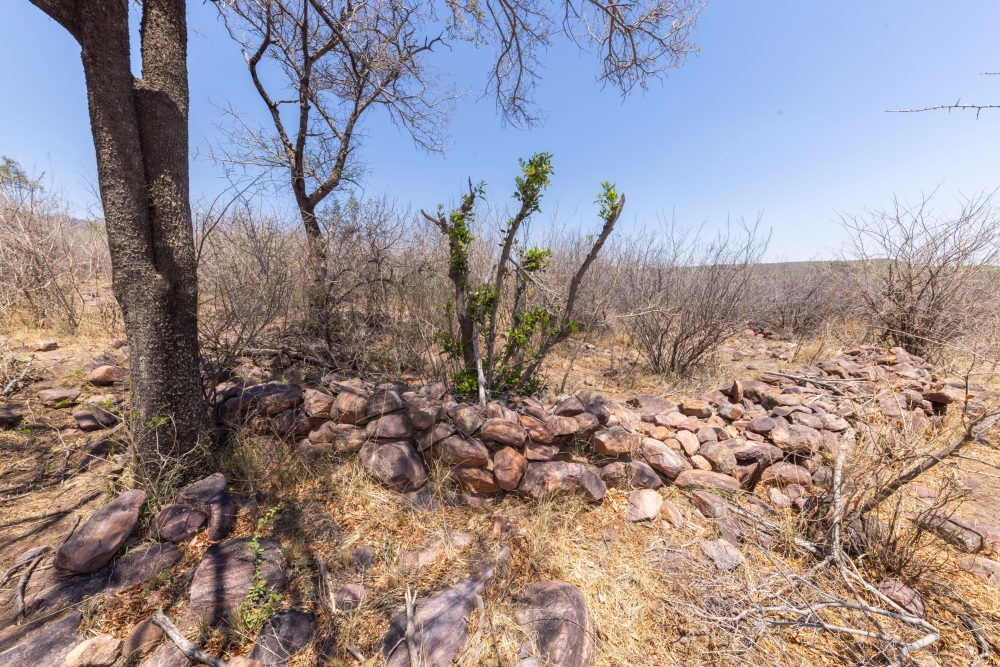
The MNP 03 site is located within Marakele National Park. It is positioned on the eastern bank of a non-perennial stream, which flows through a narrow gorge. This sheltered position would have offered access to water, defensibility, and a degree of climatic protection factors often associated with Iron Age settlements. The total area of the site covers approximately 150 x 150 metres, indicating a moderately sized small settlement. It is believed that that the communities that settled in the area were Batswana.
The environment of MNP 03 is situated within a savanna woodland, in the transition zone between bushveld and montane terrain. Thus, the vegetation is dominated by mixed grasses and broad-leafed trees, with denser vegetation likely concentrated along the stream and lower slope gorges. The gorges environment provides microhabitats that support biodiversity, and likely provided resources such as water, wood, wild fruits, and game to the settlement. The settlement’s climate is semi-arid with hot, wet summers and cool, dry winters. Water availability from the stream would have been seasonal, requiring adaptive strategies for settlement and farming.
The possibility of farming would be influenced by geological formations impacting soil fertility and stone availability. Thus, the site lies within the Waterberg geological system, dominated by coarse-grained sandstone, mudstone, and conglomerates of the Waterberg Group, particularly the Sandriviersberg Formation. The stone used in constructing the site’s walls is likely derived from locally sourced sandstone, shaped and stacked to form the characteristic stone enclosures typical of Iron Age settlement architecture in the region. Additionally, the gorge’s terrain would have offered natural boundaries and defensive advantages, enhancing the site’s strategic placement.
MNP 03 is a significant Iron Age archaeological site, evidenced by a series of stone wall enclosures, possibly used for livestock and domestic space division. The layout and location suggest the site was a settlement with some social stratification, potentially occupied during the Late Iron Age period (circa AD 1300–1800). Sites like MNP 03 are culturally important for understanding the settlement patterns, land use, and social organisation of Iron Age communities in the Waterberg region. The Iron Age communities relied on mixed farming and cattle herding, and some established trade links with wider regional networks. The spatial arrangement, proximity to water, and construction techniques observed at MNP 03 align with other known Iron Age sites in Limpopo, offering researchers valuable comparative data. The site contributes to a growing body of evidence on how indigenous communities shaped and inhabited the landscape prior to colonial disruptions.