Waterfall Rock Art Site
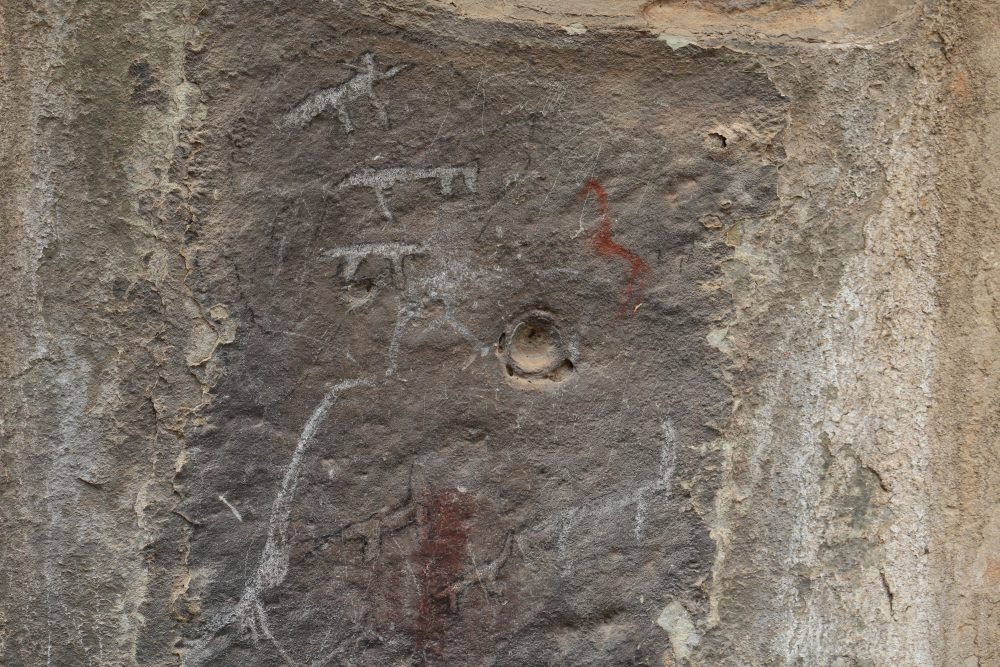
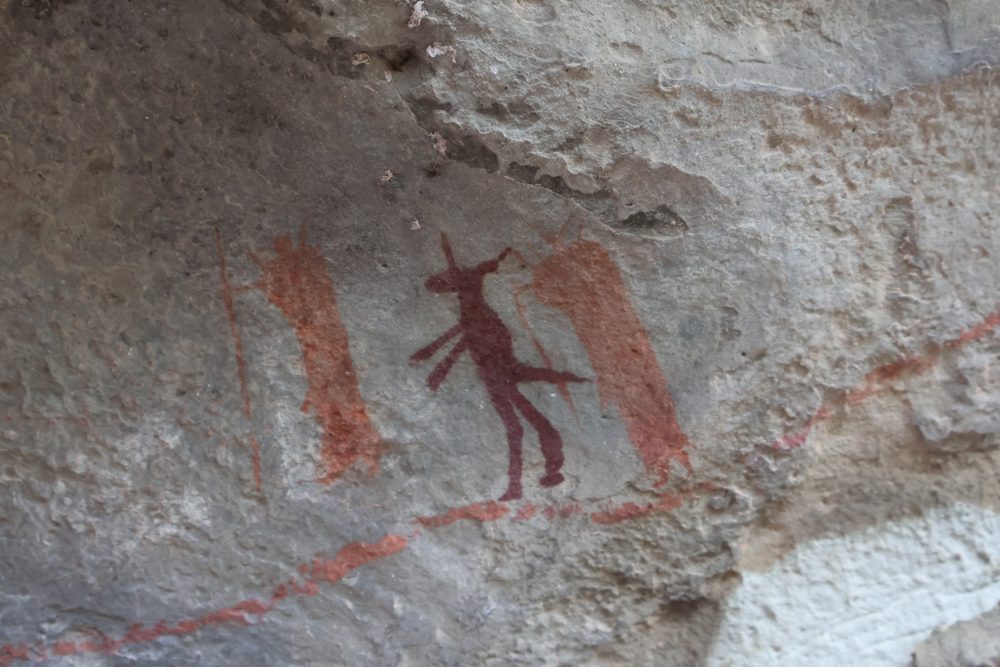
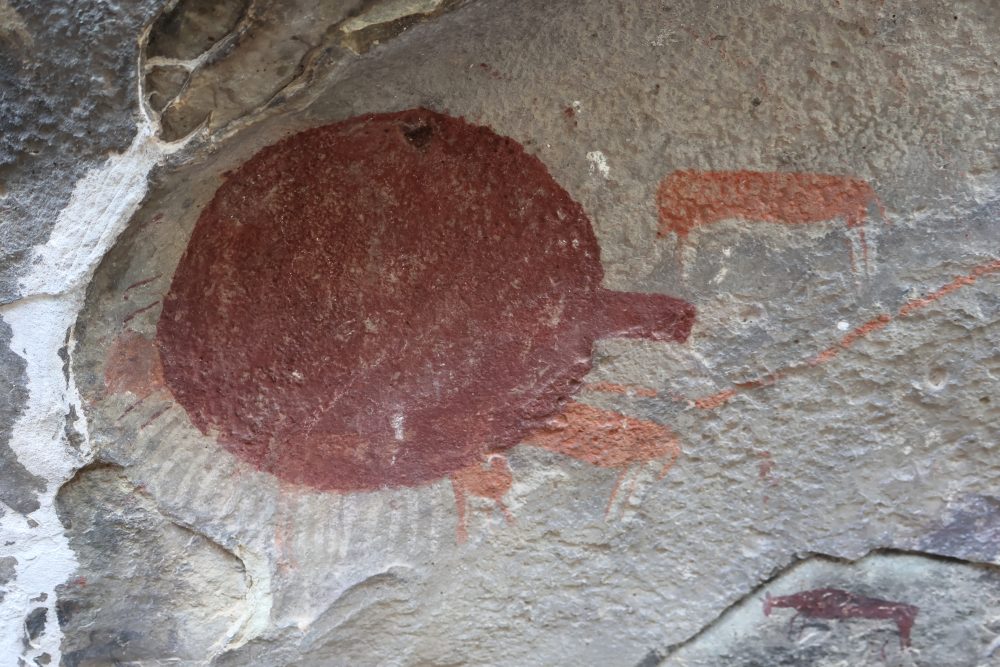
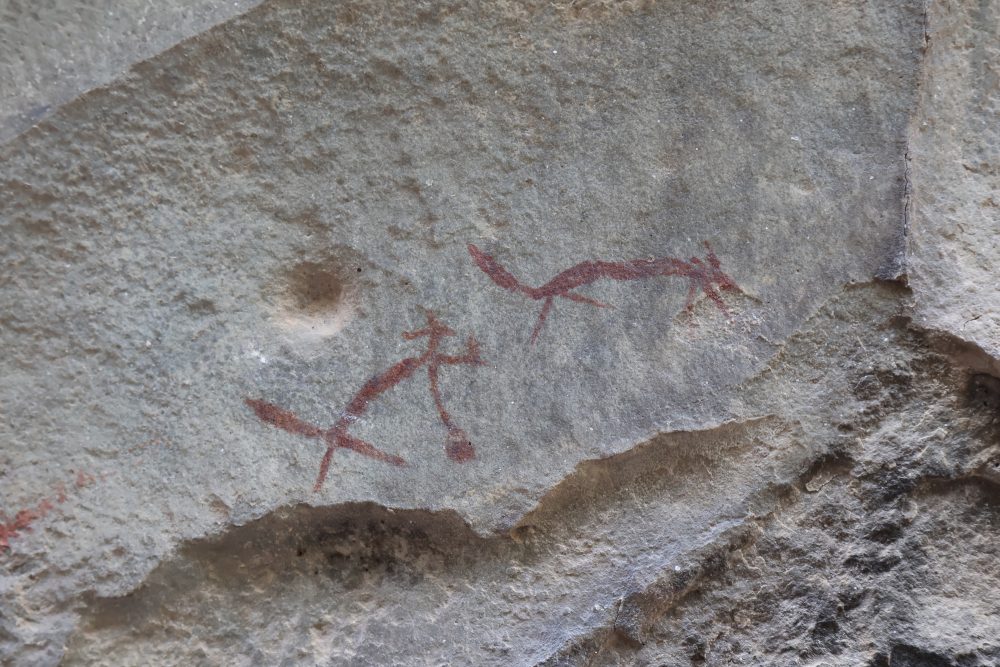
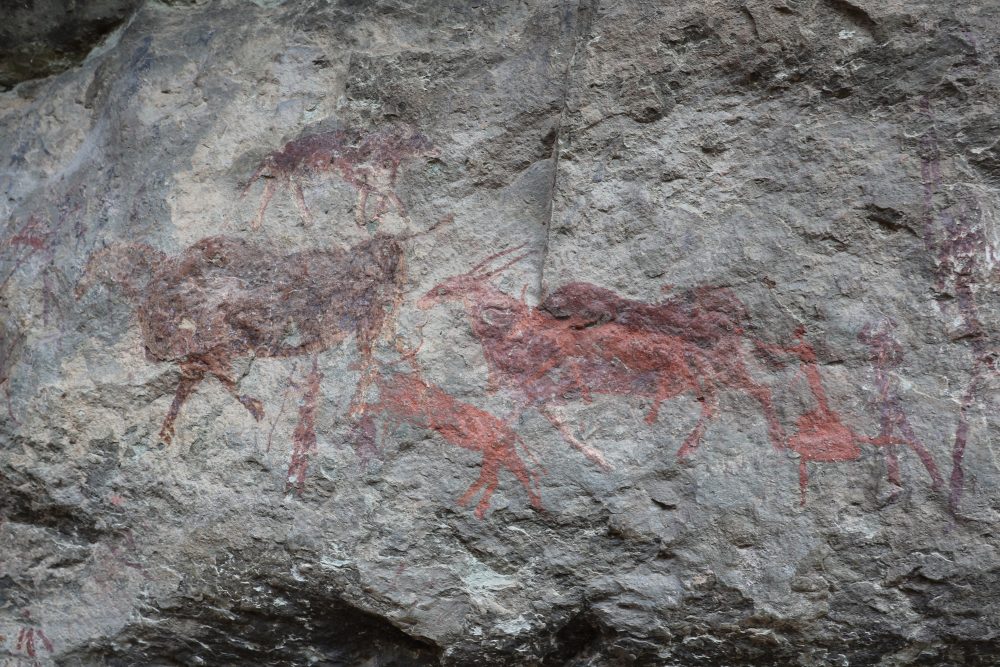
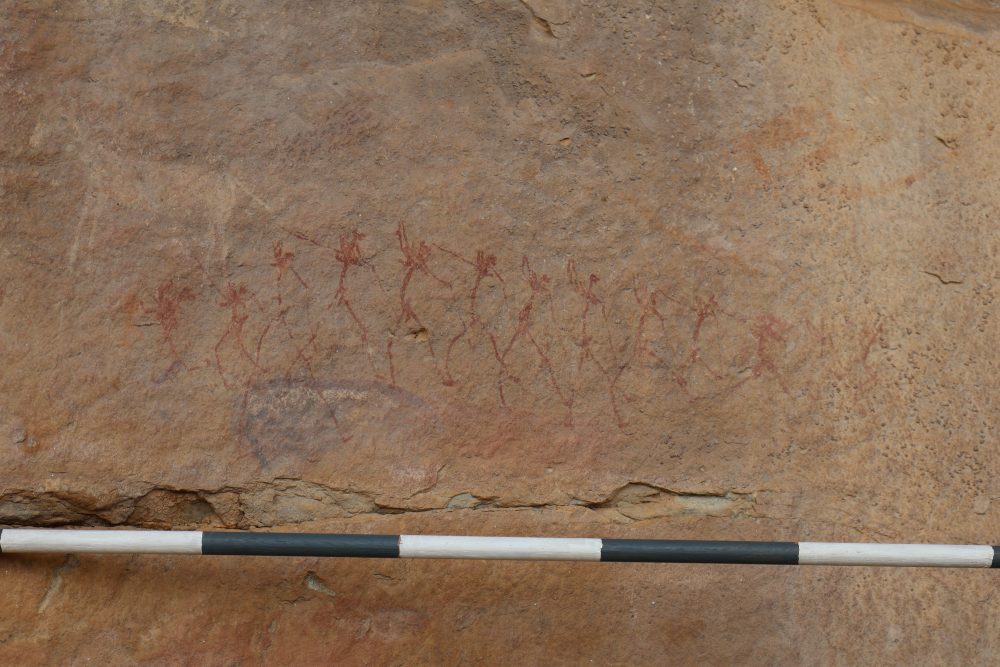
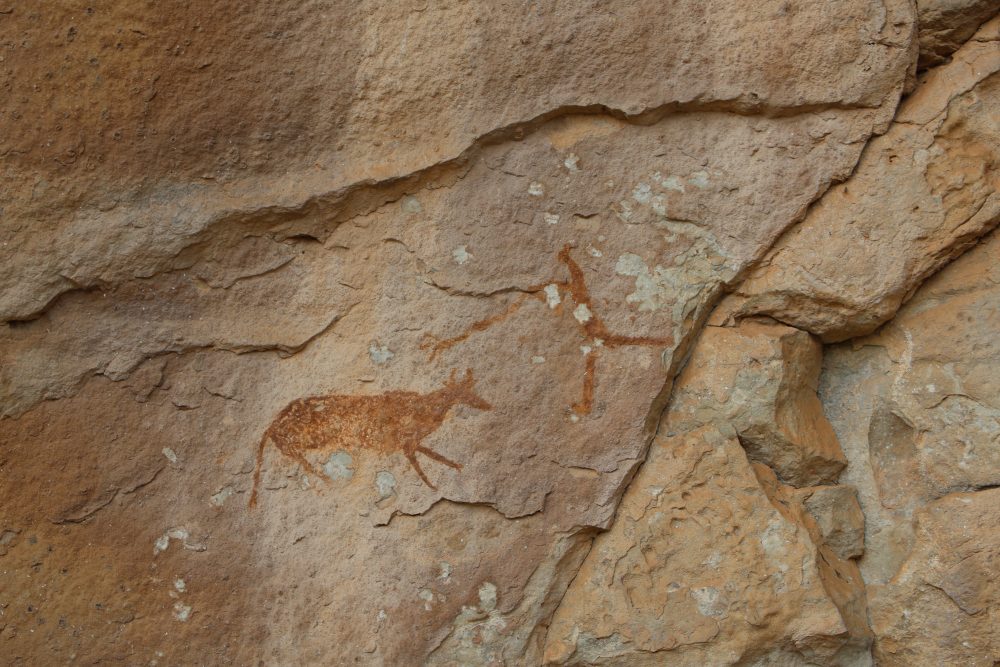
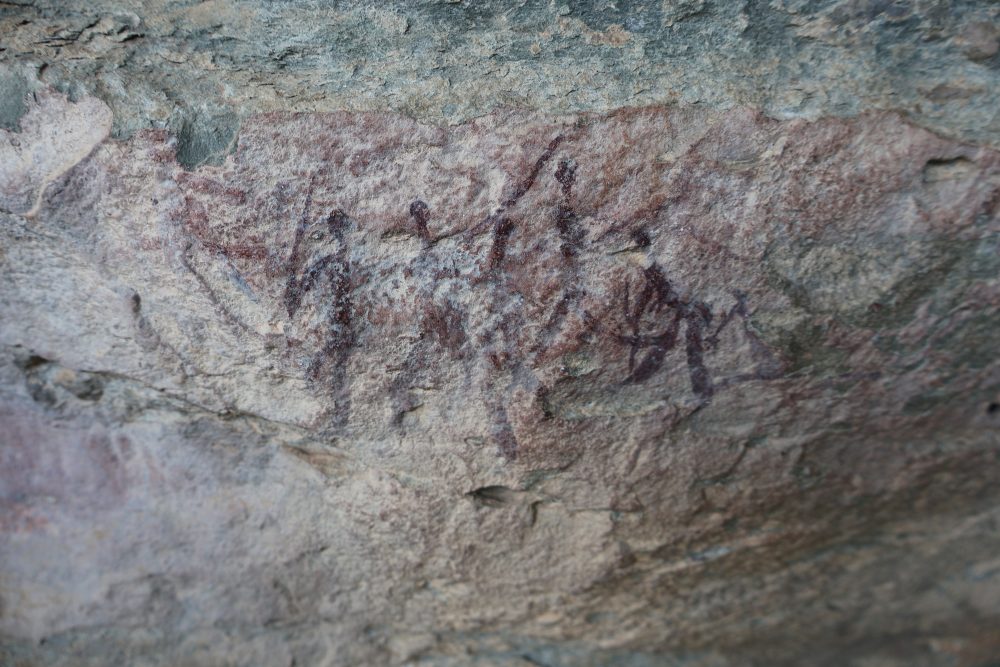
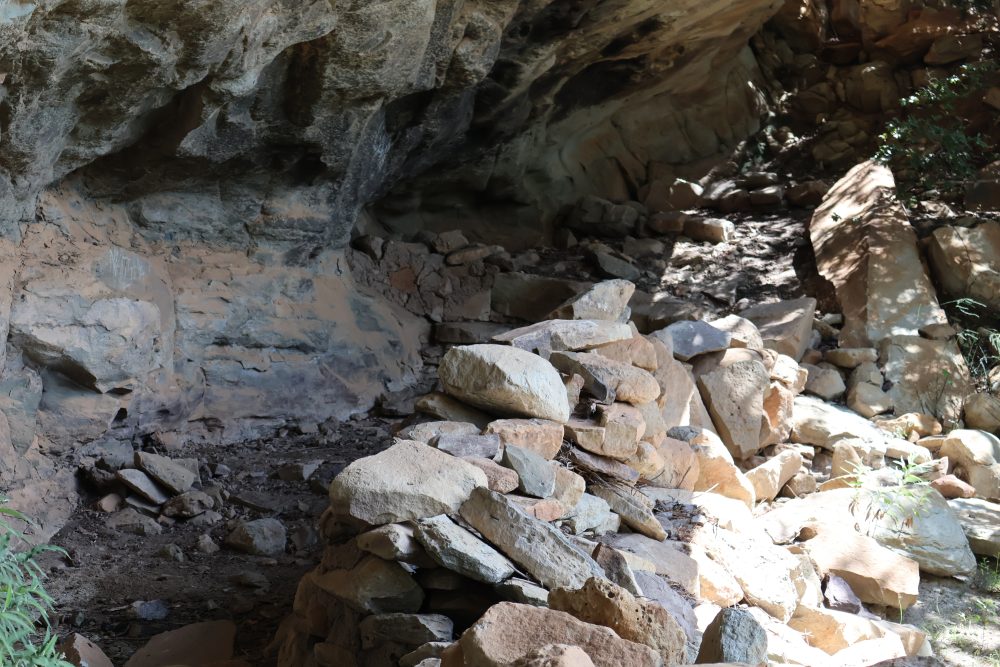
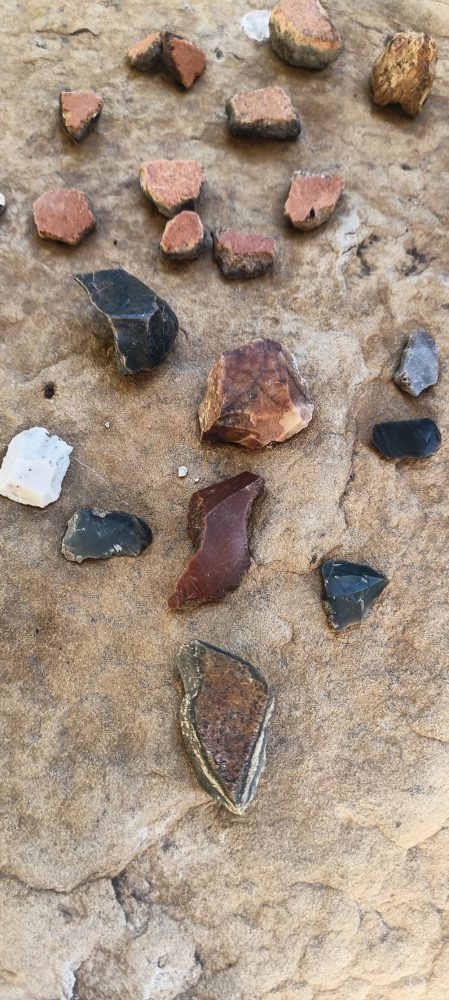
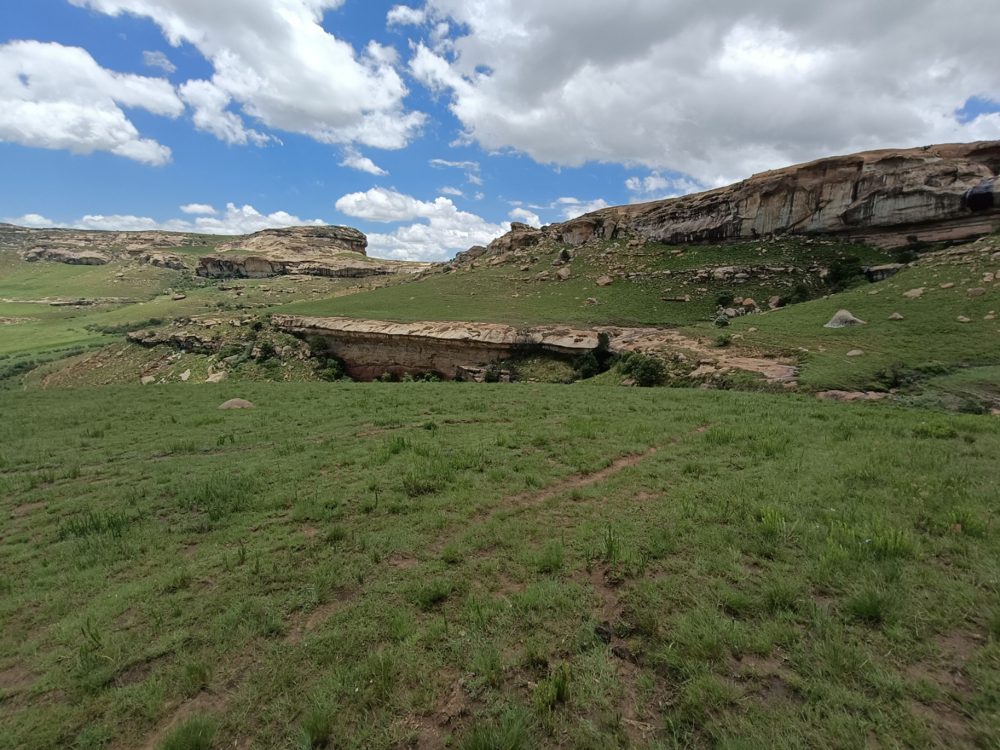
The Waterfall Rock Art Site is located near the park’s eastern boundary. The site lies in a sheltered sandstone overhang at the base of a mountain, overlooking a seasonal stream and waterfall that gave the site its name. It is accessible through a walking trail, situated within the park’s Maluti Mountain foothills at an elevation of approximately 1,900 metres above sea level.
The surrounding environment is dominated by highveld and montane grassland, interspersed with sandstone cliffs, rocky slopes, and stream valleys. The area experiences a temperate climate, with cool, dry winters and warm summers accompanied by frequent thunderstorms. Vegetation includes Themeda triandra (red grass), Eragrostis curvula, and scattered shrubs typical of the Drakensberg foothill ecosystem. The site’s position near a perennial water source and natural shelter made it a suitable location for temporary occupation by hunter gatherer groups.
The site’s environment is situated within the Clarens Formation sandstone, part of the upper Karoo Supergroup, dating back to the Early Jurassic Period (approximately 190 million years ago). This fine-grained, light-coloured sandstone was formed from ancient desert dune deposits and later exposed by erosion. The overhang that houses the rock art was created through weathering and exfoliation, providing a dry, protected surface ideal for the preservation of pigment-based rock art paintings. The surrounding landscape exhibits the characteristic golden and ochre hues that define the park’s name and aesthetic appeal.
The Waterfall Rock Art site is of major archaeological and cultural importance, featuring a rich panel of San rock art paintings. The imagery includes human figures, eland, jackal, and other antelopes, as well as scenes depicting hunting and trance rituals supposedly associated with San spiritual beliefs. These paintings were created using natural pigments derived from ochre, charcoal, blood, and animal fat.
The human occupation of the site has continued into present times with evidence of modern herders using the site as shelter for themselves and their livestock during their grazing trips. Even though the site is presently being used, the rock art panels are still well preserved, with the majority of motifs still visible despite evidence of natural weathering.