Kgodumodumo Dinosaur Interpretation Centre
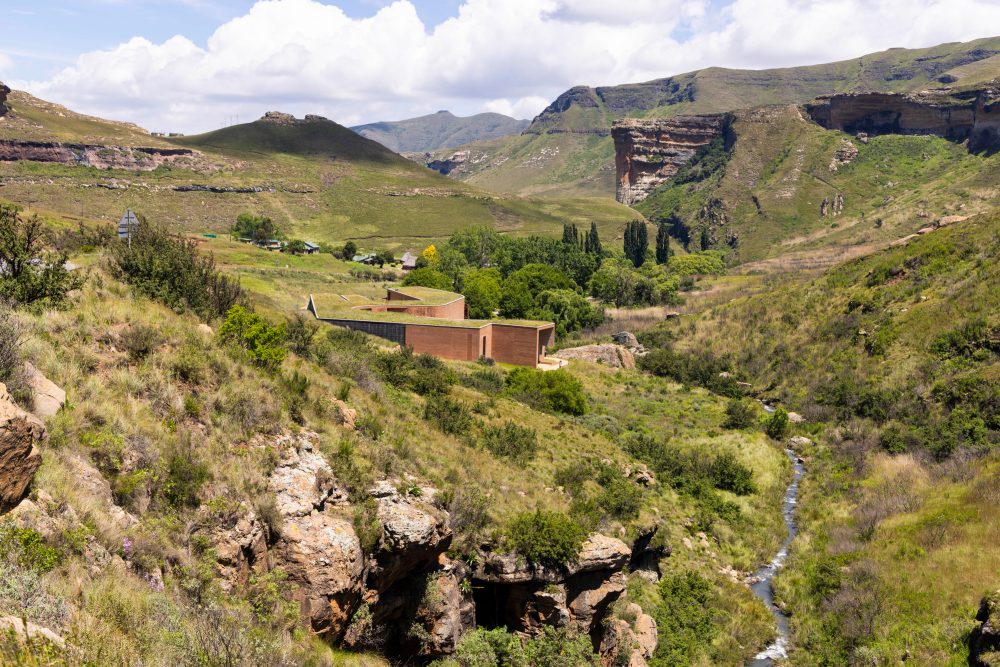
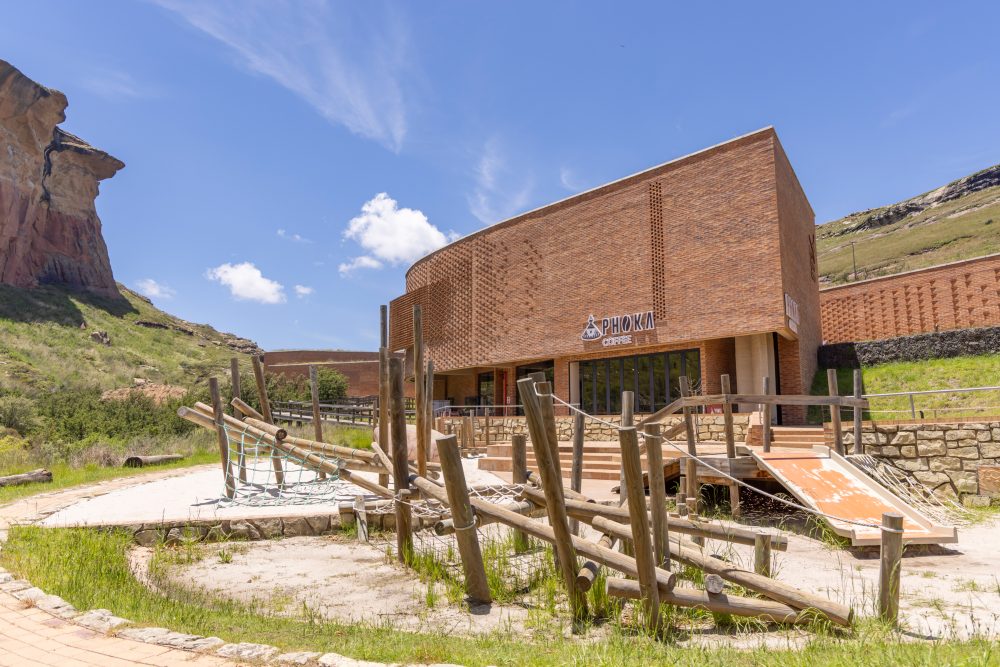
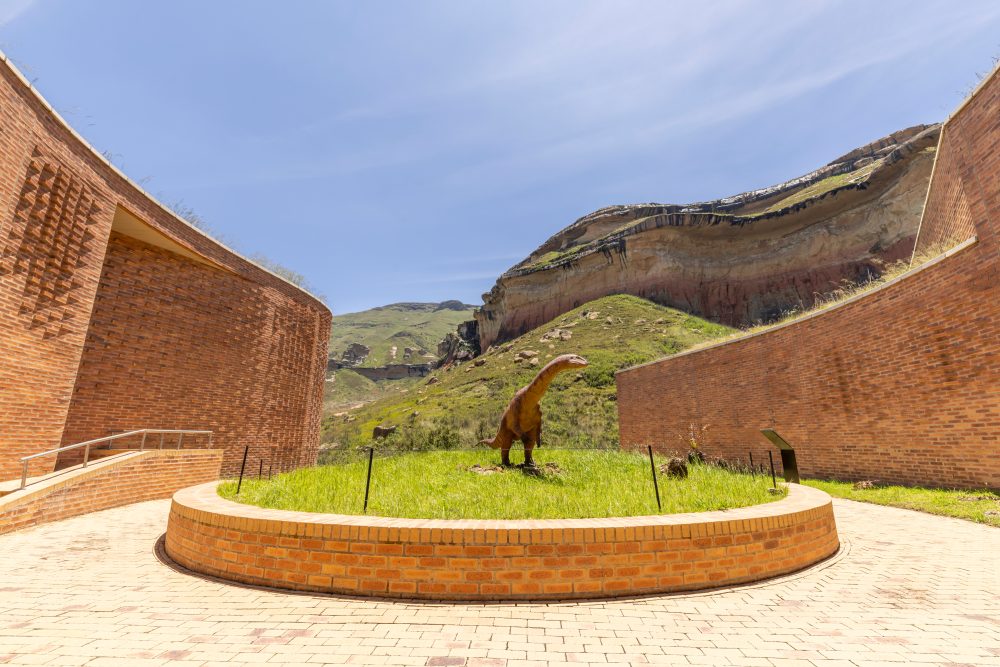
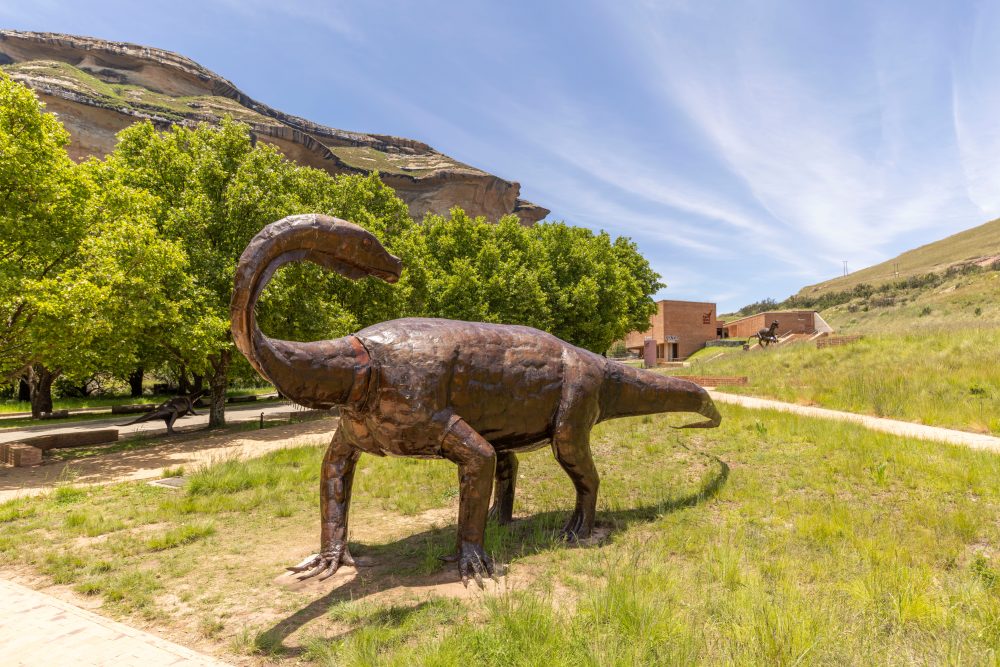
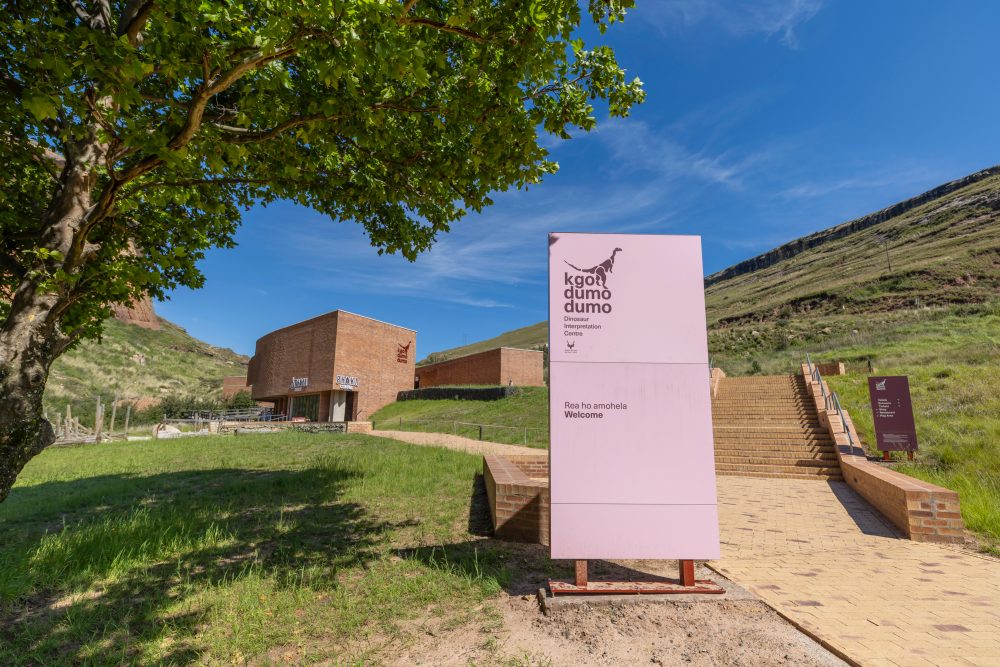
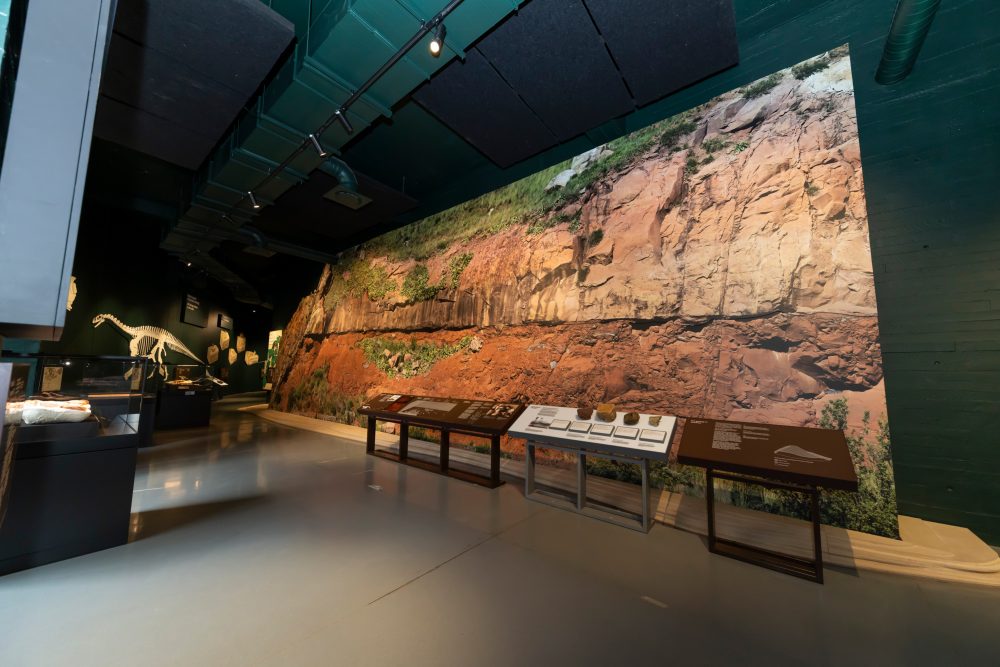
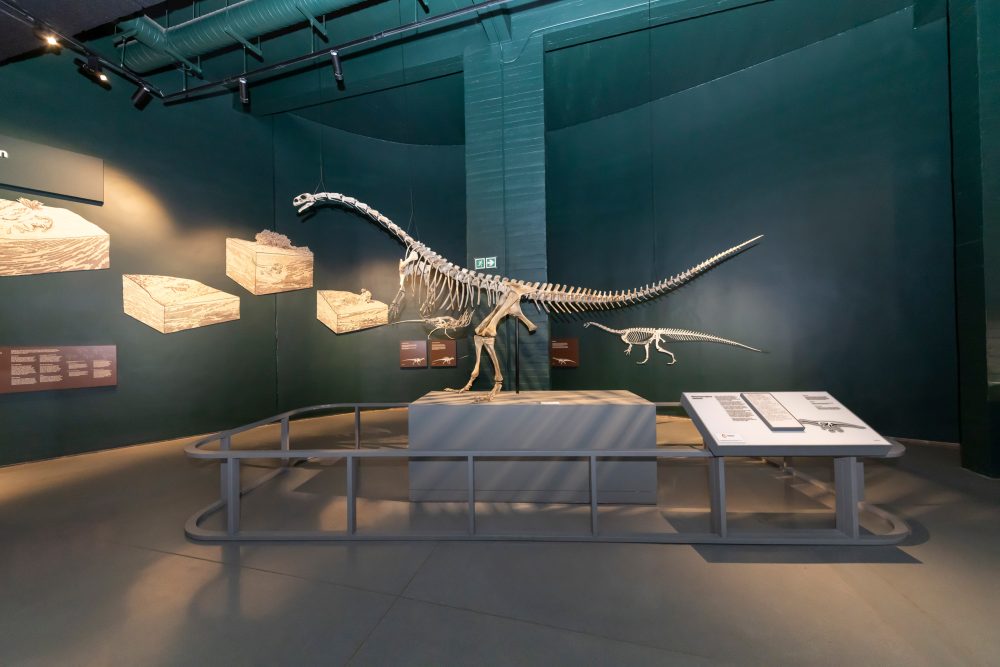
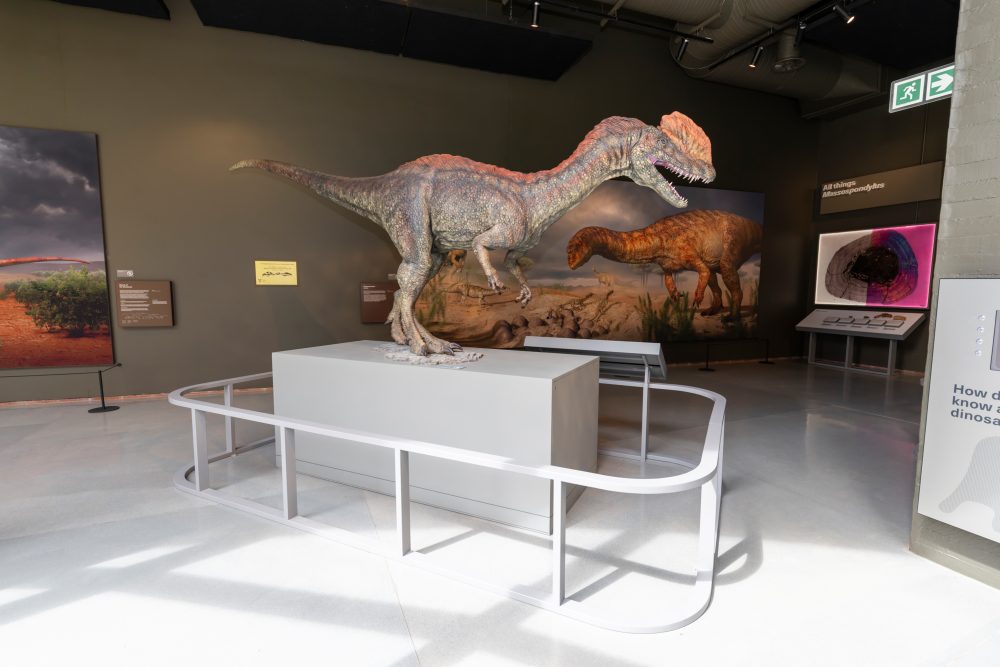
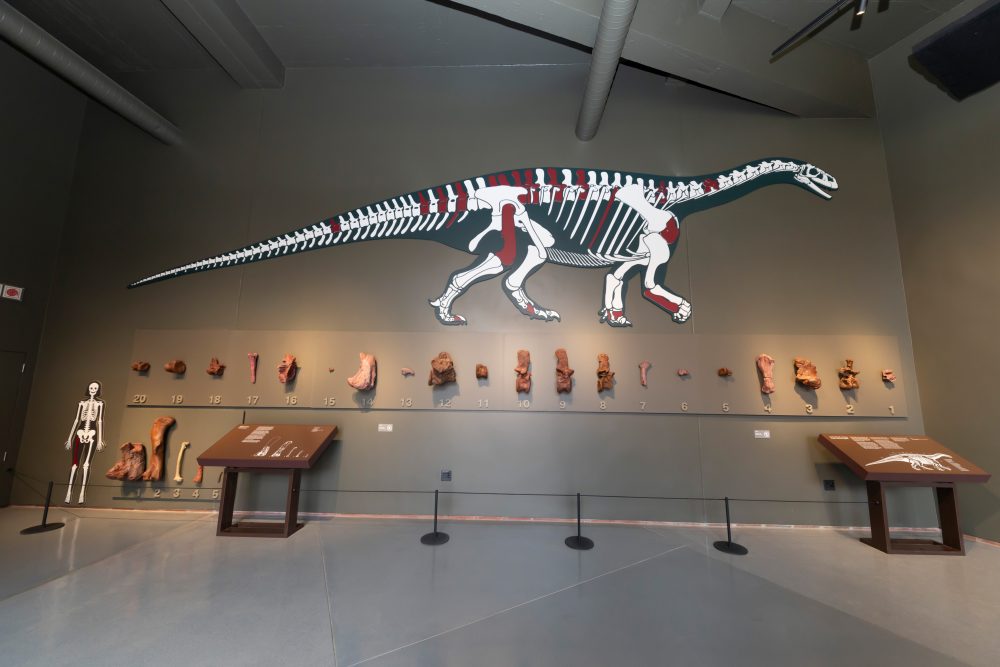
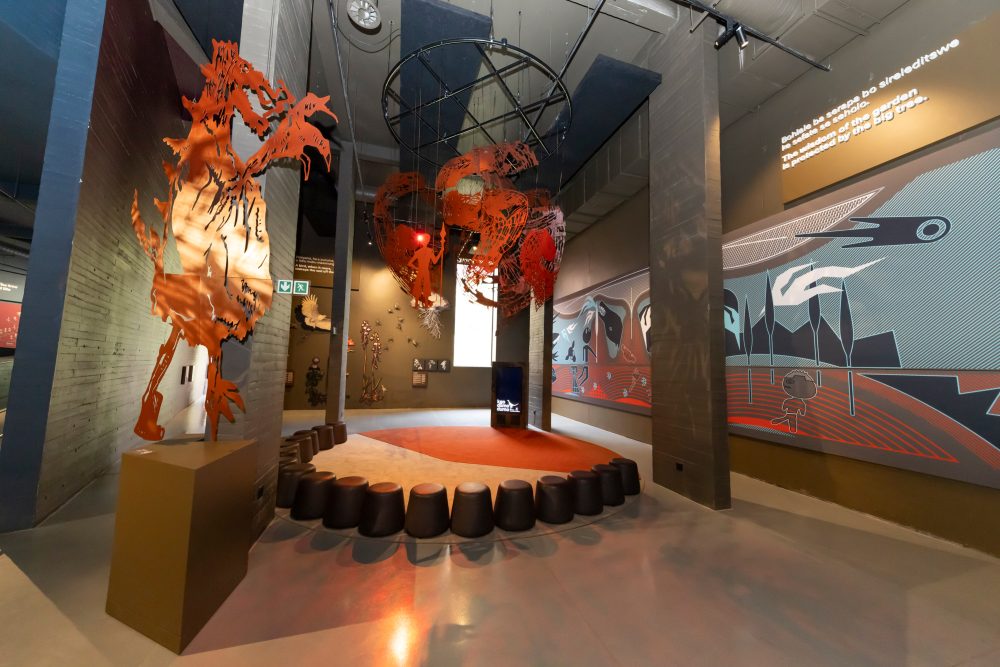

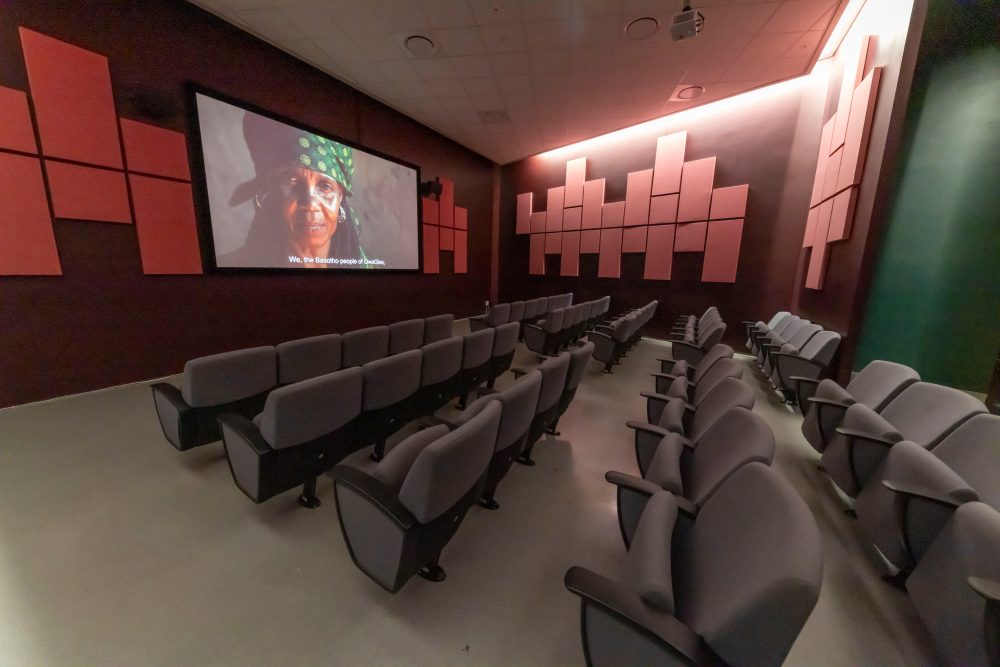
The Kgodumodumo Dinosaur Interpretation Centre holds deep cultural, educational, and symbolic significance, acting as a bridge between ancient paleontological heritage and the living cultural traditions of the Basotho people who have long inhabited the Golden Gate Highlands and surrounding landscape. Its purpose goes beyond the display of fossils it provides a space where science, mythology, identity, and landscape converge.
The centre takes its name from the Sesotho legend of Kgodumodumo, a mythical giant creature said to have roamed the mountains. Long before western science identified dinosaur fossils, early Basotho people encountered enigmatic bones, eggs, and footprints in the region, and interpreted them through oral tradition. By adopting this name, the centre validates and honours indigenous knowledge systems, emphasising that storytelling and science both represent ways of explaining the world. The centre thus positions Basotho folklore as part of the region’s palaeontological identity, not separate from it, restoring a cultural narrative that predates academic discovery.
The building itself is designed to blend into the mountainside, reflecting the Basotho cultural principle of living in harmony with the landscape. Its curved form evokes both natural erosion patterns in the sandstone cliffs and the protective enclosure of a traditional settlement. Thus, the centre is an architectural expression of place based cultural identity.
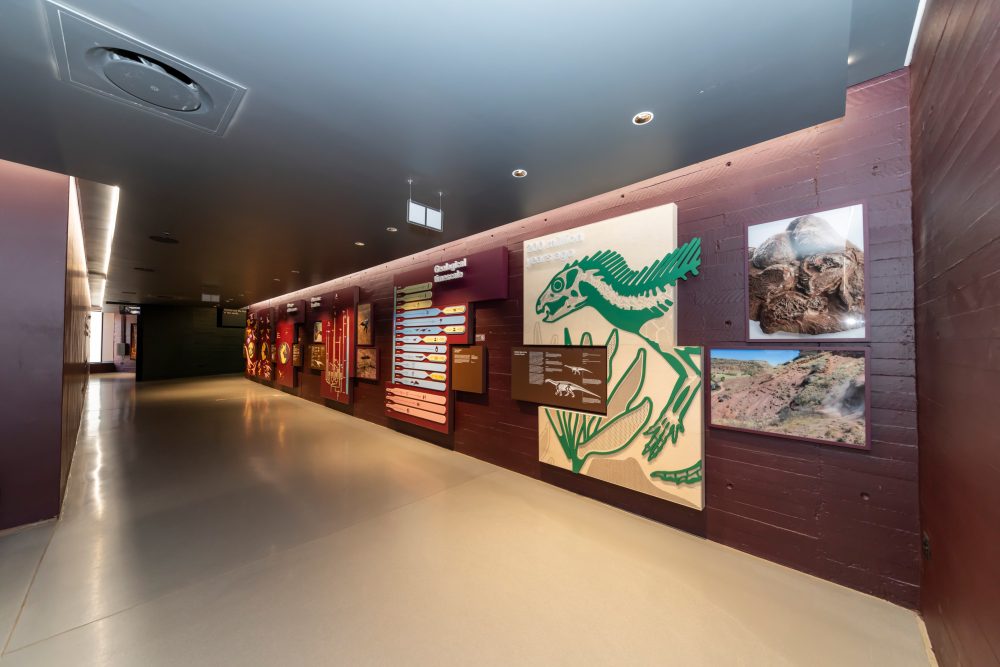
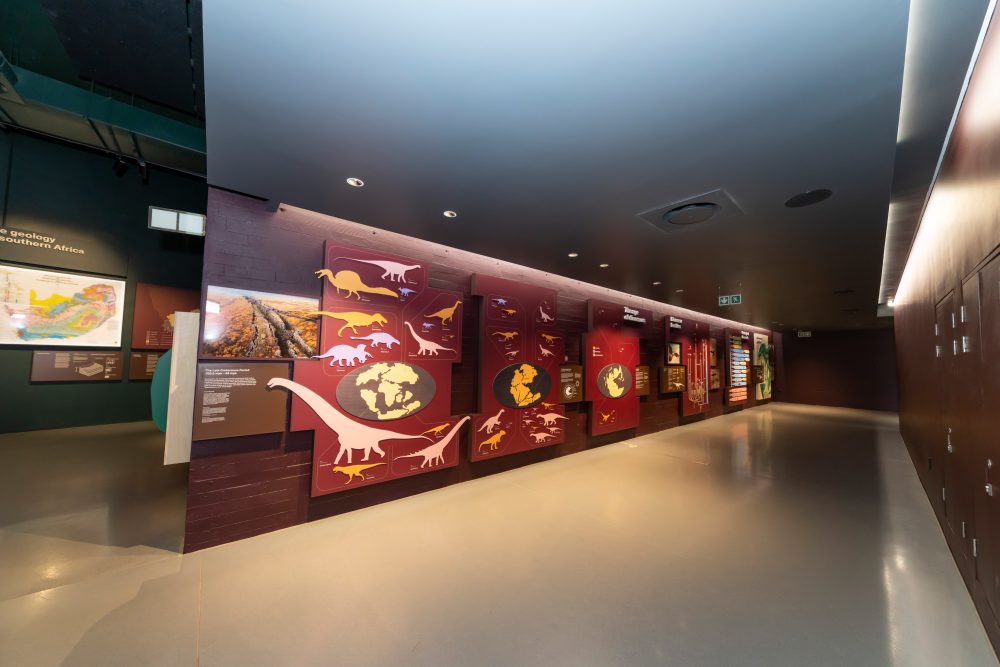
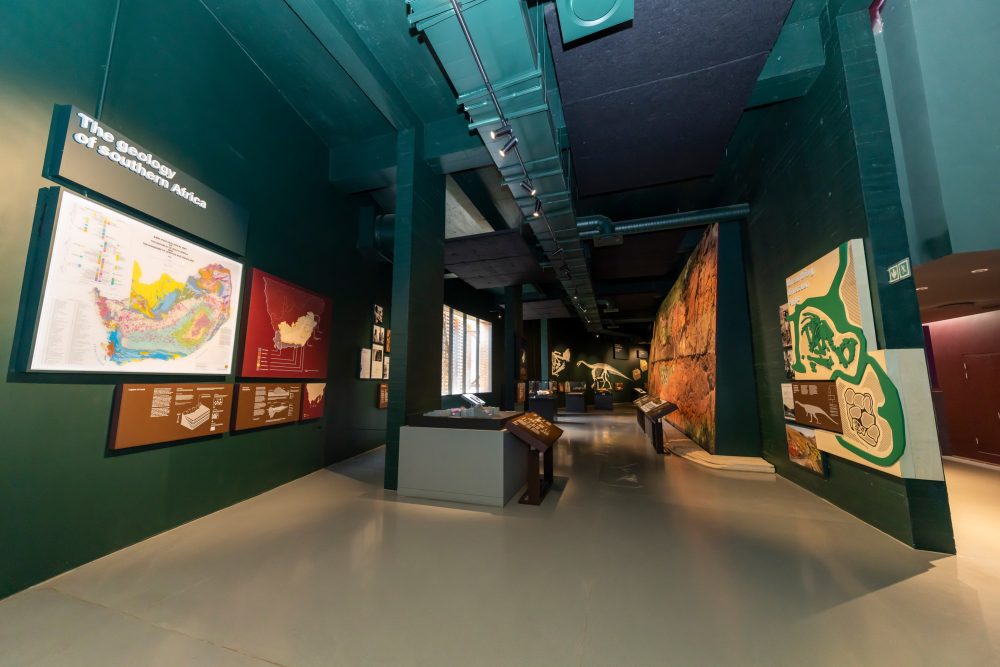
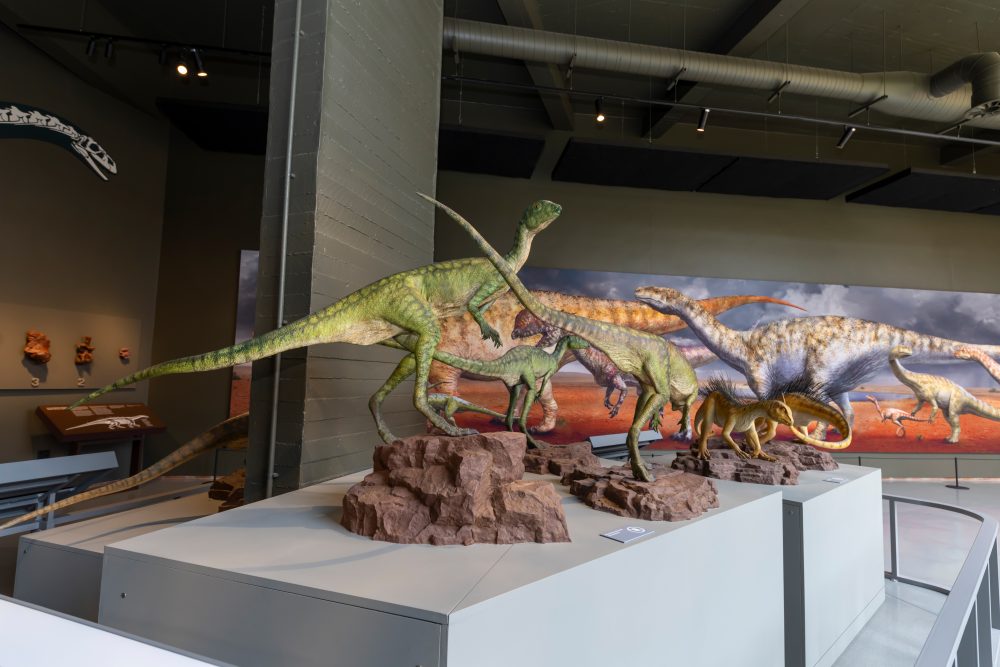
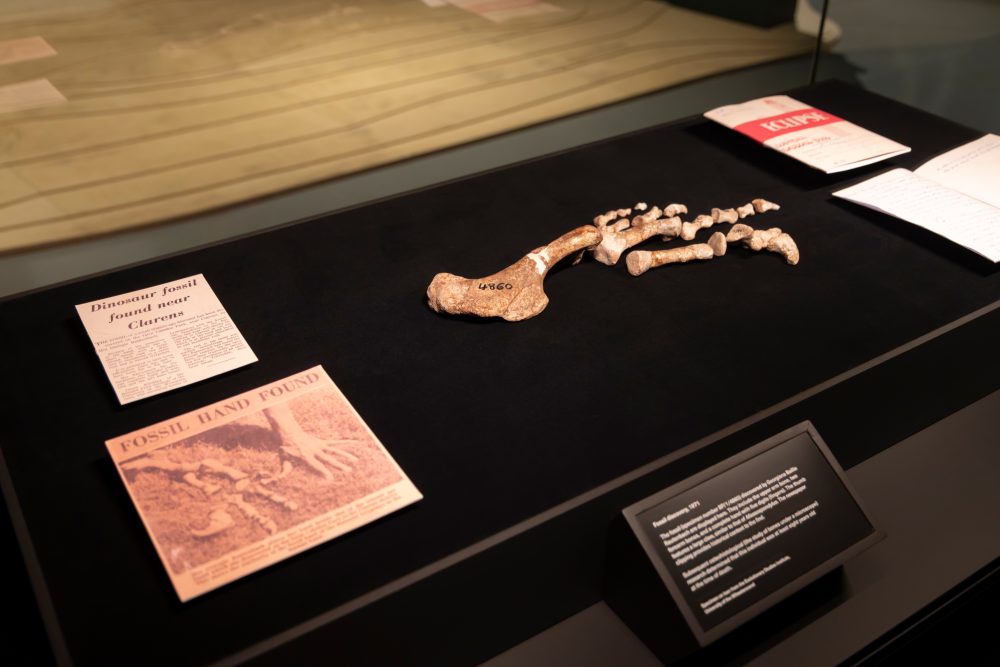
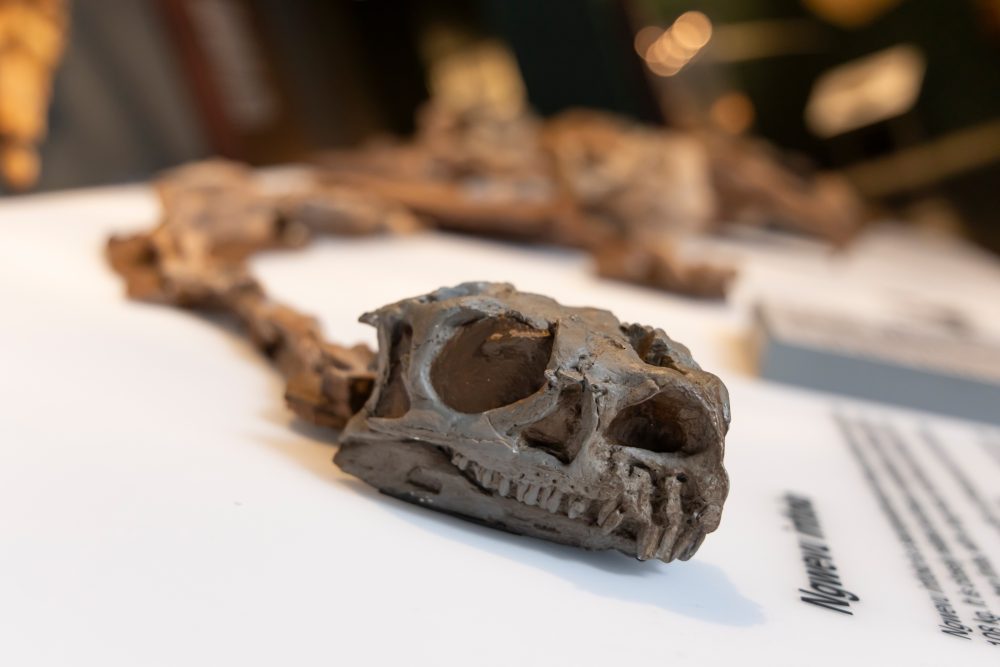
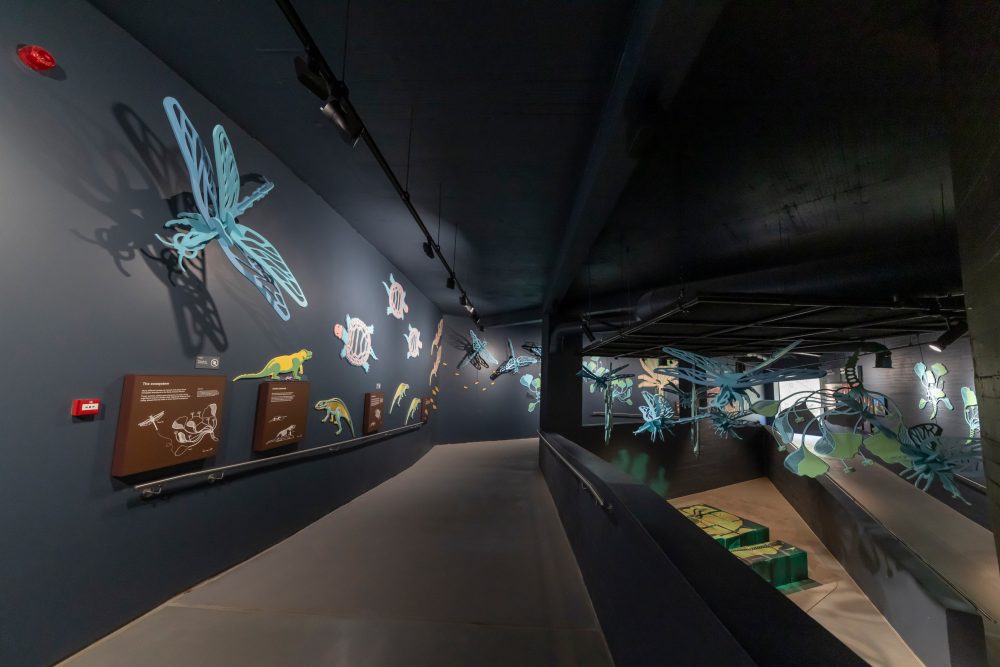
The Kgodumodumo Centre houses a combination of scientific exhibitions, cultural displays, and interactive installations designed to tell the full story of the region’s ancient and human past. The displays include fossils from the Triassic and Jurassic periods, representing the early evolution of dinosaurs and Massospondylus carinatus embryos which are among the oldest known in the world. The displays also include dinosaur egg nests as well as replica skeletons and casts of key species found only in South Africa. Among these are Massospondylus and Ledumahadi mafube (a giant Early Jurassic sauropodomorph whose name means ‘a giant thunderclap at dawn’ in Sesotho). The exhibitions also provide an explanation of the Kgodumodumo myth and how it relates to fossil findings.
GPS Waypoints: 28°30'27.3"S 28°37'12.9"E