Valley of Desolation
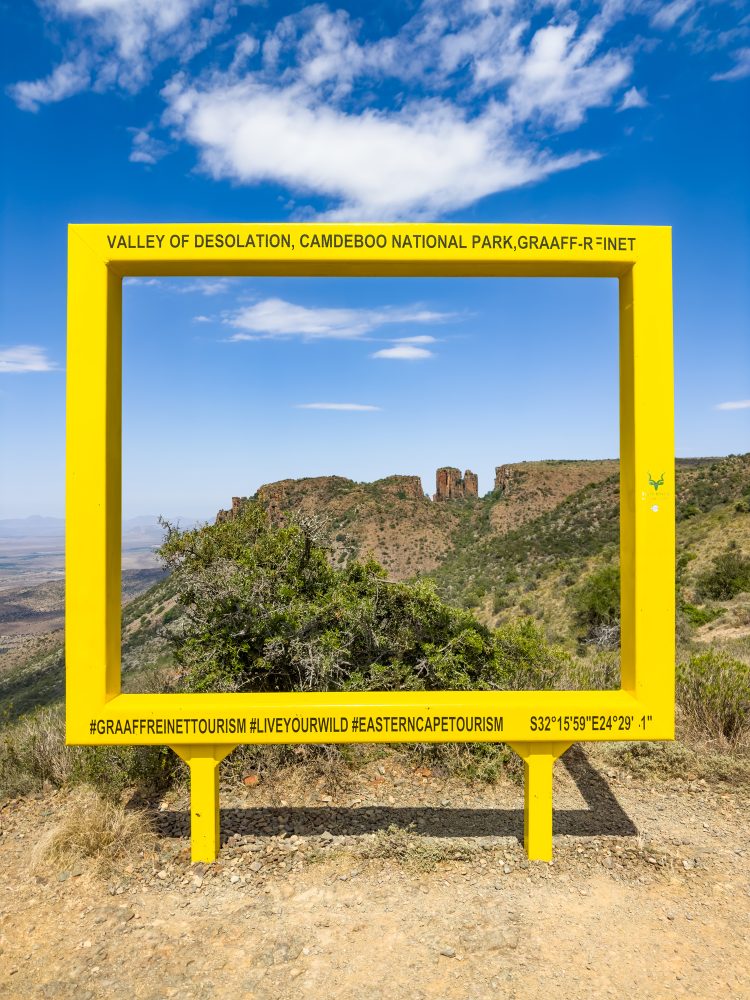
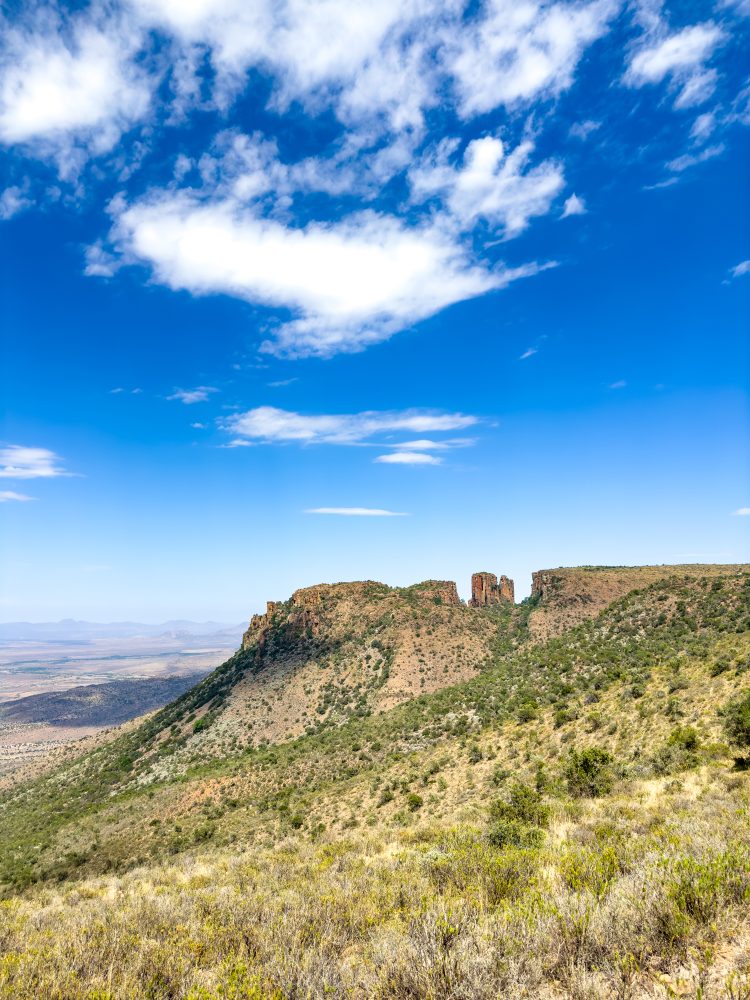
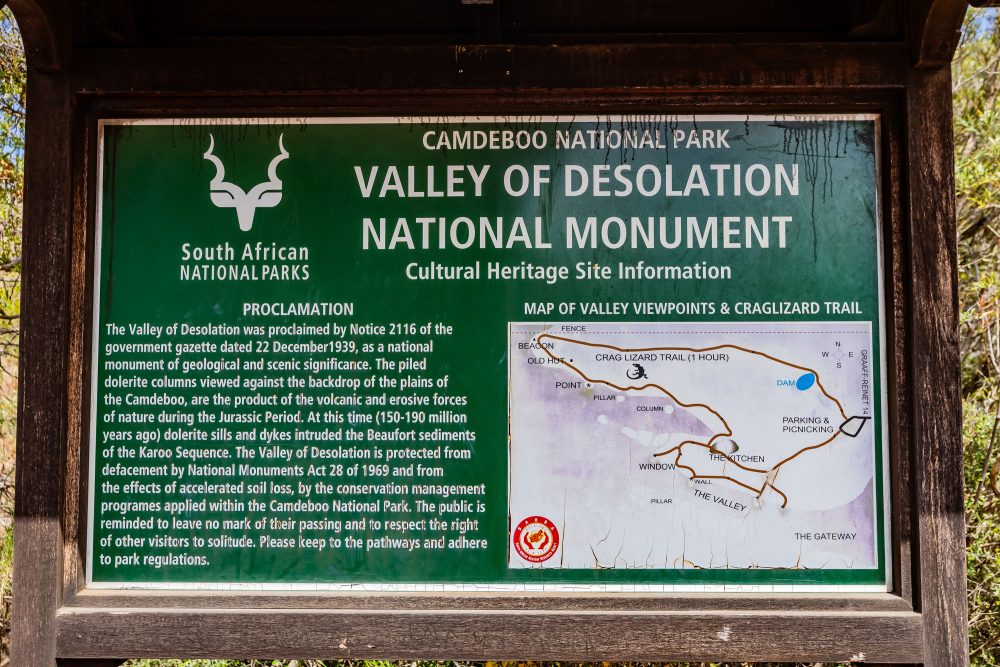
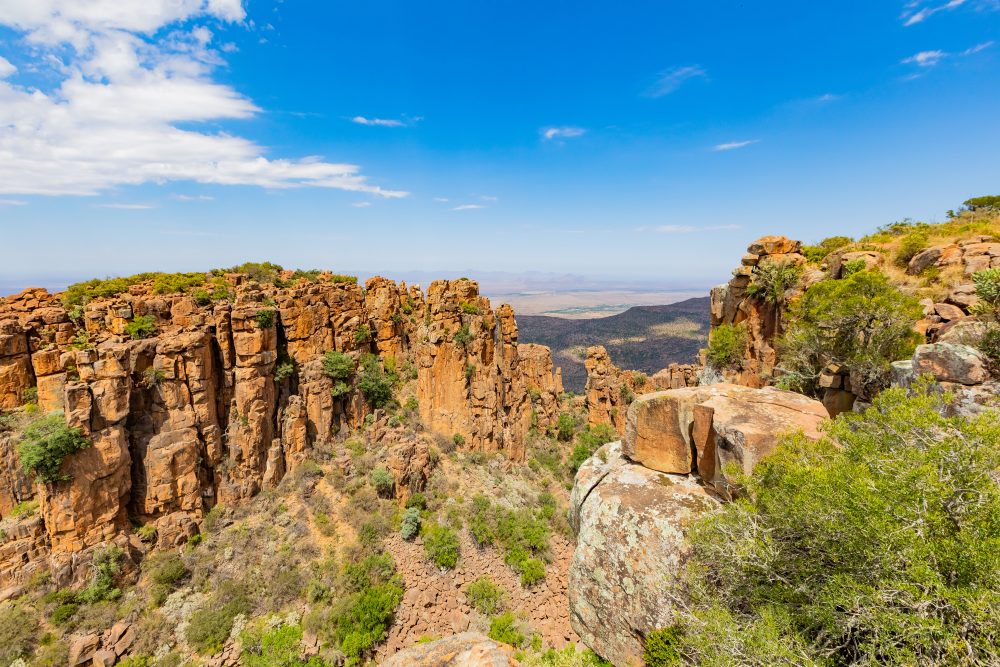
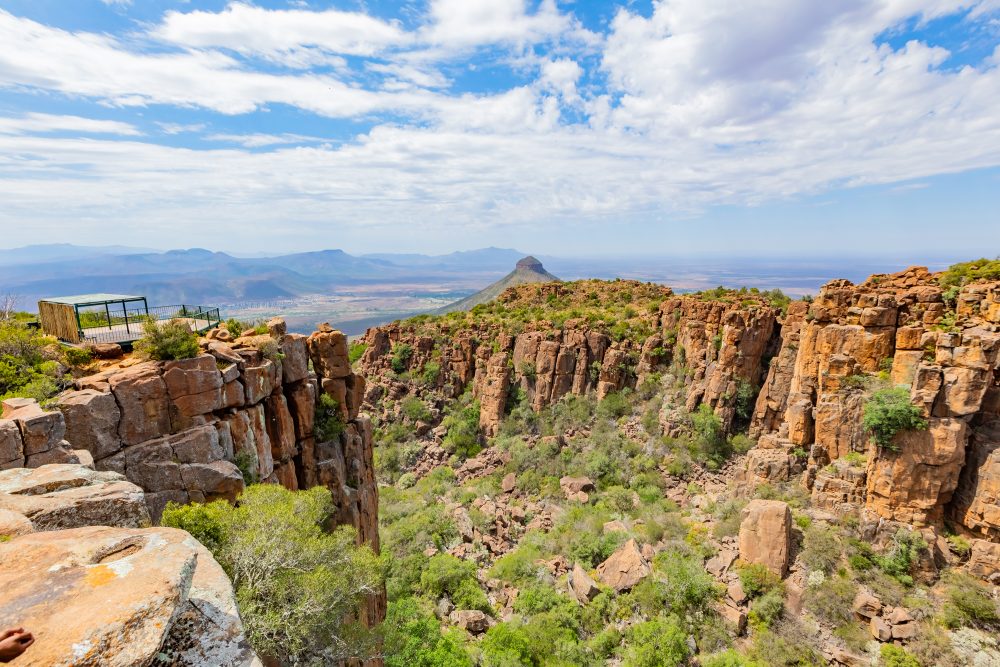
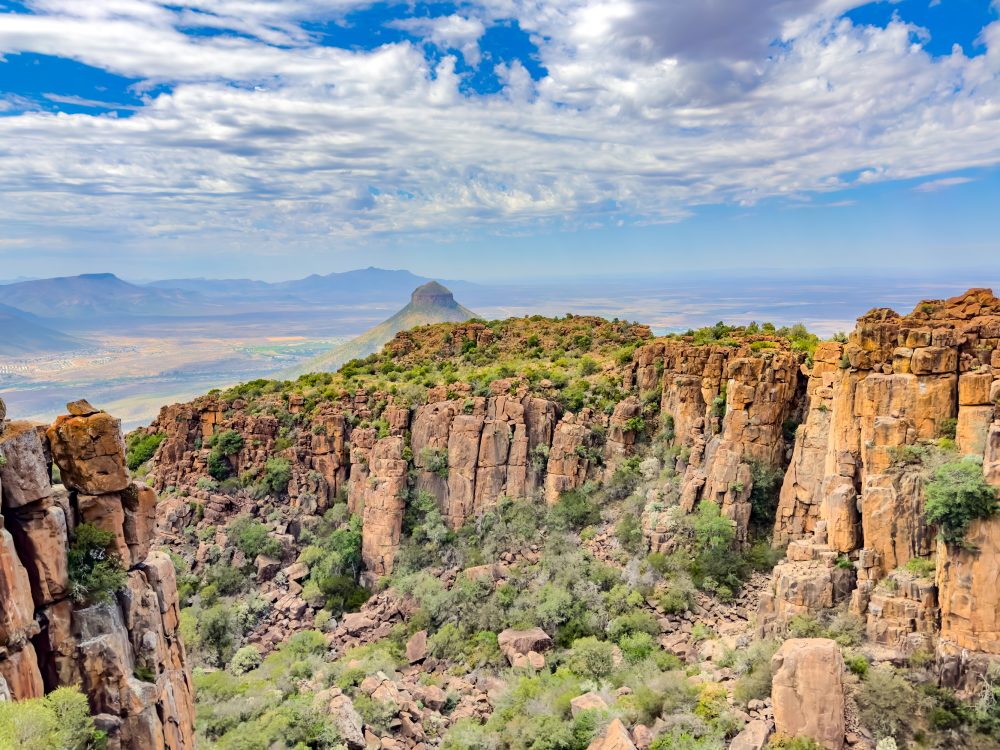
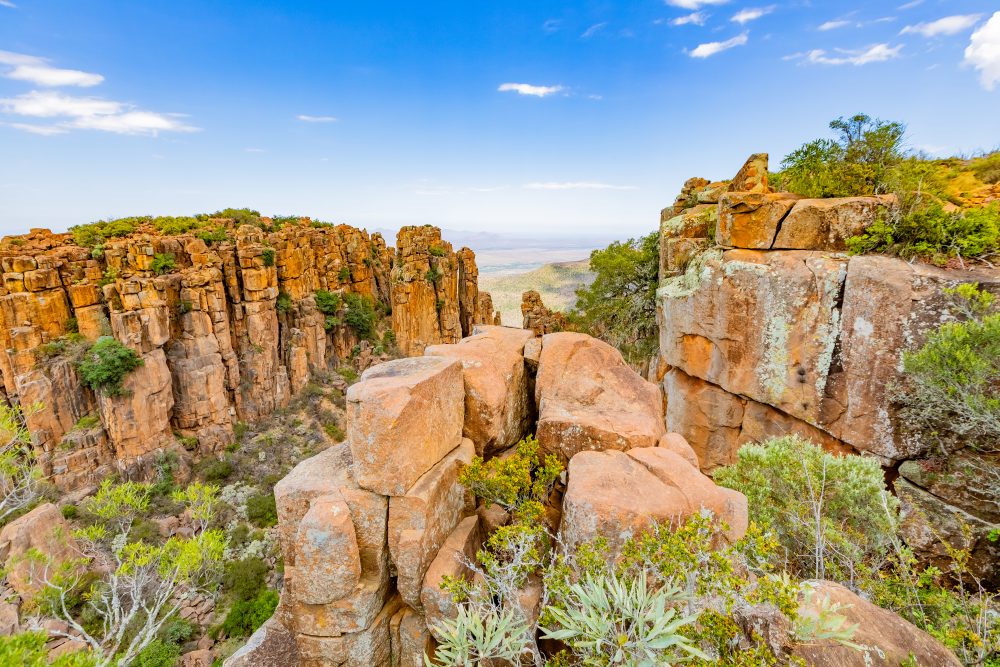
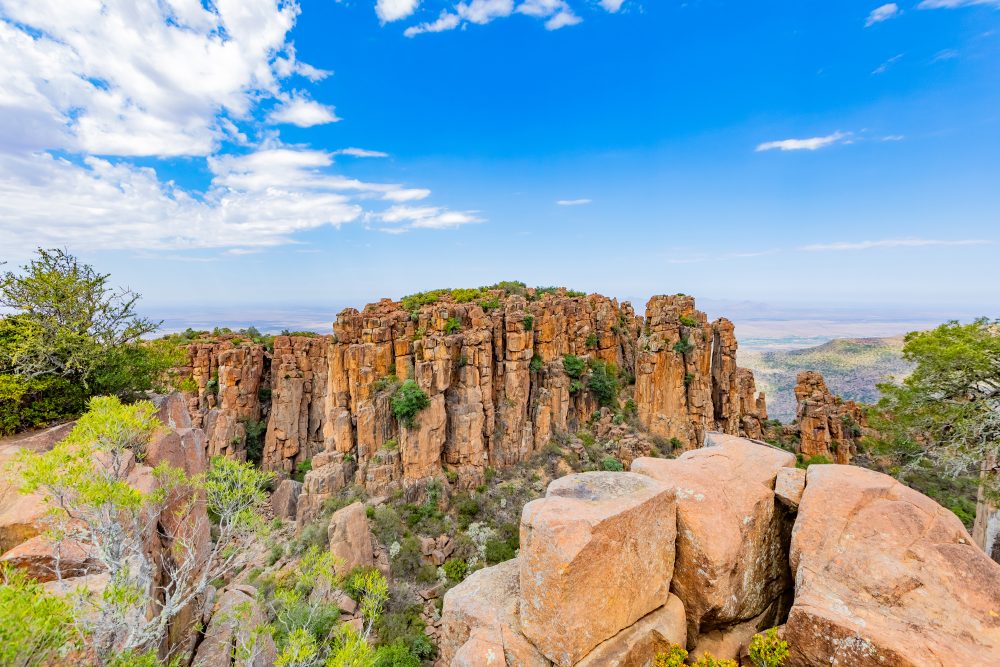
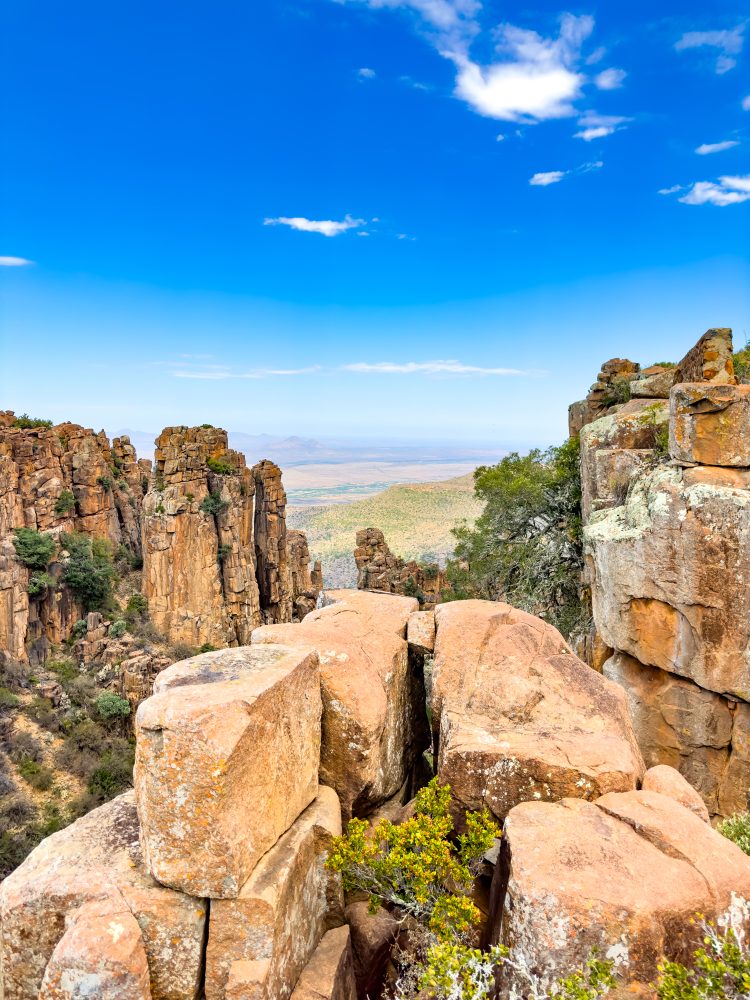
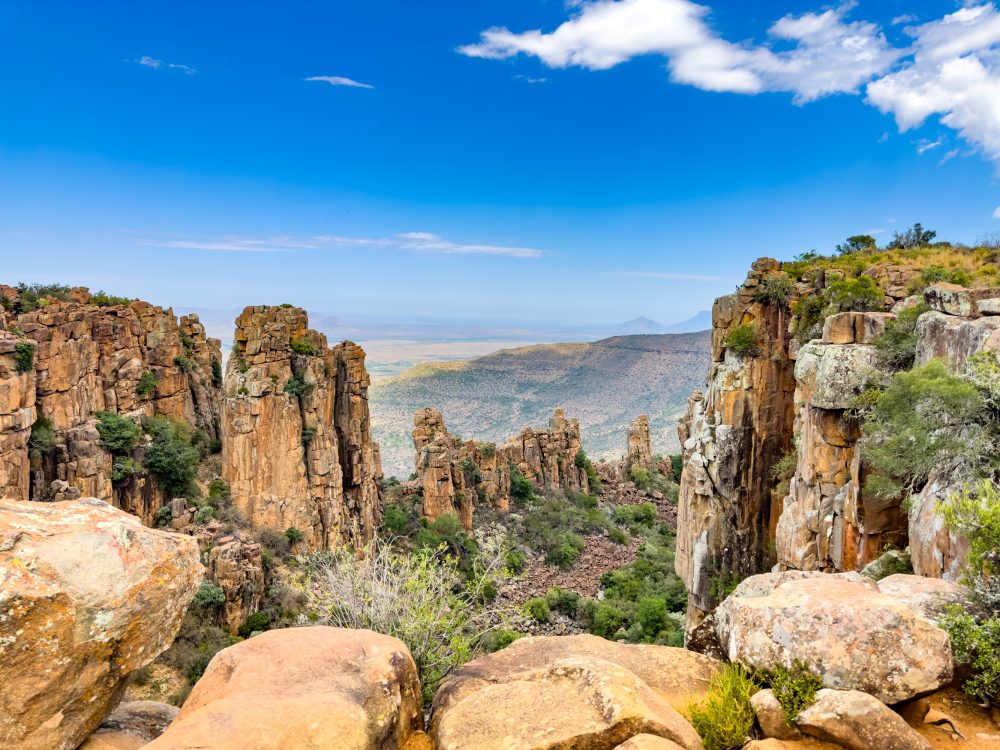
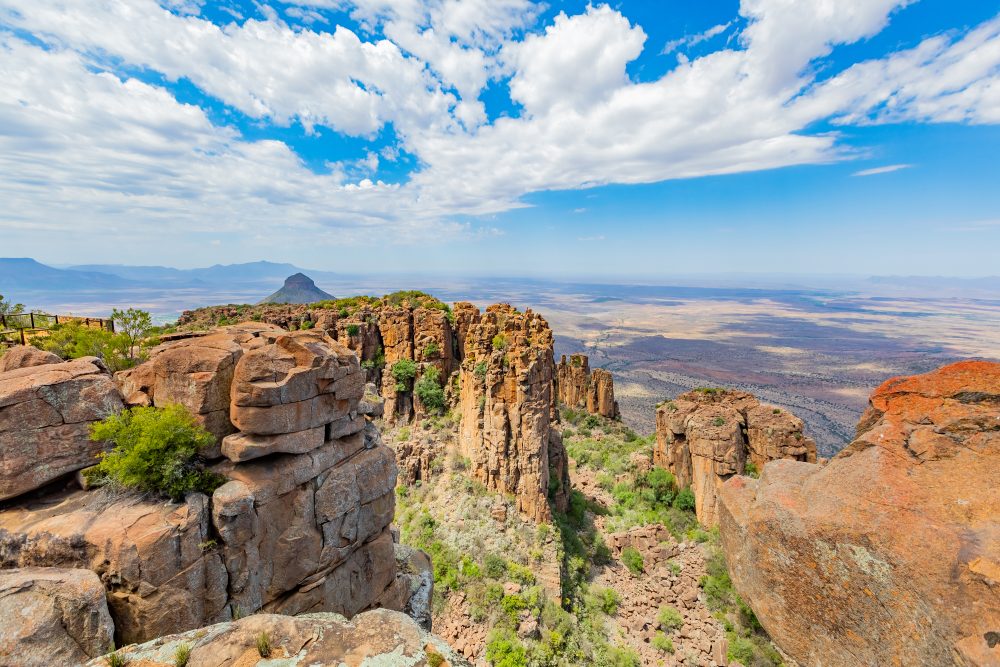
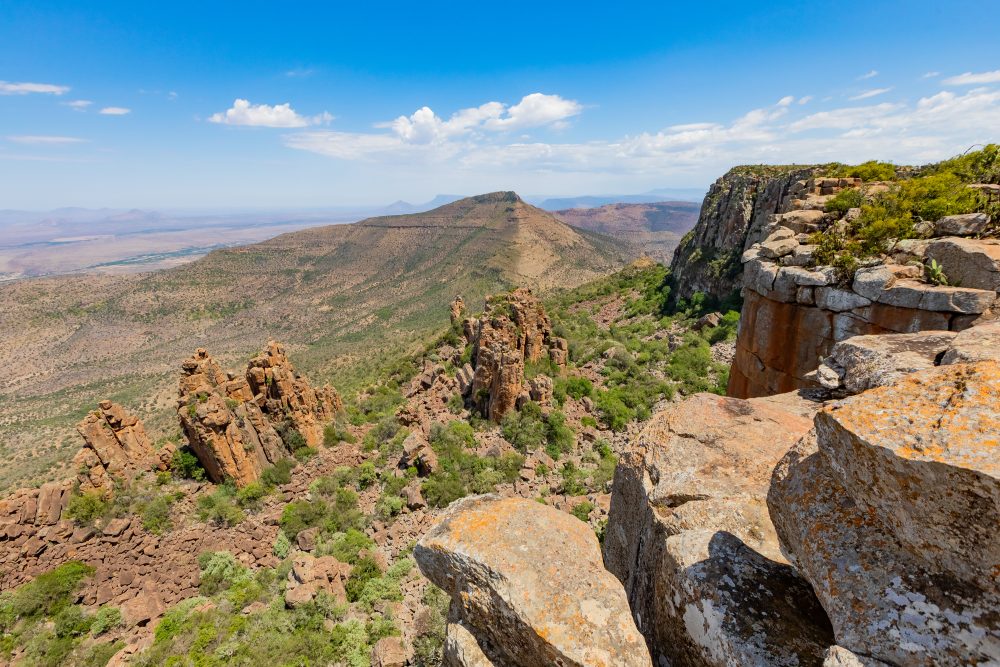
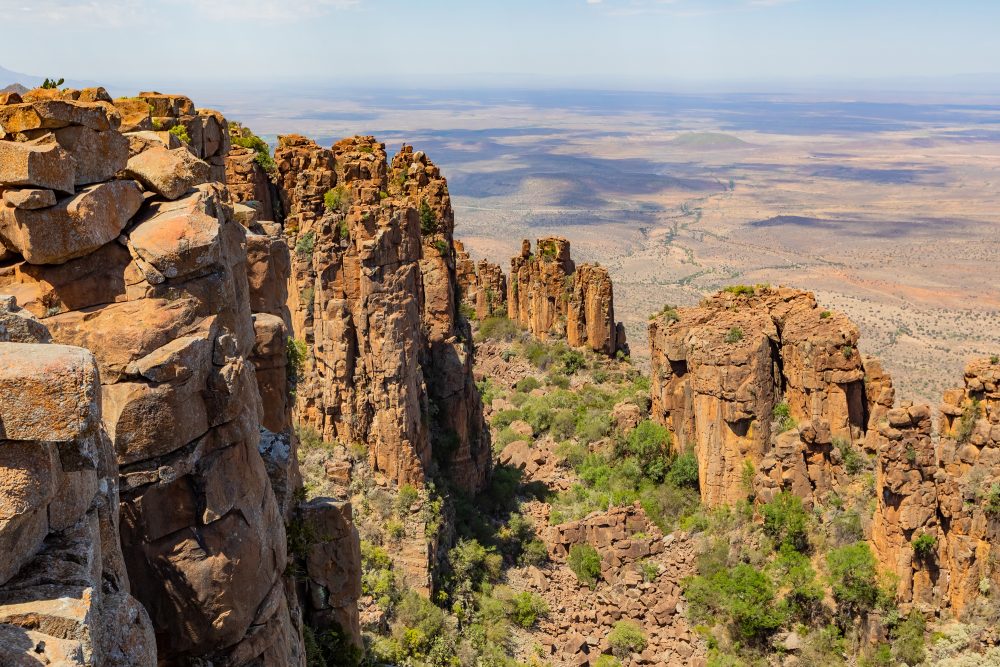
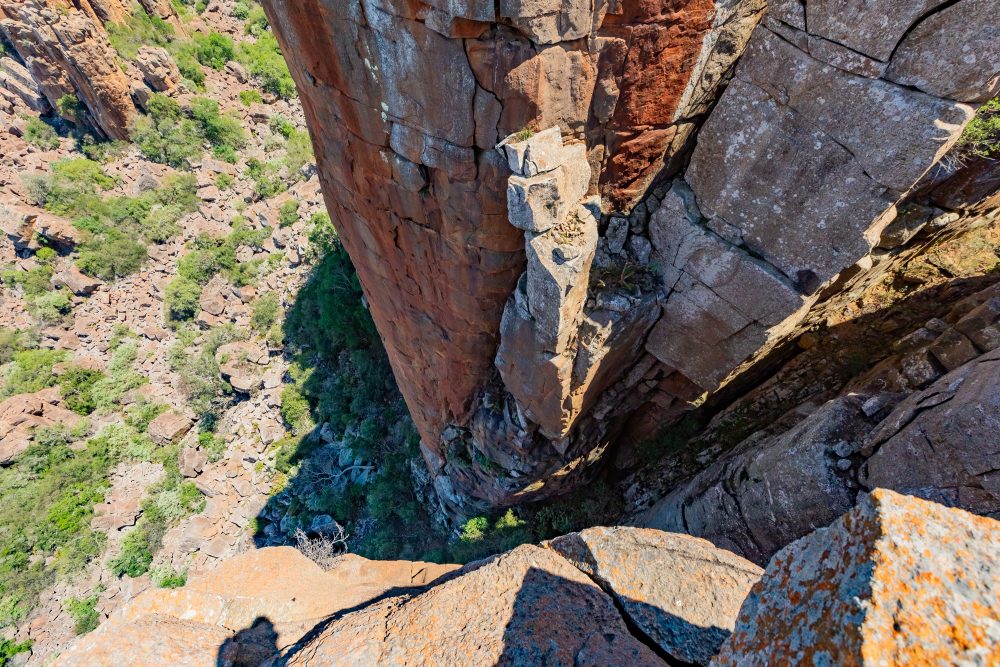
The Valley of Desolation, which lies within the semi-arid Karoo biome, occupies a prominent position atop the escarpment, overlooking the vast plains of the Great Karoo. The surrounding landscape is characterised by low, hardy shrubs, succulent plants, and drought resistant grasses that are adapted to extreme seasonal temperature fluctuations and limited rainfall. Towering dolerite columns, which were created during the Jurassic Period between 180 and 100 million years ago when Molten magma intruded into sedimentary rock layers and cooled slowly, contracting to form striking vertical columns, rise dramatically above the plains, creating a sharp contrast with the open landscape. These columns resulted from erosion over millions of years that removed softer surrounding sandstone, leaving the resistant dolerite standing in dramatic formations that dominate the landscape. The columnar structure provides an exceptional example of igneous intrusion and long-term geomorphological processes, making the valley one of South Africa’s most significant geological landmarks.
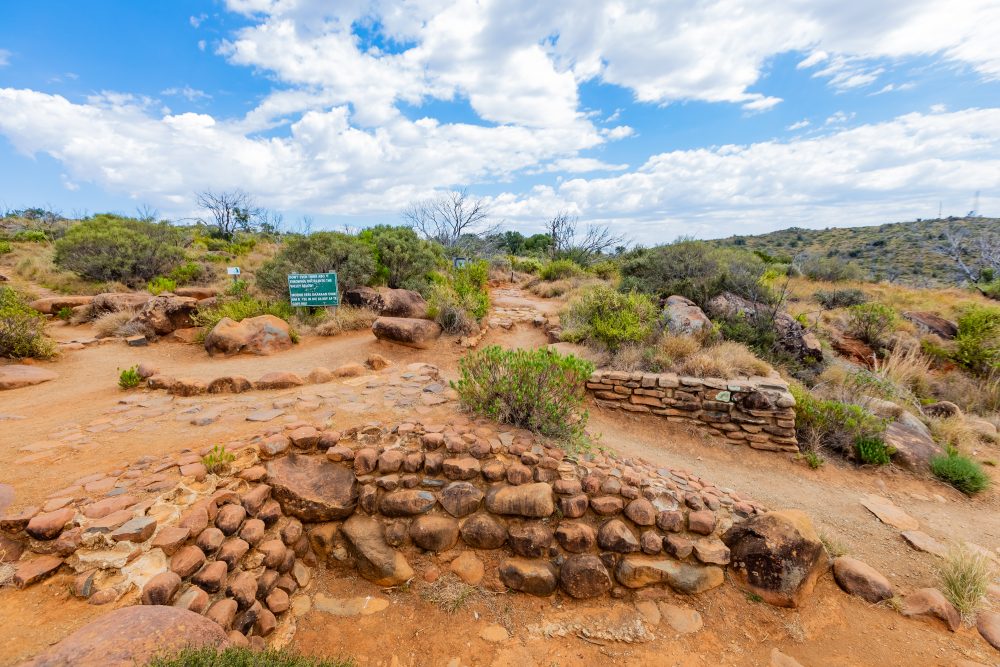
There are designated viewpoints that allow visitors to take in sweeping vistas of the valley and surrounding parkland, making it both an accessible and visually striking feature of the landscape.
The area supports typical Karoo wildlife, including small mammals like dassies, reptiles, and numerous bird species adapted to arid conditions, such as larks, kestrels, and bustards. The interplay of rugged rock formations and open plains creates a habitat mosaic of ecological and aesthetic significance.
The Valley of Desolation holds both natural and cultural significance. Its dramatic scenery has long inspired visitors, artists, and historians, symbolising the stark beauty and resilience of the Karoo. It serves as a tangible link between the region’s geological past and contemporary appreciation of South Africa’s natural heritage. It was declared as a National Monument in 1939.
Beyond aesthetics, the Valley of Desolation embodies a sense of place deeply connected to the identity of the Karoo, bridging scientific, artistic, and cultural narratives. It remains an enduring symbol of South Africa’s commitment to preserving unique geological formations and scenic heritage for future generations.
GPS Waypoints: 32°15'46.4"S 24°30'17.3"E