Andries Pretorius Monument
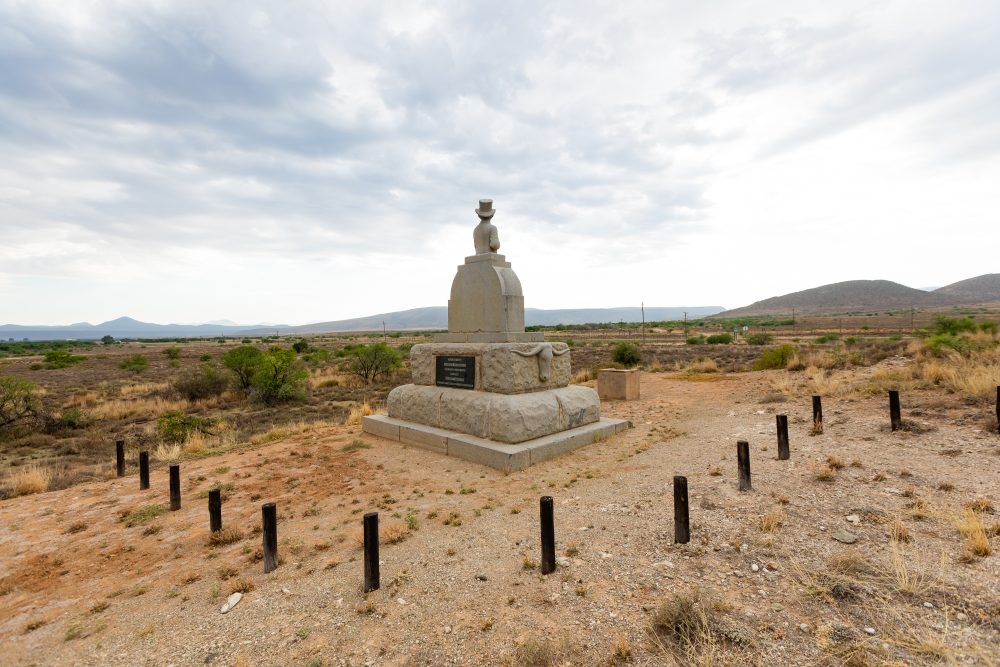
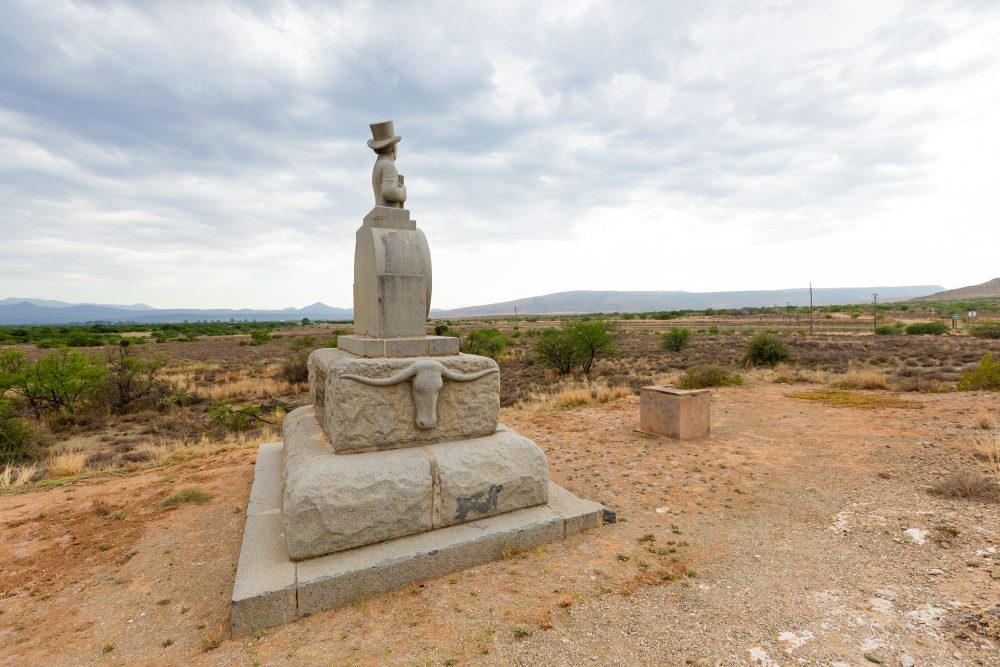
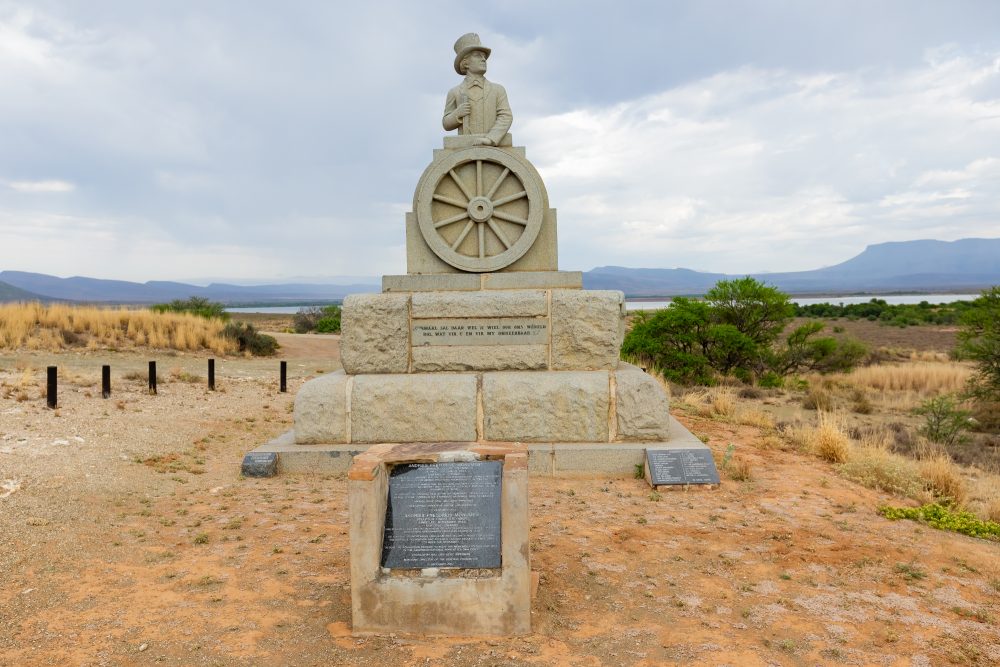
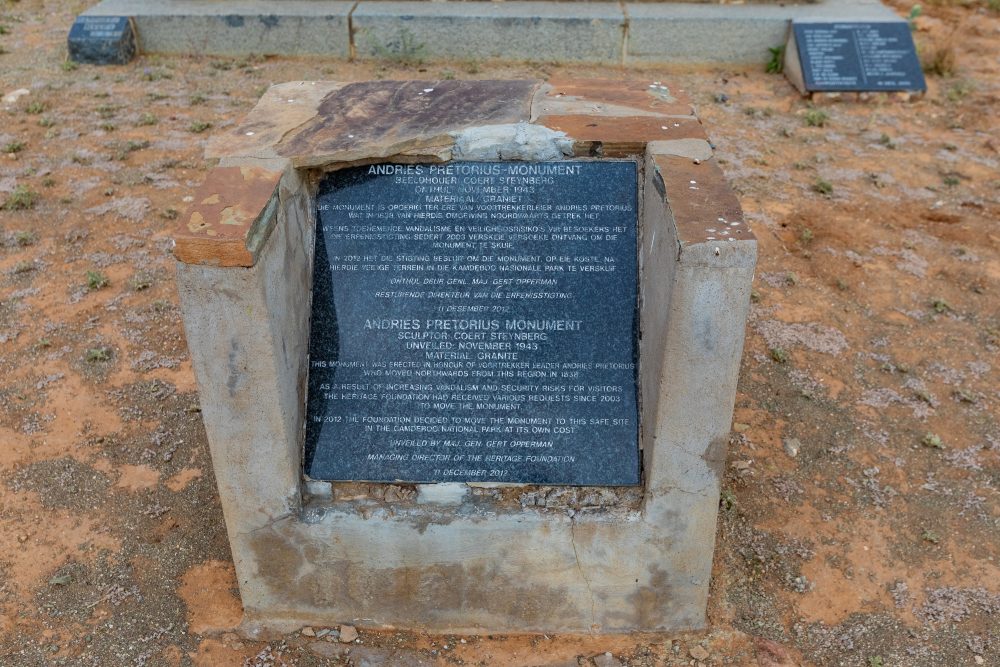
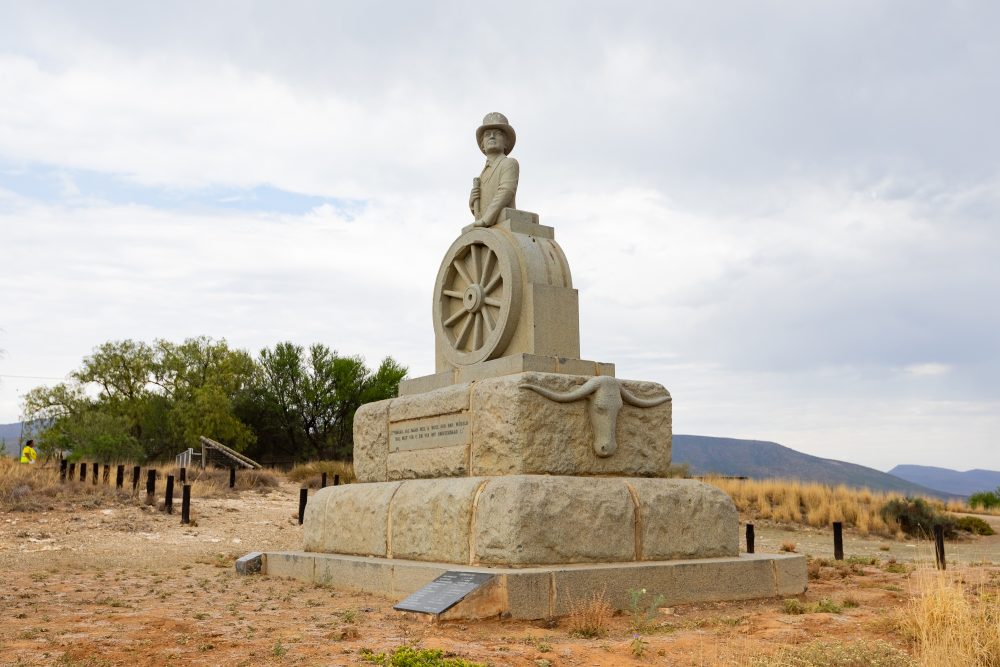
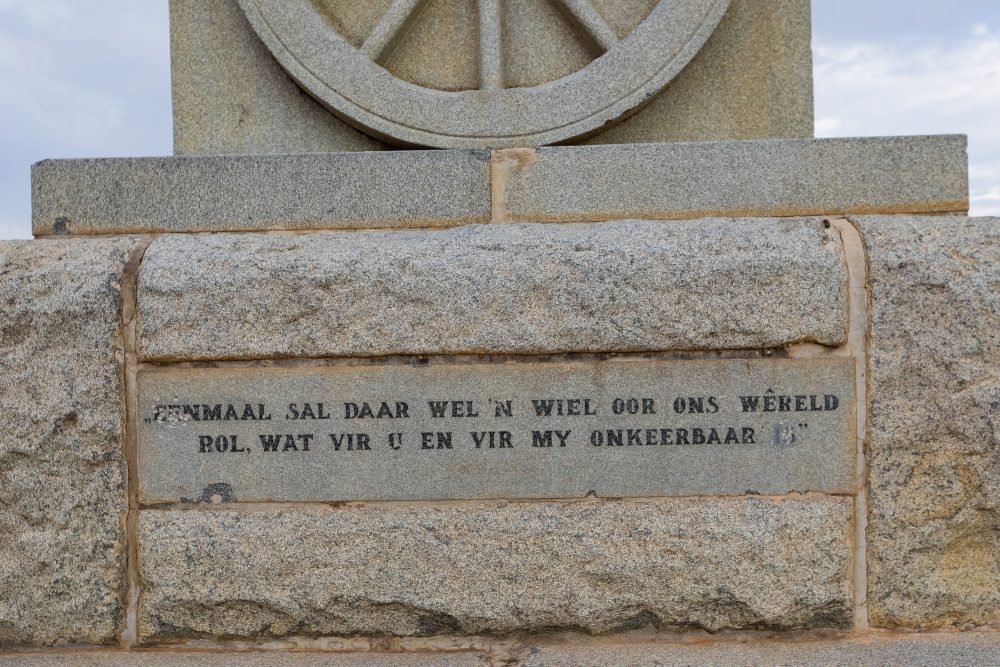
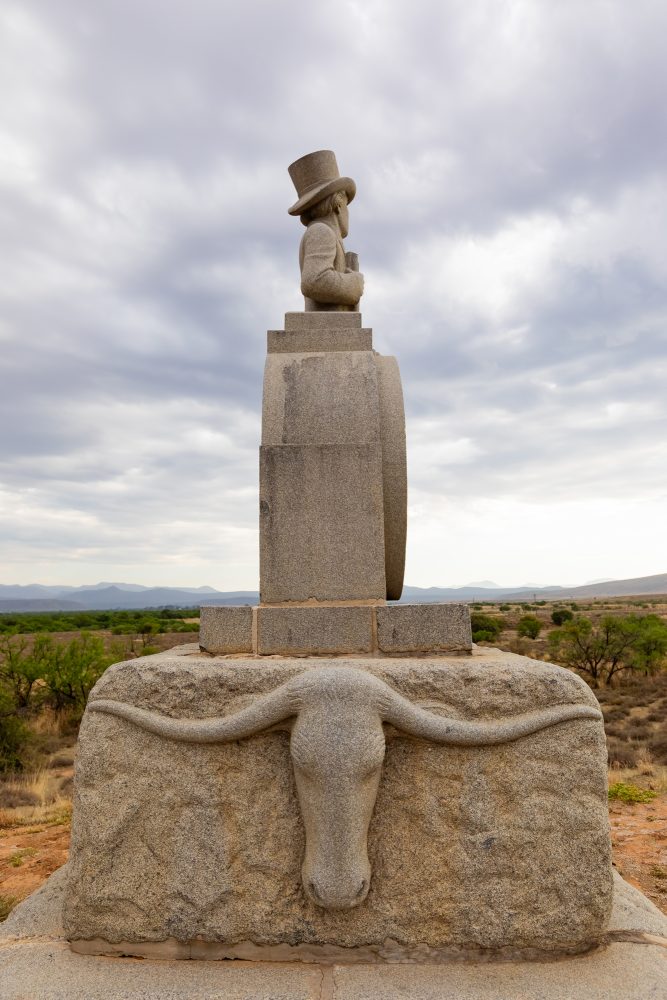
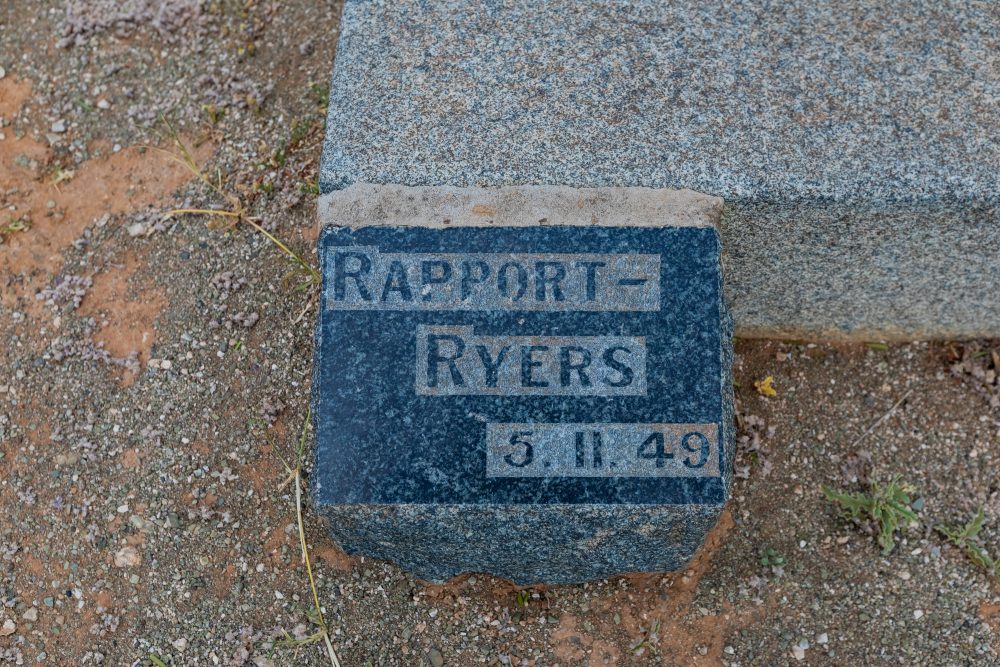
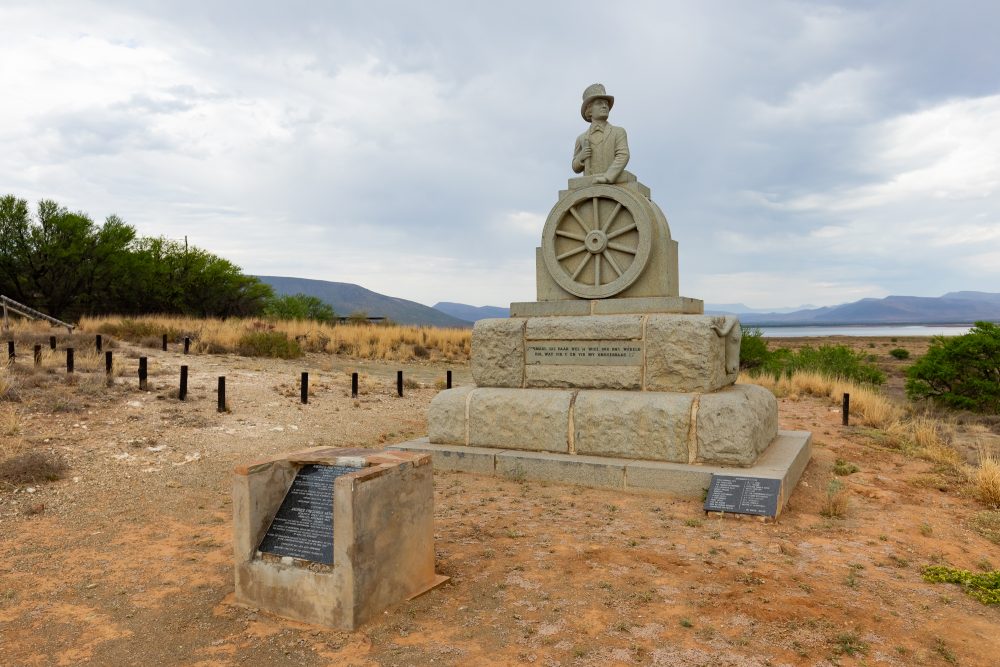
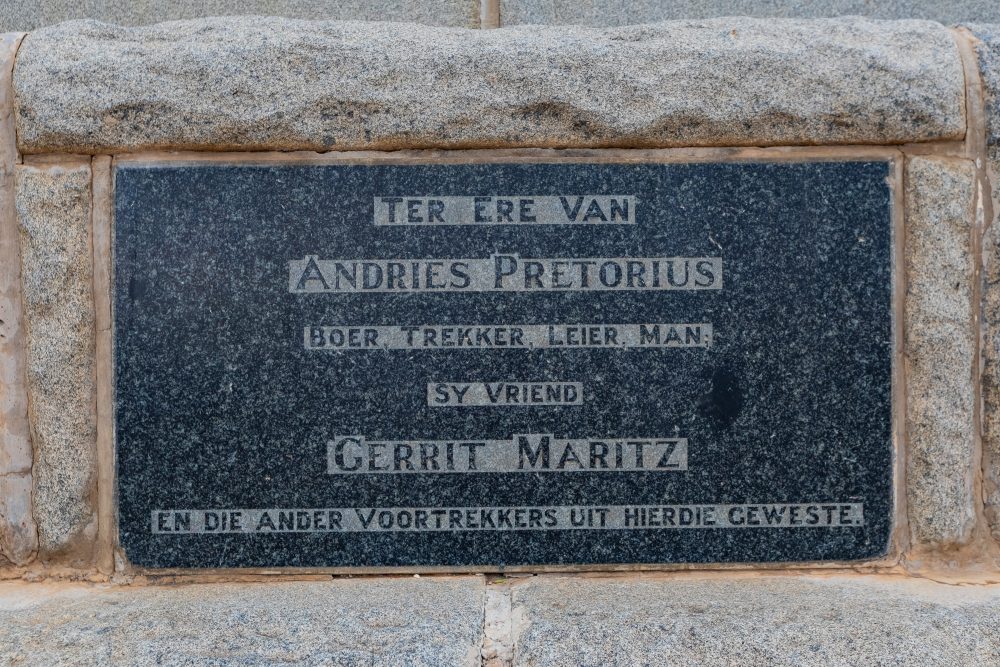
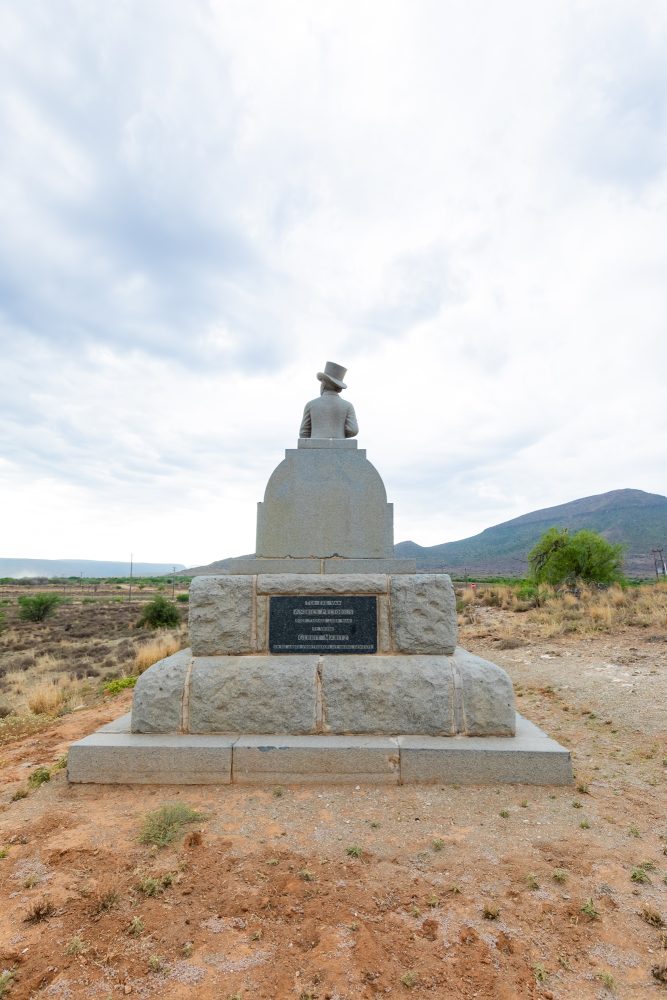
This monument, sculptured by Coert Steynberg using granite, was erected in honour of Andries Wilhelmus Jacobus Pretorius (27 November 1798 – 23 July 1853), Gerrit Mariz and other Voortrekkers from the area. Pretorius was a leader of the Voortrekkers and left the Cape to escape oppression by the British, together with the oxen that pulled the wagons of the Voortrekkers. It was officially unveiled by Mrs Gustav Preller on Andries Pretorius’s birthday, which is the 27th of November 1943. The monument is principally defined by an imposing figure of Pretorius whose eyes are looking northwards to symbolically represent the direction Voortrekkers took. Pretorius has his left hand resting on a wagon wheel. There is also an Afrikaner ox that supposedly pays tribute to the animal that hauled the wagons of the Voortrekkers.
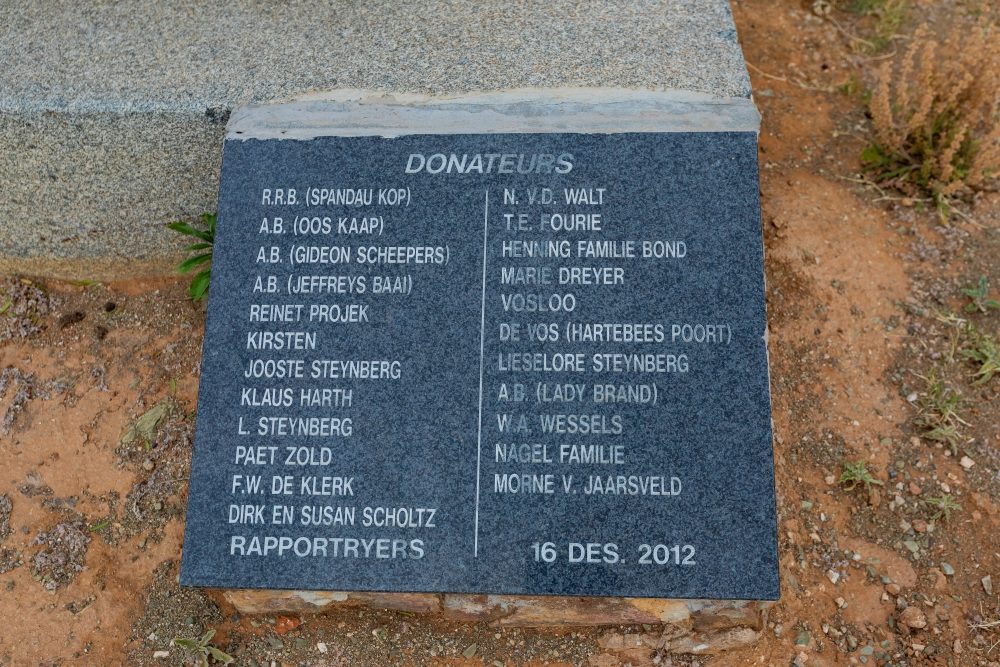
Its original location was the main road, N9, towards Middelburg. This was the route into the interior of the country that was used by the Voortrekkers. As a result of poor security, it became a subject of vandalism through acts of defacement using paint or breaking the concrete blocks, which threatened its integrity. Subsequently, a decision was taken to move it to another location in 2012, with its current location within the Camdeboo National Park deemed to be much more ideal. The protected area was probably the most secured locality within the vicinity of the original place for the statue. While its relocation was approved by the Executive Management of SANParks for security reasons, there is no known link between this monument and the existence of the Park itself.
After leaving the Cape Colony, Pretorius travelled to the northern areas of what is today KwaZulu-Natal. He got appointed as a Chief Commander of the Voortrekkers who launched an attack against King Dingane’s soldiers, following the assassination of Piet Retief who was murdered inside the Mgungundlovu Royal Palace along with his men in February 1838. Together with his men, they mounted an attach, which led to their victory on the 16th of December 1838 in what has commonly been referred to as the Battle of Ncome/Blood River. This became a significant day in the history of the Voortrekkers, first memorialised as ‘Dingane’s Day’ (until 1910), then ‘Day of the Vow’, before becoming known as the ‘Day of the Covenant’. Since 1994, the 16th of December has been renamed to the ‘Day of Reconciliation’. This day represents a strong legacy of Andries Pretorius. Pretorius later played a critical role in the leadership of AmaZulu, with him and his men supporting Prince Mpande in his conflict against his brother, King Dingane. This conflict is known as the Battle of Maqongqo, and its outcome led to the murder of King Mpande, who was then replaced by Prince Mpande. His son, Marthinus Wessel Pretorius, who later became the first President of the Transvaal Republic, honoured the memory of his father by naming Pretoria after him in 1855.
GPS Waypoints: 32°13'10.6"S 24°32'26.6"E