Unveiling a coastal wonder: Table Mountain National Park Marine Protected Area
A STATE OF KNOWLEDGE REPORT REVIEWED AVAILABLE HISTORICAL, CULTURAL AND ECOLOGICAL KNOWLEDGE AS WELL AS MANAGMENT CHALLENGES OF THE WONDROUS TABLE MOUNTAIN NATIONAL PARK MARINE PROTECTED AREA
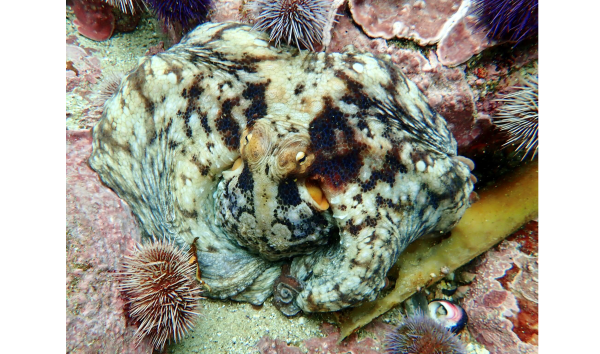
Photo: Alison Kock
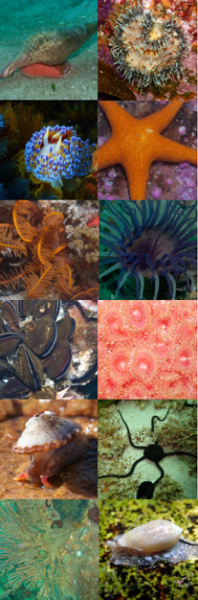
Photos: Danel Wentzel, Georgina Jones, Lisa Beasley, Magriet B, Peter Southwood & Sarah Ackland
Declared in 2004, the primary purpose of the Table Mountain National Park Marine Protected Area (TMNP MPA) is to preserve irreplaceable ecosystems and species for the benefit of humanity and nature. A wealth of information has been generated for the TMNP MPA. Through an extensive review of over 300 scientific studies, theses, and grey literature, we summarised our analysis into a State of Knowledge report. Although the overarching aim of the report is to provide an overview of available information to improve awareness for park management, planning, and research, the report had a few specific objectives. First, to reveal the history and cultural heritage intricately woven into this marine landscape. Secondly, to investigate the intricate relationships between living organisms and the environmental elements that shape the distinct characteristics of this area. Thirdly, the report sought to uncover the challenges and pressures this ecosystem faces, along with the strategic measures implemented to ensure its effective management and conservation. Lastly, it highlighted the abundant diversity of species and habitats in the TMNP MPA.
Table Mountain, known as Hoerikwaggo (mountain in the sea) by the Cape KhoeKhoe people, holds deep historical significance as it rises majestically out of the sea. The close relationship between mountain, coast and sea makes this a unique marine national park. Adjacent to the national park and Cape Town, the TMNP MPA is a treasure trove of marine and coastal biodiversity. Spanning 127 km from Muizenberg to Mouille Point, and encompassing 1000 km², this coastline attracts a diverse range of ocean enthusiasts year-round.
The MPA encompasses many habitats, including rocky shores and reefs, sandy beaches, kelp forests, estuaries, and pelagic habitats. The TMNP MPA protects twenty-four benthic and coastal ecosystem types. Three ecosystem types are classified as Endangered (Cape Island, Cape Sheltered Rocky Shore and Southern Benguela Reflective Sandy Shore), ten are Vulnerable, five are Near Threatened, and six are Least Concern. Rocky shores have distinct community compositions influenced by shore zonation, wave action intensity, and water temperature. Kelp forests provide sheltered habitats and vary in species composition between the West and East coasts. Sandy beaches support diverse species and play important roles in coastal protection and nutrient cycling. Estuaries serve as nursery areas for marine species.
The MPA also protects bay habitats and supports seasonal aggregations of whales, fish, and squid in pelagic regions. The TMNP MPA consists of a controlled area and six restricted zones. In the controlled area, resources are extracted according to specific regulations. The restricted zones prohibit resource collection and only permit low-impact activities. Archaeological evidence indicates that Strandlopers (hunter-gatherer people of Khoi descent who foraged along the coast) were the first humans on the Cape Peninsula during the Later Stone Age. Shell middens reveal people’s early reliance on marine resources, including abalone, limpets, rock lobster and fish.
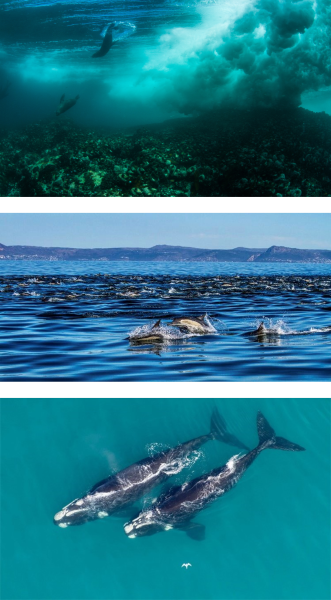
THE MPA IS HOME TO OVER 250 MARINE VERTEBRATE SPECIES, INCLUDING 46 SPECIES OF SHARK AND RAY, 149 FISH SPECIES, 39 SEABIRD AND SHOREBIRD SPECIES, 16 MARINE MAMMALS AND 3 MARINE REPTILES (Photos: Mark van Coller, Alison Kock and Jean Tresfon).
The Table Mountain National Park Marine Protected Area is home to over 142 species of seaweed, which include green, brown, and red algae. These algae species are not only important as a food source but also provide habitat for various organisms. The composition of algal communities on each side of the Peninsula is influenced by factors such as temperature gradients and wave exposure. On the Atlantic West Coast side of the park, notable species of seaweed include foliose and filamentous red algae. In contrast, the False Bay coastline features encrusting and articulated coralline rhodophytes, green algae, and other species. Kelp forests are prevalent on the West Coast, with species, such as sea bamboo and split fan kelp, dominating. These kelp forests have been commercially exploited for purposes such as alginate production (a polysaccharide used widely in many industries for its gelling properties), fertiliser supplement, and providing feedstock in the abalone aquaculture industry. The TMNP MPA allows controlled harvesting of kelp on the western side.
Over 687 marine invertebrate species have been identified in the TMNP MPA, including endemic sponges. Cnidarians, such as sea anemones and jellyfish, which are abundant and important predators in the MPA. Echinoderms like sea stars, sea cucumbers, brittle stars, and feather stars play vital roles in the marine ecosystem. At the same time, molluscs, including limpets, periwinkles, abalone, whelks, mussels, and cephalopods, are abundant and commercially valuable within the MPA. Invasive species, like the Mediterranean mussel, unfortunately threaten native bivalves. The MPA also supports various arthropods, including sea spiders and crustaceans. One notable resident species is the beautiful blue and yellow hunchback amphipod (Iphimedia gibba).
The MPA is home to over 250 marine vertebrate species, including 46 species of shark and ray, 149 fish species, 39 seabird and shorebird species, 16 marine mammals and three marine reptiles. Endemic shark species, like puffadder shy sharks and spotted gully sharks, find refuge in the area. Reef fish are abundant and diverse but face threats from overfishing. Seabirds and shorebirds are experiencing population declines due to human activities like habitat loss. Still, breeding colonies of African penguins, Cape cormorants, and other species are doing better in the MPA than elsewhere. Marine mammals, including dusky dolphins, bottlenose dolphins, killer whales, Cape fur seals and southern right whales feed extensively inside the MPA.
There are numerous pressures and threats that pose significant challenges to the marine environment. One of the key concerns is the overexploitation and depletion of fish stocks caused by overfishing, including illegal fishing activities. This has resulted in declining catch rates and the overexploitation of linefish species. Additionally, recreational fishing practices have contributed to the depletion of stocks, as there has been a shift in target species and instances of overfishing. The illegal harvesting of West Coast rock lobster and reef fish have also increased. Another major threat is invasive alien species, with over 58 recorded species in the TMNP MPA. These invasive species have been introduced through various means, such as ballast water, biofouling (i.e. the accumulation of organisms such as algae or small animals on wet surfaces that have a mechanical function, causing structural or other functional deficiencies), aquaculture, and the aquarium trade. Human-wildlife conflict adds to the challenges, with fatal shark attacks occurring and the subsequent establishment of the Shark Spotters program. Lastly, pollution and water quality problems, including oil spills, have had catastrophic consequences on marine life and habitats.
Effective management of the TMNP MPA is crucial for achieving its objectives of biodiversity conservation and
sustainable resource use. Effective management requires sound planning, design, and good governance. However, limited resources, non-compliance, and inadequate monitoring and education pose ongoing challenges. The MPA’s zoning plays a critical role in accommodating various activities while protecting sensitive areas. Recent studies have shown the effectiveness of no-take zones in conserving exploited species and protecting the community structure of rocky shores. Species of conservation concern within the MPA include white sharks, abalone, African penguins, and severely depleted fish species. Illegal extraction of marine resources, particularly abalone and West Coast rock lobster, is a major challenge requiring collaboration between SANParks and enforcement agencies. Education and awareness programs, as well as coordinated conservation efforts among NGOs and authorities, are essential for the MPA’s social ecology. Recreational activities and tourism associated with the MPA contribute significantly to the local economy, emphasising the need for ongoing management and investment. Assessing the socio-economic benefits and ecosystem services provided by the MPA is crucial, particularly in relation to resource use and the adjacent communities’ reliance on fisheries. Managing fisheries sustainably and addressing historical and social issues are important considerations for successful MPA management.
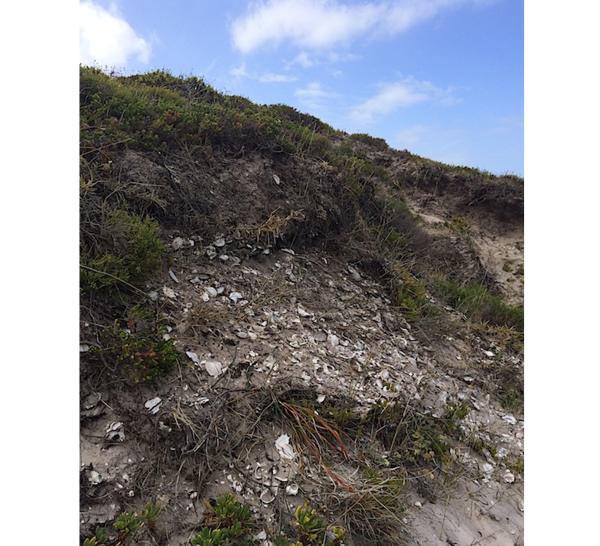
Archaeological evidence indicates that hunter-gatherer people of Khoi descent were the first humans on the Cape Peninsula during the Later Stone Age. Shell middens reveal people’s early reliance on marine resources, including abalone, limpets, rock lobster and fish (Photo: Clare Lindeque).
This article was written by Ané Oosthuizen and Alison Kock and originally published in the 2022/2023 Research Report.

