Understanding and managing a highly infectious bird flu outbreak among South African coastal seabirds
BY BEING PREPARED AND POOLING EXPERTISE AND RESOURCES WE STAND THE BEST CHANCE AT MANAGING BIRD PANDEMICS AND PROTECTING THREATENED COASTAL SEABIRDS
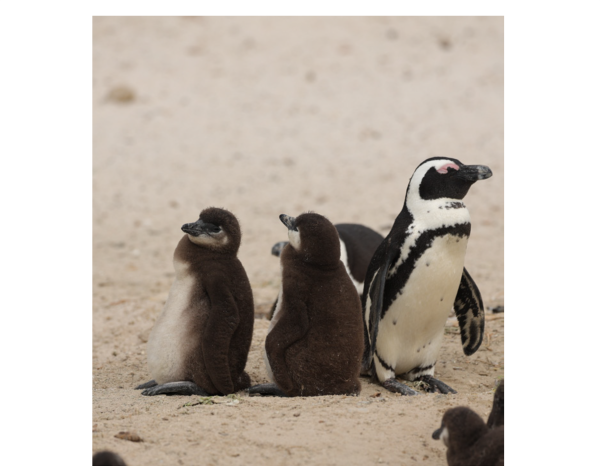
A major influenza outbreak occurred amongst seabirds during 2017 and 2018. Among the infected birds were three endangered species: African penguins, Cape cormorants, and Cape gannets. However, the outbreak primarily impacted swift terns.
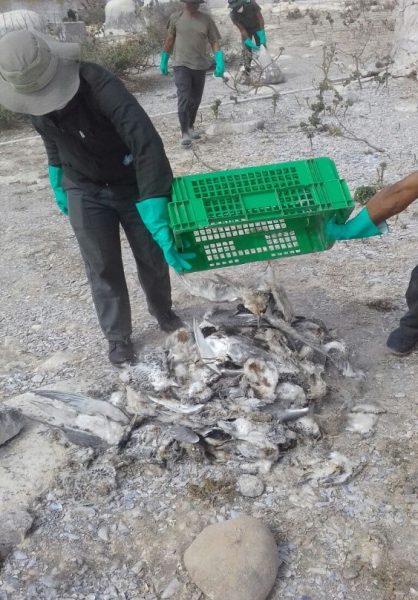
Measures were implemented to curb the spread of a deadly avian influenza, this involved removing carcasses and sick birds whenever possible to prevent further contamination, restricting human activities in colonies to minimise disturbance, temporarily halting hands-on research activities, and implementing strict biosecurity protocols (Photo: William Brink).
In 2017 and 2018, South Africa witnessed a devastating outbreak of deadly, highly pathogenic avian influenza (HPAI; bird flu) virus that killed numerous endangered seabirds. Such widespread mortality in wild birds had not been seen in the country since the avian influenza outbreak in common terns in 1961. Management efforts in 1961 were minimal, and even in 2017, there was limited global experience in how to react. The bird flu outbreak had an unprecedented impact on coastal seabirds in southern Africa, presenting significant challenges in resource allocation, risk management, and outbreak mitigation. Since then, highly pathogenic avian influenza viruses have spread worldwide, affecting vulnerable wild bird populations and highlighting the need to better understand and mitigate their impact.
The origin of the 2017-2018 virus was traced to a major avian influenza outbreak caused by a specific virus known as the Goose/Guangdong (Gs/GD)-lineage clade 2.3.4.4b H5N8. This outbreak, the fourth and most severe global wave of HPAI, affected many wild birds and poultry farms across the globe. It was first detected in May 2016 in wild water birds in Russia and China and quickly spread across Asia and Europe, eventually reaching Africa the following year. In January 2017, 60% of a group of 2000 white-winged black terns in Lake Victoria, Uganda, died from H5N8 HPAI in one event. By June 2017, it had reached South Africa, causing widespread outbreaks in commercial poultry, backyard and hobby bird populations and wild birds.
Our study defined avian influenza cases as birds that tested positive for influenza A virus using real-time reverse transcription PCR and specific tests for the H5 or N8 strains. Suspected cases included birds showing clinical signs or experiencing unexplained deaths. Avian influenza can manifest in various clinical signs, such as respiratory, digestive, and nervous system abnormalities, as well as reduced egg production in poultry and physical changes. Samples were collected by state veterinarians, veterinary and research staff, private vets, and field staff and submitted to the Western Cape Provincial Veterinary Laboratory or occasionally to Deltamune in Oudtshoorn for testing. A reporting form was used to gather data on each incident, including morbidity and mortality information. Data on defined cases, suspected cases, and negative tests were recorded and analysed by species and location.
Between December 2017 and May 2018, 7,566 individuals of 20 bird species were potentially affected by H5N8 HPAI at 31 sites in South Africa’s Western and Eastern Cape provinces. Among the infected birds were three endangered species: African penguins, Cape cormorants, and Cape gannets. However, the 2017-2018 outbreak primarily impacted swift terns, with the highest mortality rates observed at Malgas Island (West Coast National Park) and Cape Town harbour.
To respond to and manage the outbreak in wild birds, we focused on communication and reporting, minimising spread of the virus, public engagement and implementing biosecurity measures. Communication efforts focused on informing the public about the outbreak through media releases and establishing a contact list of stakeholders to ensure vital information reached relevant parties. The public was encouraged to report suspected cases, while government offices, conservation authorities, and rehabilitation facilities were requested to provide regular reports. These reports were made publicly accessible through an interactive Google map.
Managing the outbreak in the wild aimed to minimise virus spread and reduce stress on wild populations. This involved removing carcasses and sick birds whenever possible to prevent further contamination, restricting human activities in colonies to minimise disturbance, temporarily halting hands-on research activities, and implementing strict biosecurity protocols.
Public engagement and safety measures were also crucial. The public was advised not to handle bird carcasses, especially if they had contact with domestic birds. Staff at seabird colonies received instructions on disease management, biosecurity measures, and handling sick birds and carcasses. Protective clothing and disinfectants were distributed to ensure the safety of both humans and birds.
Seabird rehabilitation centres played a vital role in treating affected birds. Strict biosecurity measures were implemented, including footbaths and enhanced disinfection protocols. Suspected cases were isolated, and severely affected birds were euthanized to prevent unnecessary suffering.
We acknowledge that disease plays a significant role in population control within natural ecosystems, and active management may not always be necessary unless human activities impact disease epidemiology. However, disease mitigation measures should be explored for populations already at risk of extinction. The high mortality rates observed in different bird species during the outbreaks underscored the need for early detection, improved monitoring, and preparedness.
Much can be done to manage future outbreaks more efficiently. Digital systems, such as mobile phone applications, and systematic surveillance through a network of observers can be highly effective in enhancing data collection. Effective communication with stakeholders, the development of broad disease management guidelines, and ongoing personnel training are crucial aspects of managing outbreaks. Contingency plans need to be developed for major seabird colonies, which should include baseline mortality data collection. In addition, plans should also include maintenance of biosecurity measures, stockpiling of sampling and protective equipment, a formal surveillance and testing program, and how communication will take place between different organisations and personnel involved. Furthermore, the contingency planning process should clearly define resource requirements and funding distribution.
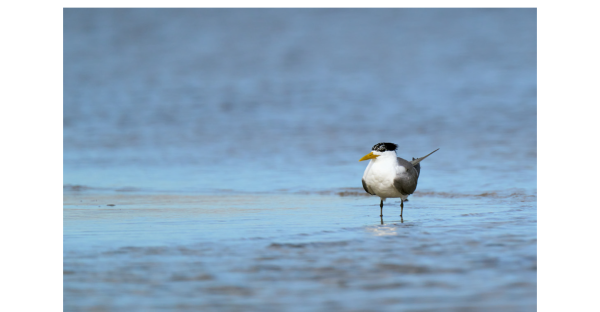
Between December 2017 and May 2018, almost 8000 individuals of 20 bird species were potentially affected by H5N8 HPAI, a highly contageous avian influenza, at 31 sites in South Africa’s Western and Eastern Cape provinces. Swift terns (pictured above) had particularly high mortalities in the 2017-2018 outbreak. To respond to and manage the outbreak in wild birds, SANParks focused on communication and reporting, minimising spread of the virus, public engagement and implementing biosecurity measures.
This article was written by Alison Kock and Laura Roberts and originally published in the 2022/2023 Research Report.

The article is based on a publication in the journal Transboundary and Emerging Diseases.
Roberts LC, Abolnik C, Waller LJ, Shaw K, Ludynia K, Roberts DG, Kock AA, Makhado AB, Snyman A
& Abernethy D. 2023. Descriptive Epidemiology of and Response to the High Pathogenicity Avian
Influenza (H5N8) Epidemic in South African Coastal Seabirds, 2018. Transboundary and Emerging
Diseases, vol. 2023, Article ID 2708458, 13 pages, 2023.
