Skip to Content

Our Stories

Elephant impacts on savannas after death – do elephants “live” forever?

09 March 2024

Elephant impacts on savannas after death – do elephants “live” forever?

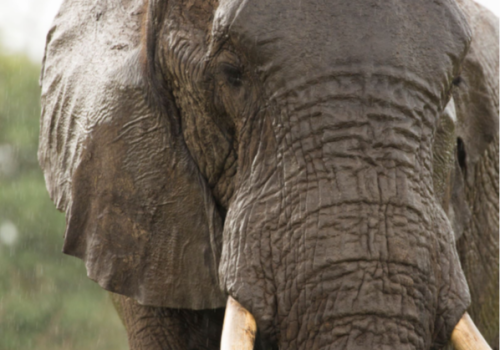
In the deep oceans far from land-locked Kruger National Park it is well understood that when a whale dies, the decomposing carcass creates a nutrient-rich environment on the ocean floor. These nutrient-enriched sites create localised hotspots that can supply sustenance to a variety of deep-sea organisms for decades. As the largest land mammal, could the…

Read More

Imagine a world without animals in the Kruger National Park

08 March 2024

Imagine a world without animals in the Kruger National Park

Almost twenty years of experimental herbivore exclusion in the Kruger National Park has shown that nutrient-poor savannas are quite resilient to herbivore impacts with fewer changes in trees and shrubs than expected If you walk through the “full” exclosure at Nkuhlu in southern Kruger National Park, which should actually be called the “empty” exclosure because…

Read More

Fire severity and tree size affect post-fire survival of Afrotemperate forest trees

07 March 2024

Fire severity and tree size affect post-fire survival of Afrotemperate forest trees

Fire severity and tree size are significant determinants of post-fire survival of afrotemperate forest trees, while species vary in their tolerance to fire Indigenous forest covers around 0.1% of land surface area in South Africa. Afrotemperate forest in the Southern Cape is the largest closed-canopy forest complex in southern Africa (60 560 ha), of which…

Read More

When the rivalry between honeybees and humans impede space research

05 March 2024

When the rivalry between honeybees and humans impede space research

Meerkat National Park is SANParks’ new kid on the block. Not only is the landscape extremely stark and beautiful, but its remoteness resulted in the Square Kilometre Array’s (SKA) scientific consortium decision to initiate an elite radio telescope project. This project consists of erecting 64 small antennas, collectively making up the MeerKAT telescope. All this…

Read More

Conservationists Need to Embrace Innovation to Adapt to Climate Change

04 March 2024

Conservationists Need to Embrace Innovation to Adapt to Climate Change

Conservation organizations and natural resource agencies will need to embrace new and more innovative approaches to protecting species and ecosystems in the face of the rapidly unfolding climate crisis. That finding is included in the newly released guide, “Innovation in Climate Adaptation: Harnessing the Power of Innovation for Effective Biodiversity and Ecosystem Adaptation.” To meet…

Read More

The SANParks Herbarium Digitisation Project

04 March 2024

The SANParks Herbarium Digitisation Project

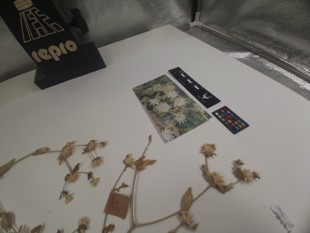
Recently, there has been a drive within SANParks for a more formal approach towards managing biodiversity data. In February 2022, a few scientists gathered in Skukuza to discuss approaches to managing parts of this process. It was decided to migrate herbarium data onto the national BRAHMS data system Why digitise herbarium collections? Scientific publications that…

Read More

Field report: Visiting Reunion National Park in 2022

03 March 2024

Field report: Visiting Reunion National Park in 2022

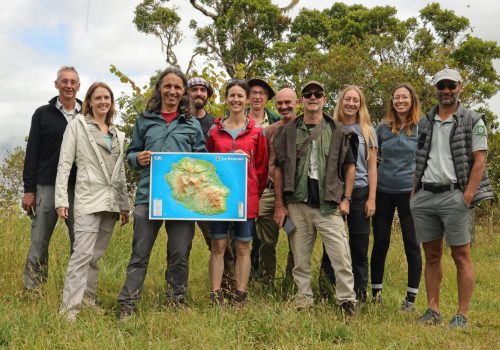
SANParks staff had the opportunity to visit the island of reunion as part of a collaboration with Parc Nationale de la Reunion. In 2021 SANParks embarked on an exciting collaboration between Table Mountain National Park and the Parc Nationale de la Reunion (PNR). It has long been recognised that these protected areas share similar challenges…

Read More

To reintroduce or not to introduce? Site visit to Kuno National Park, India

02 March 2024

To reintroduce or not to introduce? Site visit to Kuno National Park, India

A whirlwind site visit to India to assess the habitat suitability of Kuno National Park for cheetah reintroductions, in the state of Madhya Pradesh, highlights both opportunities and risks There have been heated debates as to whether or not cheetah should have been relocated from southern Africa to India and the (re)introduction has been, and…

Read More

Improving blood oxygenation monitoring in immobilised white rhinoceros

01 March 2024

Improving blood oxygenation monitoring in immobilised white rhinoceros

Our study has shown that blood oxygenation can be monitored reliably in immobilised southern white rhinoceros using a Nonin PalmSAT 2500A pulse oximeter with a 2000T transflectance probe, attached in the space between the third eyelid and the sclera, facing the third eyelid, and when oxygen levels are above 70% The population decline of black…

Read More

Attending the Conservation Symposium – A learning experience

29 February 2024

Attending the Conservation Symposium – A learning experience

The conservation symposium hosted by the KZN Ezemvelo Wildlife and partners was held at Wild Coast Sun. It was an informative event comprising of 23 sessions addressing the theme of Biodiversity Economy. Attending the conference as a young aspiring scientist was an awesomely wonderful experience. Being in a room full of conservation practitioners, scientists and…

Read More

Improving the safety of lion immobilisation

26 February 2024

Improving the safety of lion immobilisation

Physiological changes in lions, induced by immobilisation, can negatively impact animals despite immobilisations appearing to be harmless on the surface. Of three drug combinations tested, ketamine-butorphanol-medetomidine emerged as preferable due to shorter recovery times Safe and reliable immobilisation of wildlife is an important tool for conservation around the world. Understanding clinical and physiological effects of…

Read More

  1. 1
  2. 2
  3. 3
  4. 4
  5. 5
  6. 6
  7. 7
  8. 8
  9. 9
  10. 10
  11. ...
  12. 21