Improving the safety of lion immobilisation
Physiological changes in lions, induced by immobilisation, can negatively impact animals despite immobilisations appearing to be harmless on the surface. Of three drug combinations tested, ketamine-butorphanol-medetomidine emerged as preferable due to shorter recovery times

Safe and reliable immobilisation of wildlife is an important tool for conservation around the world. Understanding clinical and physiological effects of different drug combinations is vital to ensuring that immobilisation procedures are safe for both animals and personnel. Free-living African lions (Panthera leo) are routinely immobilised in order to conduct research, treat wounds, manage human-wildlife conflict, and investigate disease. Currently, the most commonly used drug combinations for the immobilisation of lions, which are tiletamine-zolazepam based, result in prolonged recovery times. Despite numerous studies reporting immobilisation with various drug combinations, very little data on associated in-depth physiological effects on respiratory and cardiovascular systems, and risks, are available. Understanding physiological effects of immobilisation allows better treatment plans and responses to complications, which reduces injury or death of animals.
We investigated how respiratory and cardiovascular function, as well as immobilisation and recovery quality and time differed in African lions immobilised with tiletamine-zolazepam-medetomidine, ketamine-medetomidine and ketamine-butorphanol-medetomidine. In 2021, 36 lions (12 with each drug combination) were immobilised in the Kruger National Park in the area around Satara Rest Camp. Immobilisation, recovery and physiological data were collected.
We found that all three drug combinations resulted in effective immobilisation of lions, caused minor side-effects for breathing and metabolism, and no single combination gave an advantage in terms of respiration. All lions initially showed a mild decrease in blood oxygen levels, which was not due to breathing problems but was likely a result of hindered oxygen exchange in the lungs caused by drug effects and the stress caused by the immobilisation procedure.
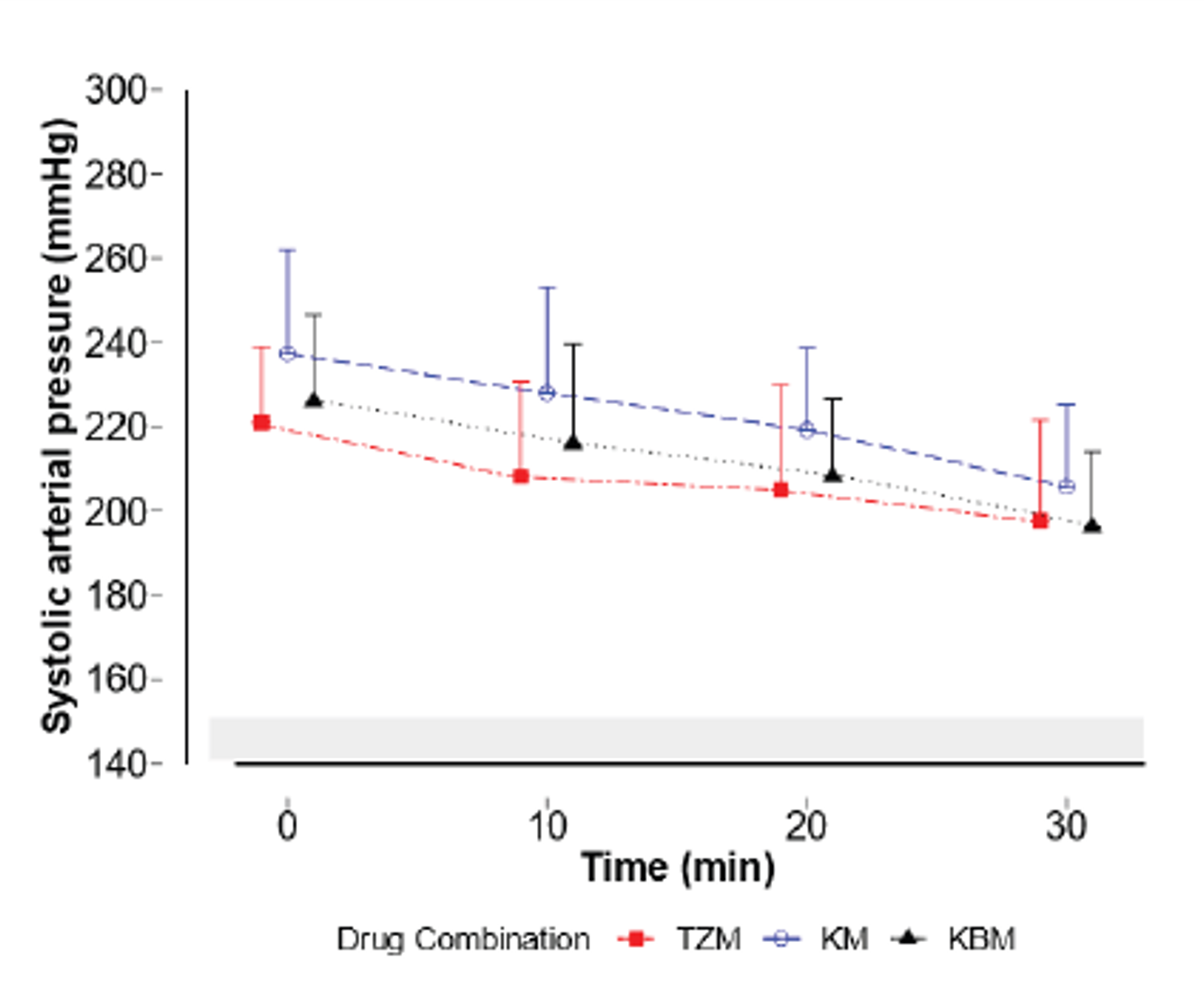
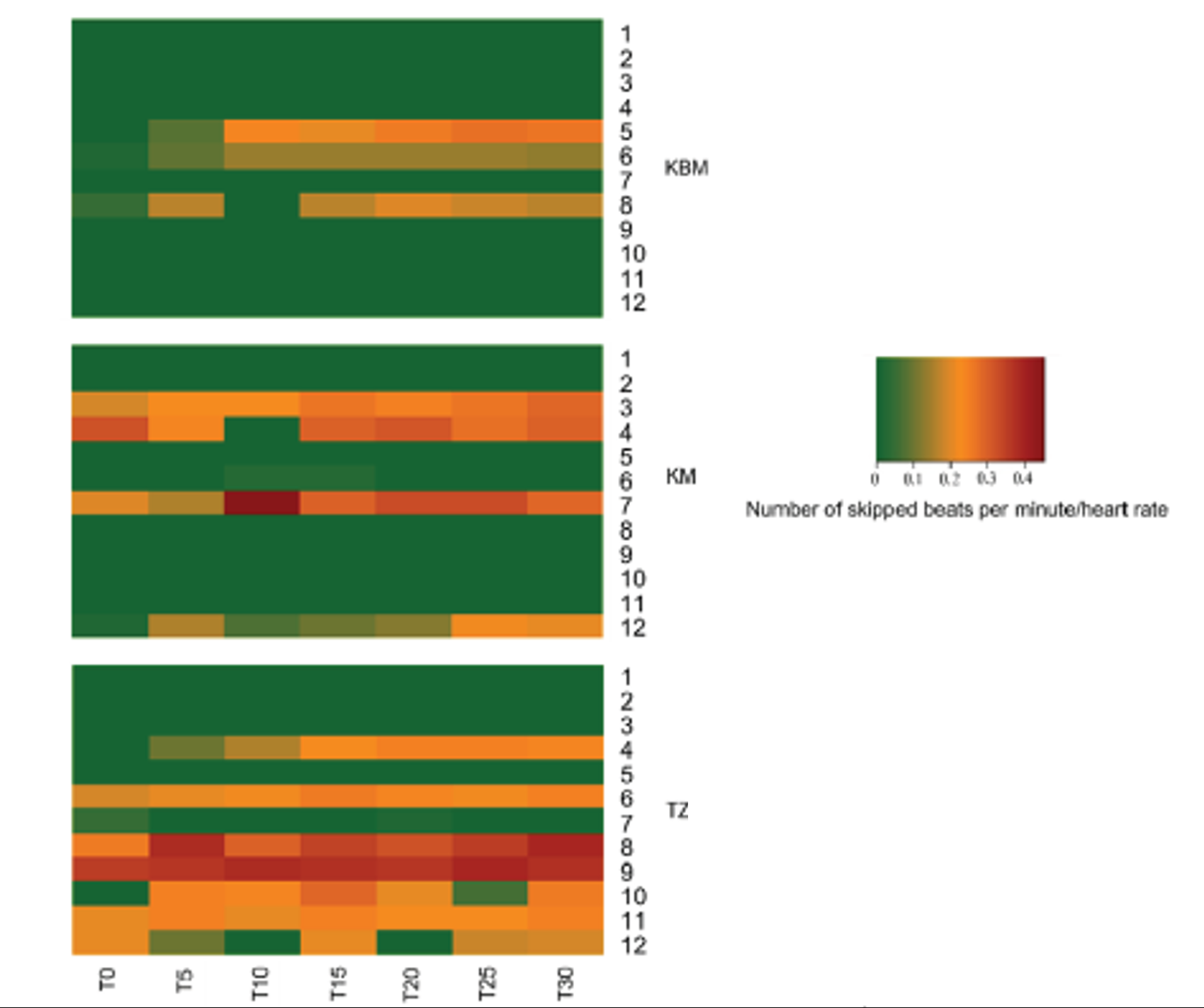
Additionally, all lions immobilised exhibited high blood pressure (Fig. 1), most likely caused by the medetomidine resulting in blood vessels constricting and increasing resistance, and the stress response triggered by immobilisation procedures. Surprisingly, heart rates of lions immobilised with all drug combinations were within normal limits, although lions in all three groups experienced cardiac arrhythmias in the form of skipped heartbeats (Fig. 2). Immobilisation with ketamine-butorphanol-medetomidine resulted in lower blood pressure than immobilisation with ketamine-medetomidine, and fewer skipped heartbeats than immobilisation with tiletamine-zolazepam-medetomidine. The study revealed that drug combinations commonly used for immobilising lions have negative effects on the heart, which have not previously been reported despite widespread use of the drugs. A key takeaway message is that it is vital to understand physiological changes induced by immobilisation as animals may be negatively impacted despite immobilisations appearing to be uneventful based on visual and basic clinical determination.
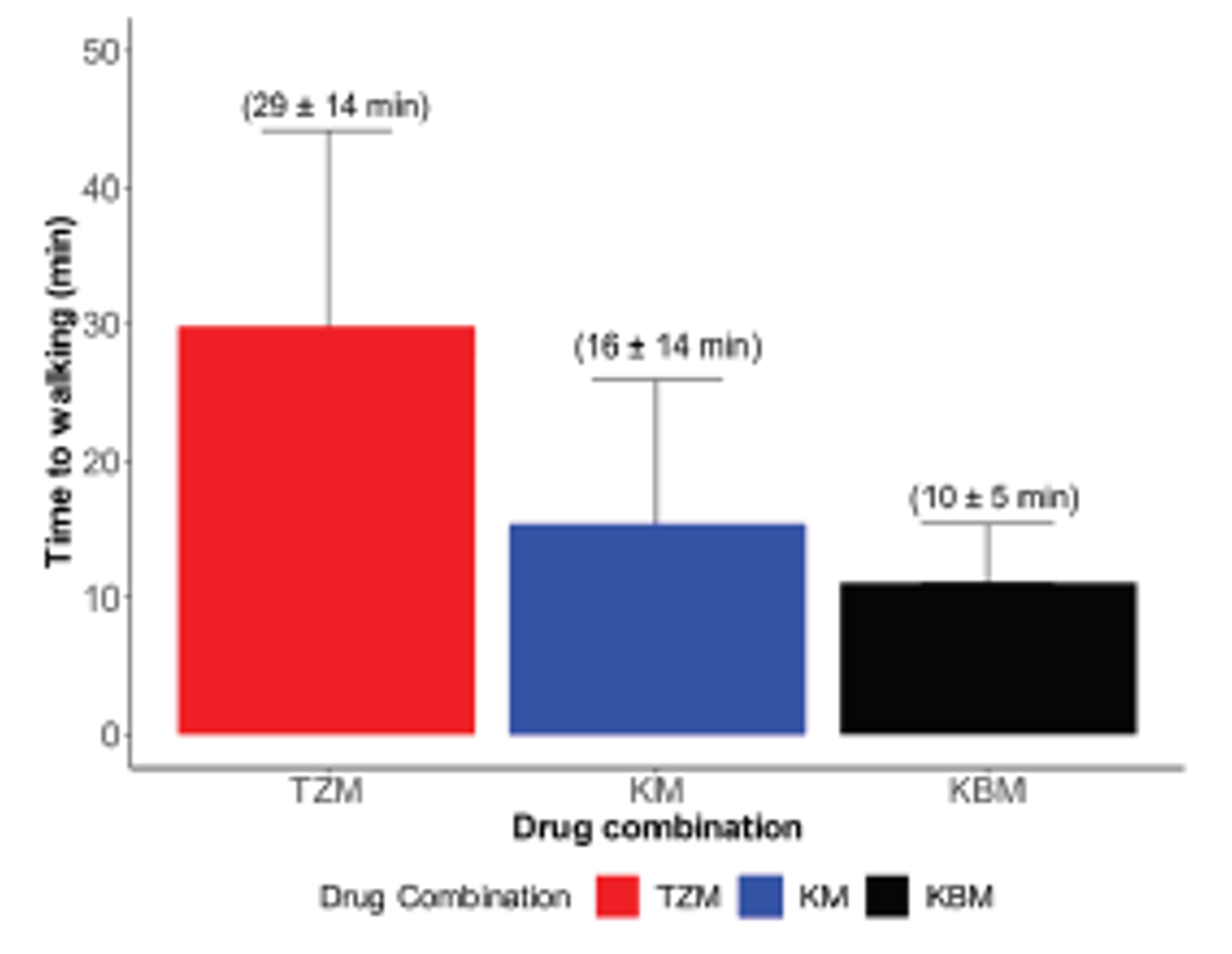
Lions immobilised with ketamine-butorphanol-medetomidine recovered three times faster than those immobilised with tiletamine-zolazepam-medetomidine (Fig.3). Fewer lions immobilised with ketamine-butorphanol-medetomidine experienced difficulties with coordination during the recovery process when compared to those immobilised with the other two drug combinations. Shorter, more coordinated recoveries are advantageous as they reduce the amount of time that lions are vulnerable to attack from other lions and scavengers, such as hyenas, and reduce the chance of injury from stumbling and repeated attempts to stand.
Ketamine-butorphanol-medetomidine emerged as a preferable immobilising drug combination compared to tiletamine-zolazepam-medetomidine and ketamine-medetomidine. Although ketamine-medetomidine results in shorter recovery times than tiletamine-zolazepam-medetomidine, it does not provide an advantage over tiletamine-zolazepam-medetomidine with regards to effects on the heart or the number of uncoordinated lions during recovery.
Our results have brought us one step closer to improving our understanding of the physiological effects of immobilising drug combinations used to immobilise free-living lions, as well as understanding the potential mechanisms that result in low blood oxygen levels, high blood pressure, and cardiac arrhythmias. Although a better drug combination for immobilising lions has been identified, there is still work to be done to further improve immobilising protocols and address the remaining negative side effects. Improving immobilising protocols will not only improve the welfare of individual lions but have direct conservation consequences for the species.
This article was written by Ashleigh Donaldson, Leith Meyer, Andrea Fuller and Peter Buss and originally published in the 2022/2023 Research Report.

This article is based on publications in Conservation Physiology and Journal of the South African Veterinary Association
Donaldson AC, Meyer LCR, Fuller A & Buss PE. 2023. Comparison of the cardiovascular effects of immobilisation with three different drug combinations in free-ranging African lions. Conservation Physiology 11: coac077.
Donaldson AC, Fuller A, Meyer LCR & Buss PE. 2023. Chemical immobilisation of lions: weighing up drug effectiveness versus clinical effects. Journal of The South African Veterinary Association 94: 23-34.
