Eyes on the wild: Visual data in SANParks
SANParks is developing best practice procedures to make the most of visual data from camera traps, baited remote underwater videos, drones and fixed point photographs
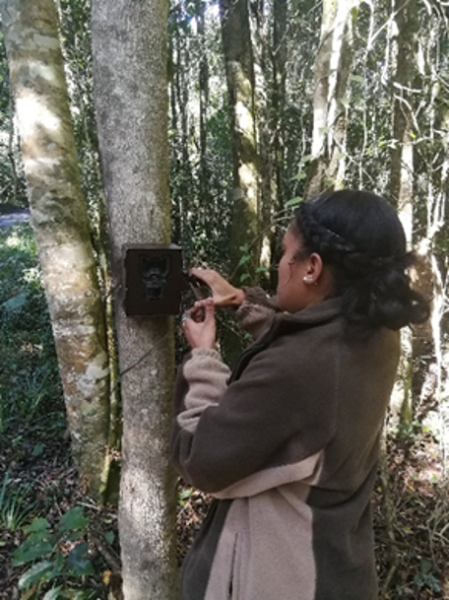
Setting up a camera trap in the indigenous forests of the Garden Route National Park in order to monitor the last remaining elephant.
Have you ever wondered how ecologists and conservationists uncover the hidden lives of plants and animals in fynbos, forests, grasslands, savannas, and the deep blue sea? The answer lies in the power of technology and the data, information, extracted from it. Over the years, technological advancements have changed the way we view, study, and understand the natural world. From camera traps and drones to baited remote underwater video surveys (BRUVS) and automated or manual fixed-point photographs, visual data has become a key research and monitoring tool for scientists in SANParks. It also comes with unique management and archiving challenges due to the sheer volume of data generated.
As part of the two-year JRS Biodiversity Foundationfunded Biodiversity Data Management project, SANParks is taking important steps towards standardising and modernising its systems to manage visual data such as photographs and videos, collected through multimedia devices.
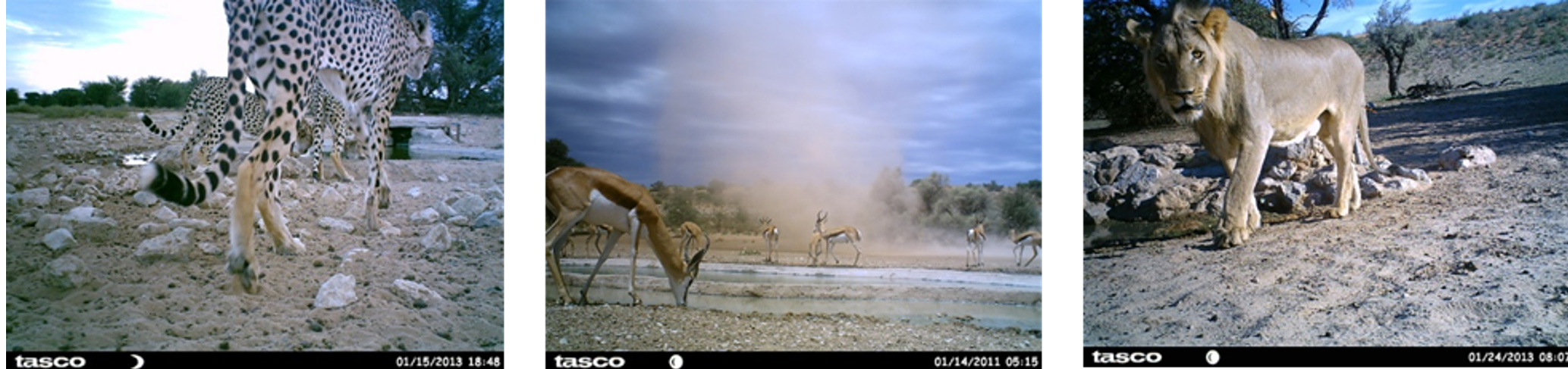
Camera trapping is a non-intrusive wildlife monitoring technique used to take pictures of animals with a motion sensor or infrared camera. Photographs can be used to identify species, understand behaviour patterns and study habitat preferences, particularly also for cryptic, shy, nocturnal species and/or animals living in remote or inaccessible habitats. Camera traps can be left in the field for several weeks or months, providing a cost-effective way to collect data over very large areas for long periods. SANParks are currently using camera traps in 16 national parks for various research and monitoring purposes. These include researching and monitoring species, such as black rhino (Diceros bicornis), the last remaining elephant (Loxodonta africana) in the Garden Route, human-wildlife interactions, species diversity, and relative abundance of species, to mention a few.
In the marine environment, SANParks uses different techniques and devices to monitor biodiversity. Baited Remote Underwater Video Systems (BRUVS) are used to see and count fish, while fixed-point photographs are used to monitor rocky shores. Photo surveys can identify individual sharks, benthic photograph quadrats examine mudprawn abundances in the Knysna Estuary, and underwater cameras help survey the endemic Knysna seahorse (Hippocampus capensis).
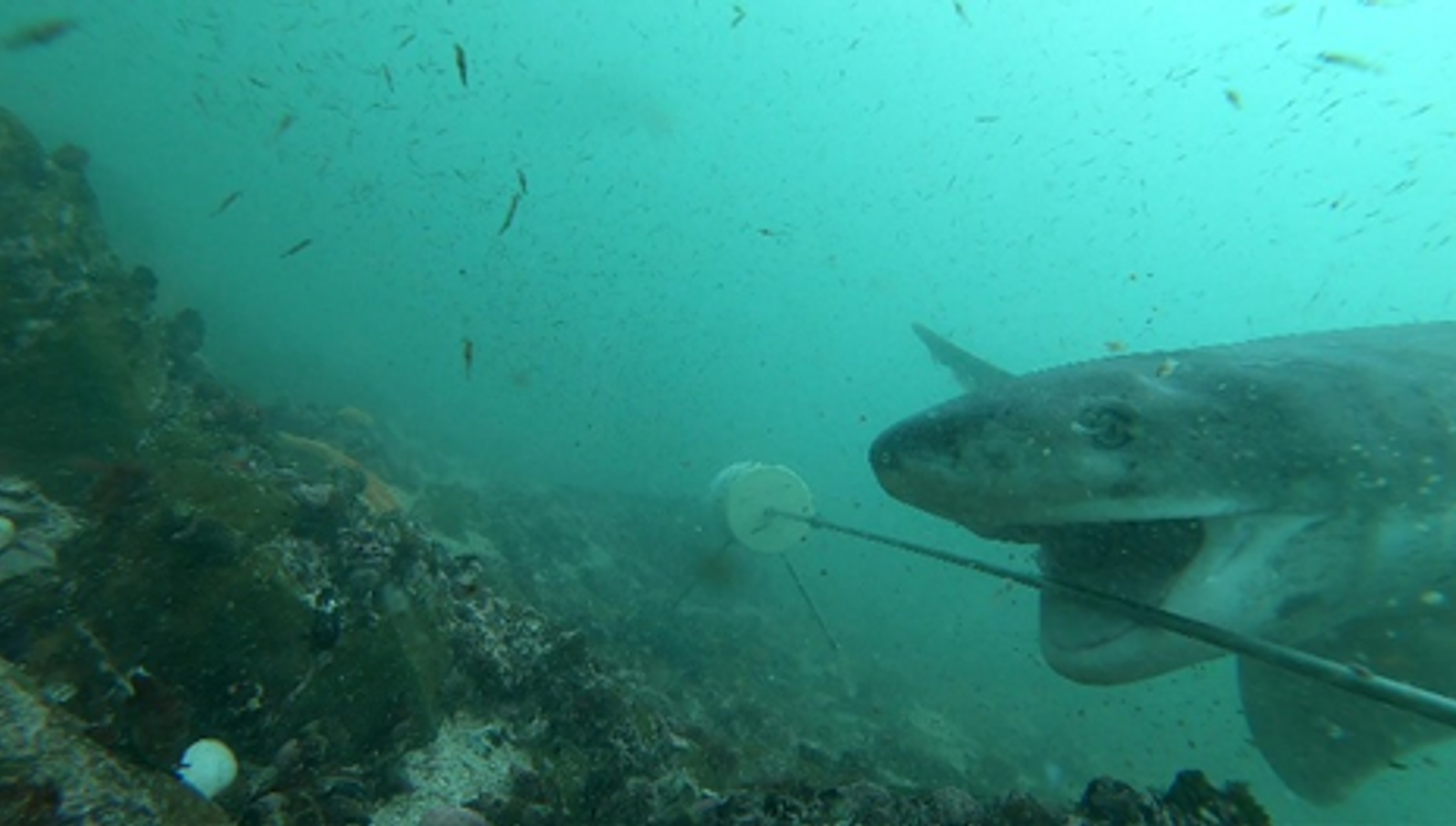
A broadnose sevengill shark (Notorynchus cepedianus) captured by Baited Remote Underwater Video System in Table Mountain National Park.
Drones are used to monitor plant cover and density of invasive alien plants in some national parks. Drones take photographs and videos that can be analysed to determine the densities and age classes of these invasive plant species. This type of information can be used to check the success of invasive alien plant clearing programs. While personal and private use of drones is prohibited in National Parks and protected areas in South Africa, drones may be used for official purposes when authorised with special permission from the Management Authority.
Fixed-point photographs have been used in parks to monitor changes in vegetation over extended time periods. For example, in Camdeboo National Park (previously known as Karoo Nature Reserve) photographs dating from 1988 to 2011 are stored at the Scientific Services Kimberley offices. These fixed-point and aerial photographs were used for vegetation monitoring, veld condition assessments, monitoring Spekboom and wood utilisation. In other parks, fixed-point photographs have been used to monitor changes in vegetation due to factors such as elephant utilisation. In Kruger National Park, both fixed-point and aerial photographic surveys have been conducted to monitor environmental changes, and fixed-point photographs are used to monitor the presence and status of species of special concern such as cycads (Encephalartos spp.).
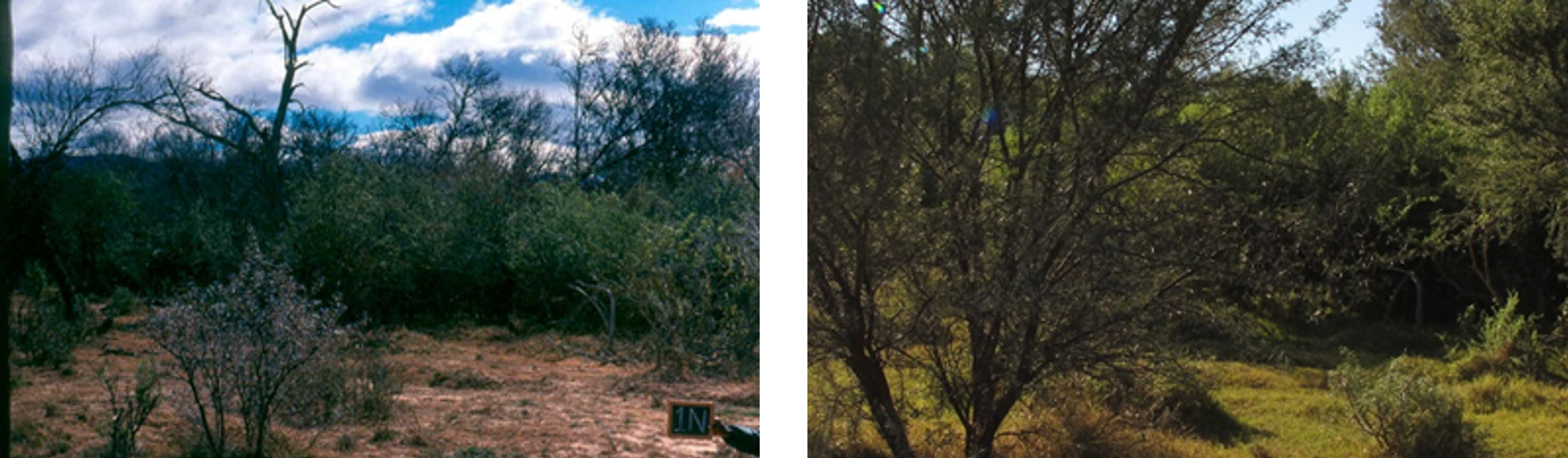
Fixed-point photograph taken in Camdeboo National Park (left 2003, and right 2010).
There are some limitations and challenges with the use of these types of technology-derived data. This includes the sheer volume of data collected. For example, camera traps can produce thousands of images per camera deployed, with large file sizes, tedious and slow data transfer and upload processes, and limited space to store and back-up data files.
Behind the scenes, scientists often manually sort through the thousands of images collected to extract, group or classify images for analysis. Imagine what a daunting task that is! With this project we aim to explore different machine learning models and artificial intelligence software or platforms to improve and speed up the process of working with these types of data. This will allow more time for data analysis, interpretation and synthesis of exciting new insights about national park ecosystems and social-ecological interactions. By standardising and modernising its data processing systems, SANParks is taking steps towards better managing and conserving biodiversity using conservation technology.
This article was originally published in the 2022/2023 Research Report.

