Back to the Wild
An illegally captured pangolin was recovered, and once treated for lesions, dehydration and starvation, became part of a successful rehabilitation process, and is once again back in its former home, Kruger National Park
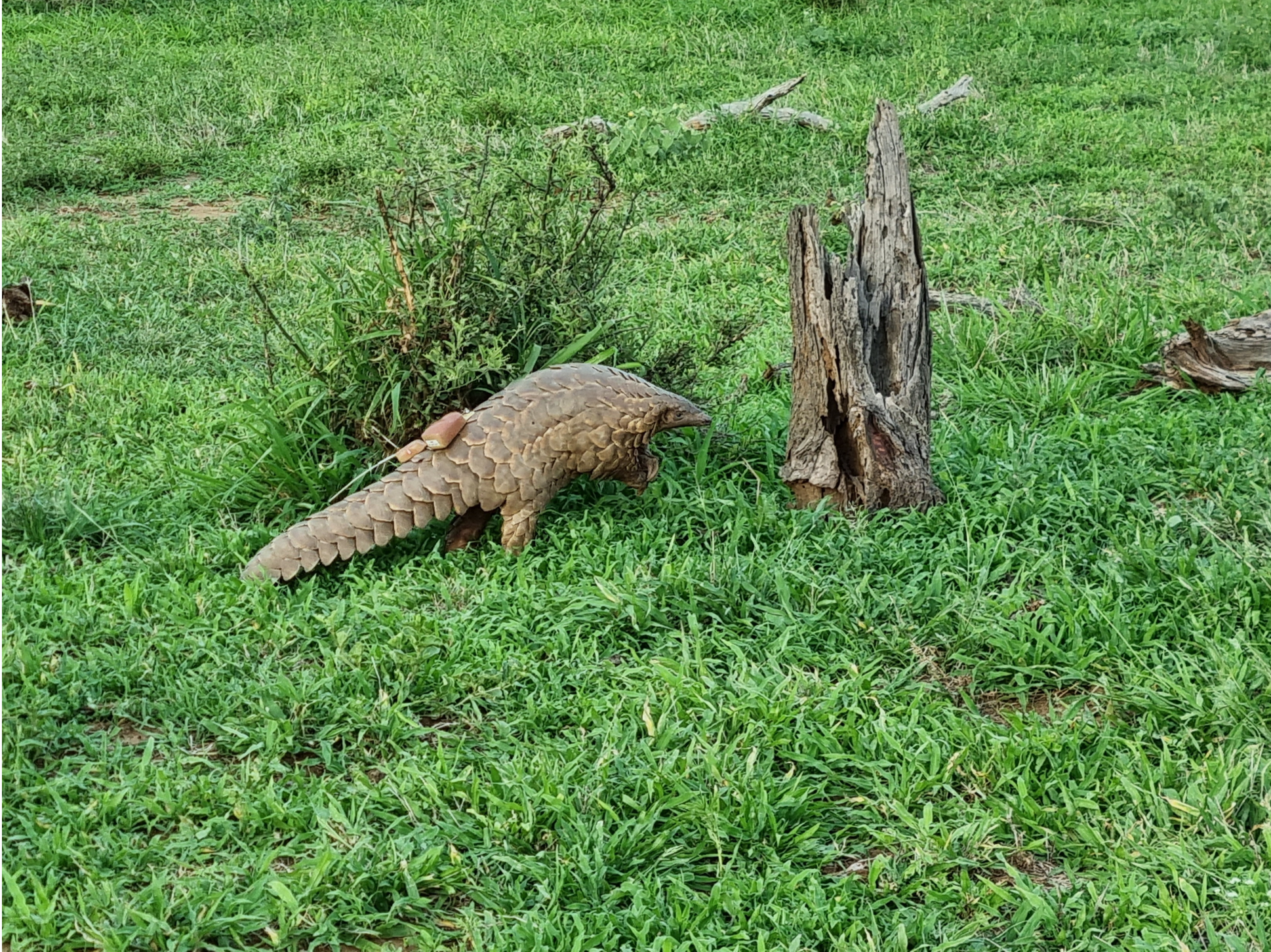
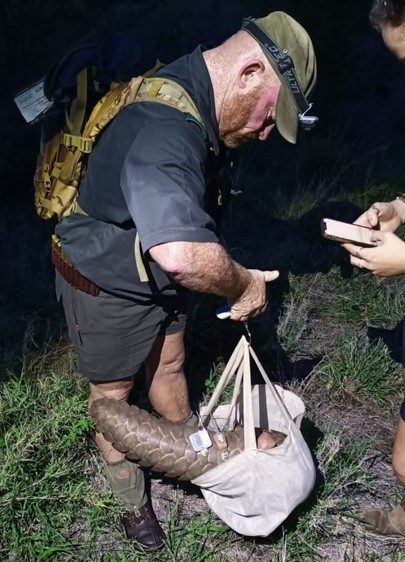
Monitoring the post release weight of a pangolinis extremely important to ensure that it is adapting well. Harry is located in the field, placed in a bag and weighed.
Pangolins are currently one of the most trafficked species in the world due to their popularity as delicacy and medicine in the East. I was privileged to be involved in the rehabilitation and release of a Temminck’s pangolin (Smutsia temmincki) that had been confiscated from poachers and released back into the Kruger National Park.
Mpumalanga Tourism and Parks Agency (MTPA) and the South African Police Service (SAPS) responded to a tipoff in September 2022 about a ground pangolin held in captivity by members of their community in the Numbi Gate area. Arrests were made, and Harry was confiscated and immediately transported to Provet Animal Hospital in Hoedspruit, Limpopo.
Provet’s pangolin expert, Dr. Debbi English, assessed the animal’s condition and started treatment for abrasions and lesions caused by attempts to escape from the mesh cage in which he was held. He was put on a drip and tube-fed as he was severely dehydrated and malnourished, symptoms usually associated with confiscated pangolins. He developed biliary fever shortly after arriving. As a natural host to the biliary parasite, pangolins usually only contract the disease when their condition is severely compromised.
After six days, Debbi was satisfied that Harry was strong enough to move to Imoya Kulula rehabilitation centre. The pangolin rehabilitation protocol requires walking the animals nightly for five hours in an area with sufficient ants to feed on. Pangolins are weighed before and after every walking session to make sure they are feeding sufficiently. Weekly visits to Provet Animal Hospital during rehabilitation enabled the close monitoring of Harry’s health and clinical condition. After two months, he was ready to return to the wild. Permission was obtained from the KNP to release him back into the park, as this was where he originated from.
The Houtboschrand section was chosen as a suitable release site, and we walked with Harry on the night of 1 December 2022 for the first time. We very soon realised that these little animals could cover serious distances in a short time. He was weighed before and after every walk and kept in his crate at the ranger station during the day. Where possible, we recorded the ant species that he was feeding on, learning that 95% of his diet consisted of Natal droptail ants (Myrmicaria natalensis). The only other species we saw him feed on was black pugnacious ants (Anoplolepis steingroeveri). A typical evening would involve Harry bulldozing his way into thickets, making it impossible for us to follow, whereafter he would start digging and then feed for a while, while we timed his feeding sessions. When he wandered too far into the thick mopani, we had to pick him up and carry him back into an open area to ensure the monitoring team’s safety.
After 10 days, we decided we could release him permanently as he was consistently picking up weight, a good sign that the release area was suitable. The “release” involved Harry being left out in the field with a satellite and VHF tag to assist us in finding him. We needed to find him regularly to make sure he found proper shelter to sleep during the day as well as to monitor his weight to make sure that his condition did not deteriorate as has been observed in other rehabilitated pangolins.
Three days after this complete release, Harry had an encounter with a pride of lions. He was scratched badly, two scales were damaged from bites, but there were no visible wounds or other damage – his instincts were still on point. He did, however, go walkabout after this and left the area!
As he was doing well and still gaining weight, we reduced our interaction with him to once a week. He continued to move south and eventually settled in the Satara section. Over the next few months, we managed to locate him three more times to change tags and to weigh him, and every time he was in better condition. Harry weighed 11.9 kg on his arrival in Kruger, and when we released him ten days later, he weighed 12.5 kg. On 9 June 2023, we located him for the last time and removed all his tags. He has survived on his own in KNP now for seven months and drew the scale to 15.2 kg. A wild pangolin once again, thanks to the dedicated efforts of multiple organisations and individuals.
This article was originally published in the 2022/2023 Research Report.