Aerial census of large herbivores in Golden Gate Highlands National Park
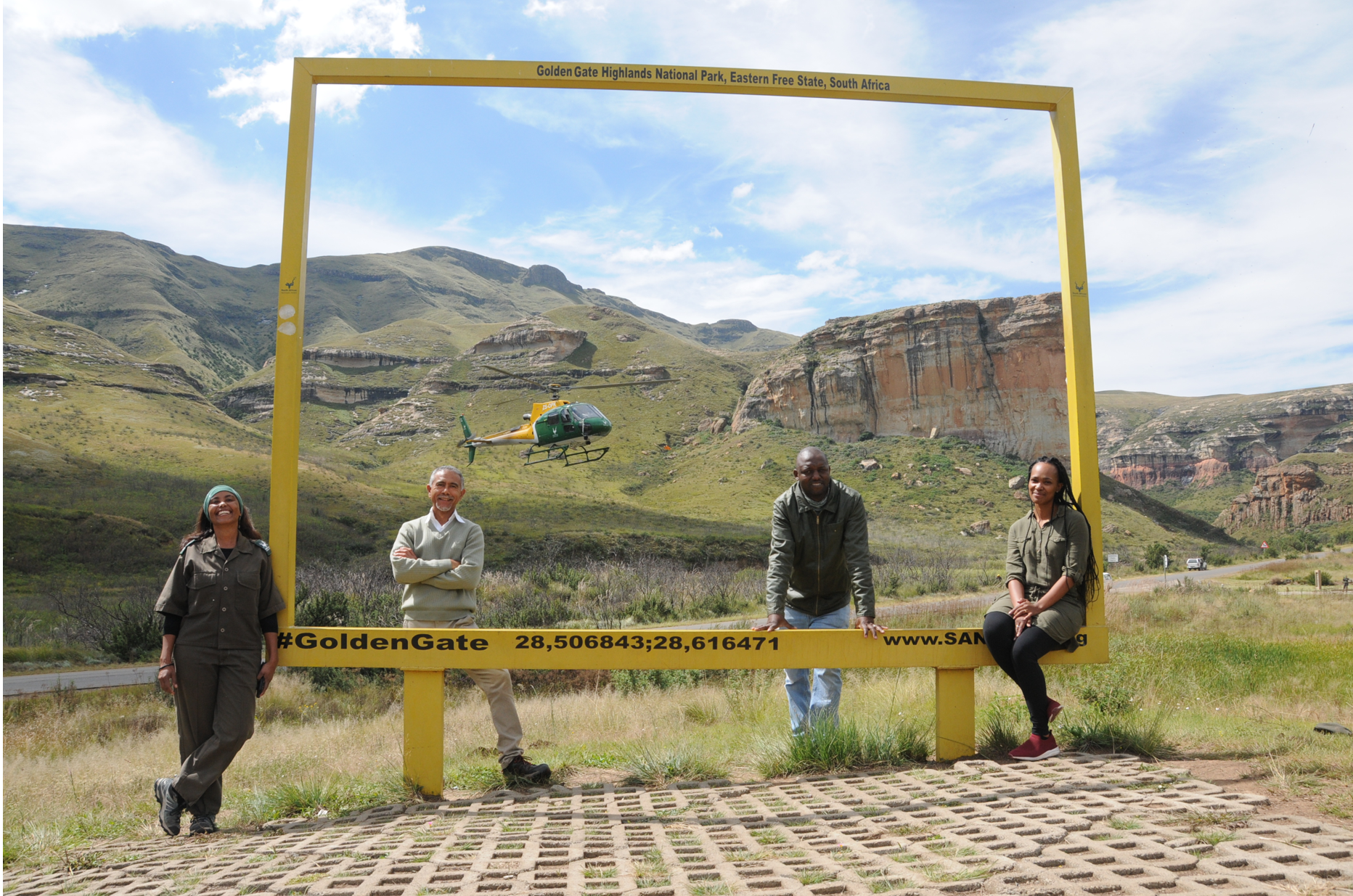
The Maluti-Drakensberg mountains of the 33 000 ha expanse of Golden Gate Highlands National Park are majestic. The towering peaks enfolded by clouds are both ominous and mesmerising. As a team assembled from Kruger and Kimberley, the rain fell gently, and the grey clouds held no promise of lifting. Here four seasons can be experienced in a day, and the first day set the tone for the remainder of the week: fly whenever the clouds lift and the wind recedes.
The team, dressed in thick warm jackets, gloves and beanies, was prepared for the freezing flying conditions with icy winds blowing into the Squirrel helicopter. When the weather was wet, cold and a safety risk for flying, the team relaxed or caught up on much-needed sleep, but remained in high spirits and completed the task timeously.
When the flying conditions were ideal, the team was rewarded with sights of caracal with kittens, herds of running black wildebeest and mountain-climbing eland. Large herbivores in Golden Gate refers not only to wildlife but also to livestock owned by legal land claimants. Golden Gate is a good example of how 14,360 head of livestock and wildlife jointly use a landscape, with many implications of this for park management. Rare species such as oribi were not seen at all, or seen in very low numbers (i.e. mountain reedbuck) which raises questions around the drivers of the gradual but ongoing decline of these species.
This article was originally published in the 2022/2023 Research Report.


