WWF Internship: Journey and Reflections
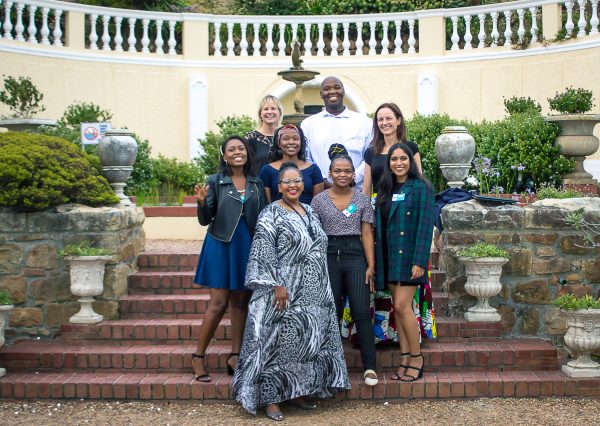
WWF interns at the valedictory event in February 2022. Top Row (left – right): Dr Alison Kock, Mr Siphelele Dyantyi, Dr Wendy Foden. Middle Row (left – Right): Ms. Khensani Nkuna, Ms. Yonela Mahamba, Ms. Zinhle Manda, Ms. Navashna Gajathar. Bottom Row: Ms. Siphokazi Bokwe: General Manager – Learning and Development and Performance Management.
Navashna Gajathar
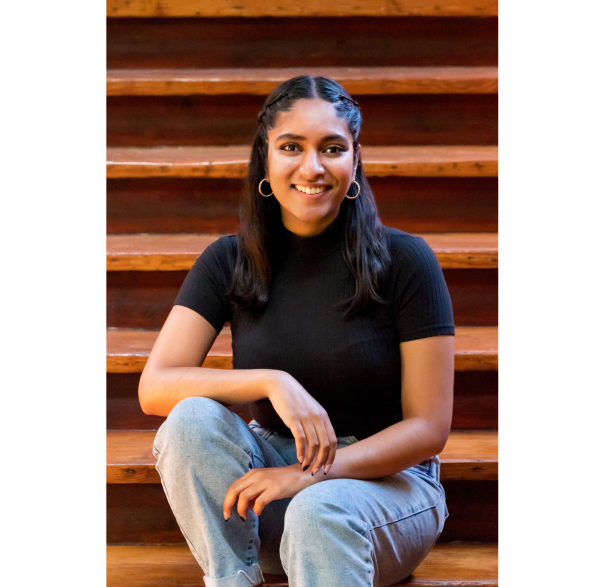
During my internship at SANParks, I was based at Groenkloof National Park under the watchful and skilled eyes of my mentors, André Spies and Kristal Maze. Given my legal background, I was placed in the Park Planning and Development Unit, where I learned how our national parks are protected physically and on paper, in terms of our legislation. This was where I first encountered the use of environmental legislation in practice and how it is utilised to enter into agreements with landowners, to expand national parks and the management thereof to conserve and protect nature, as well as ensure its enjoyment, as enshrined in our Constitution. In all of my learnings, I was fortunate enough to travel to some of these national parks with my mentors, where we engaged with park managers and landowners to ensure that the management of these protected areas met the standards as set out by the law. Although my internship at SANParks has come to an end, this experience provided me with an opportunity to understand and learn about the inner workings of conservation in our country, as well as how I may utilise the skills I obtained to protect the environment we live in.
Yonela Mahamba
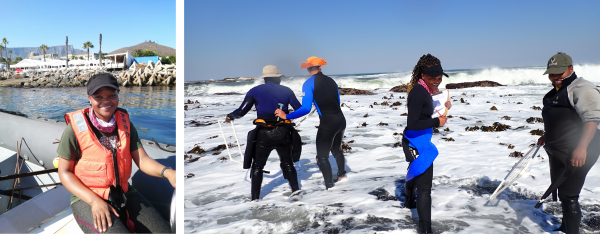
In April 2021, I joined the WWF Environmental Leader’s internship program. I was placed as a marine biologist intern at SANParks Scientific Services in Cape Town. My internship journey started during the hard lockdown of the Covid-19 pandemic when the working environment was mostly virtual. Lockdown restrictions made it uncertain whether I would get exposure to all aspects of practical fieldwork, which was one of the vital experiences I desired to receive from my internship. However, I was fortunate enough to get the opportunity to do all the practical fieldwork as anticipated. I joined my first Marine Protected Areas (MPA) monitoring field trip with the SANParks marine team and colleagues from the Department of Forestry, Fisheries and the Environment (DFFE) to Namaqua National Park to conduct annual rocky shore surveys in September 2021. I was also involved in various fish and shark surveys conducted in several MPAs within the Cape Cluster region using Baited Remote Underwater Video surveys. Reflecting on this internship journey, I attained invaluable practical experience and skills with considerable personal and professional growth. I am thankful to Dr. Alison Kock for her excellent mentorship.
Siphelele Dyantyi
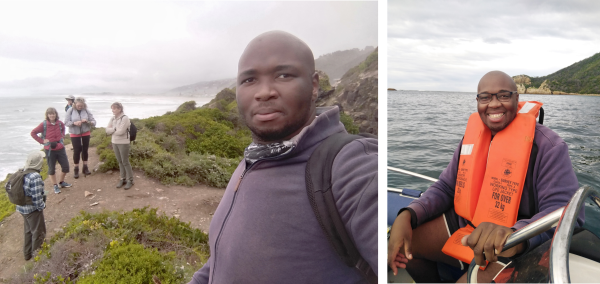
One of the most satisfying feelings you can get as a young scientist is to take the skills and knowledge that you have gained in university and apply them to real world scenarios. This was the opportunity I received with SANParks, through the WWF Internship programme. Core highlights of my time with SANParks were the importance of science communication and learning new methodologies of data collection with regards to marine resource use. Participating in roving creel surveys for the Knysna and Swartvlei Estuaries, in which anglers are interviewed, it became clear how important these interactions are not only in gaining information but also in sharing information and building trust. There is often a lack of understanding and communication between community members and work done by scientists, a gap that needs to be reduced by both parties. Having little to no experience with regards to ichthyology, I was put in an exciting position which enabled me to learn and be exposed to marine resource use and the equipment used in collecting data. I learned not only about fish, but also other important estuarine organisms, such as mud and sand prawns. One skill that I gained and surprisingly enjoyed the most from my experience was the identification of fish species in the region. Lastly, an important part of my journey with SANParks is that the experience helped me to find my passion again in marine science.
Khensani Nkuna
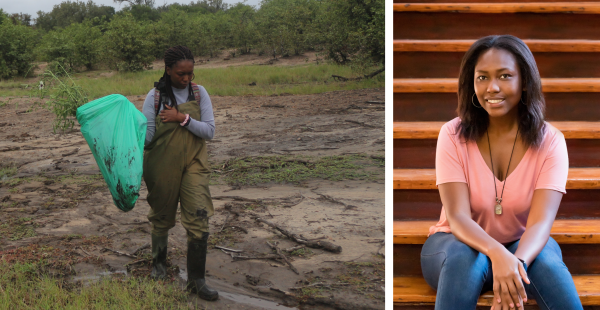
My internship with the Savanna Research Unit has been amazing, and I couldn’t have asked for a more rewarding experience. In fact, working in the Kruger National Park (KNP) has been one of my childhood dreams. Growing up in a village within the Bushbuckridge municipality, near the boundary of Kruger, I used to imagine myself working in the park, conducting game drives and such. However, under the mentorship of Dr Llewellyn Foxcroft and Dr Danny Govender, my experience in the park has been much more than that. As a conservation intern appointed to work with the invasion ecology research programme, I have collected herbarium specimens of alien species, created infographics on invasive alien species, conducted a risk analysis of a potentially invasive grass species, collected field data on an aggressive alien invader (Parthenium), and collaborated on the production of a risk analysis framework for management prioritisation of alien species invading protected areas. One of my highlights was presenting at the KNP Savanna Science Network Meeting. The skills I gained and the knowledge I have accumulated are immeasurable. My commutes to the office are actually daily game drives and that is a dream-come-true. I am truly grateful to the WWF Environmental Leaders Programme and SANParks for this opportunity.
Zinhle Manda
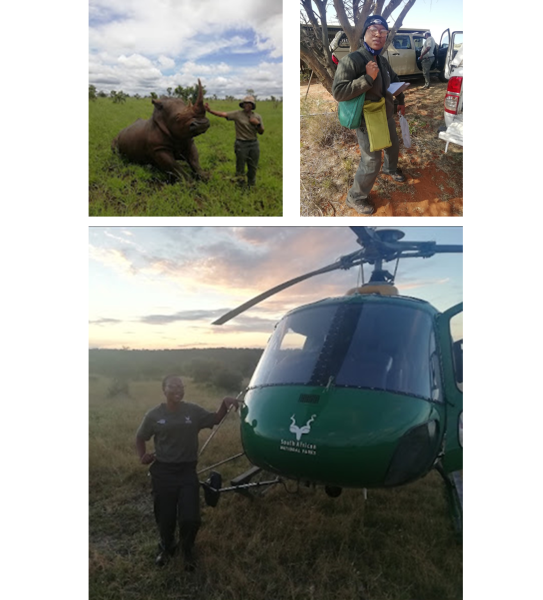
The past 12 months, under the WWF Environmental Leaders program in partnership with SANParks (Kruger and Kimberley), I had the opportunity to work in the Veterinary Wildlife Services (VWS) Department as a Biobank Assistant. My time at VWS has been nothing short of amazing and a massive learning curve. From someone coming from a molecular plant background, to being an intern working with living and breathing wildlife, reminded me why I probably shouldn’t have dropped Zoology in varsity.
During the course of my internship, I had the pleasure of working with researchers that have broadened my interests in ecology, pharmacology and exploring a future that merges plant and animal knowledge gained during this period. Interestingly, I’ve laid beside immobilised lions, touched and hugged rhinos, caught zebras and learnt to confidently identify the various types of antelopes found within our national parks. It has also improved my data management skills and taught me innovative ways to deal with data management problems. The internship gave me the opportunity to grow a new passion for wildlife, improve networking skills and a grand introduction into the working world. I am grateful to my mentors and VWS for their guidance and to WWF for placing this botanist in the wildlife world.
This article was written by Navashna Gajathar, Siphelele Dyantyi, Yonela Mahamba, Khensani Nkuna and Zinhle Manda and originally published in the 2021/2022 Research Report.