When the Swartvlei Estuary Exhaled Again: Storms, Mouths and Hidden Life in the Garden Route
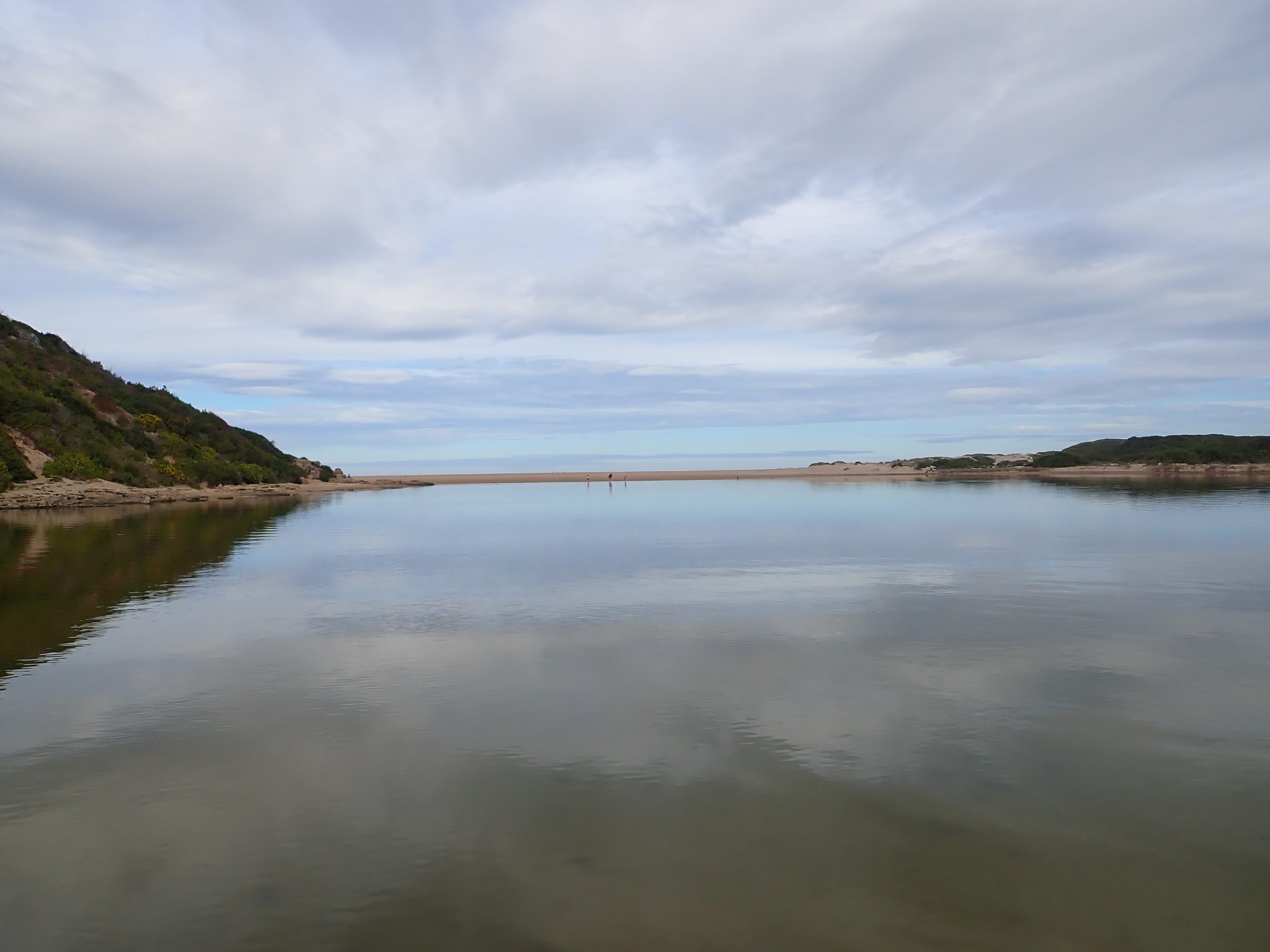
The recent storms along the Garden Route were a dramatic reminder of how quickly our coast can change. Intense rain swelled rivers, pushed up water levels and, in places like Swartvlei, brought the estuary to the point where managers had to manually breach the long‑closed mouth to the sea to prevent flooding of nearby homes and infrastructure. This may have looked like a “flooding” followed by a sandy barrier giving way, but for the estuary, it was something more – a deep “breath” after months of holding its “lungs” shut.
Swartvlei is a temporarily open/closed estuary. Much of the time, its mouth is blocked by a sand bar. Freshwater flows in from the catchment but cannot easily escape, and the estuary slowly becomes less marine. Only when water levels rise high enough – either through heavy rainfall or a managed breaching – does the mouth cut through, releasing a powerful plume of water and reconnecting the estuary with the sea. This open–closed cycle is not just a hydrological feature but the heartbeat of the system.
In a 2024 study in the Swartvlei Estuary, we looked at what happens to the small creatures – worms, snails, tiny clams and crustaceans – living in the seagrass beds as the mouth shifts between closed and open phases. These benthic macrofauna may be out of sight, but they are vital: they recycle nutrients, feed fish and birds, and help keep seagrass meadows healthy and productive. During an earlier prolonged closed phase, salinity in the lower estuary dropped and the community living in the seagrass changed. A few hardy species of snails and other tolerant animals dominated, able to cope with low‑salinity, low‑oxygen conditions. Overall species richness and abundance were noticeably lower in this phase.
After the mouth was manually breached and the estuary reopened to the sea, the picture shifted. Marine tidal flushing returned and salinity. In response, macrofaunal life exploded and we recorded roughly twice as many species in the seagrass beds (Fig. 1). Communities became more balanced, with a wider variety of worms, snails and bivalves sharing the space. Swartvlei’s benthic life bounced back strongly once the estuary could “breathe” again – a pattern that helps us understand what is likely happening after the most recent breaching event.
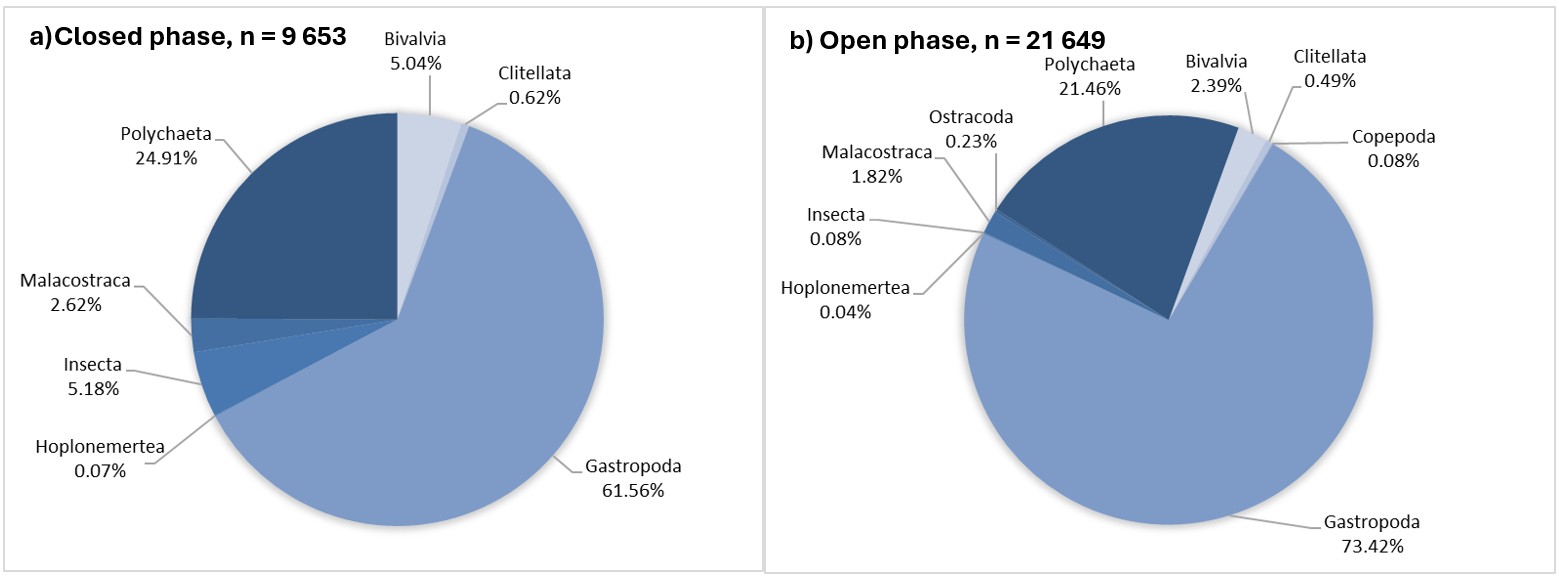
Figure 1. Relative abundance of macrofaunal taxonomic groups associated with Zostera capensis beds in the Swartvlei Estuary during (a) closed mouth and (b) open mouth phases.
This tells us two important things. First, the opening and closing of estuary mouths is a natural and powerful driver of biodiversity. A closed mouth is not “bad” in itself, but long closure can hold diversity and ecological functioning below the estuary’s potential. Periodic opening allows new larvae and species to enter from the sea and gives stressed communities a chance to recover. Second, how we manage these “breaths” matters. At Swartvlei, breaching is often delayed until water levels threaten infrastructure, which can mean long stretches of fresh, low‑salinity conditions. The recent breaching balanced an urgent need to lower water levels with an ecological “reset” that refreshed the system. Future breaching decisions that weigh both flood protection and estuary “breathing space” will be key to safeguarding this biodiversity.
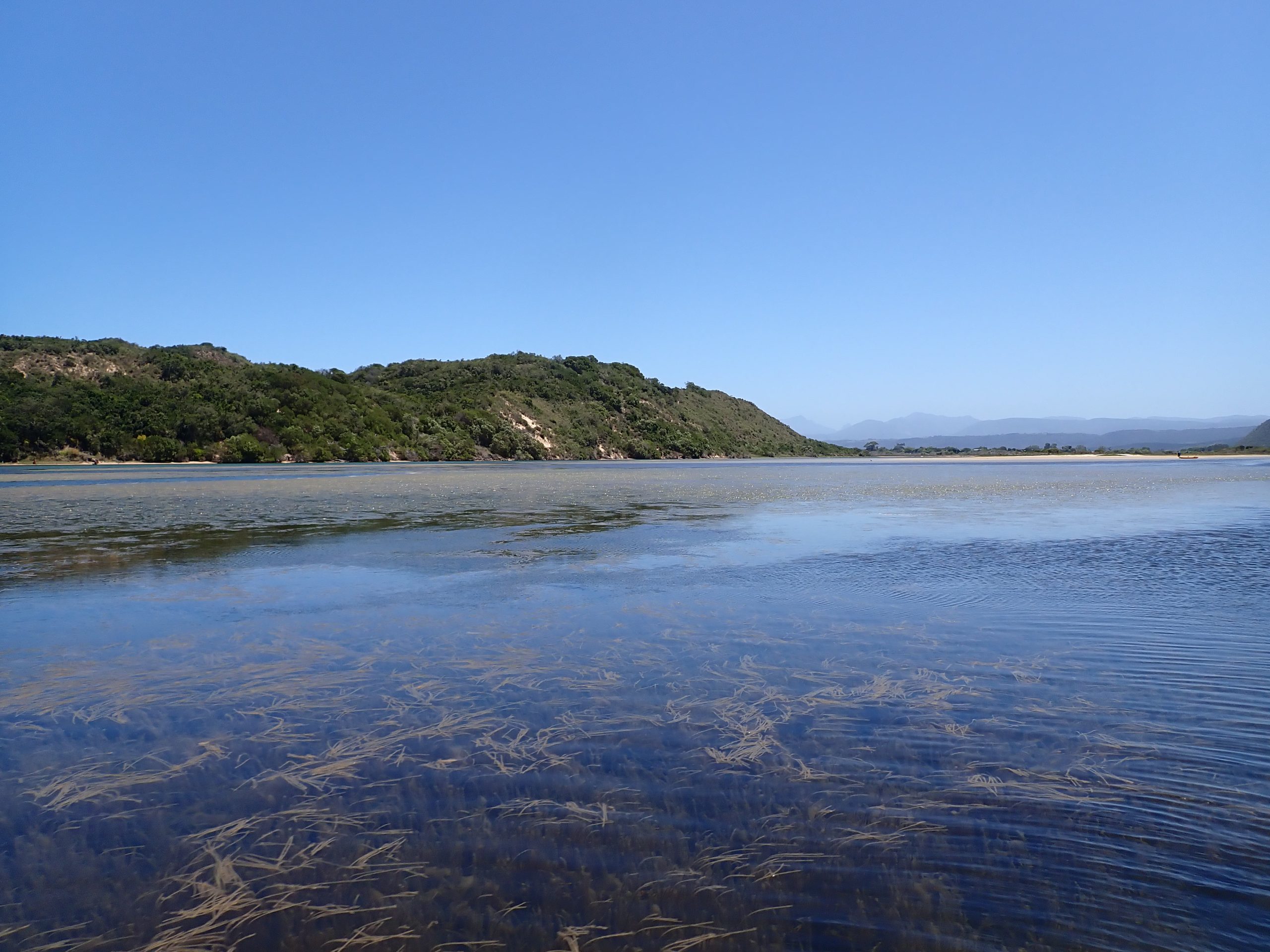
As storms and droughts become more variable, estuaries like Swartvlei will remain some of the Garden Route’s most dynamic and important ecosystems. Understanding and respecting their natural “breathing” – periods of closure followed by well‑timed openings – is key to keeping them alive, diverse and resilient for the future.
Full reference: Lawrence, C.M., Barnes, R.S. and Arendse, C.J., 2026. Estuary mouth dynamics drive shifts in benthic macrofaunal diversity associated with seagrass beds. Marine Biology Research, pp.1-14. https://doi.org/10.1080/17451000.2026.2656288
