When Estuaries Breathe: Understanding South Africa’s Temporarily Open/Closed Estuaries
Along much of South Africa’s coastline lie small, dynamic water bodies known as temporarily open/closed estuaries (TOCEs). To the untrained eye, these systems can appear “problematic” when their mouths are close to the sea, with water level, chemistry, and aesthetic changes being noted. Yet decades of research show that this opening and closing is not a failure but rather an integral part of their natural functioning. Understanding how these estuaries function and why both open and closed phases matter is essential for managing them wisely.
Most South African estuaries are not permanently connected to the sea. Instead, a sandbar forms at the mouth due to wave action and sediment movement. During dry periods, when river inflow is low, the sandbar builds up, and the estuary becomes closed. After heavy rainfall or floods, water levels rise until the sandbar breaches, restoring a temporary connection with the ocean. This cycle can occur several times a year, or only once every few years, depending on rainfall, catchment condition, and coastal processes.
Importantly, this rhythm evolved over thousands of years. Plants, animals, and ecological processes within TOCEs are adapted to these alternating states.
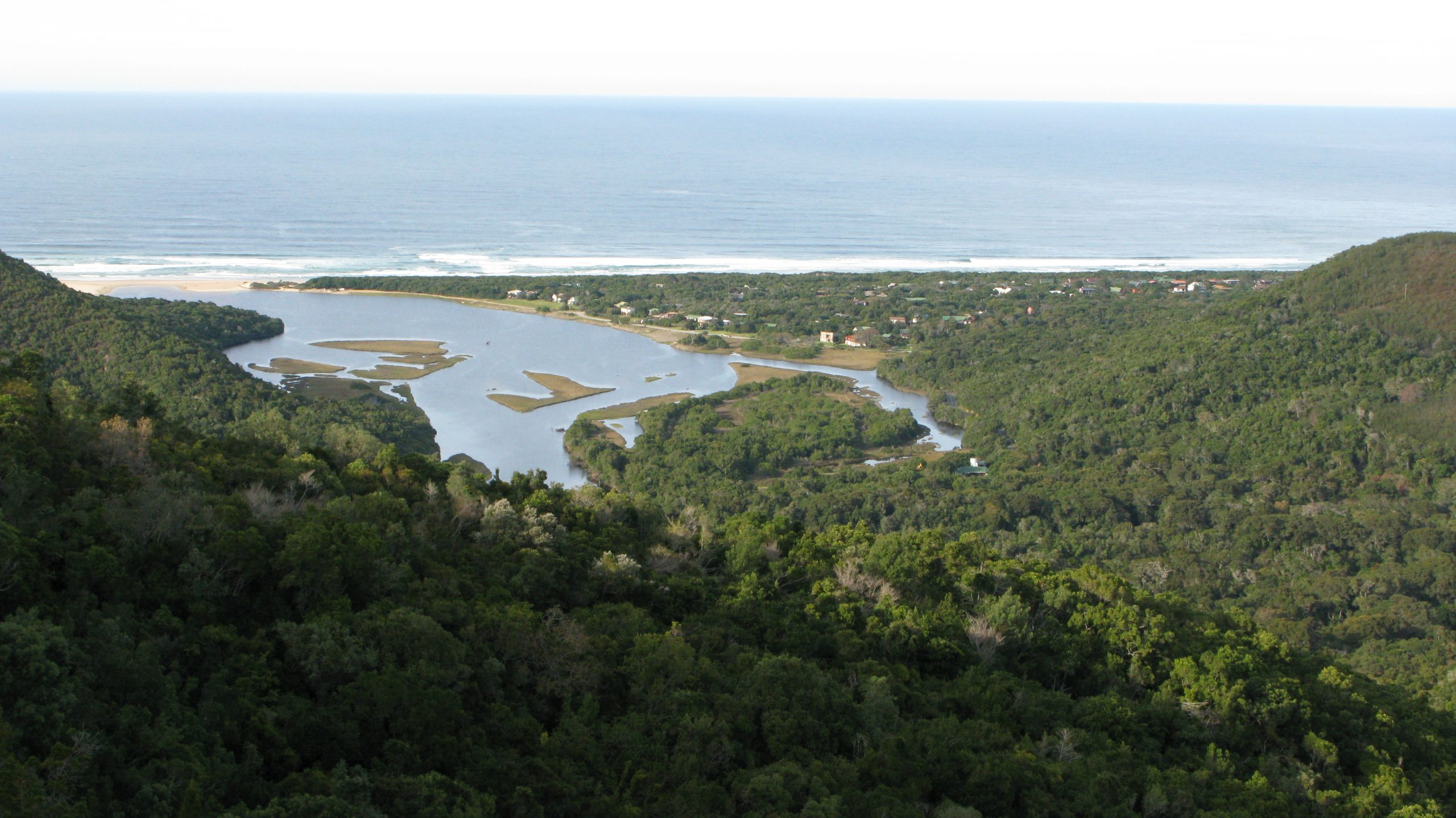
The Groot (Wes) Estuary in Nature’s Valley during its closed phase.
Two states, two very different estuaries
An open estuary performs very differently from a closed one. When the mouth is open, seawater enters on the tides, mixing with freshwater from the river. Salinity fluctuates daily, nutrients are exchanged with the ocean, and many marine fish and invertebrates can move in and out. This is often when juvenile fish recruit into estuaries, using them as sheltered nurseries rich in food. Indeed, for many fish species, the nursery habitats provided by estuaries are essential for their continued existence.
When the mouth closes, the system shifts gears. Tidal influence disappears, and water residence time increases. Changes occur in water chemistry. Salinity can either decrease (if freshwater inflow continues) or increase during dry, hot periods as evaporation concentrates salts. In some closed estuaries, salinity can even exceed that of seawater, creating hypersaline conditions. Depending on water depth, closed conditions may lead to stronger stratification, with fresher water at the surface and saltier, sometimes oxygen-poor water near the bottom. With no marine connection, nutrients accumulate rather than being flushed out, which can fuel algal growth. While this may sound negative, these blooms form the base of productive food webs that support zooplankton, invertebrates, and fish adapted to such conditions.
The opening and closing cycle reshape estuarine food chains. During open phases, food webs are closely linked to the marine environment, whereas closed estuaries rely more heavily on internal production. During open phases phytoplankton production is influenced by tidal exchange and generally increases. In contrast, during a closed phase, the amount of phytoplankton in the water column decreases, but the amount of microalgae found on the sediments increases. Phytoplankton and microalgae flourish in nutrient-rich, calm waters, while submerged and emergent plants expand into newly flooded margins. These plants trap sediments, stabilise banks, and provide habitat for insects and crustaceans. Detritus from decaying plant material becomes a crucial energy source, fueling complex food webs that differ markedly from those in an open phase.
Both phases therefore support different species and ecological processes. Removing one phase undermines the system as a whole.
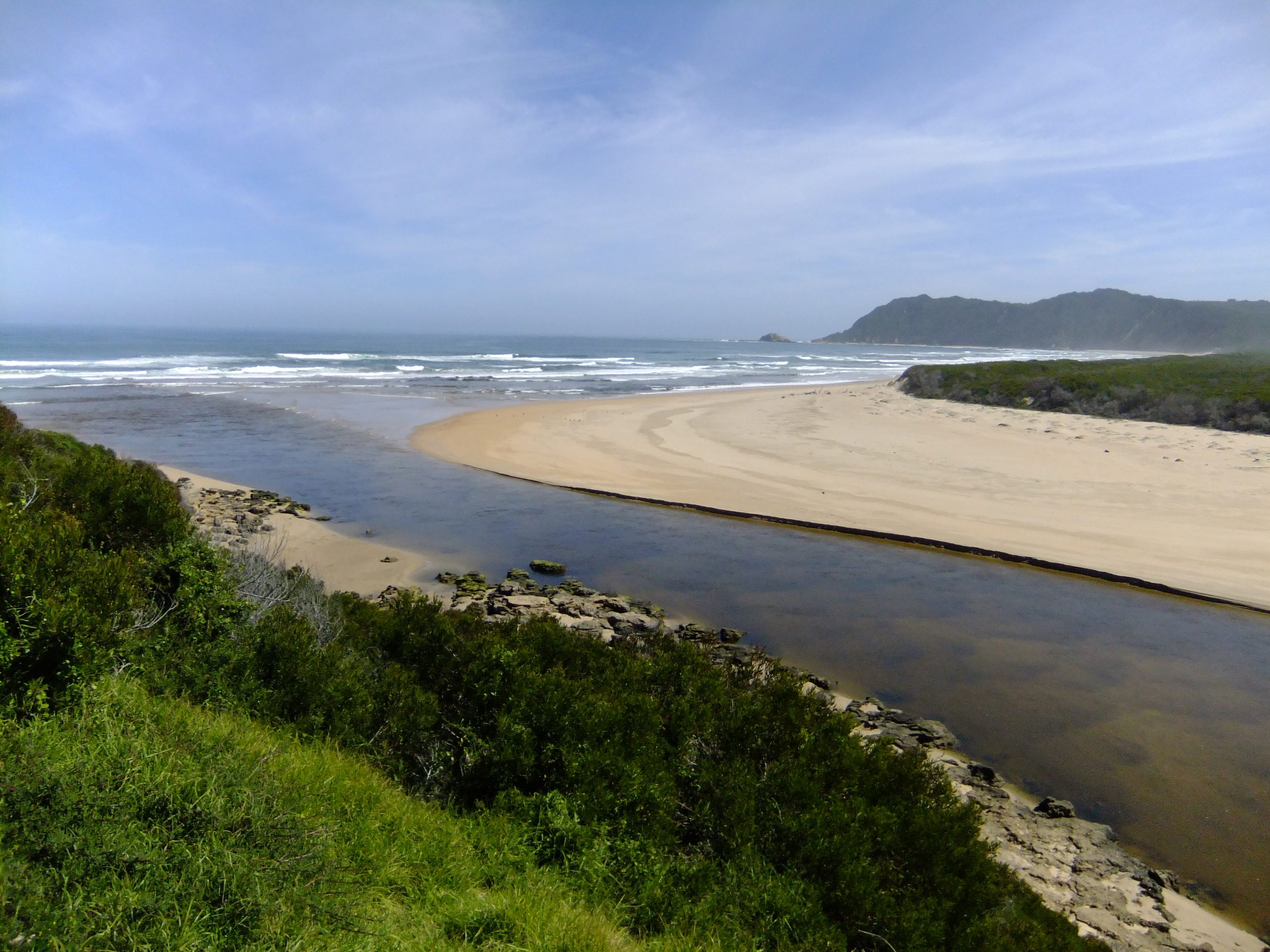
Connectivity is restored during the open phase
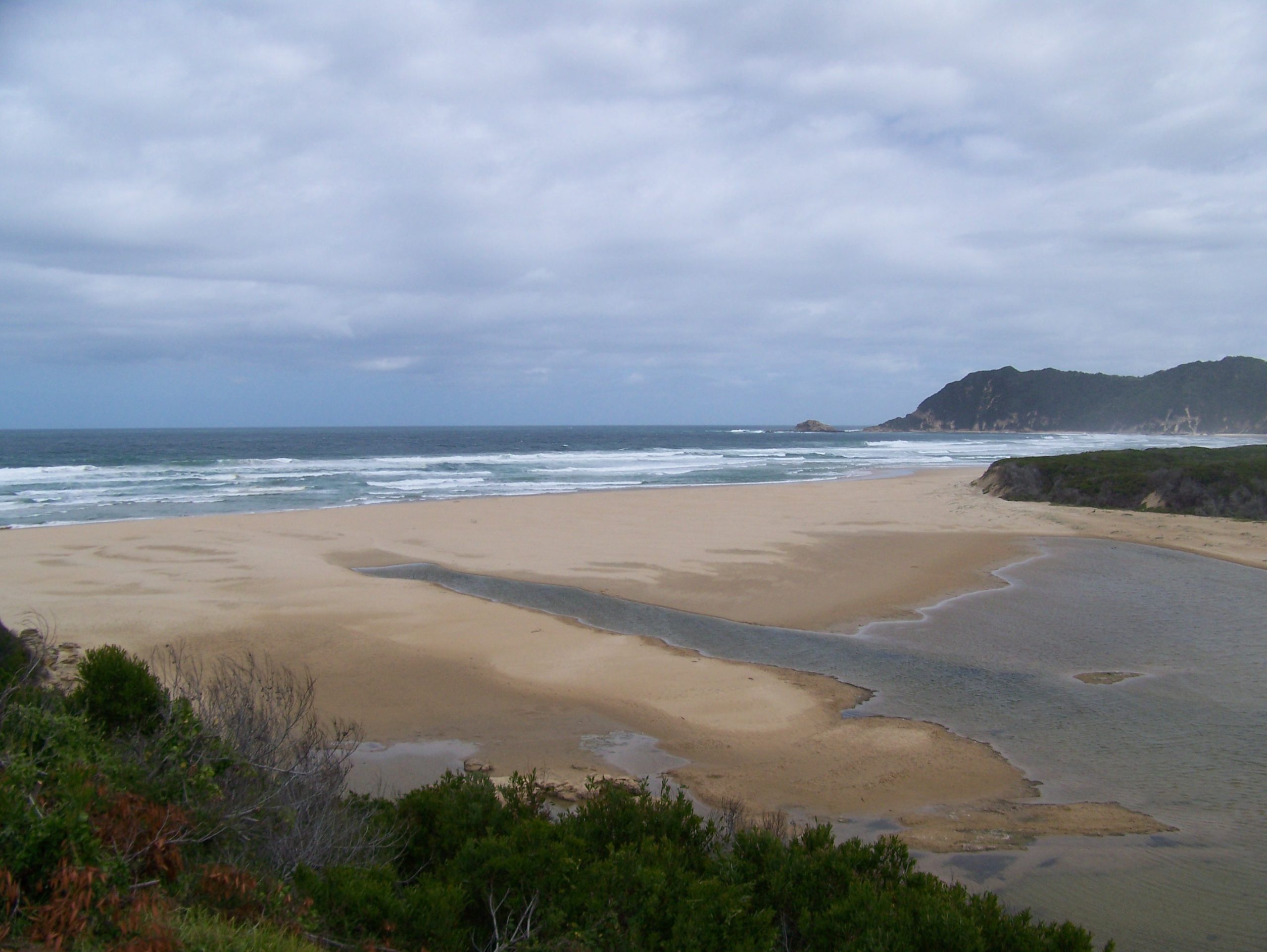
Mouth closure is generally due to low river inflow combined with sand deposited in the mouth from waves and wind.
Why closures are often misunderstood
From a human perspective, closed estuaries can be inconvenient. Rising water levels may flood roads or private properties, and stagnant conditions with increased algal growth can be aesthetically unpleasant, smell bad, and lead people to question water quality and the health of the system. While algal blooms can be associated with water quality problems, particularly elevated nutrient levels such as nitrogen and phosphorus, this is not always the case.
Excess nutrients can originate from various sources, including agricultural runoff, sewage effluent, industrial discharges, or urban stormwater. However, algal growth is also strongly influenced by natural environmental conditions. These include low water flow and long water residence times, which allow algae to accumulate, as well as warm temperatures and high levels of sunlight. For this reason, algal blooms are commonly observed during late spring and summer.
When macroalgae die and begin to decompose, bacteria break down the organic material. This process releases gases such as hydrogen sulphide, which produces the characteristic “rotten egg” or sewage-like smell that many people notice. The presence of such odours indicates active decomposition and can be associated with reduced dissolved oxygen levels in the water, particularly in localized areas. These events often prompt calls for artificial breaching, where the mouth is mechanically opened to “fix” the problem.
However, research consistently shows that routine artificial breaching can do more harm than good. Premature opening drains accumulated nutrients, disrupts plant communities, and can strand or wash out fish and invertebrates before they complete critical life stages. Over time, this can simplify food webs and reduce biodiversity.
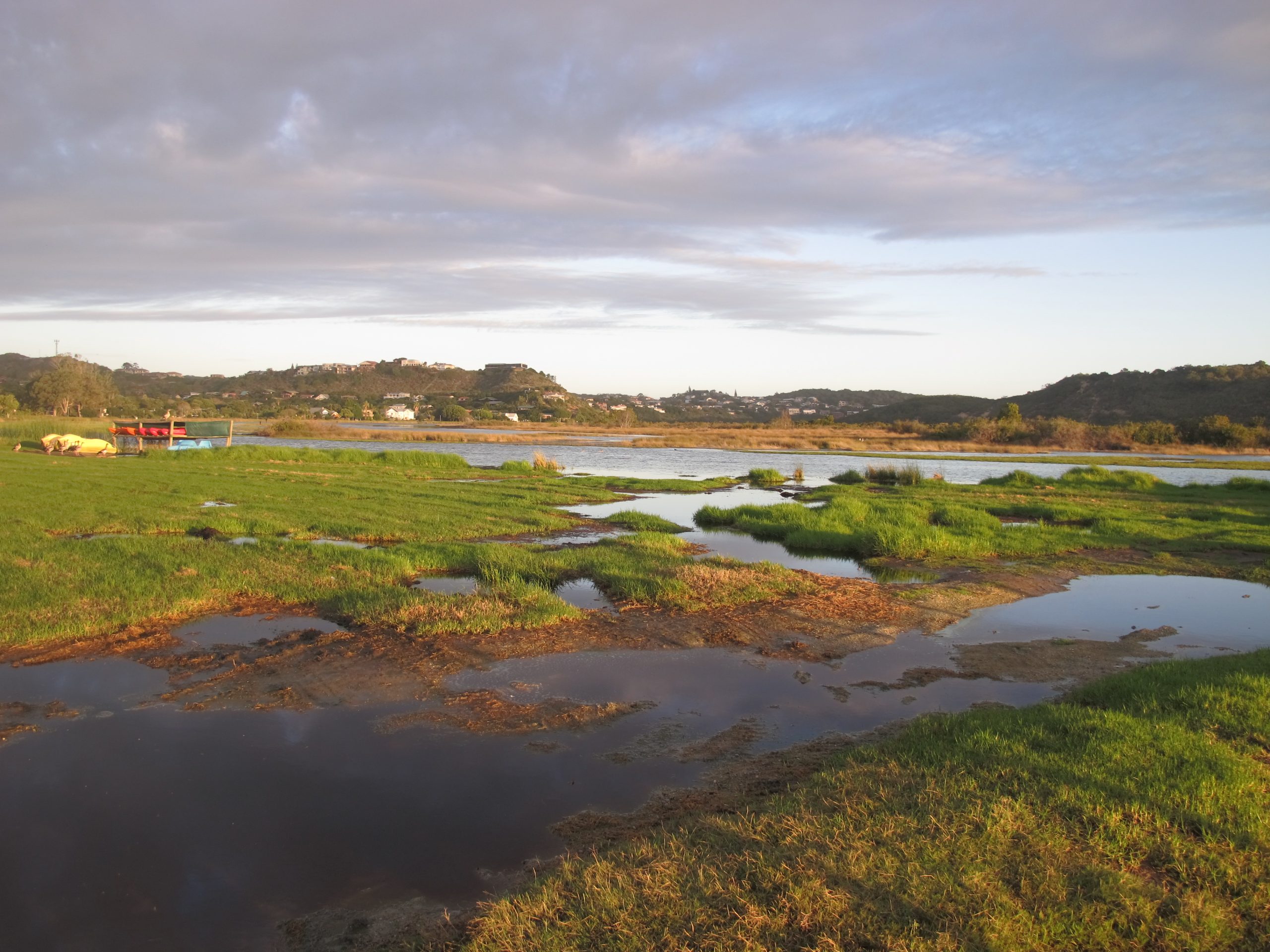
As water levels rise during the closed phase, these can inundate adjacent low-lying areas.
The importance of timing
The timing of mouth opening is crucial. Natural openings often coincide with floods, which flush poor-quality water, restore oxygen levels, and cue fish migrations. Artificial breaching during low flows may fail to achieve these benefits, allowing the mouth to close again quickly and leaving the estuary in a worse state than before.
Modern estuary management in South Africa emphasises working with natural processes rather than against them. National guidelines recommend that artificial breaching should only occur when there is a clear risk to human safety or critical infrastructure, and even then, it should mimic natural conditions as closely as possible.
Artificial mouth breaching is often perceived as a simple solution to water quality concerns, but in reality it is a highly regulated and context-specific management action. The breaching of the estuaries falling within the Garden Route National Park is governed by an Environmental Authorisation issued under the National Environmental Management Act. This authorisation is supported by a Basic Assessment Report and an Environmental Management Programme, which specify strict conditions under which breaching may occur.
These conditions relate primarily to the mitigation of flooding risk to infrastructure and, in specific circumstances, to clear and verified pollution threats.
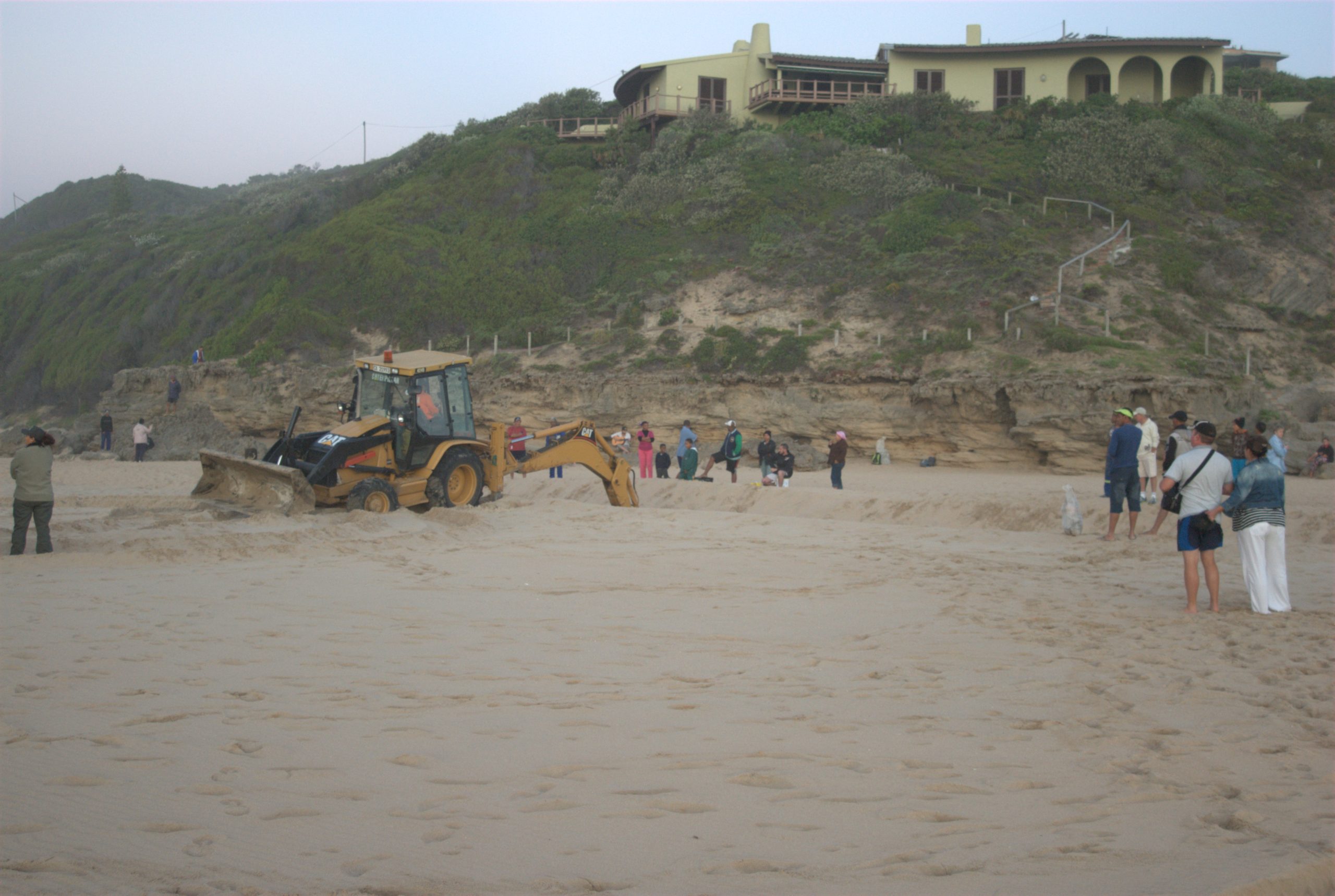
Artificial breaching is carefully controlled and undertaken primarily to prevent flooding of adjacent infrastructure.
Catchments matter more than mouths
While much attention focuses on estuary mouths, the health of TOCEs is strongly influenced by what happens upstream. Reduced freshwater inflow due to dams, water abstraction, and land-use change can alter opening frequency and duration. In general, the smaller the estuary and its catchment, the more sensitive it will be to a modification in river flow. Furthermore, nutrient runoff from agriculture and urban areas can intensify algal blooms and lead to oxygen depletion during closed phases.
Protecting and restoring catchments by maintaining environmental flows, reducing pollution, and conserving riparian vegetation are some of the most effective ways to support healthy estuary dynamics.
Living with natural change
Temporarily open/closed estuaries remind us that not all ecosystems are meant to be stable or predictable. Their value lies in their variability. Open phases connect rivers to the sea, supporting fish migrations and nutrient exchange. Closed phases create productive, sheltered environments that sustain unique food webs and plant communities. Together, these states underpin the remarkable biodiversity of South Africa’s coastline.
Estuaries along the Garden Route are under increasing pressure from altered freshwater inflows, adjacent development, and the growing impacts of climate change. Maintaining healthy, resilient systems requires a coordinated, long-term approach.
Freshwater abstraction in the catchment must be quantified and managed to ensure sufficient inflows to sustain natural estuarine processes. Municipal planning and infrastructure development need to account for estuarine floodplains, coastal management lines, and future climate scenarios.
Effective management does not mean forcing estuaries to stay open or closed but learning to live with their natural rhythms. By recognising that both phases are essential, by addressing pressures at their source, and by intervening in mouth state only when truly necessary, we can ensure that these “breathing” estuaries continue to function for generations to come.
