Using BRUVs to monitor Robben Island MPA’s locals – while they monitor us too!
Beneath the waves lies a world of curious creatures whose secrets we are still busy uncovering. Unlike taking a leisurely drive through the Kruger National Park, observing marine communities requires specialised tools and techniques. Today we invite you to dive into this hidden world with us, as we monitor the fascinating marine life at Robben Island Marine Protected Area (MPA).
Declared in 2019, Robben Island MPA is still a young MPA. Among its priority objectives are to rebuild important fishery stocks and protect the rich cultural heritage of the island. The place that once imprisoned our former struggle heroes is now set aside to free some of our marine life from the pressures of overfishing! Research shows that well-managed MPAs provide long-term benefits for ecosystems as well as coastal communities that rely on them. However, long-term monitoring inside individual MPAs is necessary to determine how effective these management measures are in specific contexts.
Baited remote underwater video systems (BRUVs) are an ideal tool for monitoring the diverse fish communities our country has to offer. Since 2022, SANParks has been conducting seasonal BRUV surveys to monitor the Robben Island MPA, enabling us to see several species in their unique habitats, as well as observe their interactions with one another. With every BRUV deployment, we are extending the dataset to eventually monitor long-term changes in the diversity, abundance, and size-structure of our local fish communities.
But while we monitor the array of marine life, the marine life is monitoring what we are up to as well! This video shows a BRUV system being deployed from a boat down to the sea floor 12 m below, where it immediately gets investigated by the locals – a huge shoal of Cape seabream (Pachymetopon blochii).
A BRUV system comprises at minimum of an underwater camera and a bait canister containing some freshly diced smelly sardines to lure in all sorts of creatures. Standardised international practice is to deploy BRUVs for just over 1 hour before retrieving them and re-deploying them somewhere else. Sounds simple, but BRUVs get a lot more complicated than this…
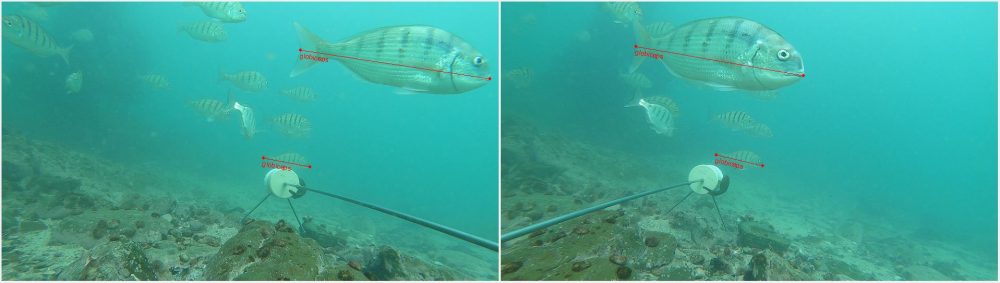
SANParks predominantly uses stereo-BRUVs – a hugely beneficial upgrade to include 2 cameras at precisely calibrated angles to enable fine-scale measurements of fish that appear in both camera frames simultaneously. The measurement data from this advanced technology is incredibly useful for ecological and management purposes. The screenshot below shows two white stumpnose being carefully measured by clicking on the top lip and the tail fork in both the left and right camera frames – revealing fork lengths of 247 mm and 397 mm for these fish.
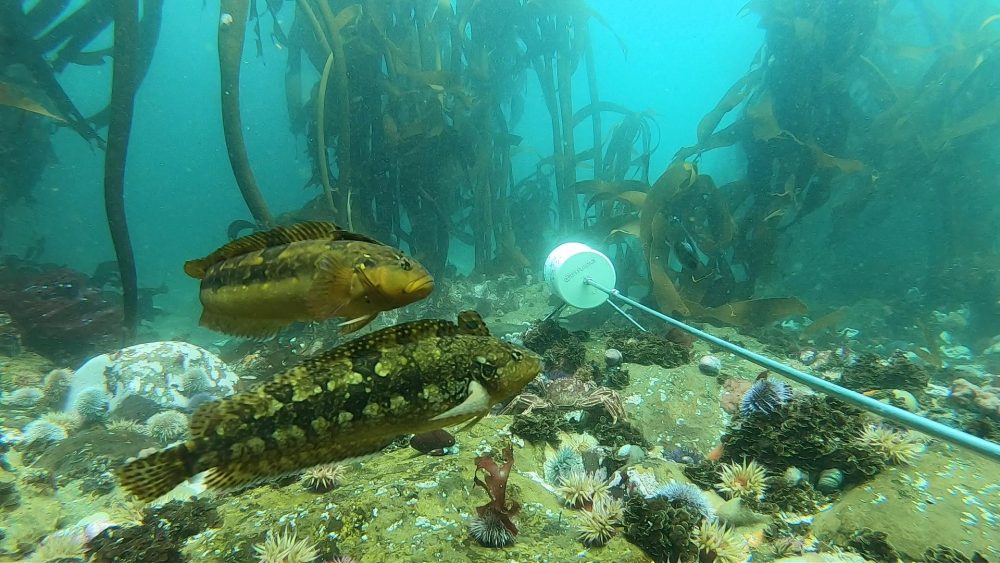
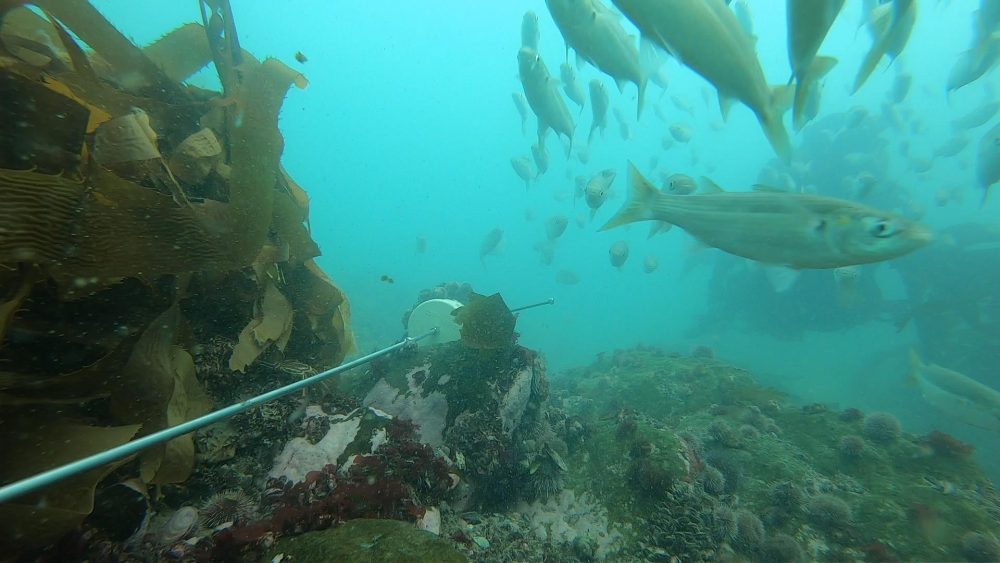
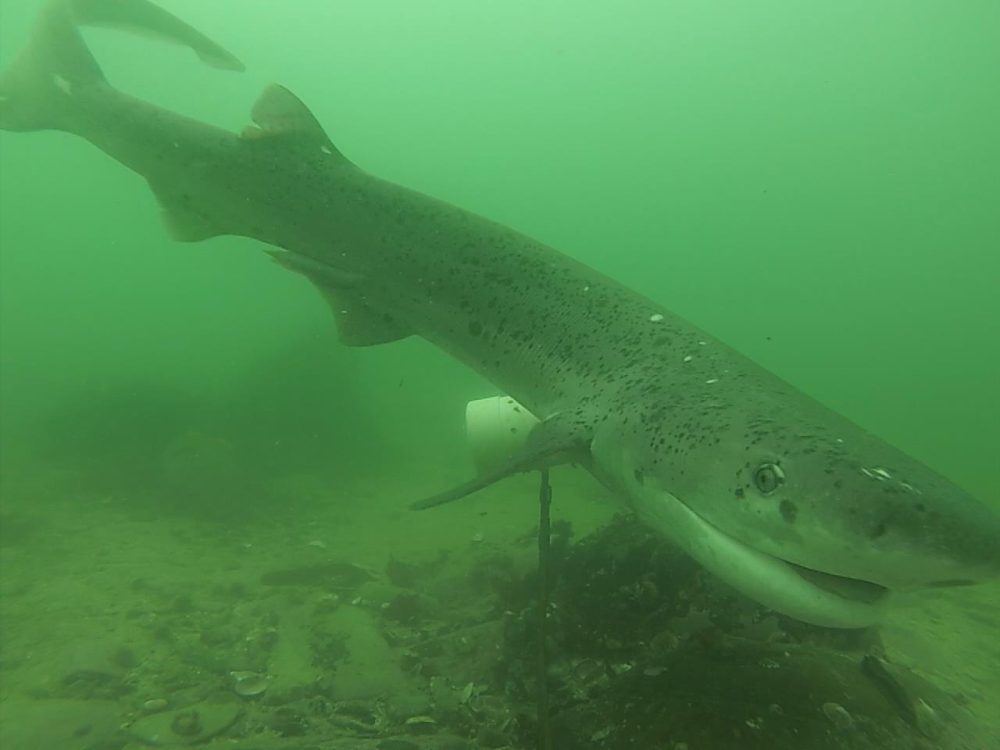
Although South Africa’s cold West Coast not known for high diversity, our BRUVs still captured some very interesting footage from a range of species. The pics below are just a small sample of who came to investigate at the Robben Island deployments (including a pair of klipvis, a school of southern mullet, and a broadnose sevengill cowshark).
If you’re curious to see more of what’s been caught on camera, check out the two-week daily post series on the Table Mountain National Park Facebook page, using the hashtag #LuvingSANParksBRUVing to easily find all the updates. You may just be surprised by all that happens beneath the waves!
Written by Russell Dixon – Video Analyst contracted by SANParks Scientific Services and funded by the JRS.