Overview of external funding: Leveraged to support and enable research and monitoring
SANParks’ science function has successfully leveraged numerous funding opportunities in the aftermath of the coronavirus disease 2019 (COVID-19)-related budget cuts. This additional co-funding from external sources has been instrumental in filling capacity gaps and enabling critical research and monitoring activities. Various staff have engaged and successfully leveraged diverse national and international funding streams. The nature and size of this funding has come in an equally diverse format, from in-kind support and equipment donations, to short-term COVID-19 relief funding for critical species, to funding enabling the pursuit of new and innovative research and longer-term capacity support. We provide a snapshot of this diversity, which is testament to the group’s engagement and adaptability in both attracting and implementing these projects.
IUCN Save Our Species (IUCN-SOS), co-funded by the European Union, supported black rhino monitoring in Frontier parks. The ~R 1,2 million COVID-19-relief grant, awarded in July 2021, enabled foot patrols, camera trapping, aerial surveillance and ear-notching. IUCN and EU representatives conducted a field mission to Addo Elephant and Mountain Zebra National Parks to familiarise themselves with this project in November 2021.
The Biodiversity Loss Modelling Project was a SANParks collaboration with CSIR on the work that was undertaken for DFFE on South Africa’s adaptation component of the Nationally Determined Contributions. This was one of the primary vehicles under the Paris Agreement which was meant to share individual country efforts and commitments on adaptation. The project, commissioned by SouthSouthNorth (SSN) – Africa, supported an update of the 2015 Intended Nationally Determined Contributions (I-NDC). In 2015, the Department of Environment Forestry and Fisheries undertook the work of the I-NDC under the technical support of CSIR. The R 216,000 that was donated to SANParks, supported the work on risk and vulnerability assessment for the biodiversity sector in South Africa, which resulted in a report and two scientific publications.
The three-year R 695,000 Table Mountain Fund grant for re-assessing the state of biodiversity in Table Mountain National Park Marine Protected Area ended on 31 March 2022. It made an invaluable contribution to foundational knowledge (monitoring, analysis, state of knowledge report, species lists), management effectiveness (enforcement and compliance drone surveillance case study), governance and enhanced management through purposeful engagement (webinar, popular article and social media campaign).
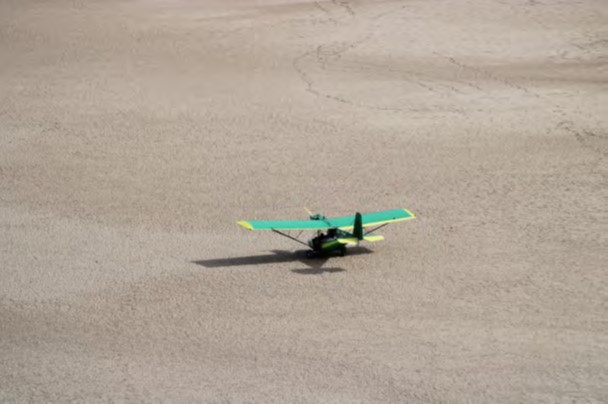
Black rhino monitoring in the Frontier Region was given a boost through grant funding from the Rhino Impact Bond (RIB) initiative for Addo Elephant National Park and an IUCN Save our Species (IUCN-SOS; co-funded by the European Union) Covid-19 relief grant. IUCN-SOS funding has enabled foot patrols, camera trap deployment and aerial surveillance in three Fronteir parks.
The Table Mountain Fund supported the assessment of climate change adaptation corridors for Table Mountain National Park, with a no-cost extension enabling completion of scientific analysis and publication. This project facilitated a trait-based, scale-appropriate, species-level, climate change vulnerability layer to inform planning and steer high intensity activities away from sensitive areas.
R 500,000 was received in late 2021 from Total Energies for critical conservation work on endangered African penguins, primarily at Bird Island in Addo Elephant National Park Marine Protected Area. Funding facilitates access to the island to rescue birds in distress, maintenance of basic infrastructure on Bird Island, weather and other monitoring equipment, temperature loggers as well as development of public information boards to be erected in Addo and Table Mountain National Parks.
Further adaptation research was made possible by the World Wide Fund for Nature (WWF), supporting research on temperature-appropriate nesting options for African penguins and assessing shading to ensure birds can access water in hot climates. In the former, penguin breeding success is evaluated in three types of artificial nest boxes at Boulders colony in conjunction with weather station data and temperature sensors installed across diverse penguin nesting sites. Understanding the effects of extreme weather events will feed into an early warning system for coordinated rescue of eggs and chicks in danger (60 chicks and 112 eggs were rescued this season). The climate change mitigation aim of “Keeping water available for birds of the Tankwa Karoo desert” is to provide artificial shade to keep water accessible to small birds during extreme heat events by reducing surface temperatures at the water’s edge. Preliminary data shows that ground temperatures in the sun can approach 60°C as air temperatures approach 40°C in the park which exceeds physiological tolerance limits of small passerine birds, making open water pools inaccessible to them.
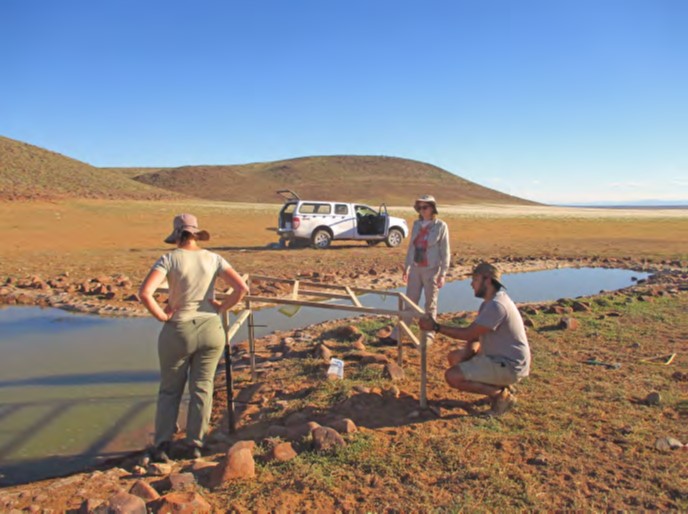
Susie Cunningham, Sean Morar and Nicola van Wilgen-Bredenkamp (SANParks) busy installing shaders as part of a climate change adaptation trial in the Tankwa Karoo. This is a collaboration between WWF, UCT and SANParks.
A new project, worth 1.5 million Euros and funded by the French Agence Francaise de Developpement (AFD), pairs Table Mountain and Reunion Island National Parks in their efforts to ‘protect the mountains in the sea’ through territory-to-territory cooperation. Funding supports park actions to facilitate the sharing of knowledge and experiences between the two UNESCO world heritage sites that conserve highly diverse ecosystems and cultural heritage of global value. Peer-to-peer activities include developing strategic plans and sharing tools for invasive and vulnerable species management, fire management and climate change preparedness, training, awareness-raising activities and joint research.
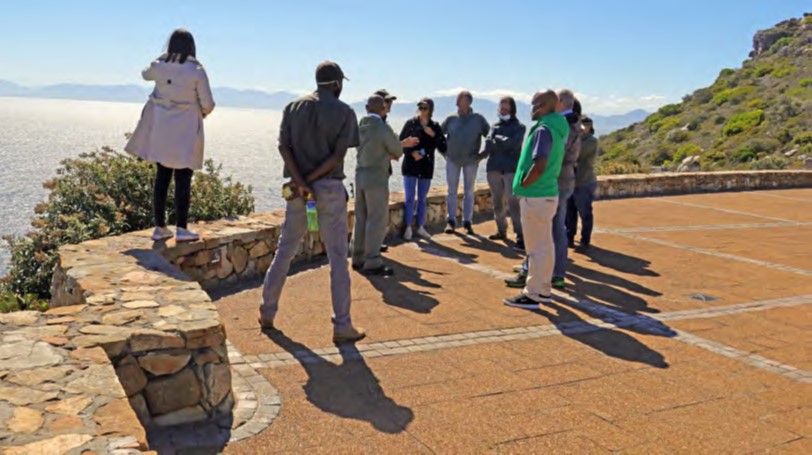
The Table Mountain Management Team and Cape Research Centre received a delegation from the island of Reunion as part of a collaborative project funded by ‘Agence Francaise de Developpement’.
In September 2020, Scientific Services received a two-year COVID-19 relief grant of US$ 208,740 (~R 3,6 million) from the JRS Biodiversity Foundation. This enabled retention of biotechnical staff and associated biodiversity monitoring in Mountain Zebra and Golden Gate Highlands National Parks as well as a bioinformatics officer to develop data-management protocols and species checklists for national parks. In 2022, the JRS Biodiversity Foundation awarded a two-year grant extension of US$ 498,100 (~R 7,500,000) to expand this bioinformatics work through access to software and interfaces to improve data management and sharing. Further, it enables capacity for knowledge collation for estuaries, freshwater systems, pollinators and invertebrates. It is envisaged that a substantial amount of knowledge and species data will be made easily accessible to facilitate research and improved conservation management.
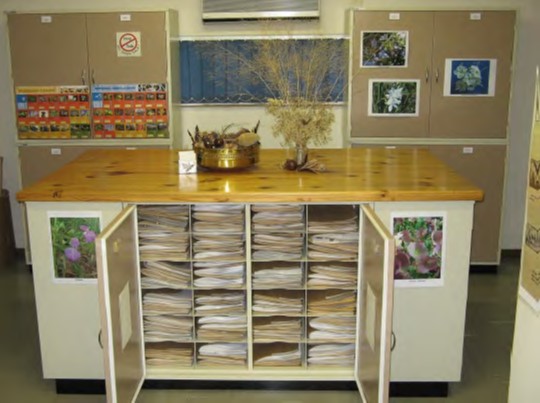
A grant from the JRS Biodiversity Foundation is going a long way to making biodiversity information within SANParks, such as herbarium specimen data shown here in the Kruger reference collection, widely available.
The UNEP – African Elephant Fund provided US$ 49,983 to remove snares from elephants in the Greater Kruger Transfrontier Conservation Area, specifically in the Pafuri area. It was linked to concerns that negative economic impacts as a result of COVID-19 could lead to increased livelihood reliance on illegal wildlife hunting. Snare removal efforts continue through a no-cost grant extension.
Kruger-To-Canyon (K2C) Biosphere generously funded the costs of nursery permits in Mpumalanga (where nursery permits cost R 300) and Limpopo (which requires an R 2,000 TOPS standing permit). Permits enable local growers of wild ginger, Siphonochilus aethipicus, to legally access the traditional medicine market in South Africa. K2C also sponsored the first legal purchase of wild ginger from a local grower in each province to the value of R 1,400.
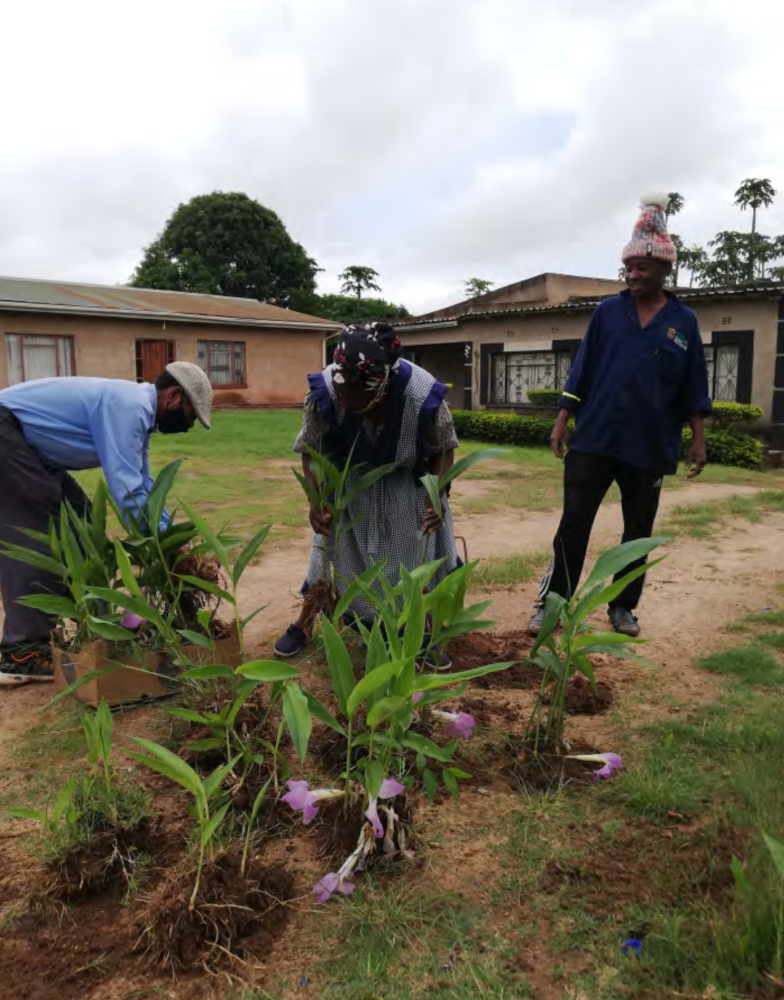
Kruger-To-Canyon (K2C) Biosphere funded the costs of permits for growers of the popular medicinal plant, wild ginger (Siphonochilus aethiopicus). Permits enable local growers of wild ginger to legally sell these in South Africa, which relieves pressure on wild populations.
SAEON’s Ndlovu Node has long been a generous supporter of the annual Savanna Science Networking Meeting. This year they sponsored R 9,150 for 210 fabric lanyards and 165 cloth masks for delegates, made by local community sewing groups adjacent to Kruger and supporting local SMME development and market access. Additionally, the generous donation of R 75,000 from the Honorary Rangers covered the registration fees for many SANParks attending delegates as well as covering the costs of live streaming the event, which was a great success.
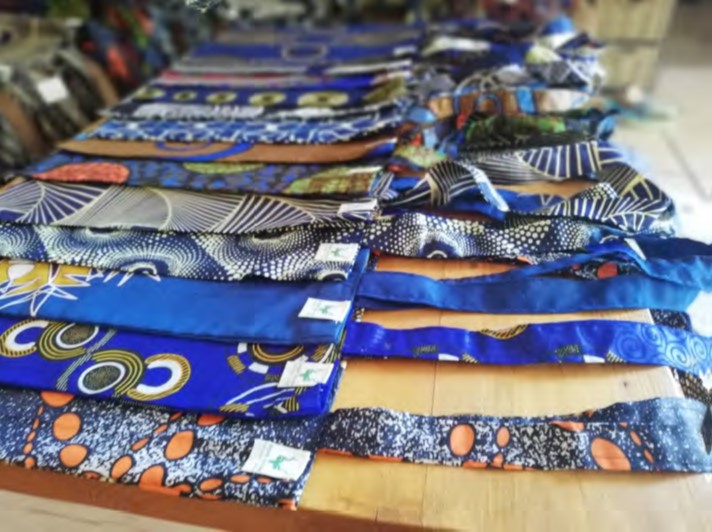
Fabric conference bags sponsored by SAEON’s Ndlovu node for the Savanna Science Network Meeting in Kruger National Park; this sponsorship reduced the environmental footprint of the conference and at the same time created local SMME opportunities. Funding from Honorary Rangers enabled SANParks staff to attend the 2022 meeting.
The Honorary Rangers in Cape Town also proved invaluable to the Cape Research Centre by assisting with maintenance, including donating and installing a rain water tank, fixing gutters damaged by baboons, installing a drain to prevent the library flooding, and supporting research by purchasing a GoPro camera for baited remote underwater video monitoring and repairing a weather station in Tankwa Karoo National Park.
The Lowveld Honorary Ranger group has generously supported research camps in Kruger by helping to keep the camps running over the past 3 years. They raise funds by advertising, selling and running the camps during the December holiday period when the research camps are ‘closed’. Funds generated in this way – R 302,500,54 this past year – are used to purchase equipment and cover small maintenance jobs in the camps.
Further, Honorary Rangers personally assist with basic maintenance and garden clean-ups during work parties at the camps. Garden Route & Frontier and Arid Research Units have also benefitted from critical capital items donated by Honorary Ranger groups. These recently include a chiller for Knysna seahorse lab research, ground water monitoring equipment for Camdeboo National Park.

Honorary rangers busy fixing the access gate and entrance at the Nwaswitshaka Research Camp outside Skukuza, Kruger National Park.
This article was originally published in the 2021/2022 Research Report.


