Off the starting blocks – Marine Protected Area and Estuarine Management Plans underway
South African Environmental legislation requires the development of integrated management plans for Marine Protected Area (MPA) and estuarine systems within each national park (NP), as expansions of the planning and management processes addressed within park management plans. To kick-start this process, SANParks drafted a guideline document in 2020 that provides a roadmap and timeline for the development of these plans.
MPAs are legislated and managed in accordance with the National Environmental Management: Protected Areas Act. Twenty new MPAs within South Africa’s Economic Exclusive Zone were gazetted on 23 May 2019, of which three, Namaqua NP MPA, Robben Island MPA and Addo Elephant NP MPA, now form part of SANParks’ protected area estate. This proclamation was a significant advancement for marine conservation. It expanded South Africa’s protected marine environment by 6.73 million hectares and increased the country’s marine protection footprint from 0.4% to 5%. Additionally, approximately 229 500 ha has been added to SANParks’ marine conservation estate, more than doubling the area from 146 400 ha to 369 900 ha.

Dolphins observed by a Baited Remote Underwater Video System
Draft MPA management plans for SANParks’ three new MPAs were developed internally by SANParks, as appropriate stakeholder engagement was not possible due to Covid-19 regulations. The draft Namaqua MPA plan was reviewed with stakeholders during the Namaqua NP Management plan review in 2022/23. Stakeholder engagement on the Robben Island MPA and Addo Elephant NP MPA management plans will take place in the following two years.
Estuary management is addressed at a broad scale within park management plans and at a finer scale through standalone estuarine management plans (EMPs) in accordance with the National Environmental Management: Integrated Coastal Management Act. The EMP development process is detailed in the National Estuarine Management Protocol, which serves as the tool to enable coordinated and efficient management. EMPs are developed collectively by all government departments who manage or could impact each estuary as well as other relevant stakeholders. Set public participation requirements must be met during the development phase before Ministerial approval.
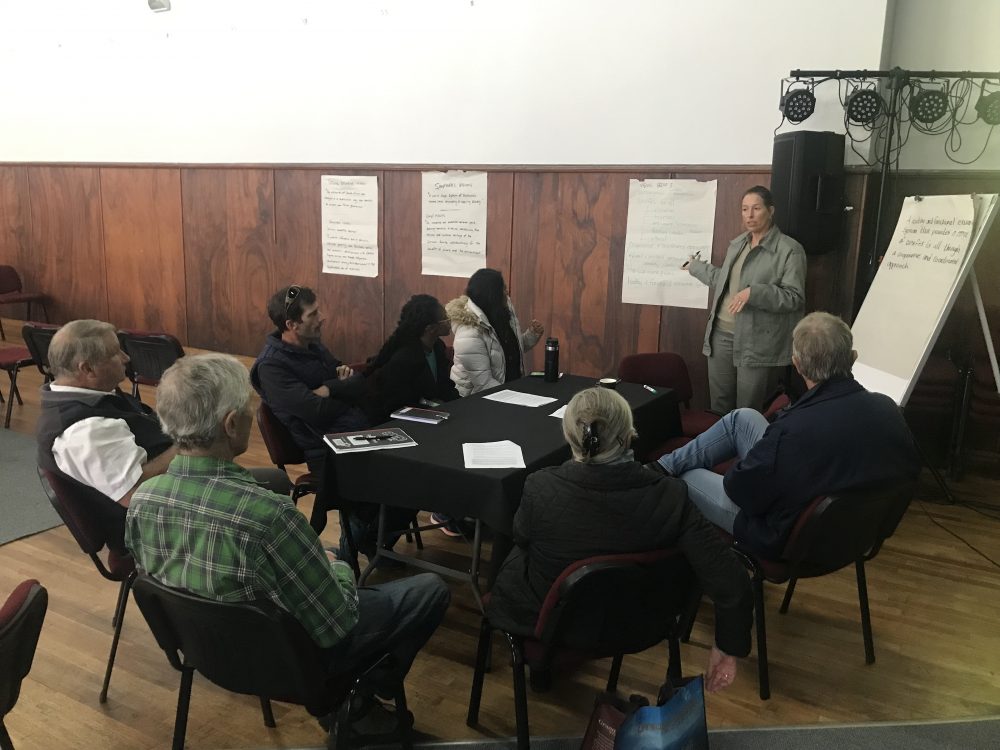
Engagement between South African National Parks’ scientists and managers and stakeholders in Knysna
South Africa has approximately 300 functional estuaries, of which 36 are managed by SANParks. Some estuaries require little to no management, whereas a few, mostly larger systems close to urban areas, require a range of ongoing management interventions. Some smaller, adjacent estuaries have similar physical and biological characteristics and stakeholder involvement processes, and where logical some will be combined within one EMP. This approach will result in 12 EMPs and related documents being developed for the estuaries managed by SANParks over a 10-year planning period. The management of estuaries as described in EMPs will be aligned with the management goals of the protected area management plan of the NP or MPA within which each estuary falls.
In 2021, work commenced on the development of EMPs for both the Sout (Oos) Estuary and Knysna Estuary in the Garden Route NP. EMP development is preceded by a scoping phase starting with the compilation of a Situation Assessment Report (SAR), which reflects the estuary’s current management status along with background information to inform the management planning process. Both the SAR and EMP for the Sout (Oos) have been completed in conjunction with relevant governance and stakeholders partners. Knysna’s SAR is complete with stakeholder engagements having commenced in 2022 resulting in a draft EMP, which is currently in the process of being finalised with governance partners before the concluding stakeholder meeting.
Once approved by the Minister of Forestry, Fisheries and Environment, implementation of the MPA and EMPs will be monitored from a resources, compliance and performance monitoring perspective. Successes, shortcomings, and the availability of new data, will be reflected upon within the plan reviews, which in future may be aligned with the revision period of the relevant park management plans.
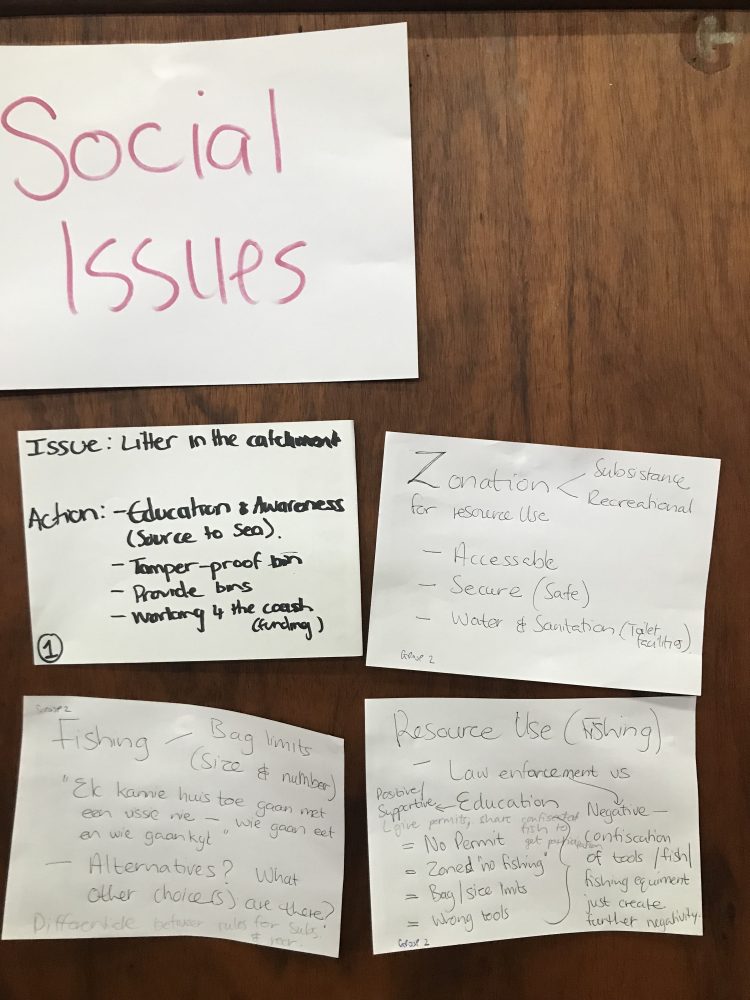
Notes on social issues.
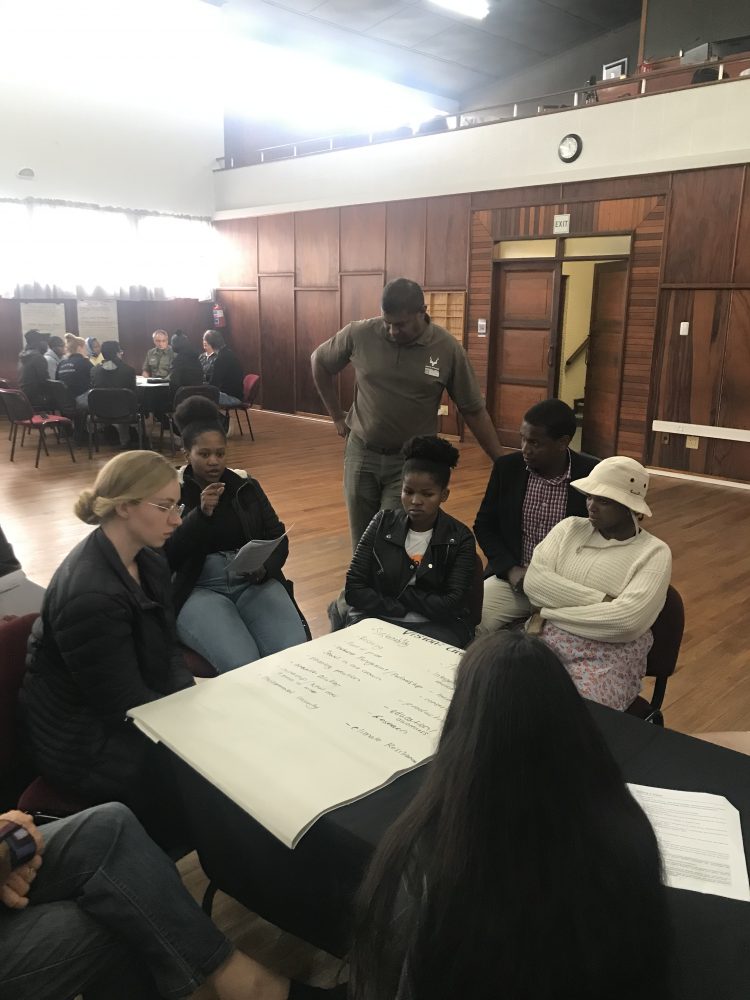
Discussions between stakeholders at a public meeting during which stakeholder groups were undertaking a vision and objective setting exercise for the Knysna Estuary Management Plan.
This article was originally published in the 2021/2022 Research Report.


