New research on Iron Age trade in the Kruger National Park
This Letaba Late Iron Age site was particularly important in the development of the earliest trade between the South African interior and the larger Indian Ocean world, as shown by the extremely rare, early Islamic ceramics (dating between the 8th and 10th centuries) that were uncovered at the site. Other important evidence for early trade includes asian glass beads, imported seashells, and the earliest known evidence for local cotton spinning – a technology imported from the East African coast.
In 2021, the Department of Archaeology at the University of Pretoria started new excavations on two of the many 8th-10th century Iron Age settlements along the Letaba River in the Kruger National Park (KNP). The Iron Age is a period that broadly refers to the history of African communities that spoke languages from the Bantu family, practised agriculture, herded sheep, goats and cattle, made and used ceramics pots, forged and worked metals, and lived in permanent villages. Research on the Letaba settlements is ongoing, but to date, we have been able to show that the Letaba region was particularly important in the development of the earliest trade between the south African interior and the larger Indian Ocean world.
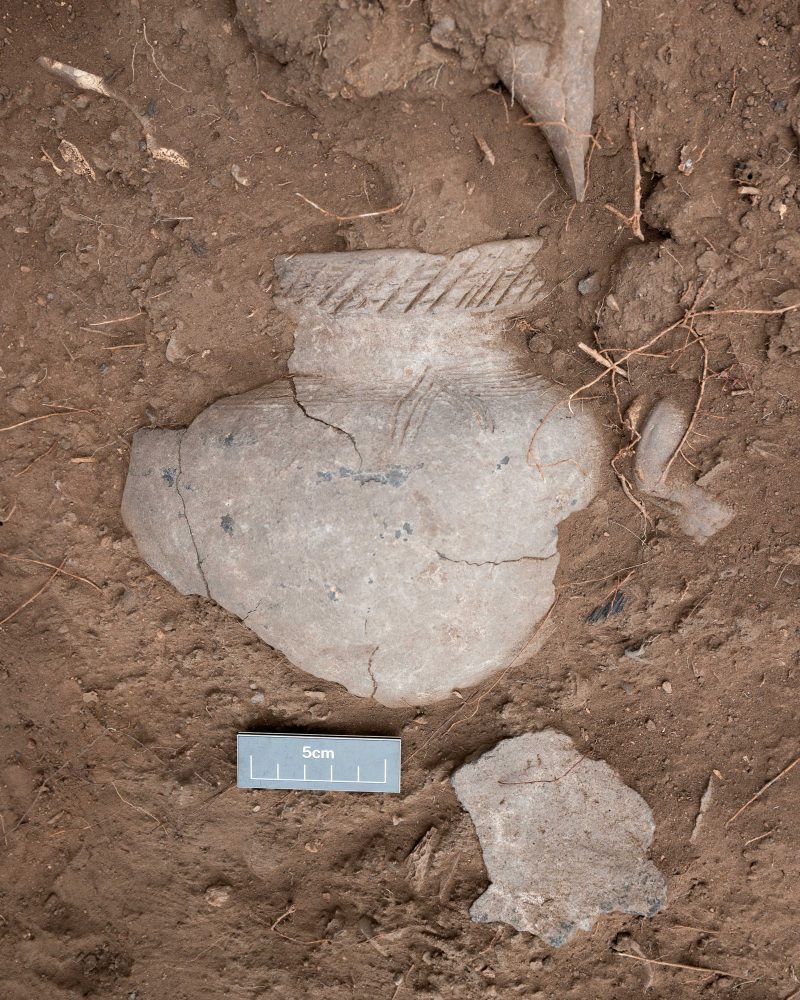
Eighth century Iron Age ceramic pot exposed through excavation, certain pottery found at the site was made in the Near East indicating that long distance trade took place at the site on the Letaba River in Kruger National Park (Photo: Michelle van Aswegen).
Our recent excavations have uncovered early Islamic ceramics that were made in the Near East (likely present-day Iran) between the 8th and 10th centuries. Not only are these objects exceptionally rare in this region, but they date to the earliest phases of international long-distance trade in southern Africa. Other important evidence for early trade includes Asian glass beads, imported seashells, and the earliest known evidence for local cotton spinning – a technology imported from the East African coast.
We believe that this burgeoning long-distance trade stimulated intensive big game hunting activities by the people living along the Letaba River at the time, and have found evidence that hunting activities were primarily focused on large herding species, such as buffalo, zebra, blue wildebeest, and giraffe. Other large species also believed to have been targeted include elephant, rhino, roan, and kudu. Our research suggests that animal products, such as skins, bones, pelts, shells, horns, and ivory, were likely exchanged for exotic goods brought in by traders from the East African coast. This evidence all points to a dynamic landscape between 1000 and 1200 years ago, where early international trade was intricately linked to the utilisation of animal resources.
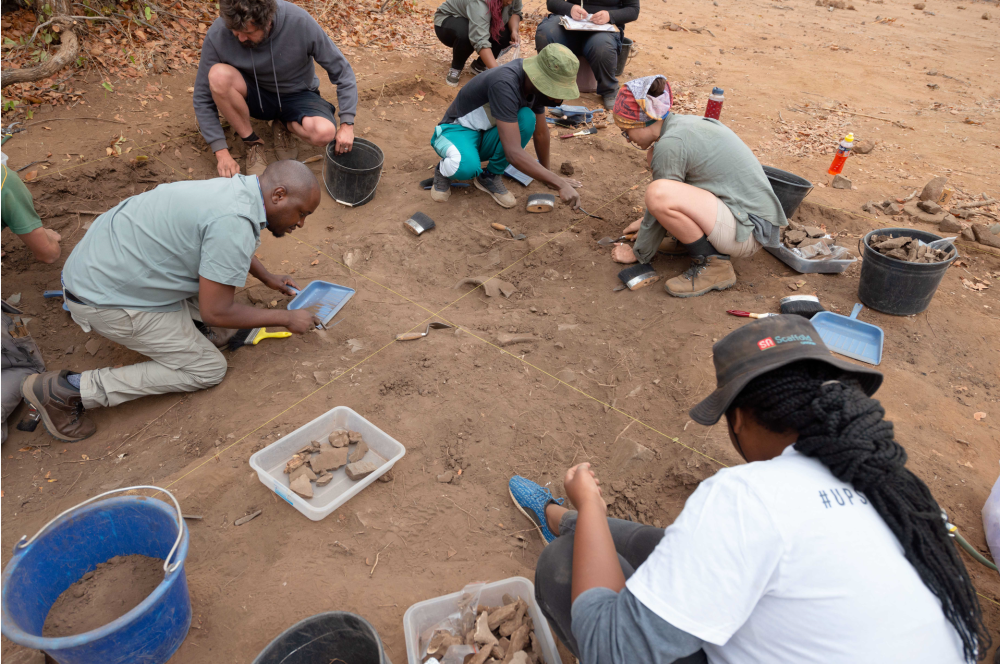
University of Pretoria’s Department of Archaeology and SANParks staff excavate an eighth to tenth century archaeological site on the Letaba River. The patterns on ceramics can be used to date pottery and give clues as to its origin (Photo: Michelle van Aswegen).
This article was written by Xander Antonites and originally published in the 2021/2022 Research Report.