New marine alien species Amathia verticillata discovered in Langebaan Lagoon MPA
Alien species are organisms not native to an area, often out-compete indigenous species, for food and space, and usually have no natural predators. Langebaan Lagoon Marine Protected Area (MPA), located within the West Coast National Park (WCNP), is susceptible to the introduction of marine invasive alien species, due to a combination of ecological, environmental, and human activities. Langebaan Lagoon MPA is linked to Saldanha Bay where the multipurpose iron ore jetty is situated, a large commercial port and a hub for international shipping. Marine alien species can be introduced into this area through ballast water discharge and biofouling from ships, making Saldhana Bay and Langebaan Lagoon hotspots for alien species. Around Saldhana Bay and Lagebaan Lagoon, there are currently 29 known marine alien species in the area, including the recently discovered Amathia verticillata.
Amathia verticillata is a soft bryozoan, a sessile invertebrate that forms colonies. Commonly known as “spaghetti bryozoan” and resembles glass noodles. This species is hermaphroditic (has male and female organs) and thrives in a broad range of temperatures and salinities, with peak reproduction occurring in the summer. Amathia verticillata is native to the Caribbean Sea and was previously misidentified as filamentous algae in the Langebaan Lagoon MPA. In late November 2023, scientists from Stellenbosch University identified these organisms at Kraalbaai in the Langebaan lagoon as the alien species A. verticillata. It is presumed that these organisms are likely brought into the bay and/or lagoon via hull fouling, as they are known to thrive on artificial surfaces. Previous countries that have encountered these organisms found that they block intake pipes, foul fishing and aquaculture gear, block turtle exclusion devices, and cause a decline in the seagrass population.
These scientists raised concerns about this species with SANParks and quickly arranged a summer baseline survey on 26th-28th February 2024. The survey aimed to determine the distribution of this alien and assess the feasibility of removal. The lagoon was sectioned into 15 zones for the survey (Fig. 1). Researchers sampled non-sensitive zones by walking 1km adjacent to the shoreline in the intertidal and shallow subtidal (<2m depth). Zones six to nine were sampled in three transect lines to avoid disturbance on seagrass (Fig. 2). A high abundance of A. verticillata was found in zones close to the Geelbek area and can be seen covering large surface areas of seagrass (Fig. 3). The shipwreck in the lagoon and the hulls of houseboats at Kraalbaai in zone 13 also had a high abundance of colonies attached to them. After the survey concluded, it was decided that the species already seemed to be established in the Langebaan Lagoon, and plans were made for further monitoring.

Figure 1. The map on the left represents the sampling sites in the MPA and the figure on the right shows the number of A. verticillata colonies recorded in the intertidal and subtidal found at each sample site of Langebaan Lagoon MPA. Note: asterisks identify zones in which single colonies were recorded, numbers next to bars indicate the number of colonies greater than 0.2m2, and the illustration represents areas in which seagrass meadows are present. (Ackland et al. (2025), BioInvasions Records 14(1): 183–196, https://doi.org/10.3391/bir.2025.14.1.15)
A follow-up winter survey was conducted on 26 August 2024. SANParks and Stellenbosch University scientists resurveyed zones 8, 9, 10,11, and 13. Interestingly, no A. verticillata was observed during the winter sampling, even at the zones with the highest abundance. Moreover, nothing was found on the hull of the houseboats at Kraalbaai. These results are consistent with scientific literature from other countries that saw a decrease in the species during winter. During a summer field trip in February 2025, scientists from SANParks confirmed the presence of A. verticillata in the lagoon once again.
To view the Amathia publication (http://reabic.net/journals/bir/2025/1/BIR_2025_Ackland_etal.pdf) in the journal BioInvasions Records (2025) Volume 14, Issue 1: 183–196
Citation:
Ackland SJ, Andersen MN, Kock A, van Blerk D, Ariefdien R, Robinson TB (2025) First record of the marine alien bryozoan Amathia verticillata (delle Chiaje, 1822) in South Africa. BioInvasions Records 14(1): 183–196, https://doi.org/10.3391/bir.2025.14.1.15
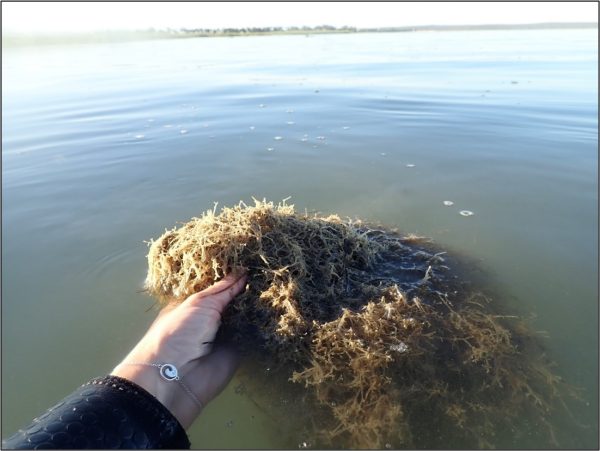
Figure 2. A raft of Amathia verticillata found in the subtidal zone of the Langebaan Lagoon around the sensitive areas of Geelbek that was sampled in transect lines.
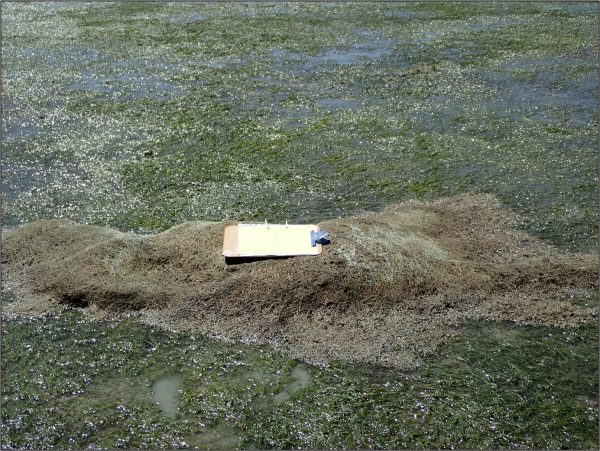
Figure 3. Amathia smothering seagrass at Geelbek.