Mass mortalities of fish in Wilderness Lakes and estuaries of Garden Route national Park
Estuaries rarely experience mass mortalities of fish, which are often triggered by extreme external factors such as pollution, droughts, or floods. Unfortunately, in many instances determining the ultimate cause of such events is often very difficult, particularly when none of these external factors have occurred.
A fish mortality event was noted at Isalnd Lake and Touw River of Wilderness – Garden Route National Park, between July and December 2022. Surprisingly other lakes in the Wilderness system such as Rondevlei, Langvlei, Swartlvei Lake and estuary were less affected although few dead fish and birds were observed in these systems. During the six months no extreme external events could be determined.
To adequately document and determine the cause of the fish mortality event, SANParks scientists routinely conducted on-site visits to assess water quality. Water quality measurements were taken, testing for E. coli levels, and visual checks for water discoloration, foaming and any unusual smells were conducted.
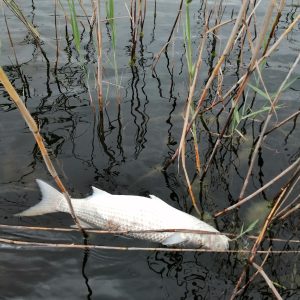
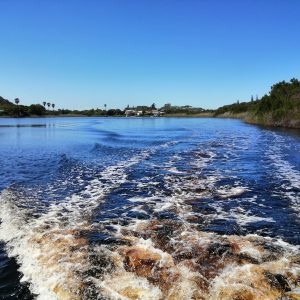
Rangers also conducted regular patrols, to collect fish and bird carcasses.
The majority of dead fish collected were large sized mullet species and within those most were flathead mullet. Whilst on the water, healthy individuals were also noted. Only few other fish species were observed, low numbers of dead birds were observed and recorded during this period.
Water Quality results indicated that all parameters were within normal range except pockets of deeper sites where O2 levels where low. This was unusual as previous work indicated that stratification of water within the system did not occur.
The most frequently interacting water quality factors in a southern African context appear to be salinity and water temperature, dissolved oxygen and water temperature. Based on our observations and water quality tests we suspect that fish were impacted by low oxygen conditions. This also fits in with large sizes being impacted – large size fish are more susceptible to low oxygen levels.
The cause of the low oxygen levels could not be determined. Could it have been due to a high biomass of plant material decomposing, or possibly related decomposition associated with a large algal bloom experienced within the system a few months earlier?
An increase in the severity and frequency of fish mortality events would be a cause for concern. Place for recreation – swimming, boating, kayaking, birding, and a place for livelihoods – fishing. Fish kills are unsightly, can cause an unpleasant odour and creates concern for members of the public.
As a conservation authority we need to monitor these events to assess timing, frequency and severity whilst trying to understand the underlying causes.
