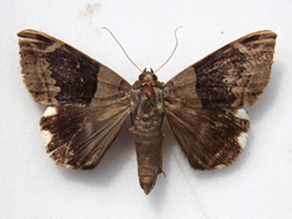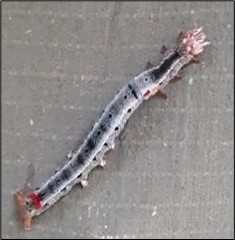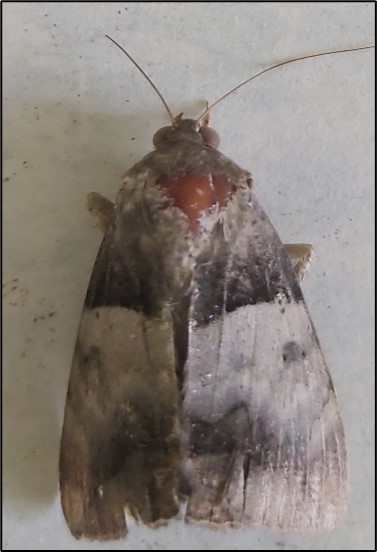
Achaea lienardi adult moth
The excessive February rains experienced around most of the southern Kruger National Park, brought with it a phenomenal outbreak of moths. On further examination, it appeared that this was primarily dominated by the Lienard’s achaea, which formed large swarms under most trees and bushes in Skukuza. The genus Achaea is a large one and well over 20 species belonging to it have been recorded, the majority in West Africa, but well represented throughout Africa. Outbreaks are driven by climatic conditions, including later summer rainfall following early season droughts according to Taylor, 1965 (The fruit-piercing moth, Achaea lienardi Boisduval (Lepidoptera: Noctuidae), in the Eastern Cape province. Journal of the Entomological Society of Southern Africa 28, no. 1: 50-56).
Achaea lienardi (Lienard’s achaea) is a fruit-piercing moth, and while the adult attacks fruit, the larva is also well-known as a defoliator of various crops in the Republic of South Africa, from various species of Acacias to the castor oil plant. Larvae were observed feeding on Terminalia prunioides (Purple-pod terminalia) in Skukuza. The moth is very variable in color and markings, with the one consistent feature being white markings or spots on the margin of the hindwing. The numbers subside as the winter months approach when surviving moths are believed to overwinter.