It’s not about the bag – supporting local when sourcing conference gear
We suggest that when it comes to locally sourced conference gear, it’s not just about the bag, it is also the right thing to do. In the “doing”, positive social and economic opportunities are created locally, which we hope in the long run will also have positive impacts on conservation.
Facilitating access for local SMMEs (small, medium and micro-sized enterprises) to supply locally made conference gear to the SANParks conference market is gaining more and more traction. This financial year alone, local sewing groups in villages and towns bordering the Kruger park have produced lanyards, cloth face masks and bags for conferences held in the park (to the value of approximately R27 000). It all started in 2016 with the Savanna Science Networking meeting (SSNM), a social and ecological scientific conference that is held in Skukuza annually.
As the hosts of the meeting, Scientific Services teamed up with the Social and Economic Transformation department, together taking the plunge to move away from the historical legacy of using bulk-produced nylon conference bags imported from China. Instead, the team chose to procure 210 conference bags from the Hlanganani Arts and Crafts centre, a women-led local community crafting group falling within the Ba-Phalaborwa municipality. The conference has not looked back since, procuring approximately 1300 locally made conference bags from a variety of groups over the past 7 years.

The sewing (and cooking and teaching) ladies of Masoyi Homebased Care Centre, Mahushu, Hazyview, who made the conference gear (Photo: Dr Louise Swemmer).
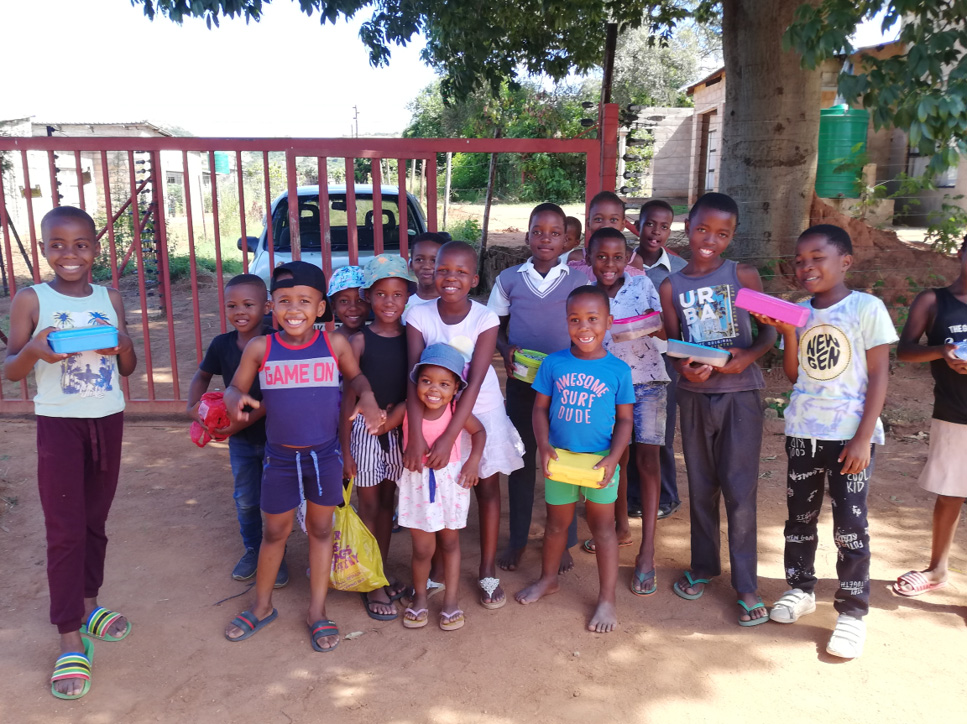
The beautiful wax print bags sourced for the 2022 conference were made by the dedicated women from the Masoyi Homebased Care Centre, who run a support programme for local children in the Numbi Gate area. The programme provides daily meals for children in need, while also providing the children with after school academic support, as well as music lessons on drums and marimba instruments. The support of this home based care centre contributes significantly towards the children’s physical and psychological well being, many of whom are from child-headed households.
Now, imagine if all the conferences held in KNP annually, sourced local gear? The SSNM hosts only a tiny fraction (3.3%)1 of the average number of people (6379 pp) who move through the three main conference centres in the park annually (Skukuza, Mopani and Berg-en-dal). Most of these (64%) are official (non-conference) bookings involving mostly SANParks staff attending meetings, who at the least, get issued with a notepad and pen at the venues. The remaining 36% of the bookings (on average 2312 pp per year) are by external groups (the broader public), mostly for conferences, and in most cases they bring in their own, externally sourced conference gear. What if it was mandatory for every conference to use locally produced conference bags and name tag lanyards? And what about using local companies to provide branded water bottles (to be refilled from a water dispenser, rather than produce the waste of single-use plastics), pens and conference stationery? This could result in a significant additional annual profit that could be channelled directly to local enterprises, with preference given to women-led and charity groups. What an opportunity!
Supporting local is not always easy, and requires ongoing partnerships, capacity building and learning from both sides. However, our pilot project involving the SSNM has shown over and over again that supporting local is not just about the bag, it is also the right thing to do. The products are beautiful (delegates love them and in fact purchased additional bags to take home as gifts), authentic, environmentally friendlier and they have a far greater impact on the livelihoods of the people involved, than we could have ever imagined. Quite simply, when it comes to conferences, we as SANParks can do more and we can do better.


1 Note: The data used to generate the historical booking statistics were taken from the roomseeker platform. The platform was not designed to be used for the above type of analysis, and as such in some cases contains more than one record for a single reservation number. For the purpose of our analysis, in order not to “over-count”, we used one record per reservation number, using the record with the maximum number of guests in each case.
This article was written by Dr Louise Swemmer, Portia Sambo, Helen Mmethi, Patience Mdungasi, Kirsty Redman, Lucia Hlatswayo, Dries De Wet, Jackey Deacon and Judith Botha and originally published in the 2021/2022 Research Report.

